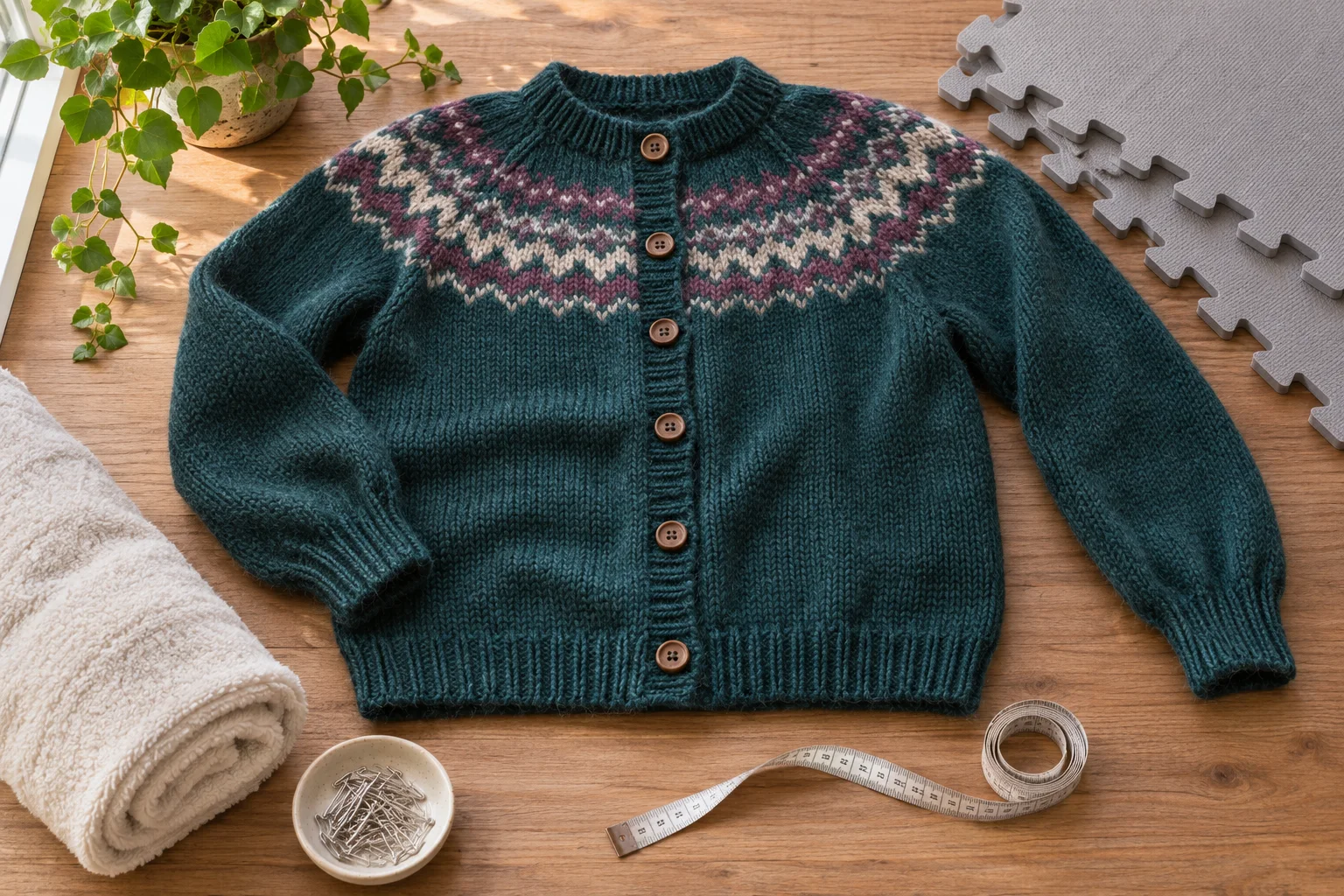
How to Block Wool Knitting: Wet, Steam & Spray Methods Explained
By Editorial Team
Learning how to block wool knitting means choosing a method the yarn and finished project can safely tolerate, shaping the damp or steamed fabric to the intended measurements, and leaving it undisturbed until dry. For many washable wool projects, wet blocking is the most thorough option. Spray blocking uses less moisture, while steam can make controlled adjustments when the yarn label permits it.
There is no universally best technique. The yarn label, pattern instructions, fiber blend, colorfastness, stitch pattern, and construction all matter. Blocking can relax uneven stitches, open lace, reduce curling, and help pieces meet a schematic, but it cannot reliably rescue a garment knitted at the wrong gauge or reverse severe felting.
Quick Answer: Which Blocking Method Should You Use?
Start with the yarn manufacturer’s care directions and the project pattern. If those conflict with general advice, follow the more restrictive instruction and test the method on a blocked gauge swatch first. The Lion Brand blocking guide likewise makes the yarn label the first decision point.
| Method | How it works | Often useful for | Main cautions |
|---|---|---|---|
| Wet blocking | The project is washed or fully wetted as its label allows, supported, towel-pressed, shaped, and dried flat. | Thorough finishing, lace, sweaters, colorwork, and projects that will later be washed. | Wet wool is heavy and vulnerable to stretching. Avoid rubbing, wringing, temperature shocks, and unsupported lifting. |
| Spray blocking | The dry project is arranged, lightly misted, shaped, and left to dry. | Small adjustments, pieces that need less water, and preliminary shaping. | Moisture may not penetrate a dense or thick fabric evenly, so results can be limited. |
| Steam blocking | Controlled steam relaxes the pinned or arranged fabric without full immersion. | Targeted finishing when both the yarn and care instructions allow heat and steam. | Direct iron contact, excess heat, or pressure can flatten texture, add shine, damage blends, or set an unwanted shape. |
What Blocking Does—and What It Cannot Fix
Blocking is a finishing process, not a repair trick. Moisture or steam allows knitted fabric to relax. The project is then arranged to the pattern’s finished measurements and dried in that position. This can make stitch tension look more even, help seams align, reveal lace motifs, soften some edge curl, and settle colorwork or textured fabric.
The result depends on the yarn and the fabric you made. A lofty woolen-spun yarn and a smoother worsted-spun yarn may relax differently, while twist, plies, gauge, and finishing can matter as much as fiber name. Blocking also does not permanently defeat the natural curl of every stockinette edge, correct a badly shaped armhole, or turn a too-small garment into the intended size without risking distortion.
Keep blocking separate from attempts to reverse accidental shrinkage. A felted sweater has undergone a different type of structural change; see our guide to what can and cannot be done with a shrunken wool sweater. For the underlying risks of heat, moisture, and agitation, our explanation of why wool shrinks provides useful context.
Check the Yarn Label, Pattern, and Swatch First
Before adding water or steam, identify the full fiber content and read the care symbols. “Wool” alone does not tell you whether the yarn is untreated, machine washable, blended with plant fiber, or combined with a heat-sensitive synthetic. Woolmark’s care-symbol guide explains that some wool items permit hand washing while others say do not wash, and that pressing and drying permissions are separate from washing permissions.
Superwash processing improves resistance to felting and shrinkage, but it does not make every yarn dryer-safe or guarantee the same dimensional response. Our guide to what superwash wool is explains why the exact product instructions still control. Likewise, “merino” identifies a wool source rather than one universal care routine; use the label and the project construction, not the name alone. The same principle applies to washing merino wool safely.
Block your swatch the way you plan to block the finished project, let it dry fully, and then measure the center. The Craft Yarn Council’s instructor material emphasizes checking the label, colorfastness, finished dimensions, and the irreversible risk of excessive steam. Record both pre-block and post-block stitch and row gauge so you can see whether the fabric grew, contracted, bloomed, or changed drape.
Tools You Need for Blocking Wool Knitting
You do not need a complete specialty kit for every project. A clean basin, colorfast towels, a tape measure, and a protected flat surface are enough for many simple knits. The Brooklyn Tweed blocking tutorial lists blocking mats, stainless wires, and rust-resistant T-pins as useful additions rather than universal requirements.
- Flat, water-resistant work area: large enough for the project at its target measurements.
- Clean, colorfast towels: for supporting the knit and pressing out water.
- Flexible tape measure and pattern schematic: to shape to planned dimensions instead of pulling by eye.
- Rust-resistant T-pins: when edges or lace points must be held. Ordinary pins can leave rust marks.
- Blocking wires: optional for straight scarf, shawl, or garment-piece edges.
- Spray bottle or steamer: only when the selected method and yarn instructions support them.
How to Block Wool Knitting with the Wet Method: Step by Step
Wet blocking is usually the most informative method because it resembles the laundering many washable handknits will eventually receive. Use it only when the label or yarn maker allows the project to be wetted.
- Measure before wetting. Note the garment or piece dimensions and compare them with the pattern schematic. Photographing the tape position can help you repeat the measurement later.
- Prepare water according to the label. Use a clean basin and the permitted water temperature. If a cleaner is needed, use only a suitable amount of a wool-compatible product and follow its directions.
- Wet the fabric gently. Lower the knit into the water without rubbing, scrubbing, or rapid agitation. Do not impose a generic soak time when the manufacturer gives different directions.
- Support the whole project. Gather it from underneath when lifting. A saturated sweater or shawl can stretch under its own weight if held by one shoulder, corner, or edge.
- Press out water—never wring. Gently compress the fabric, place it on a clean towel, roll the towel, and press. Repeat with a dry towel if needed.
- Arrange to the intended measurements. Move the project to the prepared surface, smooth it from the center outward, and compare it with the schematic. Nudge rather than pull. Keep ribbing and elastic edges relaxed unless the pattern directs otherwise.
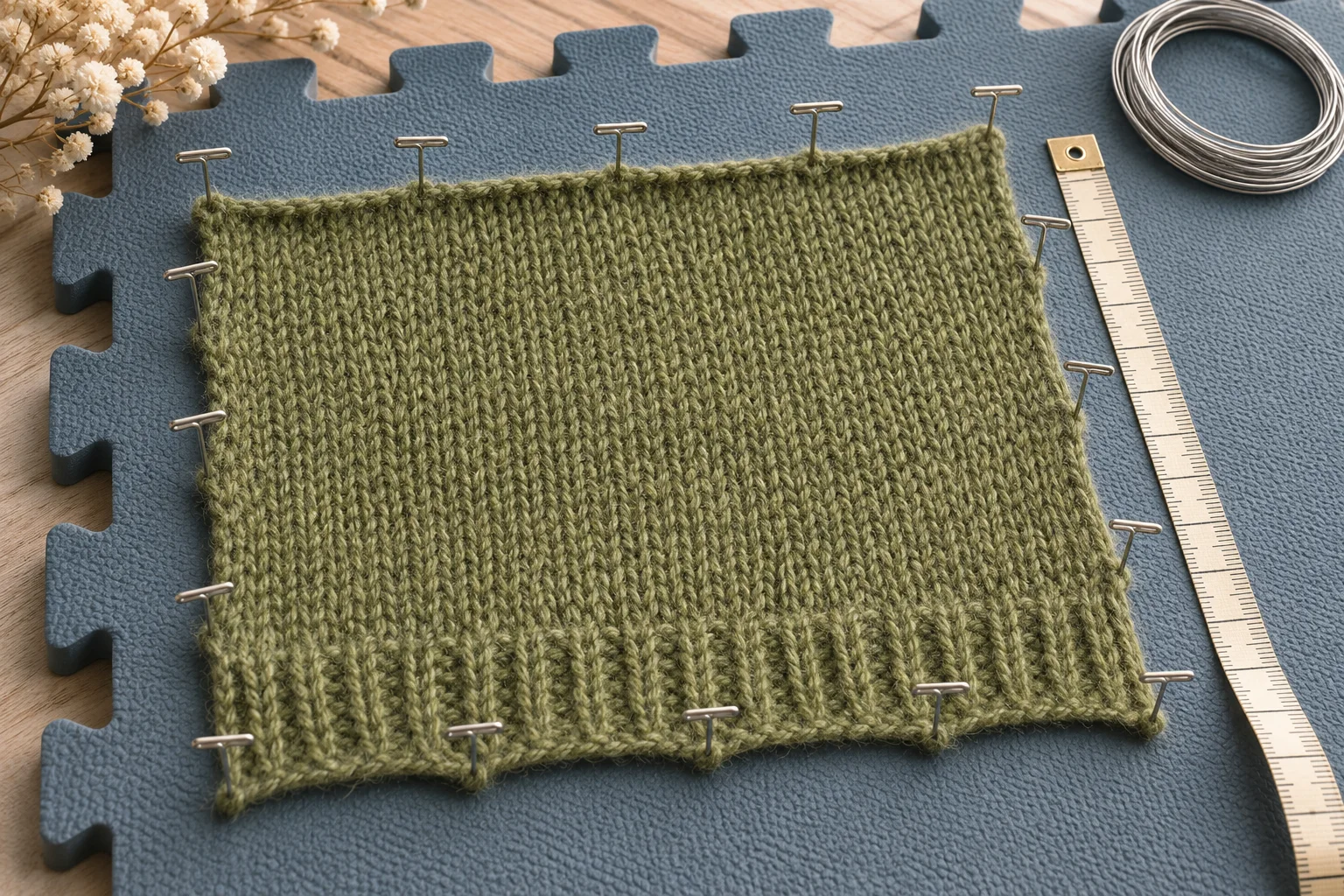
- Pin only where useful. Many sweaters can dry after gentle hand-shaping without a ring of pins. Lace points and long straight edges may need rust-resistant pins or wires placed at regular intervals.
- Dry completely before moving. Leave the project flat with airflow, away from direct heat and strong sunlight. Woolmark advises flat drying knitwear because hanging a wet sweater can lengthen and distort it; its wool sweater drying guide also specifies rustproof pins if pins are used.
How Steam and Spray Blocking Differ
Steam blocking
Arrange the project on a suitable protected surface and bring it to the target measurements before applying controlled steam. Keep the appliance off the knitted fabric unless the manufacturer explicitly gives a pressing method. Direct contact or pressure can flatten cables, crush a brushed surface, create shine, or damage a heat-sensitive component in a blend.
The Berroco steam-blocking guide describes hovering above the fabric rather than touching it. Because irons and steamers differ, avoid relying on one universal distance, temperature, or exposure time. Use the yarn label, test a swatch, work gradually, and let the piece cool and dry in place.
Spray blocking
Lay out or pin the dry project, mist it evenly with clean water until appropriately damp, and leave it untouched until fully dry. This gives more control over how much water reaches the fabric and can suit small pieces or modest adjustments. However, a surface mist may not relax a dense sweater, thick cable fabric, or tightly spun yarn as thoroughly as full wetting.
The Knit Picks sweater-blocking guide presents wet, spray, and steam methods while recommending a swatch test and the yarn’s washing instructions. If spray blocking produces little change, do not respond by soaking a “do not wash” project or adding steam to a “do not iron” yarn. Accept the limitation or ask the yarn maker or a qualified cleaner for product-specific advice.
How to Block Different Wool Projects
Sweaters and cardigans
Support the body and sleeves during every move. Shape the sweater to the pattern’s bust width, body length, sleeve length, and armhole depth without stretching ribbing. For a seamed garment, some patterns benefit from blocking pieces before assembly so edges align; others specify finishing after seaming. The construction and pattern instructions decide.
Scarves, shawls, and lace
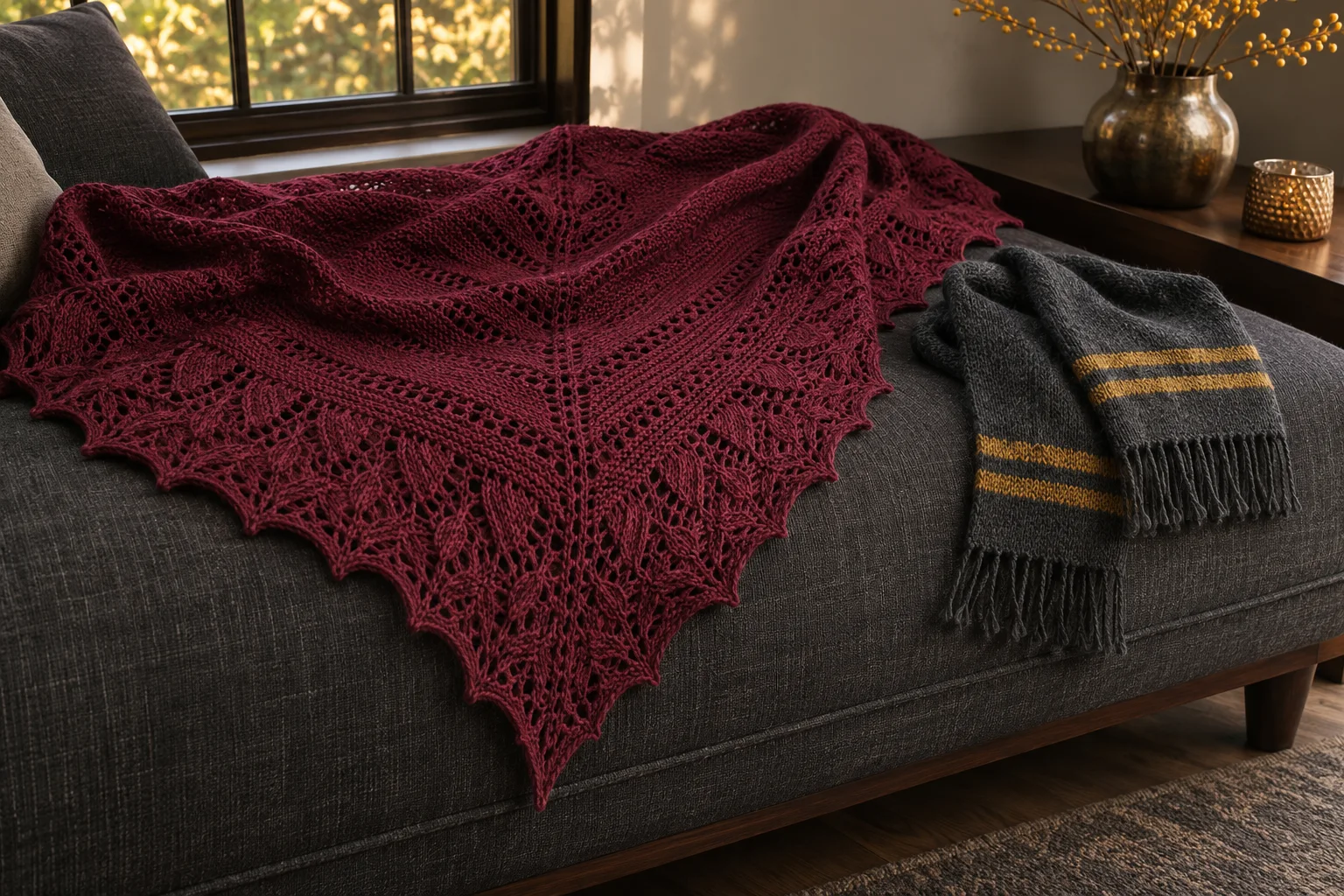
A simple scarf may only need smoothing and measurement. Lace often needs more deliberate pinning to reveal the motif, but “aggressive” should never mean pulling past the yarn’s comfortable resistance. Wires can distribute tension along straight edges; evenly spaced pins are preferable to a few isolated pins that create scallops. The DMC blocking guide similarly separates wet, steam, and spray methods and warns against wringing.
Hats, socks, cables, and colorwork
Shape hats three-dimensionally when the crown would crease if pinned flat; use a clean form only if its size matches the intended fit and it tolerates moisture. Socks usually need gentle smoothing rather than forced enlargement. For cables and other raised textures, avoid pressing them flat. Colorwork can settle with washing and shaping, but test for dye transfer before wet blocking and do not stretch floats beyond their natural range.
How Yarn Construction Changes the Result
Fiber name is only one variable. An airy woolen-spun yarn may bloom and fill visual gaps, while a smooth, tightly spun yarn may preserve sharper stitch definition—but these are tendencies, not guarantees. A loosely spun or single-ply wool yarn can be more vulnerable to abrasion and distortion than a firm multi-ply yarn. Handspun yarn may contain deliberate variation, so consult the maker’s notes and test a generous swatch; our handspun wool yarn guide explains those structural differences.
Blends require the most cautious component to guide the method. A wool-and-silk lace yarn, wool-and-cotton garment, or wool-and-synthetic sock yarn can respond differently from 100% untreated sheep wool. Even within the broad choices in our wool yarn guide, finished behavior changes with twist, ply, gauge, color treatment, and fabric construction.
Common Blocking Mistakes
- Stretching to “fix” gauge: a project pulled to size may rebound, drape badly, or lose elasticity. Re-swatching or altering the project is safer than depending on maximum stretch.
- Wringing or agitating wet wool: both can distort the fabric and increase felting risk.
- Pressing an iron onto texture: heat and pressure can flatten cables and change the surface permanently.
- Using ordinary pins: moisture can create rust stains. Use verified rust-resistant pins.
- Lifting a saturated project by one edge: wet weight can stretch shoulders, corners, or lace points.
- Moving or storing the knit while damp: the shape can shift, and trapped moisture can produce odor or mildew.
- Assuming all dimensional change is damage: a swatch may bloom or relax normally. Compare measurements after the fabric is fully dry and rested.
Troubleshooting After Blocking
The project grew larger than expected
Let it dry completely and rest before judging the final measurements. Do not add heat or agitation in an attempt to shrink it back. Compare the blocked fabric with your swatch and label instructions. If the yarn is machine washable and the manufacturer specifies a particular drying process, follow that exact process; otherwise, seek product-specific advice rather than improvising.
Edges look scalloped where the pins were
Re-dampen only if the care instructions allow, then redistribute tension with more closely spaced pins or a blocking wire. The goal is even support, not harder pulling.
Cables or ribbing look flat
Pressure or overstretching may have reduced the relief. Gentle re-wetting and reshaping can sometimes help when the label permits it, but heat-set flattening may not be reversible. Test any corrective step on the swatch first.
Frequently Asked Questions
Do you have to block every wool knitting project?
No. Blocking is valuable when you need to assess final gauge, settle stitches, shape pieces, or open a pattern, but the intensity varies. A small sturdy accessory may need only the normal wash-and-flat-dry routine allowed by its label.
Should you weave in ends before or after blocking?
Follow the pattern. Many knitters secure ends before blocking while leaving a short tail until the fabric settles; some lace or seamed constructions are easier to finish afterward. The key is preventing loose ends from unraveling during handling.
Can you block wool without mats?
Yes. A protected flat surface and clean colorfast towels can work when the piece does not need pinning. If you use pins, make sure the surface holds them securely and cannot be damaged by moisture.
How long does wool take to dry after blocking?
There is no reliable universal time. Yarn thickness, project size, room humidity, airflow, and how much water the towels removed all affect drying. Unpin or move the piece only when it is dry through its thickest areas.
Does blocking make a wool sweater permanently bigger?
Not predictably. Some fabrics relax or grow, some change little, and some rebound after unpinning. Fiber treatment, yarn structure, gauge, weight, and future laundering all matter. A representative swatch is the safest forecast.
Final Recommendation
For most washable wool handknits, begin by blocking a swatch and then use a gentle wet-blocking process that mirrors the yarn maker’s care directions. Choose spray blocking for limited, lower-moisture adjustments and steam only when the label permits heat and you can control it without direct pressure. Shape to measured dimensions, support wet fabric, and allow complete flat drying.
The best result is not the most aggressively stretched one. It is the project that reaches an appropriate shape and drape without sacrificing elasticity, texture, or long-term stability.