Woolen vs Worsted-Spun Yarn: Differences, Feel & Best Uses
By Editorial Team
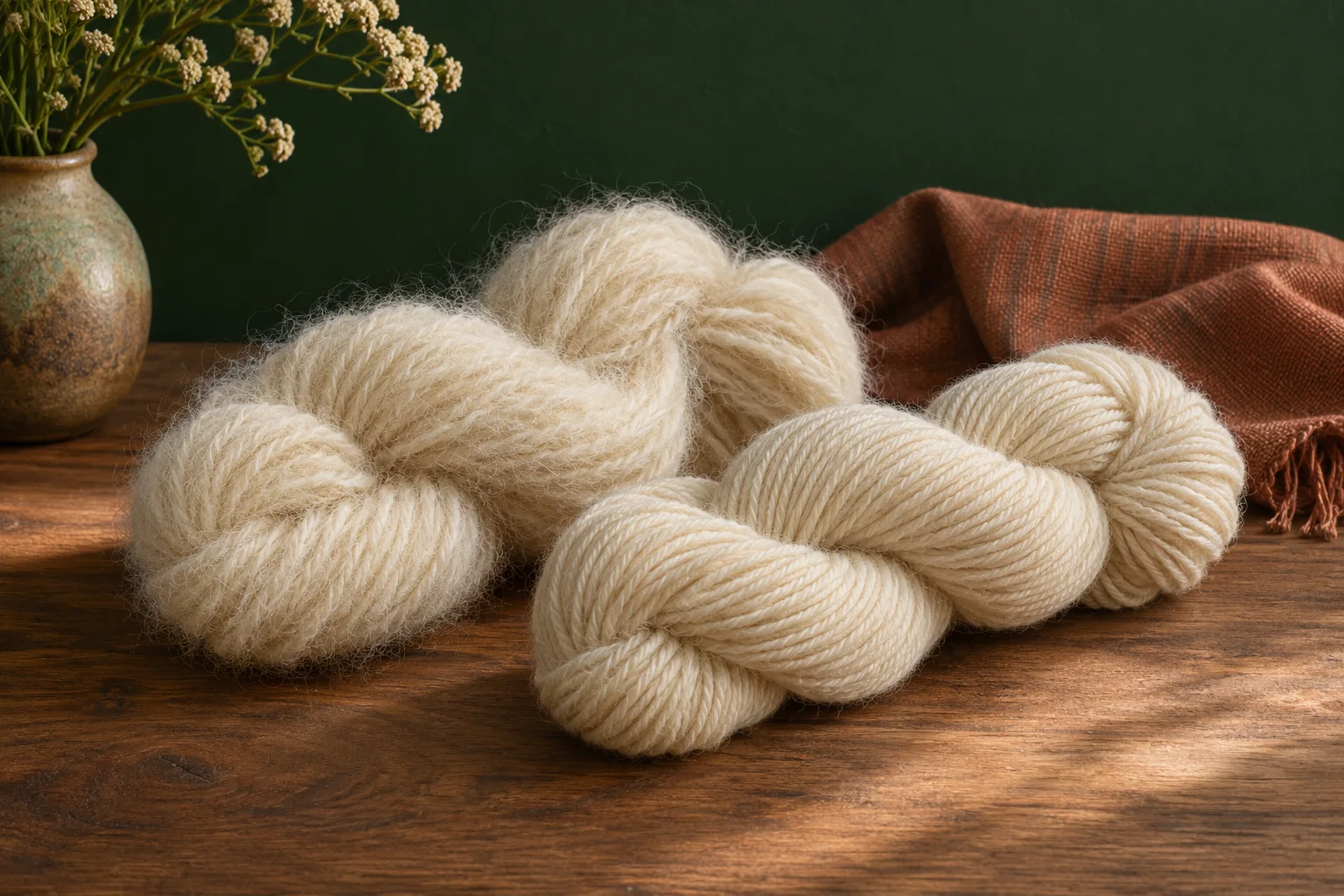
Woolen vs worsted spun yarn is mainly a difference in fiber preparation and spinning structure—not yarn thickness or quality. Woolen-spun yarn typically begins with carded fibers arranged in many directions, which helps create a light, airy, softly fuzzy yarn. Worsted-spun yarn usually begins with fibers that have been carded, gilled and combed into a more parallel arrangement, producing a smoother, more compact yarn with clearer stitch definition.
Those are tendencies, not guarantees. Breed, fiber diameter, staple length, twist, plies, yarn size, knitting gauge and finishing can change how any particular yarn feels and performs. This guide explains what the two systems mean, how they influence finished fabric and what to check before choosing yarn for a project.
Woolen vs Worsted Spun Yarn: Quick Comparison
| Feature | Woolen-spun tendency | Worsted-spun tendency |
|---|---|---|
| Typical preparation | Carded; fibers remain less parallel | Carded, gilled and combed; shorter fibers are removed and longer fibers aligned |
| Yarn structure | Airier, loftier and often hairier | More compact, even and often smoother |
| Fabric feel | Light for its apparent bulk; soft visual bloom | Cleaner surface; can feel denser at the same apparent thickness |
| Stitch appearance | Edges may look softened by halo and bloom | Often gives sharper stitch definition |
| Drape | Often springy or full-bodied | Often fluid or structured, depending on twist and gauge |
| Common strengths | Warmth-to-weight, colorwork cohesion, rustic texture | Definition, abrasion resistance, smooth fabric and drape |
| Important caution | Not every woolen yarn is soft, weak or very warm | Not every worsted-spun yarn is sleek, strong or heavy |
The International Wool Textile Organisation’s processing overview and Woolmark’s manufacturing guide both describe woollen and worsted as distinct processing routes. In American craft writing, “woolen” is the common spelling; many technical and international sources use “woollen.” They refer to the same general system.
What Is Woolen-Spun Yarn?
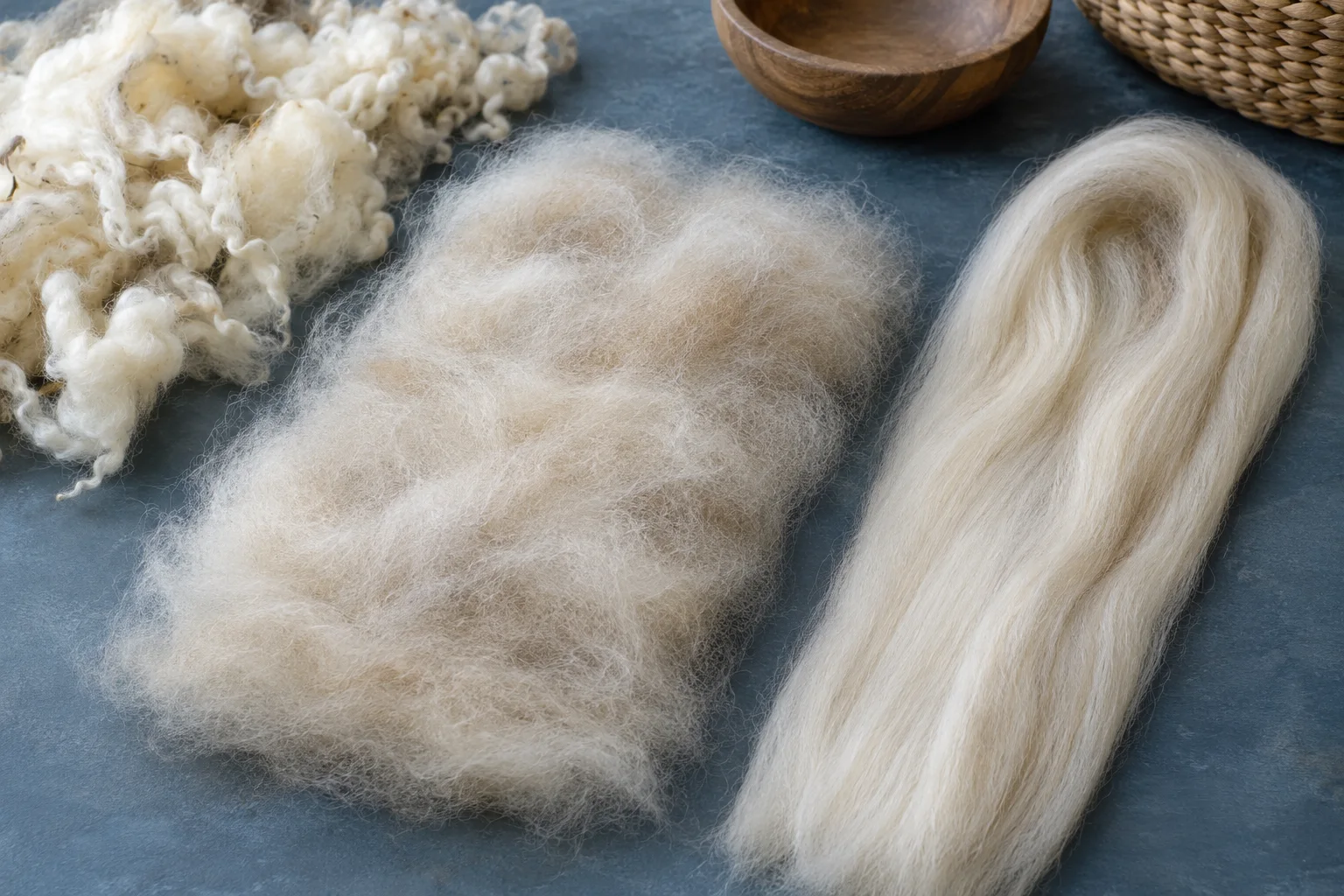
In a conventional woolen system, cleaned wool is carded to open locks, separate fibers and blend them into a web. The web is divided into narrow strands for spinning without the combing stage used in the worsted route. Fibers are therefore less uniformly parallel: some run along the yarn, while others cross or curl through it.
That irregular arrangement can preserve more space between fibers. The resulting yarn is often lofty, relatively lightweight for its visual diameter and covered by a soft halo. After washing, fibers may relax and “bloom,” filling the spaces between stitches. Our broader Wool Yarn Guide explains how fiber, weight, twist and construction work together when choosing a yarn.
Woolen-spun does not mean loosely made or low quality. Mills can produce highly consistent woolen yarn, and handspinners can control diameter and twist precisely. It also does not guarantee softness: a lofty yarn made from coarser fibers may still feel prickly. The specific wool and construction matter as much as the system.
What Is Worsted-Spun Yarn?
In the conventional worsted route, wool is carded first, then repeatedly aligned through gilling and combing. Combing removes short fibers, neps and some remaining vegetable matter while arranging longer fibers more nearly parallel. The prepared “top” is drawn into a finer feed before twist turns it into yarn.
With more parallel fibers and fewer short ends at the surface, worsted-spun yarn often appears smoother, denser and more lustrous. It can produce crisp stitch definition and a fabric that resists surface abrasion well. Woolmark’s worsted-spinning technical overview also notes that fiber length, yarn count and twist must be controlled together; the word “worsted” alone does not predict every performance result.
Industrial worsted processing and handspinning are related but not identical workflows. A handspinner may use combed top and a short-forward draft to keep twist out of the drafting zone. The Spin Off explanation of worsted, woolen and intermediate yarns emphasizes that preparation, drafting method and twist entry all contribute to the final structure.
How Carding and Combing Influence Yarn Structure
Carding and combing are sometimes reduced to “messy fibers versus straight fibers,” but the real processes are more precise. Carding opens and separates wool and begins to align it. In woolen production, the carded web becomes the feed for spinning. In worsted production, carding is followed by additional alignment and combing before spinning.
Combing removes many shorter fibers and improves length uniformity. It does not make wool inherently better; it selects a fiber arrangement suited to a different yarn structure. Short fibers and noils can be useful in woolen products. The choice should match the fiber and the intended fabric, as discussed in our guides to choosing wool fiber and raw versus washed wool fiber.
What do “semi-woolen” and “semi-worsted” mean?
Spinners and mills sometimes combine a carded preparation with a worsted-style draft, or a more aligned preparation with a woolen-style draft. These are often described as semi-woolen or semi-worsted. Usage varies among educators and manufacturers, so treat the label as a useful description rather than a universal technical specification. When accuracy matters, ask how the fiber was prepared and drafted.
Loft, Warmth, Texture, Stitch Definition and Drape
Loft, warmth and finished weight
Woolen-spun yarn often traps more air within its structure, which can support warmth without requiring as much fiber mass. A knitted woolen fabric may therefore feel surprisingly light for its thickness. Brooklyn Tweed’s mill-based comparison describes this relationship between air pockets, loft and insulation.
Still, a dense woolen fabric can be heavier than an open worsted-spun fabric. Warmth depends on fiber, yarn diameter, twist, ply, stitch pattern, gauge and how the fabric is layered. Do not choose solely from the spinning-system label.
Surface texture and stitch definition
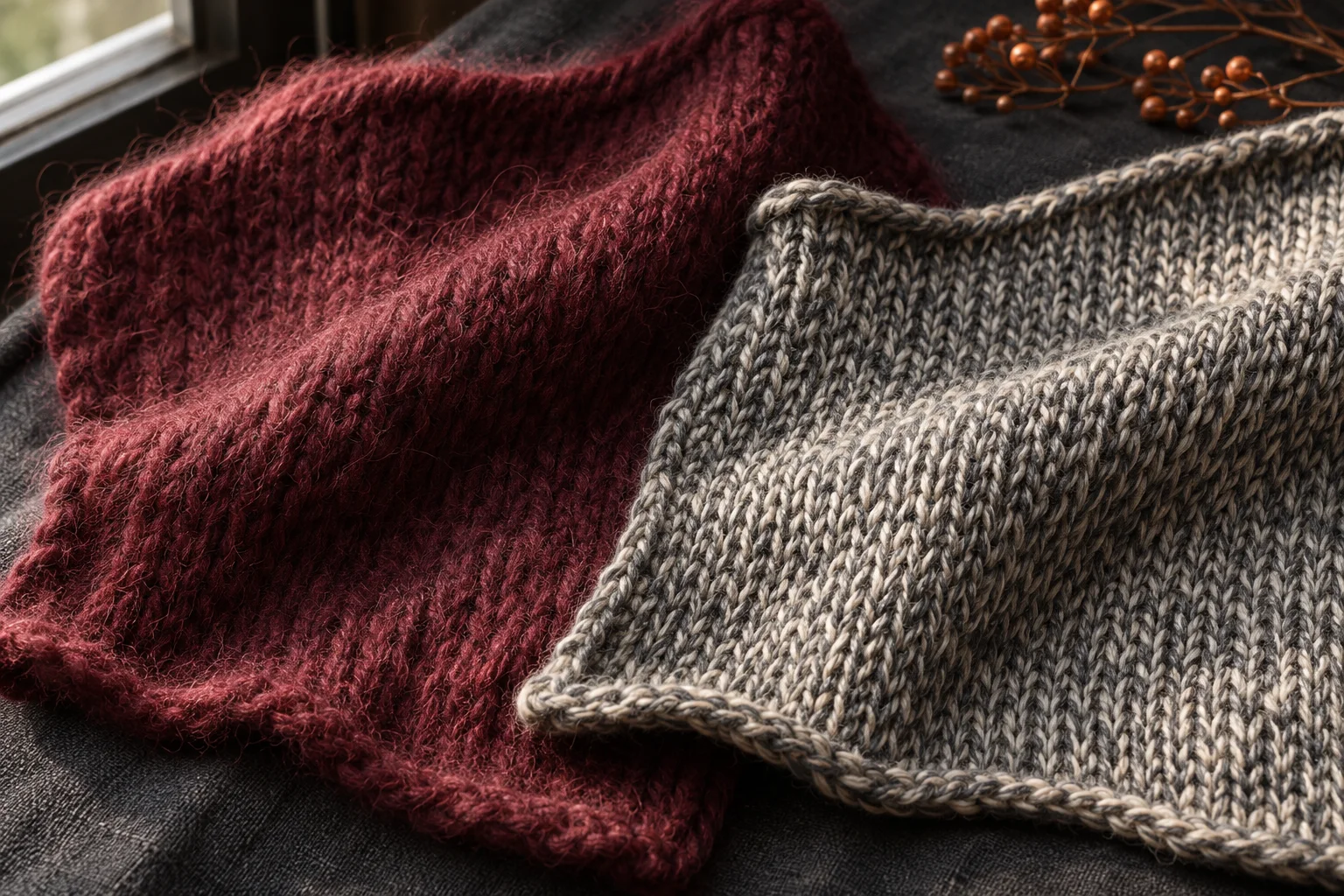
A halo can soften the outlines of individual stitches, making woolen-spun yarn attractive for blended color transitions and cohesive stranded colorwork. A smoother worsted-spun yarn usually keeps stitch edges more visible, which may help cables, traveling stitches and fine texture stand out. Fiber crimp and finishing can reverse or narrow that difference, so judge the actual swatch.
Drape and elasticity
Worsted-spun yarn is often described as drapier because its compact structure can form a smoother, more fluid fabric. Woolen yarn may feel springier and more full-bodied. However, elasticity comes strongly from the wool breed’s crimp, while drape changes with yarn size, twist and knitting gauge. A tightly knit worsted-spun yarn may be firm; an open-gauge woolen yarn may move freely.
Durability, Pilling and Care
Aligned long fibers and a compact structure often help worsted-spun yarn withstand rubbing, which is useful in cuffs, mittens, socks and woven warp. Woolen-spun yarn may abrade sooner when it is very soft, lightly twisted or made with short fibers. But spinning system is only one variable. The Woolmark pilling guidance explains that abrasion and garment use matter; technical Woolmark specifications also identify fiber length, diameter, twist and fabric construction as important factors.
Pilling occurs when loose fibers migrate to the surface and tangle under friction. A smooth yarn can still pill, while a well-constructed woolen yarn can wear well. Ply structure matters too: compared with some single-ply yarns, balanced multi-ply yarns may offer more abrasion resistance and stability. See our Single-Ply Wool Yarn Guide for that separate construction choice.
Always follow the finished yarn or garment care instructions. Washing and blocking may soften a worsted-spun yarn or make a woolen-spun yarn bloom noticeably. Neither term tells you whether the yarn is machine washable, resistant to felting or safe for a dryer.
Which Spinning Method Suits Different Projects?
- Sweaters and cardigans: choose woolen-spun yarn when low weight, warmth and bloom are priorities. Consider worsted-spun yarn for a smoother surface, drape or sharp textured details.
- Scarves and hats: either system can work. Focus first on skin comfort, halo, elasticity and care because these items sit close to the face.
- Mittens: woolen-spun fabric can feel warm and cohesive; worsted-spun yarn may better suit high-friction palms. Gauge can be as important as yarn structure.
- Socks: prioritize abrasion resistance, elasticity, twist, plies and gauge. A durable worsted-spun yarn is a common choice, but a tightly constructed woolen yarn may also be suitable when its maker recommends socks.
- Cables and textured knitting: smoother worsted-spun yarn often displays edges clearly. A moderate halo can soften the pattern without hiding it, so swatch before deciding.
- Colorwork: woolen-spun yarns often bloom into a cohesive surface, while smoother worsted-spun yarns can create cleaner color boundaries. Both can be effective.
- Weaving: a firm, even worsted-spun yarn can be useful for warp because warp threads face tension and abrasion. Woolen-spun yarn can be appealing in weft when softness, loft or a full surface is desired.
If you spin your own yarn, our beginner wool-spinning guide, drop-spindle guide and handspun yarn guide provide the surrounding skills for preparation, twist control and project planning.
Worsted-Spun vs Worsted-Weight: The Critical Distinction
Worsted-spun describes a preparation and spinning system. Worsted-weight describes yarn thickness in the craft-yarn marketplace. They are not synonyms.
The Craft Yarn Council Standard Yarn Weight System places worsted in the Medium category. A yarn can be woolen-spun and worsted-weight, worsted-spun and fingering-weight, both worsted-spun and worsted-weight, or neither. Brooklyn Tweed’s catalog, for example, includes woolen-spun yarns sold in worsted-weight sizes—useful real-market evidence that the terms describe different things.
When a knitting pattern calls for “worsted-weight yarn,” match the pattern’s gauge and fabric requirements. Do not assume it is asking for worsted-spun wool.
How to Identify the Spinning Method When Shopping
Many yarn labels disclose fiber content, yardage, weight category, gauge and care but do not name the spinning system. The Craft Yarn Council’s yarn-label guidance explains common label information; woolen- or worsted-spun construction is not reliably indicated by the weight symbol.
- Read the manufacturer’s full product page, mill story or technical sheet.
- Look for explicit wording such as “woolen-spun,” “woollen-spun,” “worsted-spun,” “combed top” or “carded preparation.”
- Check fiber breed, fiber content, yardage per weight, number of plies, care instructions and recommended gauge.
- Do not identify the process from fuzziness or shine alone. Brushing, fiber blend, twist and finishing can produce similar appearances.
- Ask the brand or retailer when the spinning system matters and the documentation is unclear.
Use a Washed Swatch to Make the Final Choice
A washed swatch is more informative than squeezing a skein. Knit or crochet at the pattern’s intended gauge, record the needle or hook size, then wash and dry the swatch according to the label. Evaluate stitch definition, bloom, halo, drape, weight, elasticity and comfort against the intended use.
For a fitted garment, measure before and after washing to see how the fabric relaxes. For colorwork or cables, view the swatch from normal wearing distance. For a hard-wearing item, gently handle the fabric and consider whether the maker recommends that yarn for the use. Swatching cannot predict years of wear, but it reveals far more than the spinning-system name alone.
Frequently Asked Questions
Is woolen-spun yarn always warmer than worsted-spun yarn?
No. Woolen-spun yarn often contains more trapped air and can provide excellent warmth for its weight, but finished warmth also depends on fiber, yarn size, twist, plies, fabric density and layering.
Is worsted-spun yarn always stronger?
No. Longer aligned fibers and a compact structure can support strength and abrasion resistance, but a specific yarn’s durability depends on fiber length, diameter, twist, ply and fabric construction.
Can woolen-spun yarn have good stitch definition?
Yes. A woolen-spun yarn with moderate halo and balanced twist can show cables and texture well. Its lines may look softer than those made with a smoother yarn, so compare washed swatches.
Can a worsted-weight yarn be woolen-spun?
Yes. Worsted weight identifies a thickness category, while woolen-spun identifies a production system. The same yarn can carry both descriptions without contradiction.
Is one system better for beginners?
Not universally. Knitters may find a smooth yarn easier for seeing stitches, while a grippy woolen yarn can make colorwork feel cohesive. Beginning spinners often find one drafting method more intuitive than another. Choose a well-documented yarn or preparation and practice with small samples.
The Bottom Line
Woolen-spun yarn typically uses carded, less-aligned fibers to create a lofty structure with a softer halo. Worsted-spun yarn typically uses combed, more-parallel fibers to create a smoother, more compact structure. Those differences influence fabric, but they do not override breed, fineness, staple length, twist, plies, gauge and finishing.
Use the spinning-system label as one piece of evidence. Confirm the yarn’s weight, construction and care, then judge a washed swatch in relation to the project. That approach is more reliable than treating either system as the universal winner.