A beautiful skein is a starting point. The right wool yarn is the one that produces the fabric your project needs, in a quantity you can afford and with care requirements you can follow. Start with the pattern or intended use, then compare fiber content, thickness, construction and length before choosing a color.
Editorial note: This is a modern educational resource from the current website. It is not a catalog or continuation of the former Homestead Wool & Gift Farm business. We do not sell its historical yarn products.
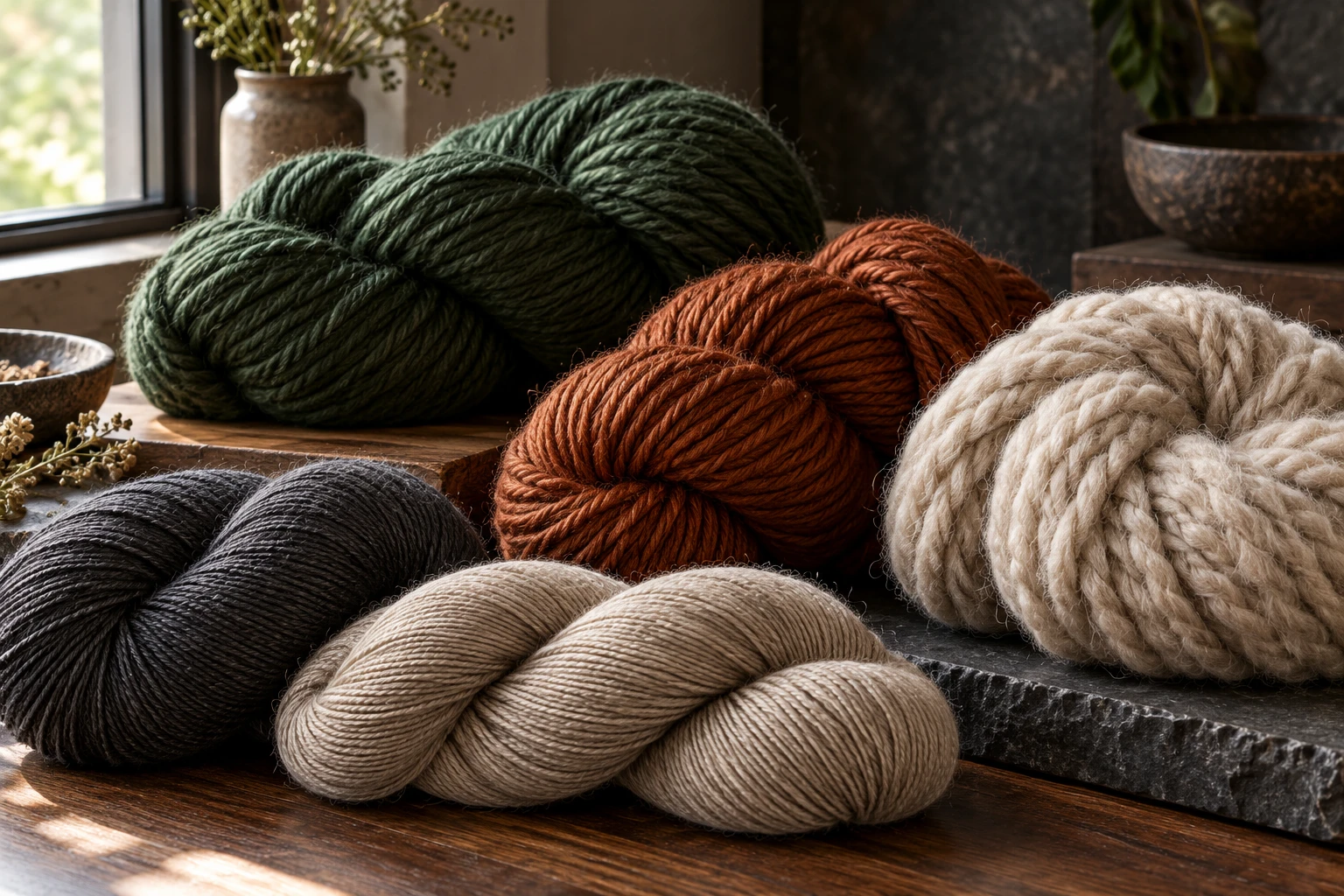
Start with four separate yarn questions
Several labels can describe the same skein without contradicting each other. A yarn might be wool, handspun, two-ply and bulky. Each word answers a different question:
- Fiber: What is it made from? Check whether the label specifies wool alone or a blend, and read the percentages.
- Weight category: How thick is the yarn? This is different from the skein’s weight in grams.
- Construction: Is it a singles yarn, or are multiple strands twisted together?
- Production: Was it spun by hand or on mill equipment? This does not, by itself, establish thickness or suitability.
Write those four answers alongside the length per skein. A missing answer is a useful question for the maker or retailer, especially when ordering yarn you cannot handle in person.
Understand yarn weight before buying
The Craft Yarn Council uses categories 0–7: lace, super fine, fine, light, medium, bulky, super bulky and jumbo. These group yarn by thickness, not package mass. A 100-gram skein can contain very different lengths depending on the yarn. The Council’s weight and gauge chart is a starting reference; the gauge required by your pattern remains the practical target.
Keep the label and pattern units consistent. If the pattern gives meters, compare meters rather than treating a yard as a meter. If a seller only gives grams, ask for length before committing to a project with a stated yardage requirement.
For thick yarns, use our bulky wool yarn guide for gauge checks, quantity calculations and project planning. That guide also explains why “chunky” is not a precise promise of interchangeability.
Singles, two-ply and other plied yarns
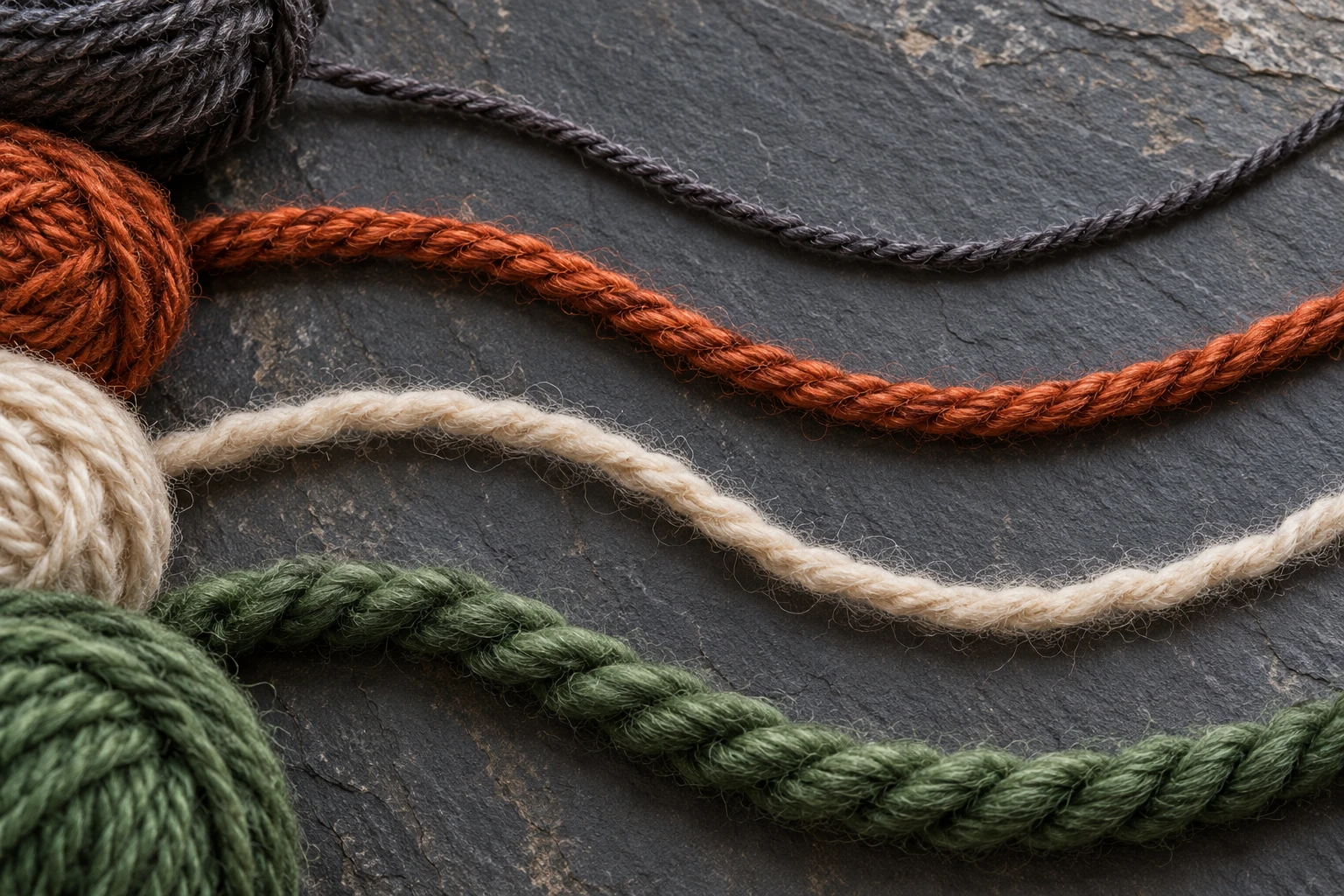
What does single-ply mean?
A singles yarn is one spun strand; “single-ply” is a common retail description for it. It can be fine or thick. Two-ply yarn combines two spun strands, while other constructions use more strands or additional plying stages. Do not assume two-ply always means a fine yarn: some regional naming systems also use ply language for weight categories.
Ask whether a ply number describes actual construction or a local size convention. Then confirm the weight category, length and pattern gauge separately. This prevents a label shortcut from becoming an expensive substitution mistake.
Is a higher ply count better?
There is no universal best count for every project. Fiber, twist and the resulting fabric matter alongside construction. Spin Off’s explanation of yarn balance describes how opposing twists in plied yarn can offset one another. Ply count alone does not tell you whether a finished piece will behave as intended.
For a textured stitch pattern, inspect a sample in that stitch rather than judging the skein alone. For an accessory worn against skin, assess the washed fabric’s feel. For a fitted garment, prioritize stable measurements. These are separate decisions; one attractive property does not answer all three.
Handspun and mill-spun wool yarn
Handspun describes yarn made by a person using spinning tools such as a spindle or spinning wheel. Mill-spun describes machine production in a mill. Either description leaves important questions unanswered: fiber content, construction, consistency, finishing and available quantity still need checking.
Do not treat handmade as a guarantee of softness, sustainability or superior wear. Equally, do not assume handspun must be uneven. Judge the specific yarn and the information supplied about it. Our handspun wool yarn resource focuses on evaluating individual skeins, planning around variation and using textured yarns.
Woolen-spun is not the same as worsted weight
Woolen and worsted can describe preparation and spinning systems. Woolen-spun yarn generally retains a more airy structure; worsted preparation aligns fibers through combing and tends toward a smoother, denser yarn. Brooklyn Tweed’s manufacturing explanation illustrates this distinction. “Worsted weight,” by contrast, refers to a thickness category. Read the full description rather than using the word worsted alone to select a substitute.
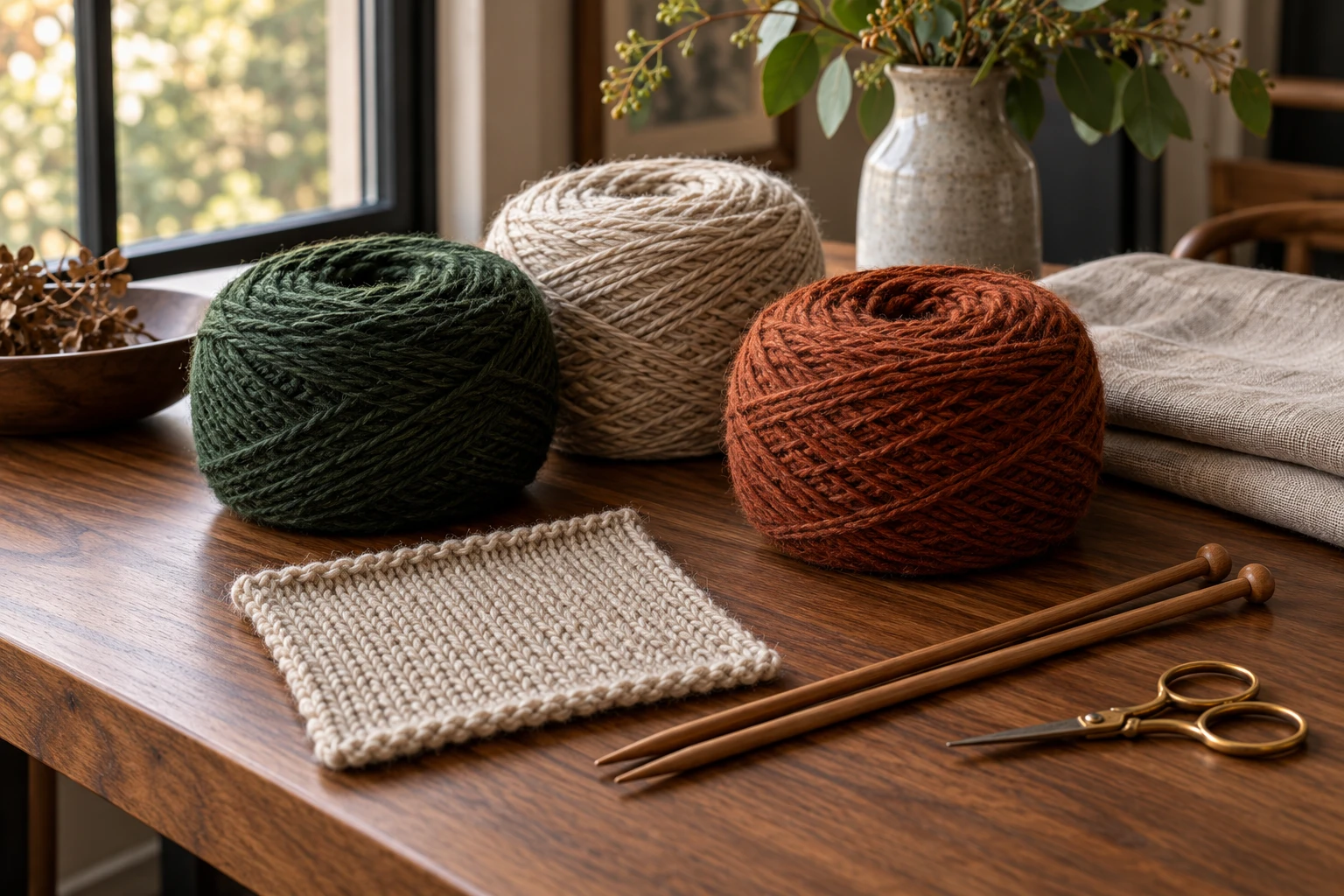
A practical buying workflow
- Define the result. Record the intended size, stitch pattern and use. A decorative wall piece and a fitted cardigan need different kinds of planning.
- Read the pattern requirements. Note gauge, total length, recommended construction where specified and finishing instructions.
- Compare candidate labels. Record fiber percentages, length, grams, color or dye lot and care instructions in one place.
- Check quantity before choosing color. Ask whether enough matching yarn is available. Do not build a project around an assumed restock.
- Evaluate a sample. A washed swatch is the point at which a promising yarn becomes a practical choice.
For example, suppose a pattern requires 720 meters and your chosen yarn supplies 150 meters per skein. Dividing 720 by 150 gives 4.8, so five skeins cover the stated length, supplying 750 meters. That leaves just 30 meters beyond the pattern estimate. Decide separately whether your swatch, alterations or uncertainty justify more. This is a planning example, not a universal quantity recommendation.
Read the care claim, not just the fiber name
Wool does not automatically mean hand-wash only, and “superwash” does not authorize every wash or drying setting. Follow the actual yarn label and preserve it with the project. Woolmark explains that machine-washable wool processing reduces the interlocking associated with felting. That treatment is not a substitute for the product’s care directions.
If two yarns will share a project, compare their care requirements before combining them. Make a sample containing both. For a finished blanket, our wool blanket washing guide provides further context; the yarn maker’s instructions remain the starting point for a handmade piece.
Questions worth asking the seller
- Is the quoted length measured after the yarn’s finishing wash?
- Does the stated ply number describe construction or a weight name?
- Are these skeins from the same batch, and how much variation should be expected?
- What washing and drying instructions apply to this exact yarn?
- Is there a fabric sample or suitable pattern information available?
Vague answers do not automatically make a yarn unusable, but they shift more evaluation onto you. For a first fitted project, choose a yarn with clear labeling and a pattern that specifies it. For an exploratory craft project, leave room to change the design after sampling.
Sources and editorial approach
This guide combines the linked Craft Yarn Council standards, Woolmark care information, Brooklyn Tweed manufacturing education and Spin Off’s technical explanation with original planning examples. It is research-based guidance, not a product test or a reconstruction of the former farm’s catalog. Research checked September 6, 2026.