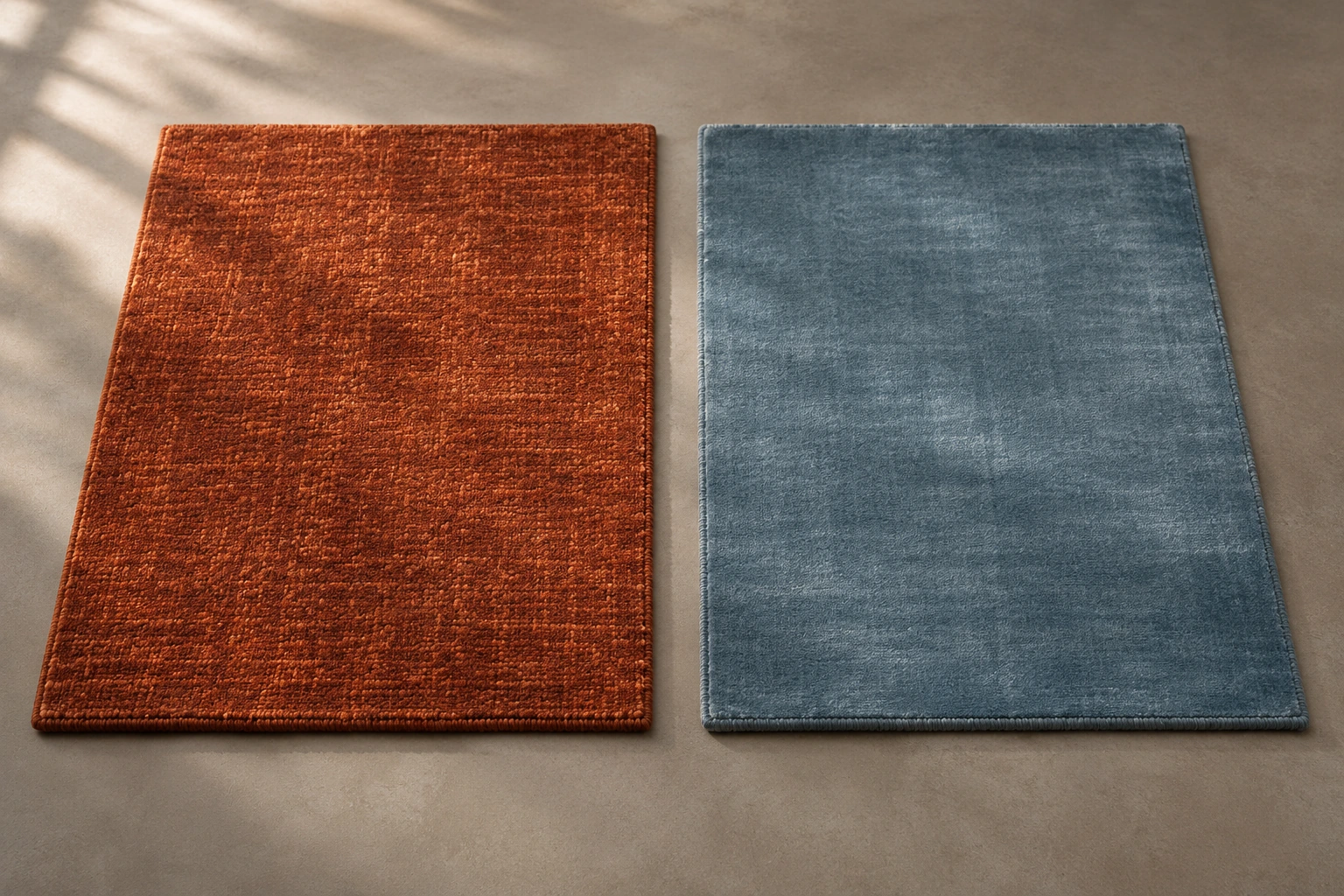
Wool is usually the more practical choice for a rug that gets walked on every day. Genuine silk or a wool–silk blend can make sense when you value a lustrous surface and can accommodate the exact rug’s traffic and care requirements. Construction, the room and the maker’s instructions can change the answer when comparing silk vs wool rugs.
About this comparison: This is a research-based guide using textile and conservation sources, not hands-on rug testing. Room recommendations are editorial judgments; they are not performance ratings for individual products.
Silk vs wool rugs at a glance
Start with wool for everyday practicality, then consider silk for its appearance and a blend for a particular design. The Institute of Conservation’s carpet guidance says wool-pile carpets generally tolerate more wear than carpets containing silk. That is a broad tendency, not a guarantee about every modern rug.
| Buying consideration | Wool pile | Genuine silk pile | Wool–silk pile |
|---|---|---|---|
| Appearance and feel | Often springy and textured; softness and cushioning vary. | Luster is a main attraction; inspect the finished surface and feel. | Check where each fiber appears, rather than assuming an even mixture. |
| Daily foot traffic | A practical first shortlist; verify intended use. | A more cautious choice for concentrated daily wear. | Needs its own traffic guidance; percentages are not a rating. |
| Spills and care | Not automatically washable or stainproof. | Confirm spill response and specialist cleaning before buying. | Use instructions for the complete blend and construction. |
| Where to consider it | Busy living rooms and suitable dry entryways. | Quiet bedrooms and decorative spaces with controlled use. | Rooms approved for the specific rug, where the design justifies its care. |
If you still need to compare rug constructions or plan dimensions, use our wool rug buying guide. Here, the decision is which material suits the way you will use the room.
What do wool and silk actually change?
Wool’s resilience and silk’s luster are useful starting points, but neither tells you how the whole rug will perform.
Woolmark’s explanation of wool fiber connects its natural crimp with elasticity and recovery after compression. This helps explain wool’s appeal underfoot; it does not promise that furniture dents or worn paths will disappear. A thin wool flatweave also will not feel like a deep wool pile.
The Wellcome Collection’s silk-fiber description identifies silk as a supple, lustrous natural protein fiber. For a buyer, the useful question is whether the actual rug gives you the sheen and feel you want. Request a sample or an in-person viewing instead of judging those qualities from a brightly lit product photograph.
Fiber strength is not the same as a finished rug’s suitability for heavy traffic. The Canadian Conservation Institute’s natural-fiber notes describe undegraded silk fibers as very strong, while also explaining their sensitivity to deterioration. A statement about silk’s strength does not establish a rug’s resistance to repeated foot traffic, spills or years of light exposure.
Which material makes sense in your room?
Choose for what happens on the rug, not just the room’s name. These recommendations assume a sound rug whose maker approves the intended use.
Busy living room: start with wool
For a living room used for meals, children’s play or frequent entertaining, shortlist wool rugs intended for regular residential traffic. Ask about the route between the sofa, doorway and kitchen: repeated walking across one narrow area matters more than an otherwise quiet corner.
A wool–silk design can remain on the shortlist if its documented use suits those demands and its cleaning requirements are manageable. Ask whether the silk is in the main walking surface or selected details. Its location informs the conversation with the maker; it does not establish a wear rating by itself.
Entryway: wool only if the conditions suit it
Between these materials, wool is our first candidate for a dry indoor entryway, provided the rug is approved for that traffic. Check door clearance, secure placement and whether routine soil removal is realistic.
A doorway receiving wet boots, road salt or frequent pet accidents calls for a different question: does this rug belong there at all? Do not buy wool merely because it is the more practical of these two fibers. Our guide to choosing a rug pad for the floor and backing explains the compatibility checks beneath the rug.
Quiet bedroom: decide between cushioning and sheen
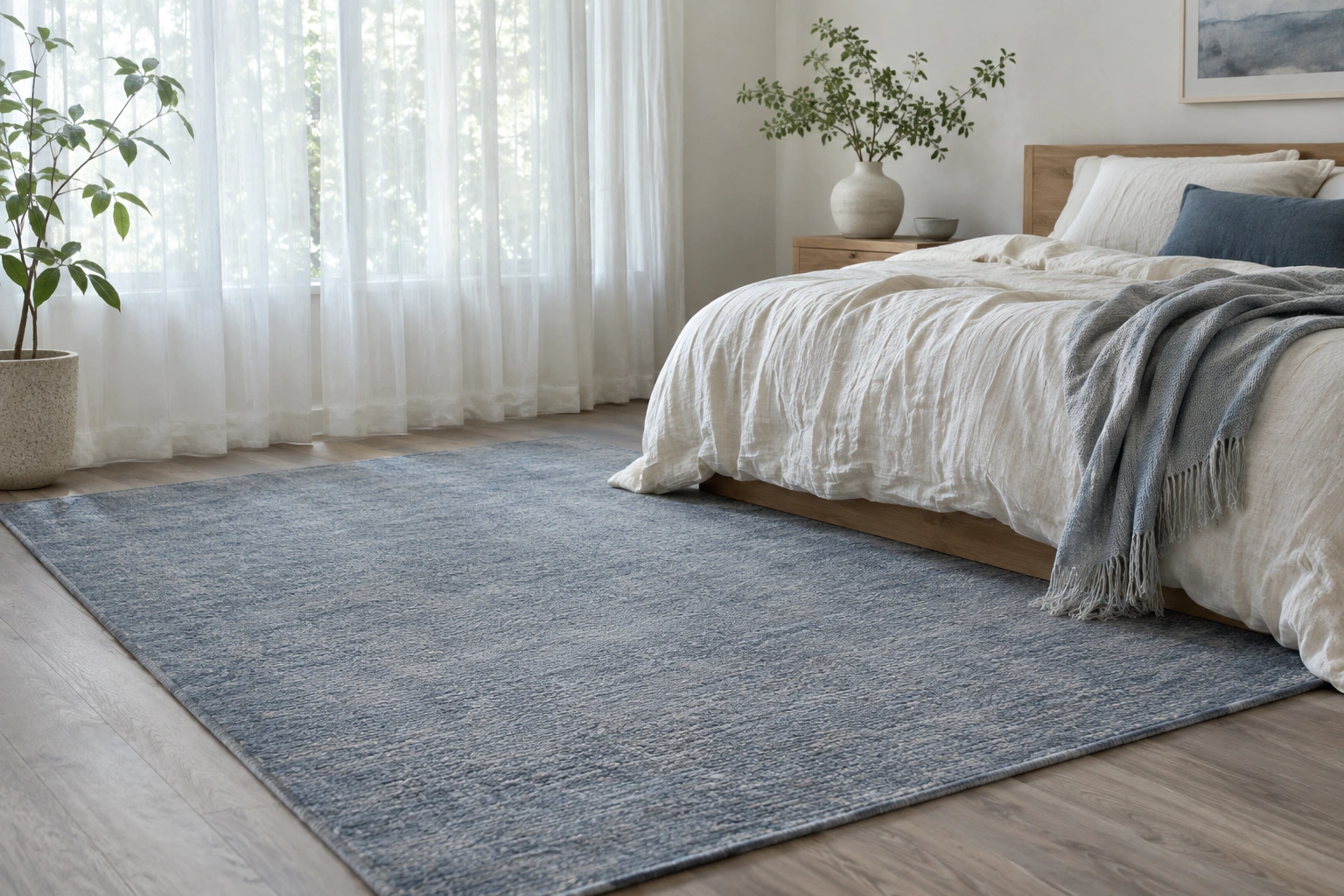
A bedroom gives you more freedom to choose either material. Prioritize a wool rug if you want a textured, cushioned landing beside the bed; consider genuine silk or a blend if the sample’s surface is the main attraction.
Test the sample barefoot if the seller permits it, and confirm how furniture may sit on the rug. Also check the window exposure: the Canadian Conservation Institute notes that sunlight degrades both wool and silk, with silk particularly sensitive to ultraviolet radiation. A quiet room is not necessarily a protected room.
Decorative space: silk becomes a stronger candidate
In a seldom-used sitting area, genuine silk may be worth considering primarily for its appearance. You should still be comfortable limiting direct sunlight, following its care requirements and arranging specialist help when needed.
For an antique or fragile piece, condition can outweigh the fiber comparison. The George Washington University Museum and The Textile Museum’s care guidance recommends consulting a textile conservator before cleaning historical textiles. Get an assessment before treating a collectible rug as an ordinary floor covering.
How to read a rug listing
Verify what the walking surface contains and how the entire rug is made. Save the specifications for the exact model, rather than relying on a collection name.
- Pile composition: Look for exact fiber names and percentages, and clarify whether they describe the pile or the whole rug. For a flatweave, ask about the woven surface instead.
- Foundation and backing: Request these separately. A woven foundation and an applied secondary backing are different components; “silk” somewhere in the construction does not establish silk pile.
- Construction: Identify hand-knotted, hand-tufted, flatwoven or machine-made construction. Ask about adhesives where relevant.
- Approved use: Get the maker’s traffic guidance and explain your actual room. Do not convert a fiber percentage into an assumed durability score.
- Care: Obtain vacuum, spill-treatment and professional-cleaning instructions before ordering. Ask the seller to resolve missing or conflicting information in writing.
“Bamboo silk” is not proof of genuine silk
If the listing identifies its “bamboo silk” as viscose or rayon, it is not silkworm silk. The Federal Trade Commission’s bamboo-textile guidance distinguishes actual bamboo fiber from rayon or viscose manufactured using bamboo as the plant source. Read the declared fiber name; do not treat a silky finish or marketing phrase as a material specification. If the listing is unclear, request clarification before comparing it with genuine silk.
A real example: wool pile on a silk foundation
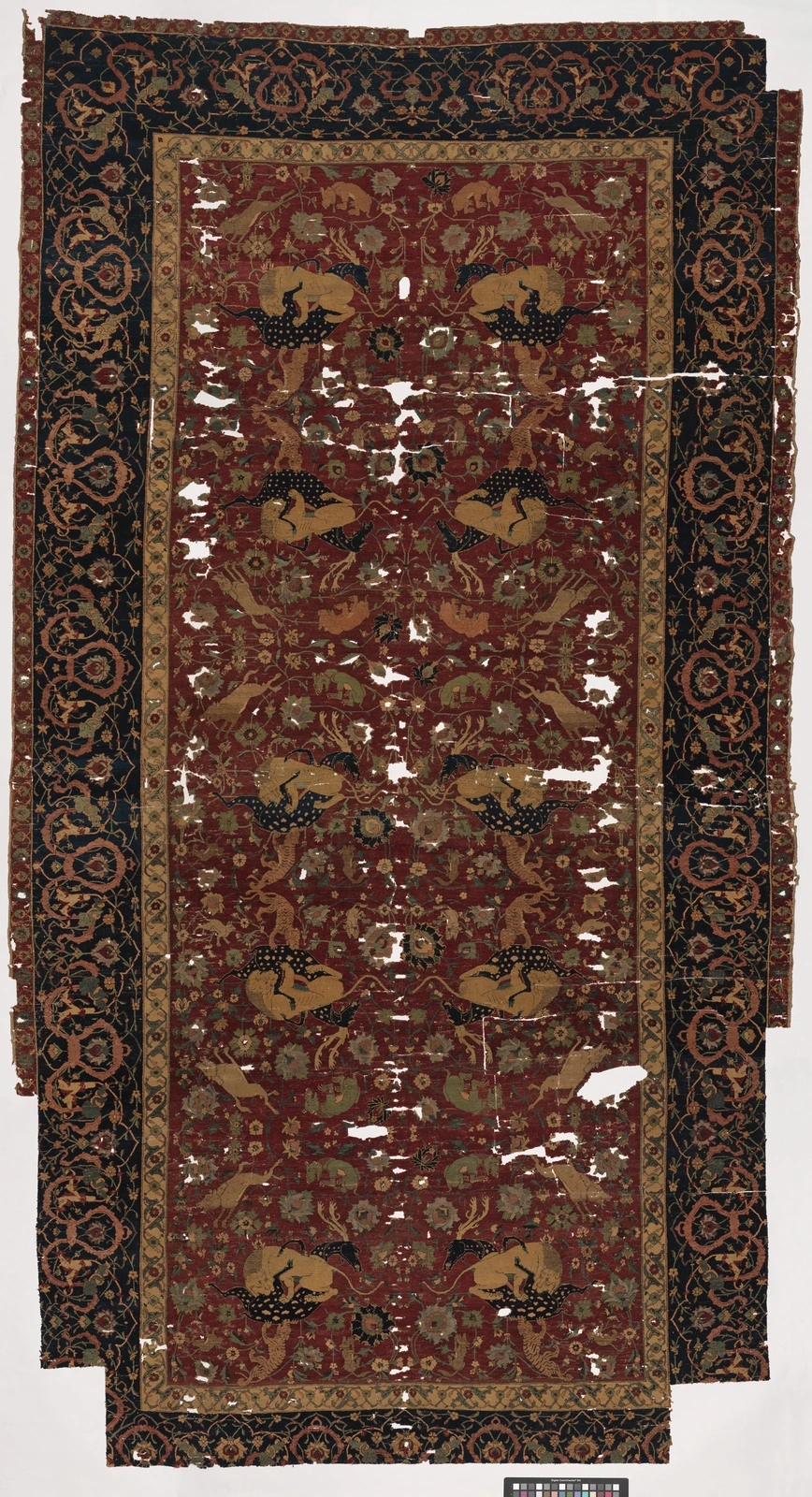
The Metropolitan Museum of Art’s record for Carpet, object 10.61.2, describes a sixteenth-century Iranian carpet with silk warp and weft, wool pile, and asymmetrically knotted construction.
Read those fields separately: the pile is wool, while silk forms the warp and weft of the foundation. Calling it simply a “silk carpet” would obscure the material at its surface. This historical record teaches you how to interpret a specification; it does not provide a traffic rating for a modern purchase or prove how another rug will wear.
What care commitment are you buying?
Choose a rug whose documented maintenance you can realistically follow. Neither “wool” nor “silk” authorizes a universal cleaning recipe.
For accidental liquid spills, the Canadian Conservation Institute’s carpet-care guidance recommends absorbing liquid gently rather than rubbing it into the rug. Before adding water or cleaner, consult the rug’s own instructions. A large spill, unknown dyes or a valuable piece warrants specialist advice.
For routine cleaning, verify the permitted vacuum head, brush action and suction. Do not assume that equipment suitable for another wool carpet suits a silk blend or delicate fringe. Our guide to wool-rug vacuum heads and controls explains what to check; our wool-rug cleaning guide by construction covers everyday care decisions.
Before a substantial purchase, ask a qualified rug cleaner whether they handle that fiber combination and construction. Get a quote that accounts for the size, condition and any collection or delivery charges. For historical textiles, seek conservation advice. Museum guidance protects collection objects; it should not be mistaken for a cleaning warranty or identical maintenance schedule for every household rug.
Before you buy: five final checks
- See the surface: Inspect a sample or the actual rug under your room’s lighting.
- Confirm the match: Have the seller identify the exact fibers, construction and intended use.
- Plan placement: Check walking routes, sunlight, doors, furniture and pad compatibility.
- Budget for ownership: Include approved cleaning and the pad, not just the purchase price.
- Read the terms: Confirm returns, sample differences and any restrictions on custom orders.
Frequently asked questions
Can a home test prove that a rug is genuine silk?
No simple touch or shine test should settle an expensive purchase. The Canadian Conservation Institute explains that a burn test can indicate a broad fiber group, while more definitive identification requires microscopy. Do not burn or remove a thread from a rug to authenticate it. Request documented composition; for a valuable or disputed piece, seek professional fiber identification.
Do silk rugs cost more than wool rugs?
Not necessarily—the fiber name alone does not establish which rug costs more. Compare two itemized quotes for rugs of the same size and construction, with the exact pile composition and condition documented. Check purchase totals, including shipping and any taxes, separately from care costs. Ask a qualified cleaner for an estimate for each rug’s approved cleaning method, including pickup or delivery. This gives you a useful comparison without assuming a universal silk price premium.
Our recommendation
For an everyday living room or suitable dry entryway, begin with wool rugs approved for that use. For a quiet bedroom or decorative space, consider genuine silk or a wool–silk blend when you prefer its appearance and accept its care requirements. Buy the documented rug that fits your room—not a promise attached to the fiber name.