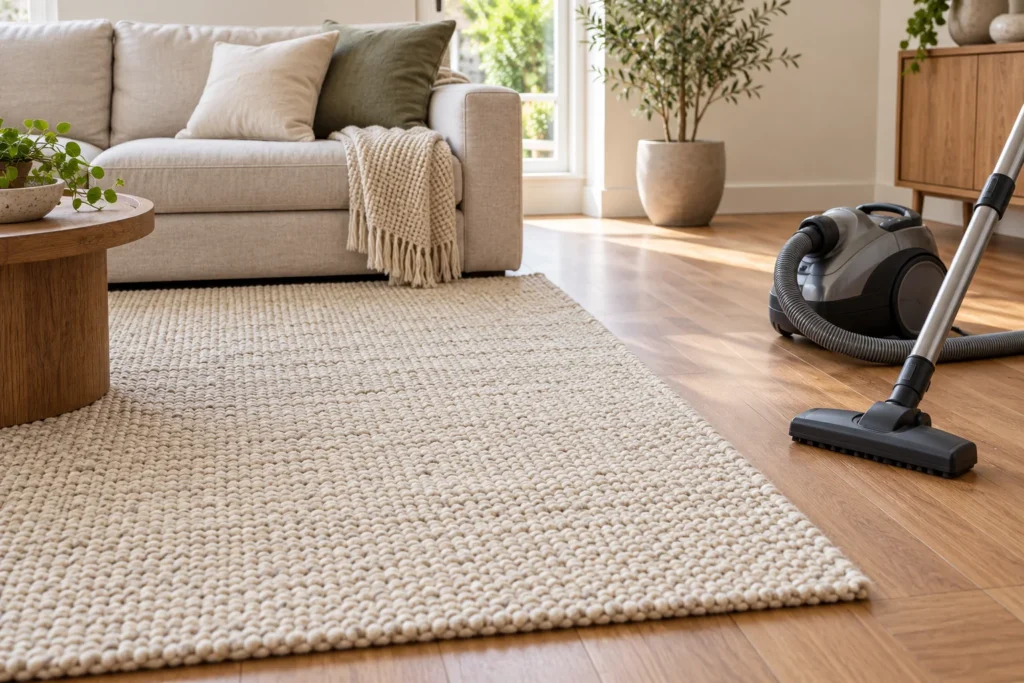
The best vacuum for wool rugs is the configuration that matches your rug’s care instructions: the right floorhead, controllable suction and, where relevant, a brush roll that can be switched off. A powerful motor or a premium brand name does not establish that match.
For a rug whose maker requires suction-only cleaning, start by comparing a non-rotating combination head with adjustable suction. A household that also needs a powered brush for other carpeting may prefer a machine with separate brush control, provided its wool-rug setup is approved by the rug maker.
This guide compares four exact US configurations. We have not physically tested these vacuums. Recommendations are based on manufacturer documentation, operating manuals and published rug-care instructions, not cleaning-performance rankings.
Best vacuum for wool rugs: configurations to compare
All four options below are bagged canisters. They offer documented ways to change suction or floorhead operation; their inclusion does not mean canisters universally outperform uprights or sticks on wool.
| Exact US configuration | Supplied floorhead and brush type | Documented controls | Main buying consideration |
|---|---|---|---|
| Miele Classic C1 Pure Suction PowerLine SBAN0, Graphite grey, 11181020 | SBD 365-3 combination head; no rotating brush | Six-stage suction dial; retractable bristles; no separate pile-height setting documented | A non-rotating combination-head configuration to investigate when the rug maker permits this head type; confirm the actual SBD 365-3 in the box |
| Miele Guard M1, Terra red, SVWE0, 12704600 | SBD 365-3 combination head; no rotating brush | MODE-button suction selection; retractable bristles; no separate pile-height setting documented | Same supplied SBD 365-3 as the C1; compare suction-control interfaces, not a different or gentler wool-rug head |
| SEBO AIRBELT K2 Kombi, Dark Blue, 9679AM | Kombi combination nozzle; no rotating brush; not the K2 Turbo | Canister suction knob; retractable bristles; no separate pile-height setting documented | An unpowered combination-nozzle configuration to investigate when the rug instructions permit this head type; no electric-powerhead upgrade |
| SEBO AIRBELT K3 Premium, Red, 90687AM | ET-1 electric powerhead plus parquet brush | Handle suction slider and brush shutoff; four ET-1 height settings | Mixed-flooring configuration; verify the brush-off setup against rug instructions. Included parquet brush is for hard floors |
The table describes equipment, not rug-safety ratings. Retracting a combination head’s stationary bristles is different from switching off a rotating brush. An adjustable wand changes reach, not clearance over the rug.
How these configurations were selected
Selection required identifiable US models, manufacturer-described floorheads and controls, an accessible operating manual, and a current US purchase route. Rug-maker instructions were reviewed separately because a vacuum specification cannot tell us how every weave, loop or backing will respond.
Retailer listings can mix older head names, regional packages and current stock. Use the model number and supplied-head description together when ordering. Prices and inventory change, so the buying recommendations below do not depend on a temporary discount.
Miele Classic C1 Pure Suction: for a non-rotating combination head
Miele’s US specification for model 11181020 lists the SBD 365-3 floorhead and a six-stage suction selector. This is the Graphite grey SBAN0 configuration, not a Classic C1 Turbo Team or an unspecified C1 bundle.
The supplied head has stationary, retractable bristles. The operating manual instructs users to retract them for carpets and rugs, extend them for hard floors, and reduce suction if the head becomes difficult to move. It also describes a handle air inlet for temporarily releasing suction.
Who it may suit: someone whose rug instructions permit this kind of unpowered head and who wants a physical suction dial. There is no rotating brush to disable in the supplied floorhead.
What to verify: some retailer descriptions still name an SBD 285-3. Ask which head the actual box contains rather than assuming an older listing matches Miele’s current page. A turbo or electric accessory is not established as compatible simply because it carries the Miele name.
Miele Guard M1: for MODE-button suction selection
The Guard M1 Terra red, model 12704600, also supplies the SBD 365-3. Its distinguishing feature here is the control interface, not a different wool-rug floorhead.
Miele describes four suction presets selected through the MODE button; the current operating manual also explains intermediate power settings. The telescopic wand adjusts working length. Neither that wand nor the head’s bristle rocker supplies an independent pile-height adjustment.
Who it may suit: a buyer comparing non-rotating setups who prefers this suction-control arrangement. The specifications do not establish better wool-rug cleaning than the C1 configuration.
What to verify: order the base Terra red SVWE0 package, not a Guard M1 Cat & Dog or another bundle. Miele identifies this base model as an authorized-retailer product. Confirm the dealer’s supplied head and purchase arrangements. Its CO-family bags also differ from the C1’s GN bags, which matters when buying replacements.
SEBO AIRBELT K2 Kombi: distinguish it from K2 Turbo
SEBO’s AIRBELT K range documentation distinguishes the K2 Kombi 9679AM from the K2 Turbo 9678AM. The Kombi package supplies a non-rotating combination nozzle; the Turbo package supplies an air-driven rotating head and a parquet brush.
This matters because both machines can be described as straight-suction canisters. That description refers to the machine configuration and does not make an attached turbo brush non-rotating.
Who it may suit: someone considering an unpowered rug-and-floor head with suction adjusted at the canister. The Kombi’s bristles retract for carpeting and extend for hard floors; this is not a multi-position pile-height system.
What to verify: the current AIRBELT K manual identifies the US AM-model Kombi nozzle as part 8351GS. Regional packages differ. K2 machines have non-electric hoses and wands and cannot accept an electric powerhead, so do not buy one expecting that upgrade later.
SEBO AIRBELT K3 Premium: separate suction and brush controls
The Red 90687AM configuration supplies an ET-1 electric powerhead and a parquet brush. Its handle has separate suction and brush-roll controls. This is useful equipment differentiation for a home containing both a wool rug and other carpeting, rather than evidence that a powered head is preferable for wool.
The ET-1 manual documents four height settings. Height adjustment and brush shutoff perform different jobs: raising the head does not necessarily satisfy a rug instruction prohibiting rotating brushes. SEBO cautions that rotating brushes may damage some delicate or hand-woven carpets and that the powerhead should not run over rug edges or fringe; follow the flooring or rug manufacturer’s guidance.
Who it may suit: a buyer who needs powered brushing on compatible carpeting elsewhere and can establish a suitable separate operating setup for the wool rug.
What to verify: brush-off operation still needs to meet the rug maker’s requirements. If a different unpowered head is necessary, confirm its exact compatibility and additional cost before purchase. The included parquet brush is intended for hard floors, not automatically for rugs. Check that the seller supplies current 90687AM controls rather than treating every older K3 listing as identical.
What “suction only” means at the floorhead
For this buying decision, the important question is whether a brush rotates against the rug. The machine’s category name alone does not answer it.
These attachment types should not be treated as interchangeable:
- Straight-suction head: uses airflow without a powered rotating brush. Its underside and stationary bristles still need to suit the rug.
- Combination head: switches between floor settings, commonly by extending or retracting stationary bristles. Both Miele configurations and the K2 Kombi above use this arrangement.
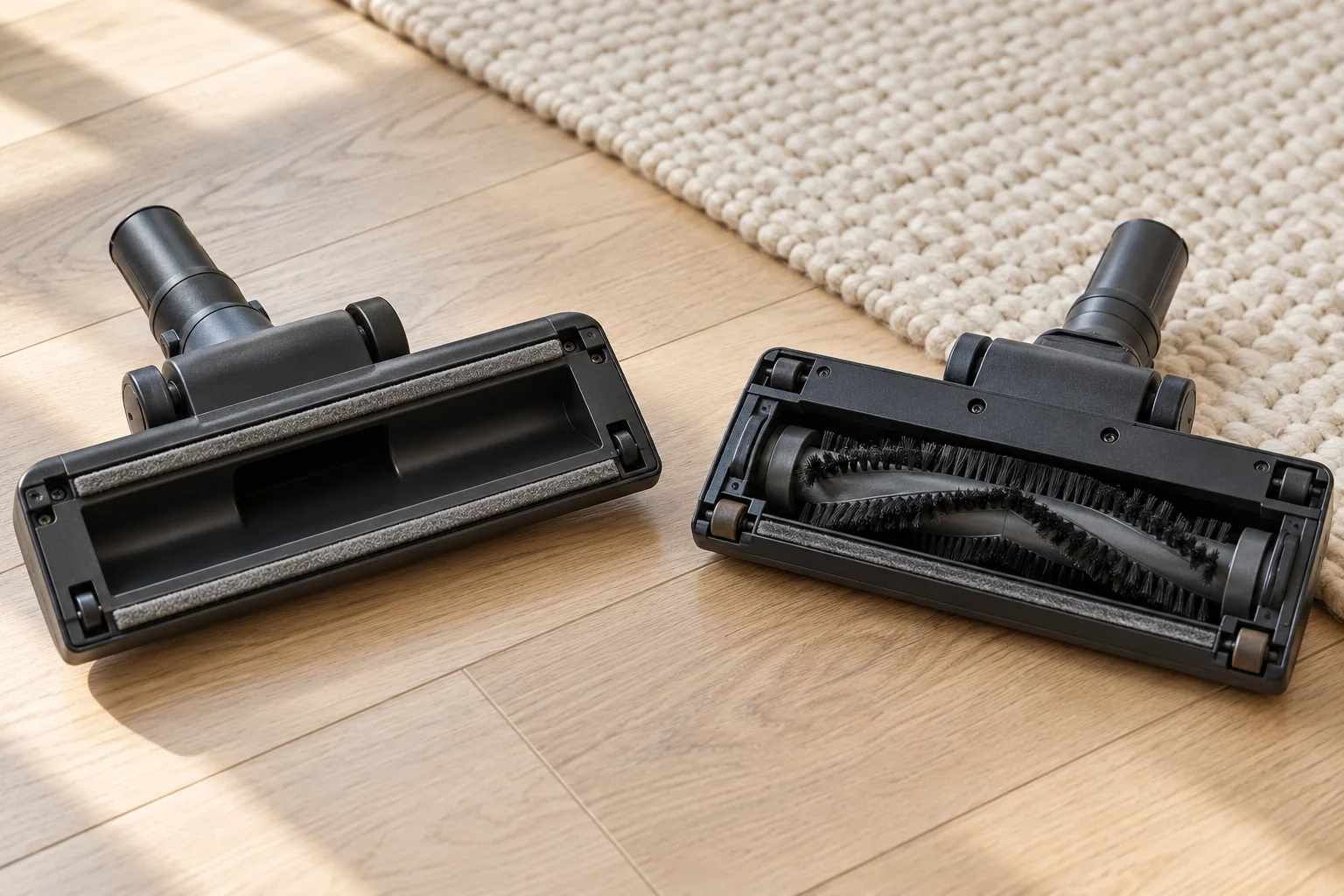
- Turbo head: airflow drives a rotating brush. It still agitates the surface even though it has no electric brush motor.
- Electric powerhead: a separate motor drives the brush. Look for an explicitly documented shutoff; adjustable suction alone does not establish one.
- Parquet or hard-floor brush: designed around hard surfaces. Soft bristles do not establish suitability for every wool weave.
- Upholstery tool: intended for furniture and smaller surfaces. Do not assume it replaces a full-size rug head without appropriate instructions.
Miele’s floorhead guide helps distinguish hard-floor, universal, turbo and electric tools. Treat such categories as a starting point, then check the exact attachment and rug documentation.
Match the controls to the rug’s requirements
Translate the care instructions into features you can verify before buying. “Adjustable” is too vague unless the listing identifies what changes.
Suction adjustment changes the machine’s suction setting. An airflow vent provides another way to relieve suction where the handle includes one. Neither is a substitute for a documented brush shutoff.
Brush-roll shutoff stops rotation. Confirm how it operates on the exact machine, including after changing modes or restarting. Pile-height adjustment changes the powerhead’s setting relative to the carpet; a telescopic wand merely changes working length.
Floorhead switching can be the most important choice. Check the attachment connection and any electrical requirements, not just the brand. Buying a compatible machine with the wrong supplied head can leave you paying for another tool immediately.
Ask a seller to demonstrate these controls and identify the supplied head. A showroom demonstration can confirm how a switch works; it cannot certify that your own rug will tolerate that configuration.
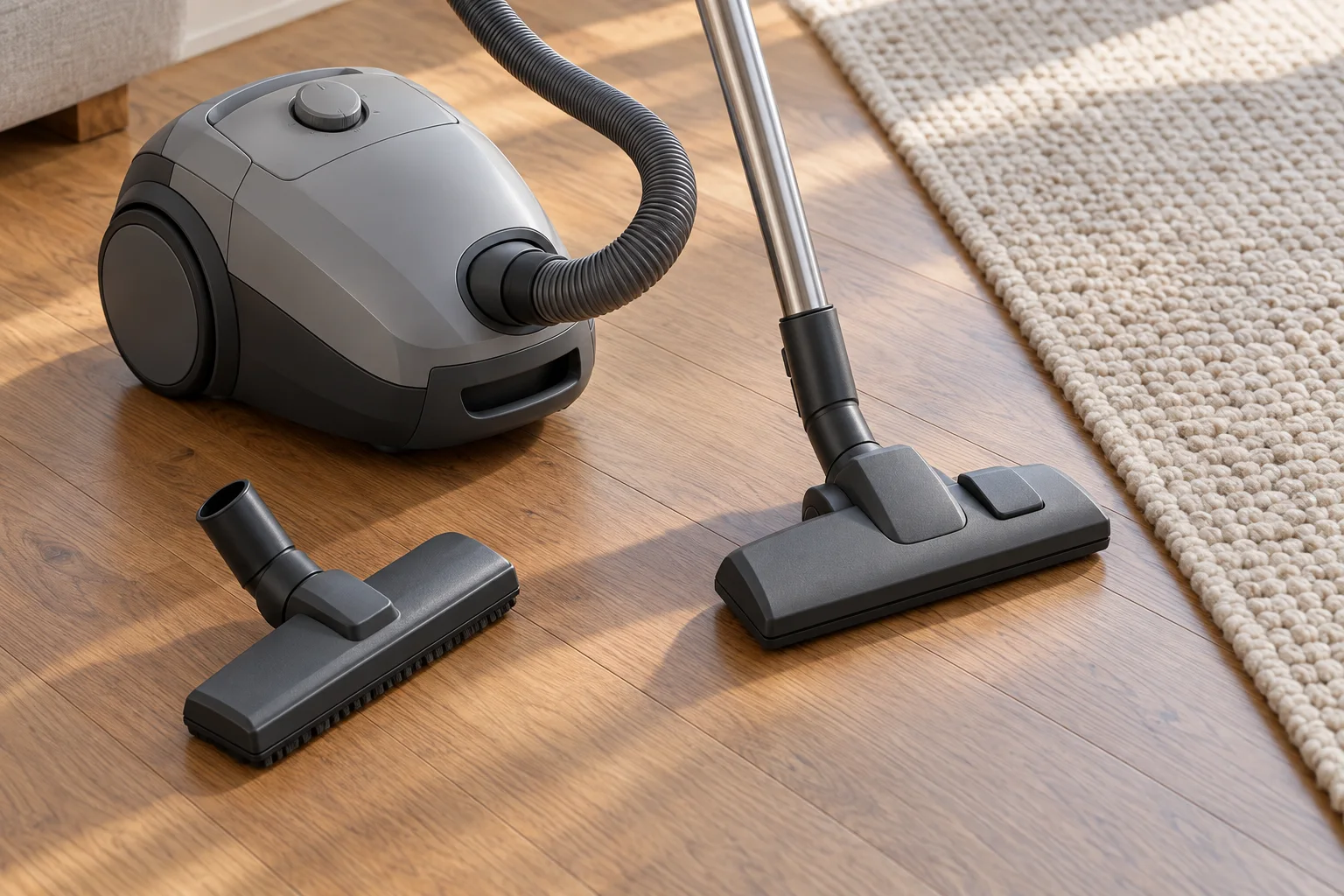
Rug construction changes the buying decision
Wool content alone does not determine the permitted head. Use the product label or the rug maker’s written instructions, particularly for mixed fibers, loose loops, fringe and unusual pile.
Tufted and hooked rugs
Loloi’s Highgrove HIG-03 is a hand-tufted wool example. Its description calls for vacuuming without a beater bar, while the care block gives wording about no beater bar or a highest-pile setting and low variable power. Those statements are not identical. Seek clarification rather than interpreting the second as blanket permission for rotating brushes.
Loloi’s hooked Victoria VK-06 also supplies product-specific vacuum guidance. For loop construction more broadly, WoolSafe advises suction-only vacuuming as a general rule. The useful shopping question is whether the supplied head and controls can follow your particular rug’s instructions.
Flatweave and kilim-style rugs
Double Studio’s wool-flatweave guidance specifies a soft brush attachment, movement with the weave, and avoiding rotating brushes and stiff bristles. That is the brand’s instruction for its collection, not an endorsement of every parquet brush or a universal rule for all kilims.
A thin rug lifting under the head is a reason to reassess the permitted setup. Do not choose maximum suction simply because the machine offers it.
Hand-knotted and higher-pile rugs
Armadillo’s Savannah combines hand-knotted construction with a wool-and-cotton composition and high-low pile. Its care guidance advises avoiding rotating or beater-bar heads where possible and flags tassel and long-pile entanglement with robot vacuums.
For a valuable hand-knotted rug or unusually long pile, get a specific head recommendation from the rug maker before choosing a machine. Adjustable height is a feature to investigate, not automatic approval. Our wool rugs buying guide explains the separate decision of choosing the rug itself.
Check the complete purchase, not just the vacuum name
Before ordering, obtain the exact model, included floorhead and any required accessory in writing. Compare the full setup cost, then check replacement bags, filters and local service options. Filtration specifications do not demonstrate gentler contact with wool.
US listings for these configurations were available during research, but stock and package contents can change. Check whether the advertised unit is new, whether the seller is manufacturer-authorized, and whether the applicable warranty requires an authorized purchase. Do not assume an advertised dealer extension is the standard manufacturer warranty.
Returns deserve particular attention. SEBO’s direct-website policy requires requesting authorization within 30 days of purchase and returning the complete package within 14 days afterward; conditions apply. That policy does not automatically apply to a dealer purchase. For example, Ace Vacuums’ K3 listing describes returns for eligible unused items. Clarify used-return eligibility before treating a purchase as a home trial.
Keep care and damage questions separate
A compatible vacuum setup is for routine dry cleaning, not repairing pulled loops, loose yarn or failing construction. Stop if the rug snags, lifts persistently or shows damage, and consult its maker before continuing.
More aggressive brushing is not a buying solution to unexplained fiber loss. Use our wool rug shedding guide for the distinction between loose surface fibers and issues needing closer attention.
Frequently asked questions
What is the best vacuum for wool area rugs?
Start with the rug’s required head and settings. The C1 Pure Suction, base Guard M1 and K2 Kombi are documented non-rotating configurations to compare. The K3 Premium adds brush shutoff and powerhead height adjustment for mixed-floor needs. None is approved for every wool rug.
Does a wool rug always need a suction-only vacuum?
Not as a universal rule. Construction and manufacturer instructions decide. When a rug requires suction only, check the actual head: an air-driven turbo brush can rotate even when the canister itself is marketed as straight suction.
Is switching off the brush roll enough?
It addresses rotation, but not every compatibility question. The remaining underside, contact pressure and suction setting still need to fit the rug’s instructions. If the rug maker requires a different attachment, brush-off operation does not replace that requirement.
Can I use a parquet brush on a wool rug?
Do not assume so. Parquet brushes are designed for hard floors. A rug instruction allowing a soft attachment does not identify every hard-floor brush as suitable; confirm the specific tool, bristle arrangement and rug guidance.
Should I buy a vacuum with adjustable height?
It may be useful when a permitted powerhead must accommodate different carpeting. It is not the same as suction control, and it does not cancel a no-rotating-brush restriction. A non-rotating combination head may instead use retractable bristles without separate pile-height settings.
Are cordless or robot vacuums automatically unsuitable?
No blanket judgment follows from the format alone. Check the exact head, whether rotation can stop, available suction control and the rug maker’s restrictions. Robot-specific concerns can include fringe and long pile. This shortlist does not establish compatibility for unresearched cordless or robot models.
Make the floorhead decision first
The best vacuum for wool rugs is a matched setup, not a universal brand winner. Identify the rug’s requirements, choose the exact supplied or compatible head, then compare controls, full purchase cost and return terms. More features are useful only when they address your flooring needs.