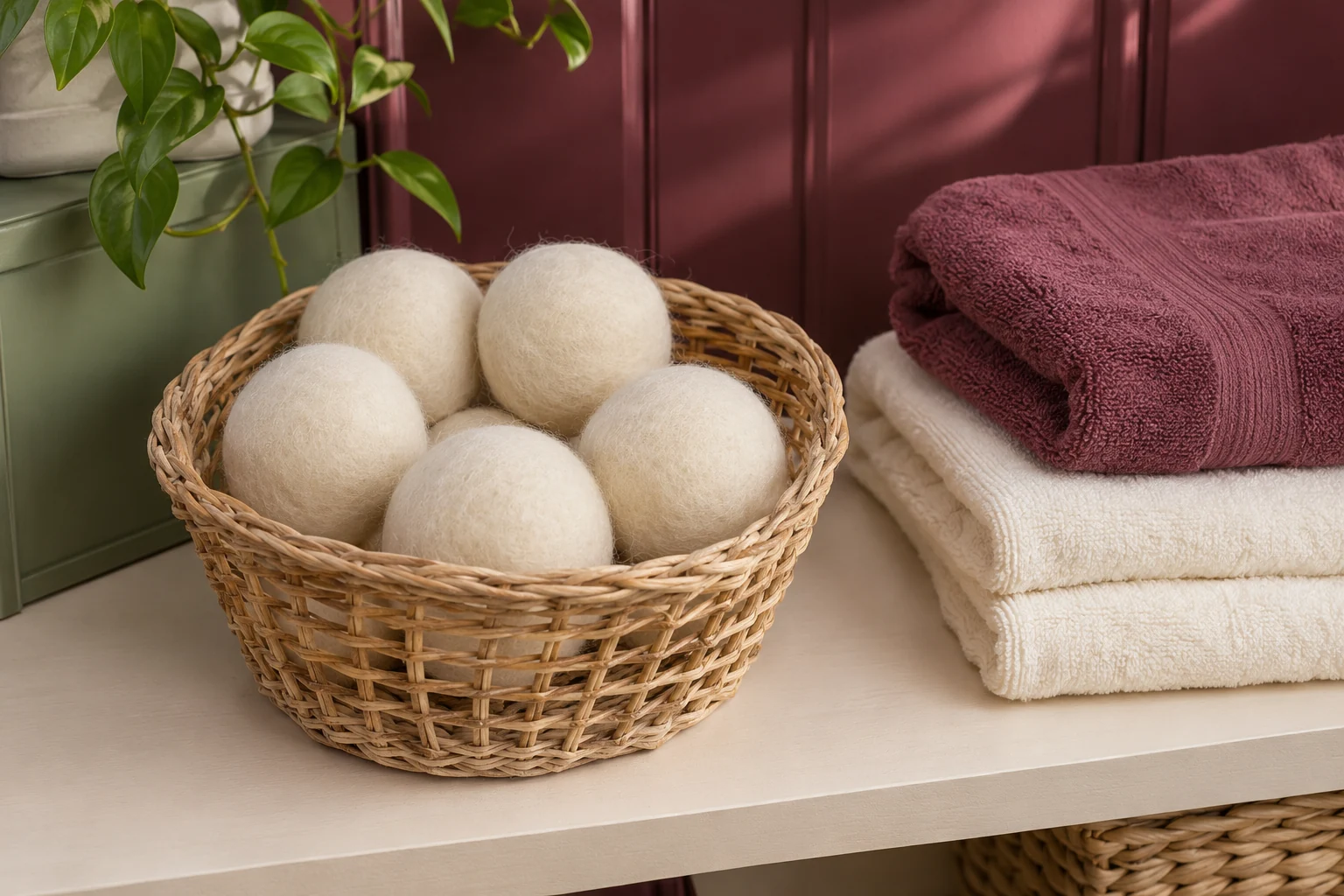
How Long Do Wool Dryer Balls Last? Lifespan & Replacement Signs
By Editorial Team
Wool dryer balls can last for years, but there is no independently verified lifespan that applies to every set. Published manufacturer estimates range from roughly 1,000 loads to more than 2,000, while some brands give calendar-based replacement advice. Treat those figures as product-specific guidance, then check the condition of the balls you actually own.
If you are asking “how long do wool dryer balls last?”, the most useful answer is practical: keep an intact set in service according to its instructions, investigate persistent shedding, and replace balls that are separating or coming apart. Light surface fuzz alone does not establish that a ball has reached the end of its useful life.
This guide compares manufacturer documentation, textile-care information and published independent testing. We have not performed our own durability tests. The replacement checklist is an editorial decision aid, not a validated lifespan test.
How Long Do Wool Dryer Balls Typically Last?
There is no standard expiration date for the whole category. The brands reviewed describe repeated use over many cycles, but their numbers and wording differ:
- Woolzies’ FAQ estimates approximately 1,000 loads.
- Smart Sheep’s FAQ expects more than 1,000 loads and describes two to five years of use, depending on laundry frequency.
- Friendsheep’s FAQ advertises more than 2,000 loads. Its replacement guidance also emphasizes the condition of the felt.
- Molly’s Suds’ product page advises replacement after three years.
These statements, checked November 14, 2026, are manufacturer claims or recommendations. They do not establish a universal minimum, average or warranty. More ambitious wording is not proof that one brand outlasts another under equivalent conditions.
There are inconsistencies even within a brand’s information. Smart Sheep’s FAQ says more than 1,000 loads, while its separate lifespan article describes a ceiling of 1,000 cycles. Those are different promises. If the distinction matters to a purchase or warranty question, request clarification for the exact product rather than choosing the larger number.
Loads and years measure different things
For illustration, 1,000 loads divided by five loads per week is 200 weeks, or about 3.8 years. At ten loads per week, the same count represents about 1.9 years. This is arithmetic, not a prediction that a particular set will survive that long.
Count dryer loads in which the balls are used, not washing-machine loads that you line-dry. A six-ball set used together in one cycle has served one household load; multiplying that cycle by six would exaggerate the set’s use.
What independent evidence establishes
In the sources reviewed, we did not find a standardized, independent endurance test establishing a replacement count across wool dryer ball brands. Available performance studies answer different questions.
For example, CHOICE’s dryer-ball investigation compared four products, including one wool set, in two dryers with standardized cotton loads. It found little performance benefit in those conditions. That does not tell us how many years the wool set would remain structurally sound.
What Affects the Lifespan of Wool Dryer Balls?
Think about both the product and its treatment. We do not have reliable coefficients showing that a certain density, dryer temperature or load weight adds or subtracts a fixed number of uses.
Wool composition and construction: Check whether the maker identifies the entire ball as wool, rather than only describing its outer surface. Felt density, cohesion and manufacturing consistency are plausible durability factors, but a firm feel or a premium material claim alone cannot prove a longer service life.
Frequency and workload: More cycles accumulate use faster. Load size and fabric mix also change the conditions inside the drum. We cannot translate a load of towels versus lightweight shirts into an evidence-based wear multiplier.
Dryer conditions: Follow both the accessory instructions and the appliance manual. Do not raise the temperature or extend an already-finished cycle to “activate” the balls. There is no universal heat-treatment schedule established by the durability evidence reviewed here.
Handling and maintenance: A lost, contaminated or physically damaged ball may leave service before any advertised cycle count. Keeping the original care instructions and checking each ball when unloading are more useful than relying on its purchase anniversary alone.
If you are selecting a new set, our wool dryer ball buying guide compares documented product details. A higher price should not be treated as a verified longevity ranking.
Signs It’s Time to Replace Wool Dryer Balls
Look for structural deterioration
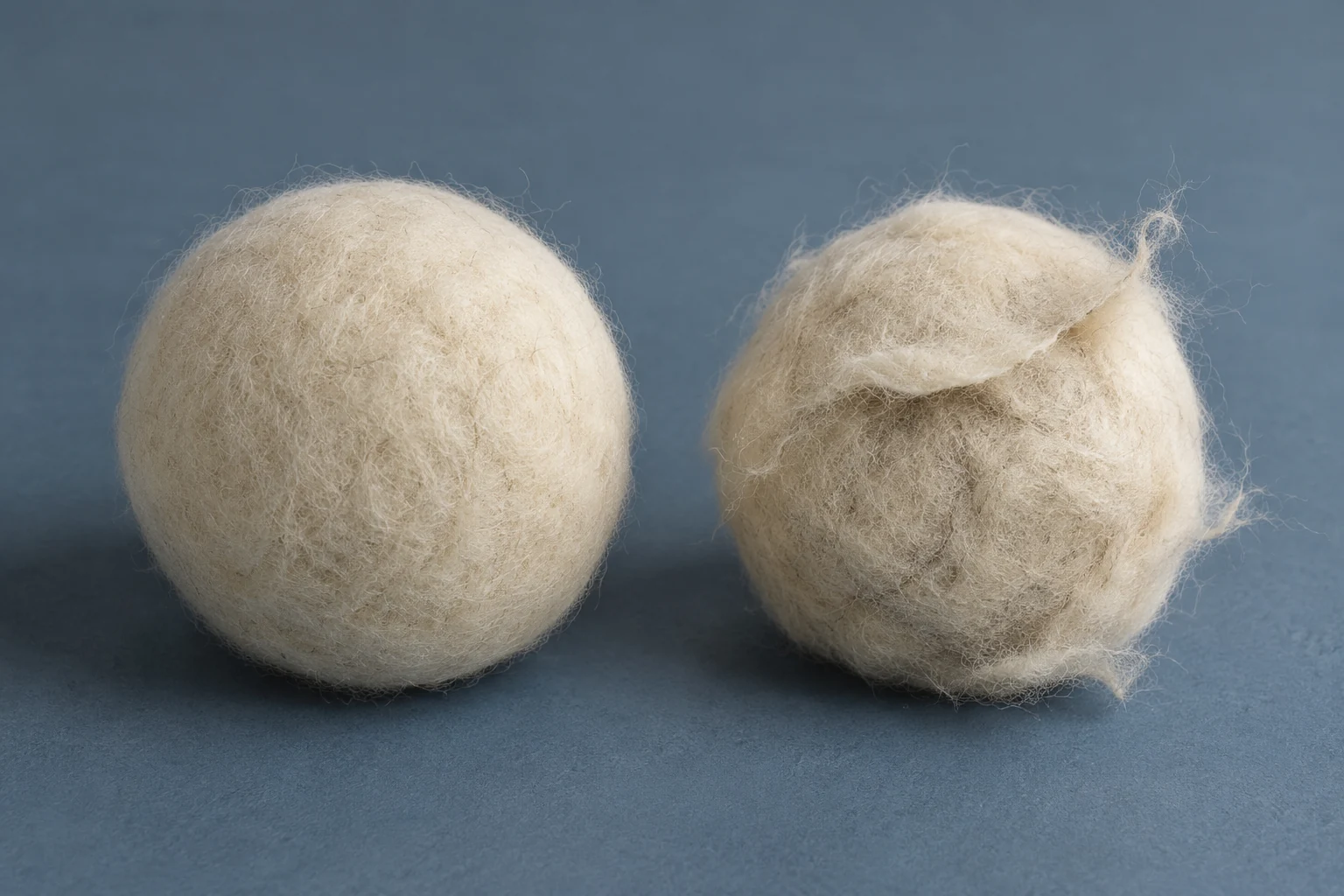
Friendsheep identifies progressively loosening felt, increased softness and eventual unraveling as replacement signs for its balls. The important distinction is between a stable sphere with surface fibers and a ball whose body is separating.
Examine the whole ball in good light once it is cool enough to handle. Look for lifting layers, a split that is opening, detached clumps or a shape that no longer holds together. Do not pull at a questionable area to see how much wool you can remove; that changes the condition you are trying to assess.
Our recommendation is to take a visibly disintegrating ball out of service. Photograph it and contact the manufacturer if the failure seems premature. Include the approximate purchase date, ordinary use and any cleaning treatment. No precise minimum age is needed before reporting a defect.
Separate light fuzz from persistent shedding
Woolmark explains pilling as small surface bobbles produced through rubbing on wool clothing. That is useful textile context, not a dryer-ball retirement standard. A few surface pills or a fine fuzzy outline do not, by themselves, demonstrate loss of the felted body.
Persistent loose wool on laundry deserves closer inspection. First distinguish fibers coming off the ball from lint collected from a towel or sweater. If repeated shedding accompanies loose layers or clumps, stop using that ball and seek product-specific advice or replace it.
Do not aggressively shave, cut or peel the surface simply to make an intact ball look new. A neat appearance is not a measure of performance, and cosmetic intervention should follow the maker’s instructions.
Do Wool Dryer Balls Stop Working Over Time?
They are intended to move among the laundry and help separate fabrics. The sources reviewed do not establish a predictable performance curve in which every set loses a fixed percentage of effectiveness each year.
A longer drying cycle or a clingy load is therefore insufficient evidence that the balls are worn out. Before replacing an intact set, consider whether you changed the fabric mix, load size, washer spin setting, drying program or target dryness.
ENERGY STAR’s dryer guidance emphasizes room for laundry to tumble, automatic termination and cleaning the lint filter after each load. Follow your machine’s maintenance instructions, including any additional filters on a ventless model. Dryer balls cannot compensate for a maintenance problem.
If you want to investigate a change, note results across comparable ordinary loads rather than judging one cycle. Record the laundry type, ball count, setting and whether the clothes finish equally dry. This can inform your own routine; it does not validate a brand’s lifespan claim.
For quantities and everyday operation, see how to use wool dryer balls. Replacing a set does not guarantee better drying, softness or static control.
How to Care for Wool Dryer Balls Between Loads
Use a routine that makes deterioration easier to notice. Retrieve all the balls when unloading, inspect their surfaces and put questionable ones aside. Check sleeves, pillowcases and bundled bedding before assuming a missing ball needs replacing.
Let damp balls dry completely before storage. Smart Sheep’s lifespan guidance recommends dry storage; Friendsheep specifies ventilation and advises against plastic storage. An open basket is a convenient option when the balls are dry and the storage area is suitable.
Keep the set together with a note of the product name and care directions. That makes it easier to identify an unusually worn ball and avoids applying instructions from an unrelated brand. A quick photograph when the set is new can also give you a visual reference later, without requiring obsessive cycle counting.
Inspect a dropped or accidentally soiled ball before returning it to clean laundry. Use the approved cleaning method when needed. We do not recommend adding fragrance or essential oils as a maintenance treatment; scent is not evidence that a ball has been restored.
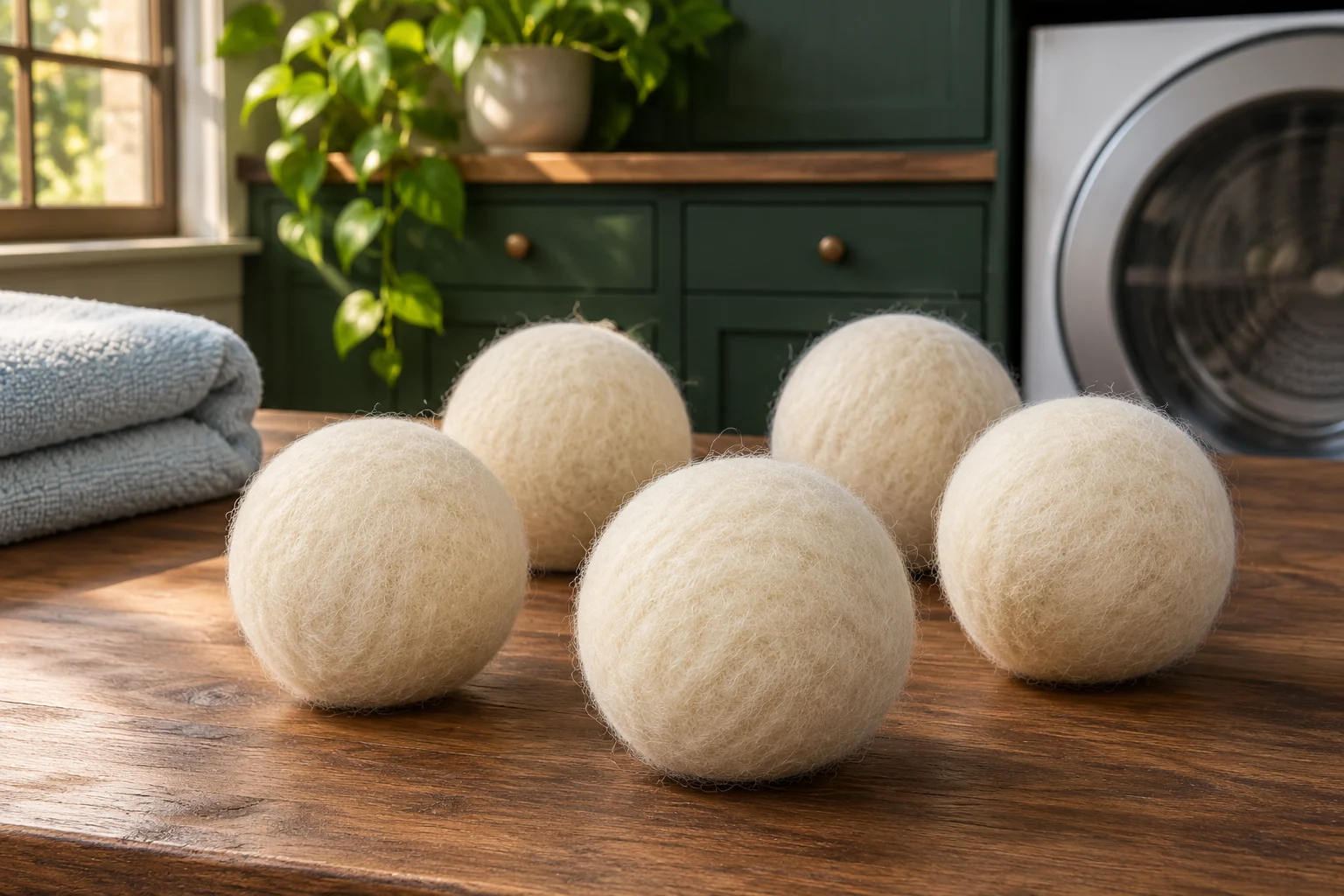
Can You Wash or Refresh Old Wool Dryer Balls?
Often yes, but cleaning instructions vary substantially. Follow the directions for your exact set and clarify conflicting advice before choosing a treatment.
- Smart Sheep: Its care discussion describes mild soap, warm water and air drying for a dirty ball.
- Molly’s Suds: The product page specifies a mesh bag or pillowcase, a warm delicate wash and complete drying in a sunny window.
- Woolzies: Its FAQ gives a machine-wash method using a sock or stocking, followed by high dryer heat. This is that brand’s instruction, not a treatment to transfer to other balls.
- Friendsheep: Its FAQ generally favors lukewarm hand washing and warns about prolonged hot washing, yet separately suggests hot-water “recharging.” Ask which advice applies to the condition of your set.
If the maker permits washing with a wool-suitable cleaner, our guide to choosing wool detergent explains relevant product-label distinctions. Permission to use a detergent does not establish permission for a particular machine cycle.
Cleaning is not a proven reset
Cleaning addresses dirt or buildup. Drying removes retained moisture. Re-felting attempts to change the structure. Sellers may use “refreshing” or “recharging” for different procedures, so the word itself does not identify one standardized process.
We found no independent durability evidence showing that a routine recharge restores a specified number of future loads. A freshly washed ball should still be inspected for damage. Do not assume that a looser ball has become sound merely because it smells cleaner.
Avoid improvised boiling, repeated high-heat cycles, gluing or wrapping loose layers back onto a damaged sphere. If there is no clear repair instruction for that product, replacing a deteriorating ball is more straightforward than inventing a restoration method.
Replace or Keep Using Them? A Simple Checklist
Use this check at unloading time. Where the condition is unclear, pause use and ask the manufacturer rather than testing a questionable ball on another load.
| What you notice | Practical next step |
|---|---|
| Light fuzz or a few pills; body remains intact | Continue according to product instructions and monitor. Appearance alone is not a retirement date. |
| Surface dirt or collected lint; structure unchanged | Use the approved cleaning method, dry fully and inspect again. |
| Persistent shedding, with no obvious cause | Set the ball aside and ask the maker. Check whether the fibers originate from the ball. |
| Separating layers, loose clumps or substantial unraveling | Remove from service; replace or pursue a defect claim. |
| Slower drying, but no visible deterioration | Check load, settings and appliance maintenance before buying replacements. |
| A manufacturer’s replacement interval has arrived | Follow the advice for that product or ask for clarification; do not apply another brand’s interval. |
Is Replacing Wool Dryer Balls Worth the Cost?
Calculate value from what you actually paid and the loads actually served:
Accessory cost per load = total spending on the set and replacements ÷ completed loads using them.
Use your receipt, including any relevant shipping and tax. If you replace one ball, add that cost rather than pretending the original set lasted unchanged. If you rotate multiple sets, decide consistently whether you are tracking each set or your total household accessory spending.
For a prospective purchase, the denominator is uncertain. A calculation using a seller’s advertised lifespan is a scenario, not your realized cost. There is no need to invent a current retail price or assume that every ball reaches 1,000 uses to evaluate the set already in your home.
Cost also depends on what, if anything, the balls replace. Our comparison of wool dryer balls and dryer sheets explains the different functions. If you continue buying sheets, their cost has not disappeared. Keep any potential energy savings separate unless you have relevant measurements.
Frequently Asked Questions
Do unused wool dryer balls expire?
The reviewed sources do not establish a common shelf-life date for unused balls. Before using a stored set, check its condition and original instructions. Being unused does not resolve damage or contamination acquired in storage.
Should I replace the entire set if one ball is damaged?
Inspect the others individually. One damaged ball does not prove they are all worn out. If the maker offers individual replacements, check that the resulting set still meets its size and quantity guidance.
Can I mix old and new dryer balls?
Age alone does not establish incompatibility, but inspect the older balls first. With different brands, check both sets’ directions, especially size, count and permitted care. We found no independent test establishing an ideal mixed-brand combination.
Will washing repair an unraveling ball?
Do not count on it. A cleaning instruction is not necessarily a repair instruction. Ask the manufacturer about structural damage before trying to restore the ball, and do not resume use solely because it has been washed.
Final Verdict
Use the manufacturer’s guidance as your starting point and the ball’s condition as your ongoing check. Keep sound balls in service, address unexplained shedding, and retire those that are coming apart. A published load count helps frame expectations; it does not replace inspection or guarantee a better result from a new set.