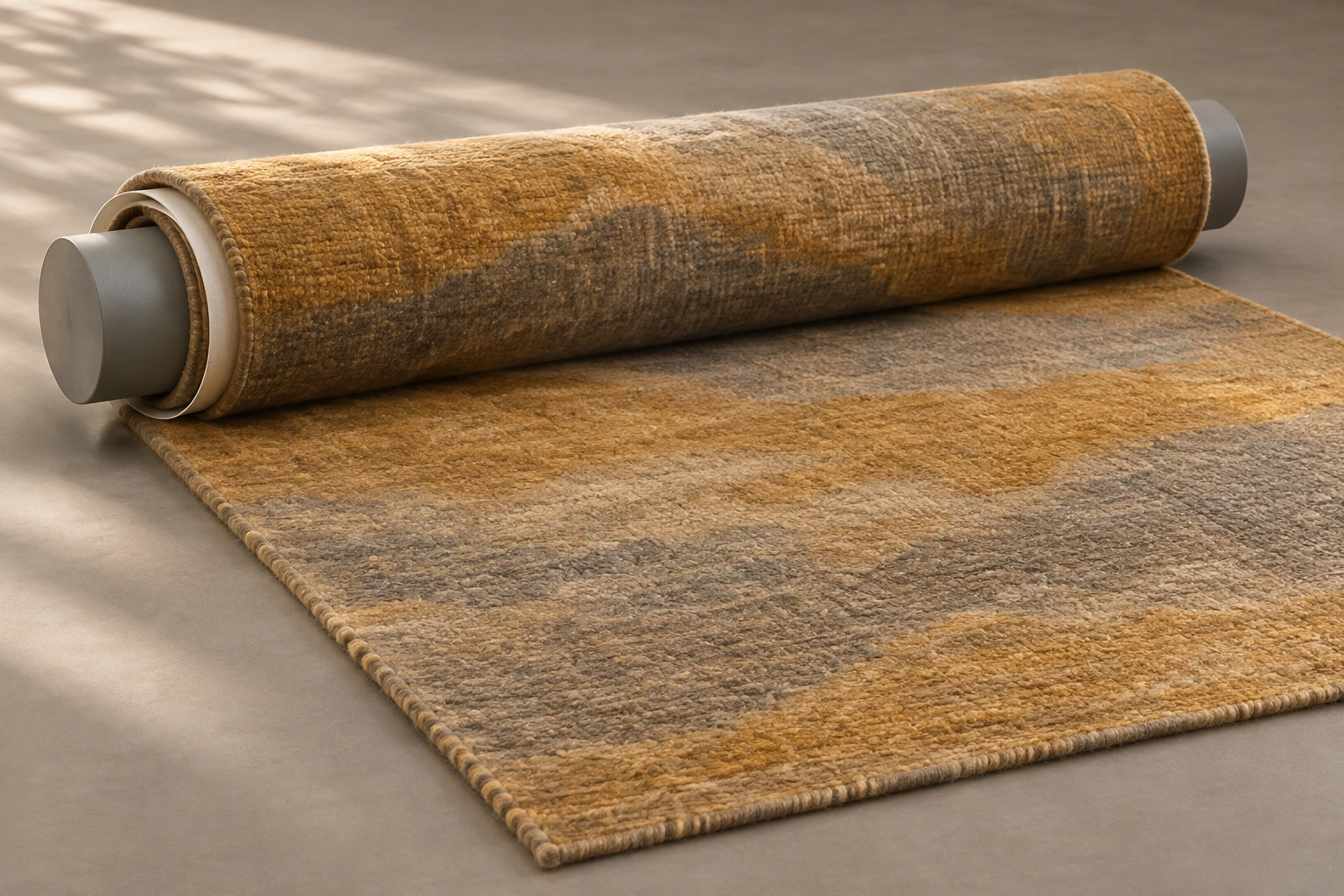
If you’re wondering how to store a wool rug, start by inspecting it, cleaning it as its care instructions allow, and making sure it is completely dry before packing. If its construction and condition permit rolling, use a suitable support tube and protective cover, then store it off the floor in a dry indoor location with stable conditions. Rolling direction, wrapping materials and handling should suit the entire rug, including its foundation or backing—not just its wool surface.
Your wool rug storage checklist
- Read the care label and inspect both sides for damage, moisture and pests.
- Remove soil using an approved method; resolve stains or contamination before packing.
- Allow the entire rug to dry, including its reverse and any backing.
- Choose a supported roll or a specialist-recommended alternative; protect it from dust and pressure.
- Store it somewhere accessible, record its condition and plan checks during storage.
The Canadian Conservation Institute’s basic care guidance for carpets and rugs emphasizes clean, dry preparation, avoiding damaging folds and supporting stored rugs above the floor.
Research disclosure: This guide draws on textile-conservation guidance, manufacturer instructions and rug-care specialists. It is research-based, not a report of hands-on storage tests. Museum recommendations inform the precautions below; your rug’s documented care requirements and condition determine how to apply them.
Check the rug’s construction and condition first
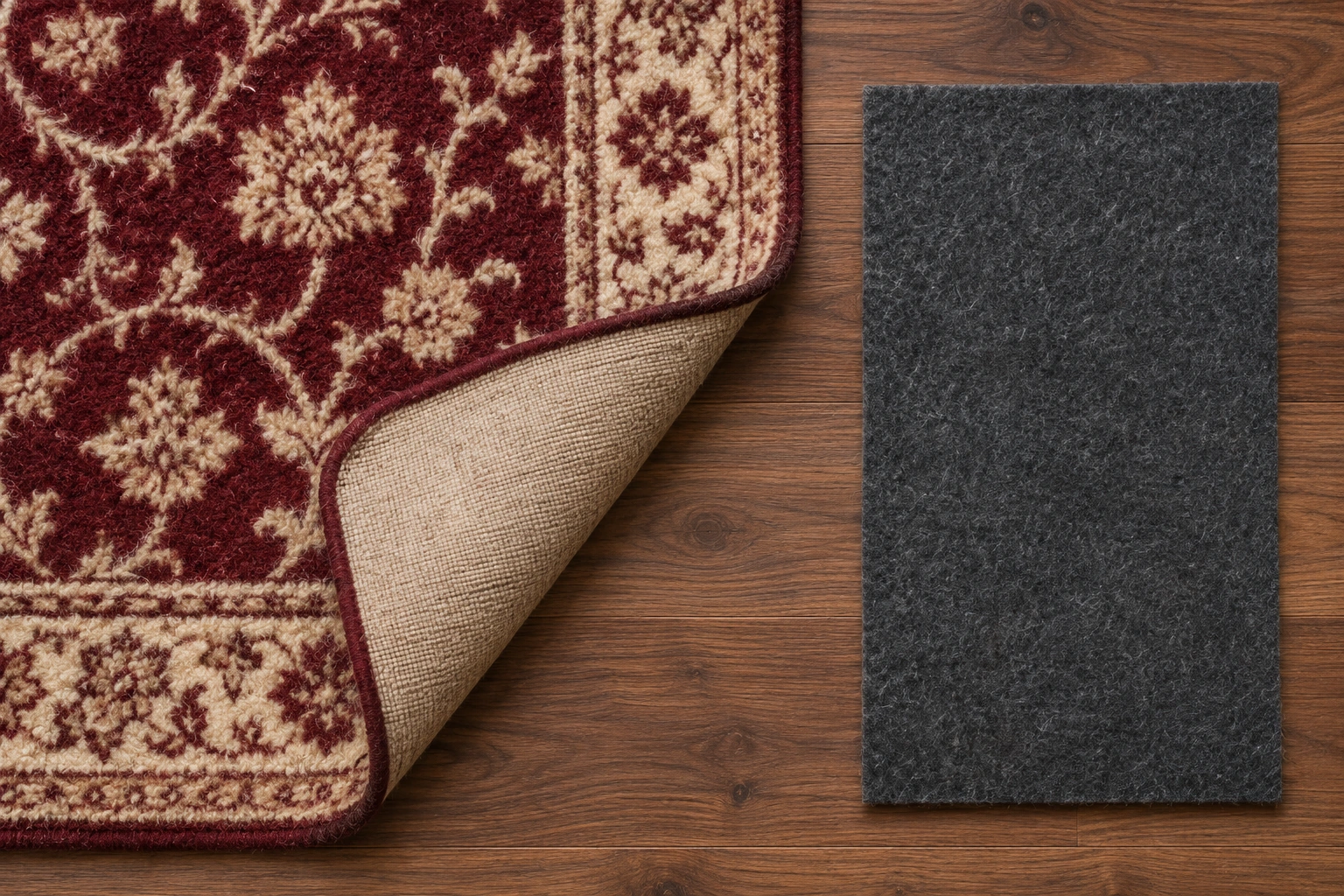
A wool label alone does not tell you how the rug should be packed. The pile is the raised surface yarn; the foundation is the structure supporting it. Some rugs also have an applied backing, which needs its own consideration. Flatwoven rugs have no raised pile.
Check the label, order record and underside for the complete fiber composition and construction. Our silk vs. wool rug comparison explains why pile and foundation should be read separately. A rug described as wool may contain silk elsewhere in its structure.
Photograph the front, reverse, edges and existing damage before packing. Note loose fringe, holes, separated layers and any stiff or crumbling backing. These records give you something concrete to compare with after storage.
For an antique, fragile or damaged rug, consult a qualified textile conservator before cleaning or bending it. For a modern silk-blend rug, obtain the maker’s instructions or advice from a rug specialist experienced with that construction; historical or weakened pieces need conservation expertise. The Institute of Conservation’s carpet and rug guidance stresses individual assessment and warns that treatment suitable for one rug may harm another.
Prepare and dry the rug before packing
Storage preparation means removing dirt safely, not automatically washing the rug. Follow its approved vacuuming method and keep vulnerable fringe or loose threads away from moving brushes.
For example, RH’s rug care instructions specify suction-only vacuuming without bristles for its wool rugs and professional help for larger, deeper stains. Those instructions apply to the rugs covered by that care sheet; they are not permission to use the same treatment on every wool rug.
Use our wool rug cleaning guide by construction to identify the questions to ask before cleaning. If the rug has suspected insects, mold, substantial staining or a deteriorating backing, arrange an assessment rather than packing the problem away.
After any permitted wet treatment, check the reverse, edges and thicker areas as well as the surface. Do not decide that the rug is ready simply because the pile feels dry. If it has been professionally washed, ask the cleaner to confirm that it is dry and ready for storage.
There is no single drying time for every thickness, backing, cleaning method and room. If dampness or unexplained mustiness remains, postpone packing. Our guide to wool rug odors and moisture-related warning signs explains when further assessment is appropriate.
Should you roll or fold a wool rug?
For a sound rug that can tolerate bending, a supported roll generally avoids the concentrated creases of folded storage. Do not fold it in half first merely to make a shorter roll.
Rolling is unsuitable for some weakened or layered textiles. Loose components, substantial fiber loss or layers that cannot move together are reasons to stop. CCI’s flat-storage guidance explains the value of supporting fragile textiles across their full area. Ask a conservator to plan the support if rolling is unsafe. Do not force a stiff rug to bend around a tube.
Pile inward or outward? Follow the rug-specific advice
There is no reliable single direction for every wool rug. CCI’s textile-preservation guidance recommends pile outward. The George Washington University Museum and The Textile Museum’s storage guidance generally recommends pile inward, with exceptions for a weaker foundation or a sewn lining.
Both discuss rolling with the direction in which the pile lies. These recommendations should not be reduced to a universal pile-in or pile-out rule. Use instructions for your exact rug; if they are missing or its condition raises doubts, have a specialist identify the appropriate orientation before packing.
Use a suitable core, protective layers and support
The tube and packing materials should support the rug without introducing sharp folds, abrasive contact or concentrated pressure. Choose their size and strength for the rug’s weight and construction.
CCI’s rolled-storage instructions favor acid-free card or high-density polyethylene tubes. The core should extend beyond the rug’s width. For paper touching wool or silk, specify unbuffered, acid-free tissue; buffered papers contain alkaline additives that may harm these fibers or some dyes. A clean, prewashed cotton layer is another option described in the guidance. Ordinary cardboard needs an appropriate isolating barrier, so ask an archival supplier or conservator rather than putting the rug directly against a salvaged tube.
Once the rug has been assessed as suitable for rolling:
- Clear a clean, dry working area large enough for the whole rug. Arrange help for a heavy or awkward piece.
- Position the rug and prepared core in the approved orientation. Keep the edges aligned as the roll forms.
- Place the recommended tissue or washed cotton between successive layers. Guide the rug smoothly; stop if it develops folds or begins to skew.
- Cover the finished roll and secure the cover with loose, broad cotton ties. Label the outside with the rug’s identity and packing date.
National Museums Scotland’s textile-packing guidance describes interleaving and loose ties, and recommends conservation advice when rolling suitability or technique is uncertain.
CCI’s rolled-storage guidance describes supports at the projecting core ends so the textile does not bear its own weight. For long-term storage, have the support matched to the load; do not improvise with furniture pressing against the rug. Keep boxes and other stored belongings off it.
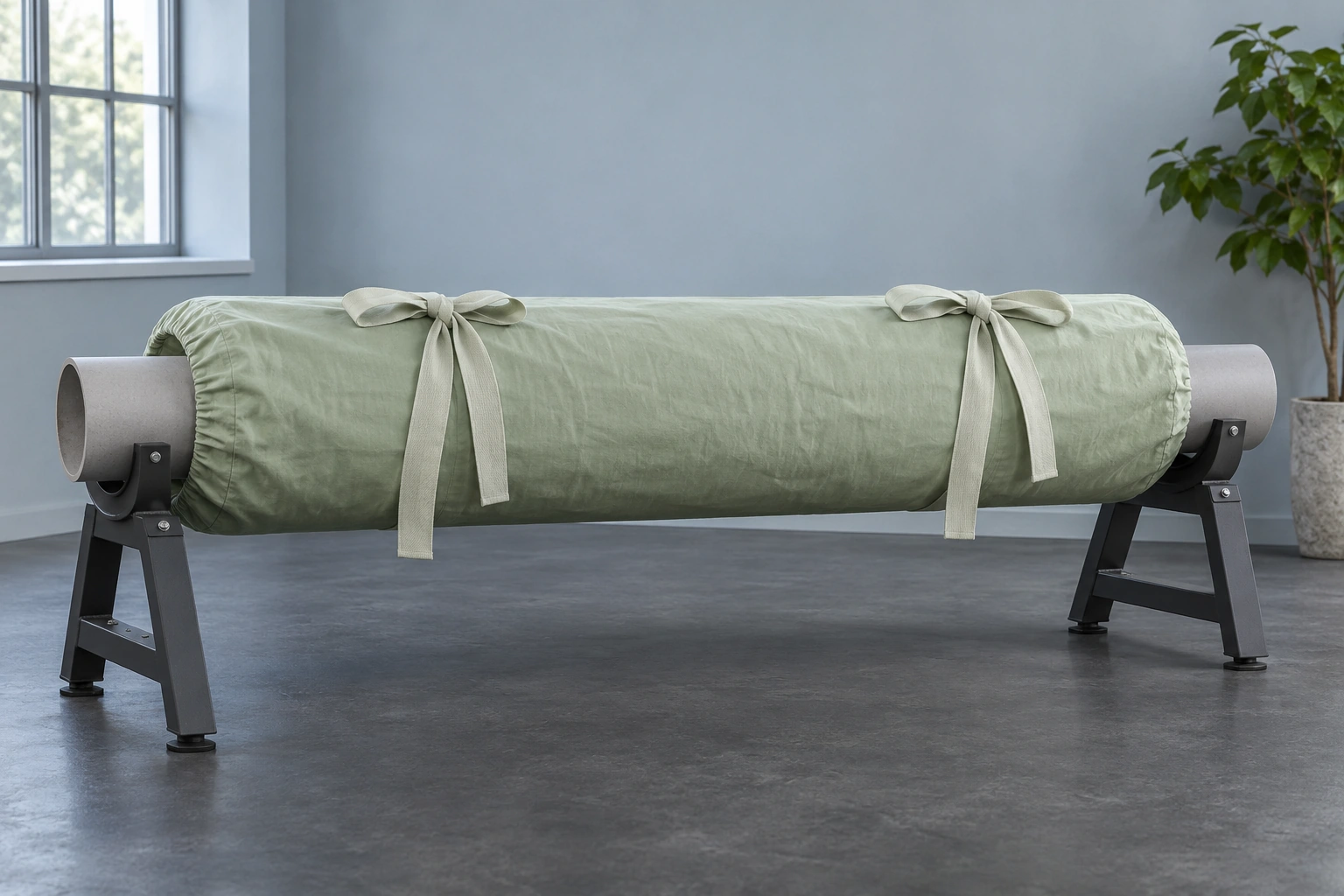
| Use | Avoid | Why |
|---|---|---|
| A suitable core and supported roll | Tight folds or a roll without support | Reduces concentrated bending and pressure. |
| Compatible tissue or clean, prewashed cotton | Bare ordinary cardboard against the rug | Separates the textile from unsuitable packing surfaces. |
| A protective cover and loose ties | Straps cinched into the rug | Contains the roll without compressing it. |
| Accessible storage above the floor | Floor contact or boxes piled on top | Makes checks easier and avoids unnecessary loading. |
Distinguish a short move from long-term storage
Transport packaging protects the rug during a journey; it should not automatically become its storage packaging. For a move, tell the mover about fragile areas, specify the handling orientation and agree how the roll will be supported and protected from wetting or crushing. Check it on arrival before putting it away.
For seasonal or longer storage, also plan the location, lasting support, cover and access for inspection. A rug packed behind a roomful of furniture is difficult to monitor, even if the initial wrapping is suitable.
Plastic requires context. Seattle rug-care specialist D.A. Burns distinguishes its perforated plastic transport tubing from storage wrapping and warns against leaving rugs stored in that packaging. This does not mean every conservation use of plastic is wrong: CCI uses specified plastic films as barriers around cores. A core barrier and a sealed outer bag perform different jobs. For ordinary household storage, clean cotton is a practical dust cover; it is not a guarantee against insects or damp conditions.
Choose a dry, stable and accessible storage location
An interior room with relatively stable conditions is a better starting point than a space exposed to dampness, strong heat or large seasonal swings. Keep the rug away from direct sunlight and off the floor.
The Textile Museum’s location guidance recommends cool, dry storage and cautions against attics and basements, where conditions often fluctuate. Evaluate the actual room: look for past leaks, condensation, dusty corners and pest evidence. Keep the storage area clean and leave enough space to retrieve the roll safely.
For paid storage, ask whether the facility manages humidity as well as temperature, how water or pest problems are handled, and whether you can inspect the rug. “Climate controlled” is a starting question, not proof that a particular unit suits a valuable textile.
Inspect the rug during storage and when unrolling
Plan repeat inspections rather than treating a wrapped rug as maintenance-free. The appropriate schedule depends on the space, pest history, rug condition and professional advice; museum inspection programs should not be treated as a universal household interval.
Check the room and covering for dampness, disturbance and insects. When safe to do so, unroll the rug with adequate support and inspect both sides for new damage. Icon identifies irregular holes, cocoons and gritty deposits as warning signs. Also note staining or backing changes, compare with your packing photographs and record the check.
If you find suspected pests, keep the rug separate from unaffected textiles and seek advice about containment and treatment. Our guide to signs of moths in wool rugs and safe next steps covers that assessment. Suspected mold or active deterioration also warrants professional help before routine handling or cleaning.
When bringing the rug back into use, prepare a clean, dry area and unroll it gradually with help as needed. Check its reverse, edges and any separate pad before positioning furniture. Do not force a brittle backing or assume a sharp crease will disappear. Ask the maker or a specialist about persistent curling or distortion rather than trying heat, steam or aggressive reverse rolling without approval.
Frequently asked questions
Can I store a wool rug in a garage?
A garage is usually a poor first choice if it has damp concrete, leaks, pests or large temperature swings. Raising the rug off the floor addresses only part of the problem. Choose a more stable indoor location, or have a specialist assess the proposed space if the rug is valuable or fragile.
Should I roll the rug pad inside the rug?
Do not assume the pad belongs inside the same roll. Check the pad’s own storage instructions as well as the rug’s. Unless the maker or specialist specifies otherwise, our recommendation is to pack the clean, dry pad separately and label it for the rug; that allows each item to receive suitable handling and inspection.
How long can a wool rug stay in storage?
There is no single safe maximum established by the guidance cited here. Duration alone does not determine the outcome: condition, support, moisture, pests and access for checks all matter. For extended storage, arrange a maintenance plan with a specialist instead of relying on a promise that wrapping will protect the rug indefinitely.
Before you put the rug away
Choose the packing method only after you know the rug is clean, dry and sound enough for it. Confirm the rolling orientation, provide suitable support, and select a location you can inspect. When the construction or condition is uncertain, a tailored storage plan is more useful than a universal folding, wrapping or drying rule.