
Possible signs of moths in wool rugs include localized pile loss, silken webbing or cases, and live larvae, especially along edges and beneath furniture. The larvae feed on wool; flying adults do not. Photograph what you find, inspect nearby textiles, and confirm the pest before choosing a treatment. A hole or bare patch alone does not prove an infestation.
Start with observation, not a spray. Some damaged rugs need pest control; others need different vacuuming, a repair assessment, or an explanation for ordinary shedding. The aim is to protect the rug while working out which problem you actually have.
Research note: The Editorial Team prepared this guide from university entomology, pesticide-safety and textile-conservation guidance. We have not inspected your rug or tested pest treatments.
Why clothes moths can damage wool rugs
Two relevant species are the webbing clothes moth, Tineola bisselliella, and the casemaking clothes moth, Tinea pellionella. Oregon State University Extension identifies their immature larvae as the damaging stage. Wool blends can also be affected when they contain animal fibers; a synthetic component does not automatically protect the wool.
Wool supplies keratin, an animal protein that fabric-feeding larvae can use. Cornell IPM explains that these insects often feed out of sight, including on rugs beneath furniture. An undisturbed patch under a sofa can therefore be vulnerable even when the room’s open floor is cleaned regularly.
Soiling can also matter. The National Pesticide Information Center (NPIC) notes an attraction to animal-fiber textiles with food, sweat or urine stains. Cleanliness reduces some opportunities, but it is not proof that a rug is pest-free. Inspect secondhand rugs and upholstered furniture before bringing them inside.
Possible signs of moths in wool rugs
Look for more than a change in appearance. Insect feeding may leave a shallow, grazed patch where pile is missing rather than a hole through the entire rug. The Canadian Conservation Institute’s textile guidance describes grazing, holes, webbing, cases, shed larval skins and live insects as signs worth investigating.
According to UC IPM’s clothes moth identification guide, webbing clothes moth larvae can leave silken feeding tubes or webbing mixed with fibers and debris. Casemaking larvae carry a small silken case. The pale larvae have darker heads. These details are more useful than the shape of a hole, but identification may still require a specimen.
Check the rug’s perimeter, underside and furniture-covered areas in good light. Lift only an edge that can be handled safely. Do not pull the rug out from beneath heavy furniture or force a brittle backing to bend. Photograph the whole area and a close view before disturbing the evidence; record the date and location.
Old damage can remain after insects are gone. Conversely, loose fuzz does not establish insect activity. Abrasion, pet damage, failing yarns and construction problems can cause fiber loss. Our wool rug shedding guide explains how ordinary loose fibers differ from warning signs that deserve assessment.
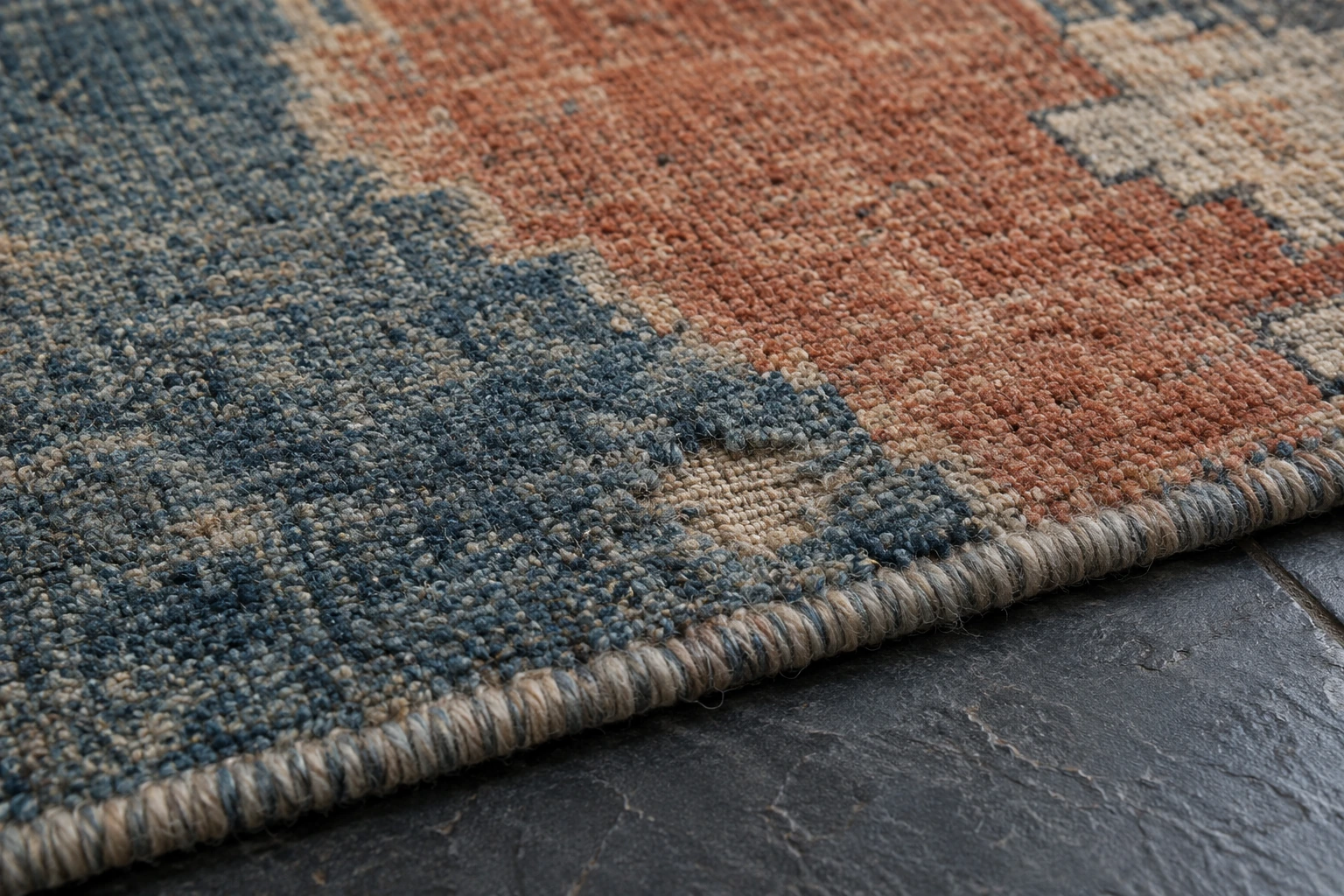
Clothes moths, carpet beetles or ordinary wear?
UC IPM’s carpet beetle guide describes larvae that look hairy or bristly, unlike the relatively smooth clothes moth caterpillars. Carpet beetle larvae also damage wool and can leave shed skins. Their adult beetles feed on pollen rather than eating the rug. Both pests warrant identification, but a clothes moth pheromone trap will not diagnose carpet beetles.
Use this table to choose the next step, not to identify a species from damage alone.
| What you find | What it might mean | Useful next step |
|---|---|---|
| Loose fuzz; pile remains even | Shedding or wear; insects not established | Check care instructions and watch for new localized loss. |
| Bare or grazed patch without insects | Feeding damage, abrasion, pets or construction trouble | Photograph both sides and seek rug assessment if it progresses. |
| Silken tubes, cases or pale larvae | Possible clothes moth activity | Preserve a specimen and arrange identification. |
| Bristly larvae or hairy shed skins | Possible carpet beetle activity | Seek pest identification rather than assuming moths. |
| Flying moth, no rug evidence | Clothes moth or another moth species | Identify the insect and inspect textiles; do not spray the rug automatically. |
If possible, keep an insect in a secure container and ask a local extension identification service or qualified pest professional to examine it. A useful report includes where it was found and whether there is new damage. Do not assume a moth near a light came from the rug: clothes moths tend to avoid light, while other household moths have different habits.
What to do when you find suspected moth activity
Set the rug apart without spreading the problem
Avoid moving a suspect rug into another furnished room or placing it against other wool textiles. Canadian Conservation Institute guidance recommends isolating infested textiles and supporting them when moved. For a small, dry, sound rug, suitable temporary containment may be practical; ask a specialist about wrapping and transport for a large or fragile one. Do not seal a damp rug or compress weakened areas.
Check nearby wool throws, stored clothing, upholstered furniture and any animal-fiber rug pad. University of Kentucky entomologists emphasize finding all infested items, including concealed sources. Treating the visible patch while leaving another affected textile nearby can leave the underlying problem unresolved.
Vacuum only where the rug can tolerate it
Vacuuming can remove accessible insects and debris, but it is not a guarantee that an established infestation is eliminated. Start with the rug maker’s instructions and the rug’s present condition. Use an approved floorhead and suction level; keep fringe and loose yarn away from the nozzle.
For example, Room & Board warns against rotating brushes or beater bars on its wool rugs. That is a reason to check the actual setup, not simply the vacuum’s brand. Our wool-rug vacuum guide explains floorhead and control differences.
Do not repeatedly vacuum a disintegrating patch. The Canadian Conservation Institute cautions against surface cleaning textiles with powdering fibers, fragmentation or numerous broken threads. A conservator may need to stabilize the area first.
Clean surrounding hiding places and record changes
Clean accessible floor edges, baseboards and areas beneath movable furniture, including accumulations of hair and lint. Inspect the rug’s reverse and pad where safe. Do not dismantle fitted carpeting or move heavy furniture alone to reach a suspected source.
UC IPM advises prompt disposal of vacuum contents after cleaning infested areas. Seal collected debris for disposal outside the home rather than leaving it in an indoor bin. With a bagless machine, follow its emptying and maintenance instructions without scattering debris. Preserve any identification specimen before cleanup.
Keep a simple record of inspection dates, insect findings and changes in the photographed patch. Fresh evidence calls for reassessment; an old hole that remains visible is not, by itself, proof that treatment failed.
Treatment options: what they can and cannot do
Pheromone traps help monitor activity
English Heritage’s clothes moth guidance explains that pheromone lures attract male moths and that traps do not control an infestation on their own. Use the lure intended for the identified pest and follow placement and replacement directions. Pantry moth traps are not interchangeable with clothes moth traps.
A catch is a reason to investigate, not proof that one particular rug is the source. An empty trap does not demonstrate that every larva or egg is gone. Inspection and follow-up remain necessary.
Professional cleaning must address the pest explicitly
A general carpet-cleaning appointment is not the same as a confirmed insect-treatment plan. Cornell recommends professional help for large, infested items that cannot be laundered or dry-cleaned and notes that thick carpets may need special treatment. Tell the provider about suspected insects before arranging collection.
Ask whether the service specifically addresses the identified pest and relevant life stages, how it protects the rug’s dyes and construction, and what follow-up is included. Hand-knotted, tufted and flatwoven rugs can need different handling; our guide to wool rug construction gives the background.
Heat, freezing and pesticides require a suitable protocol
Do not substitute a household steamer, hot car or casual freezer stay for a planned treatment. The Canadian Conservation Institute’s low-temperature guidance explains that thickness and insulation affect how quickly an object’s center cools. Packaging and condensation also matter. A thick rolled rug cannot be treated as though it were a thin fabric sample.
A qualified provider should assess the pest, exposure conditions and material compatibility before recommending heat or freezing. This guide gives no universal temperature or duration. Likewise, soaking or steaming is not a default moth remedy; see our wool rug steam-cleaning guide for the distinctions between vapor steam and professional extraction.
If a pesticide is proposed, it must be permitted for the intended use and used according to its label and applicable rules. EPA guidance favors targeted application over blanket room spraying and warns against using outdoor products indoors. Ask for the product label and precautions for occupants, pets and treated surfaces.
Do not scatter mothballs beneath rugs or furniture. NPIC explains that mothballs release pesticide gases intended to build up in airtight containers under labeled conditions. They are not a general room repellent. Cedar, lavender, vinegar and essential oils should not be presented as proven cures for an established rug infestation; scent is not evidence of control.
When to bring in a professional
Arrange help promptly when larvae are confirmed, damage is expanding, several items are affected, or the source remains unclear after inspection. Valuable, antique, fragile or structurally compromised rugs deserve a textile conservator’s assessment before aggressive cleaning or treatment.
The roles are complementary: a pest professional identifies and addresses the infestation; a rug specialist evaluates construction and cleaning; a conservator considers preservation of a vulnerable textile. Ask who is responsible for each part rather than assuming one service covers everything.
EPA recommends checking pest-control credentials and requesting pesticide labels. Also ask what evidence supports the diagnosis, how nearby textiles will be assessed, and how success will be monitored. Agree on a reinspection plan; no provider should need to promise that insects can never return.
Preventing further damage and planning repairs
Make neglected areas part of routine care. Inspect edges and accessible undersides, move furniture when practical, and remove lint and pet hair from surrounding spaces. Clean spills by the rug’s approved method rather than adding an unverified repellent.
- Inspect incoming secondhand rugs and furnishings before putting them beside susceptible textiles.
- Store only clean, completely dry, pest-free rugs using a wrapping and support method suited to their construction.
- Keep stored rugs accessible for checks instead of leaving them indefinitely behind other belongings.
- After treatment, continue the agreed inspection and monitoring plan before relaxing precautions.
If damage remains, ask a qualified rug repairer whether the goal is structural stabilization, cosmetic repair or both. Cleaning cannot replace missing pile. Get an assessment of the foundation and an estimate before deciding whether repair makes sense; do not begin cosmetic work while pest activity is unresolved.
Frequently asked questions
How do I get rid of moths in a wool rug?
Confirm the pest, locate affected items, clean suitable areas and arrange a treatment matched to the rug. Vacuuming and monitoring support that plan but may not eliminate an established infestation. Fragile rugs or continuing activity warrant professional help.
Do adult moths eat wool rugs?
No. Clothes moth larvae do the feeding damage. Adults can signal a problem, but killing the moths you see does not address larvae already hidden in textiles.
Are holes in a wool rug always moth damage?
No. Carpet beetles, wear, abrasion, pets and construction problems can also cause damage. Look for supporting evidence such as identifiable larvae, silken cases or webbing, and get uncertain findings assessed.
Will vacuuming remove all moth eggs and larvae?
Do not count on it. Vacuuming reaches accessible material, while insects may occupy concealed areas or other items. Use a rug-safe setup, dispose of debris promptly and continue the broader inspection and treatment plan.
Can I freeze or steam clean the rug to kill moths?
Neither is a universal DIY solution. Controlled temperature treatment needs a validated process and a material-safety assessment. Rug thickness, construction and moisture handling matter. An ordinary steam-cleaning service should not be assumed to eradicate an infestation.
Do moth traps, cedar or lavender solve the problem?
Traps help monitor the relevant adult male moths; they do not remove hidden larvae. Cedar or lavender should not replace identification, cleaning and appropriate treatment. A pleasant-smelling rug can still need inspection.