Acrylic Yarn vs Wool Yarn: Which Is Better for Your Project?
By Editorial Team
When comparing acrylic yarn vs wool yarn, start with the project and its care needs. Wool is an animal-derived natural fiber valued for insulation, moisture absorption and resilience. Acrylic is a manufactured synthetic fiber often chosen for accessible prices, color options and machine-washable products. Both work for knitting and crochet; the better choice depends on the particular yarn, the wearer and how the finished item will be washed.
A hand-washed winter hat and a frequently laundered family blanket have different requirements. Choose the fabric you want to make, rather than treating either fiber name as a quality guarantee.
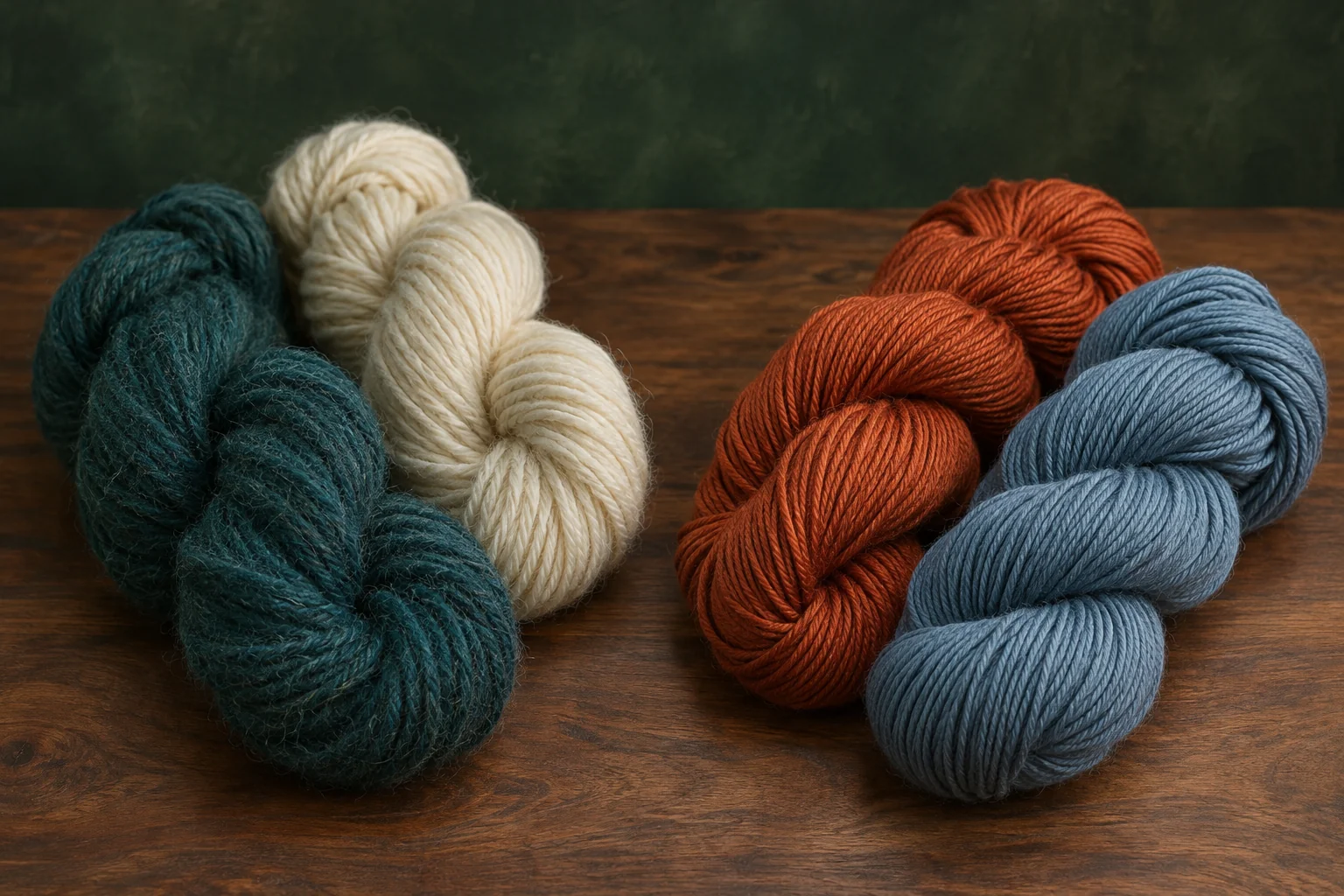
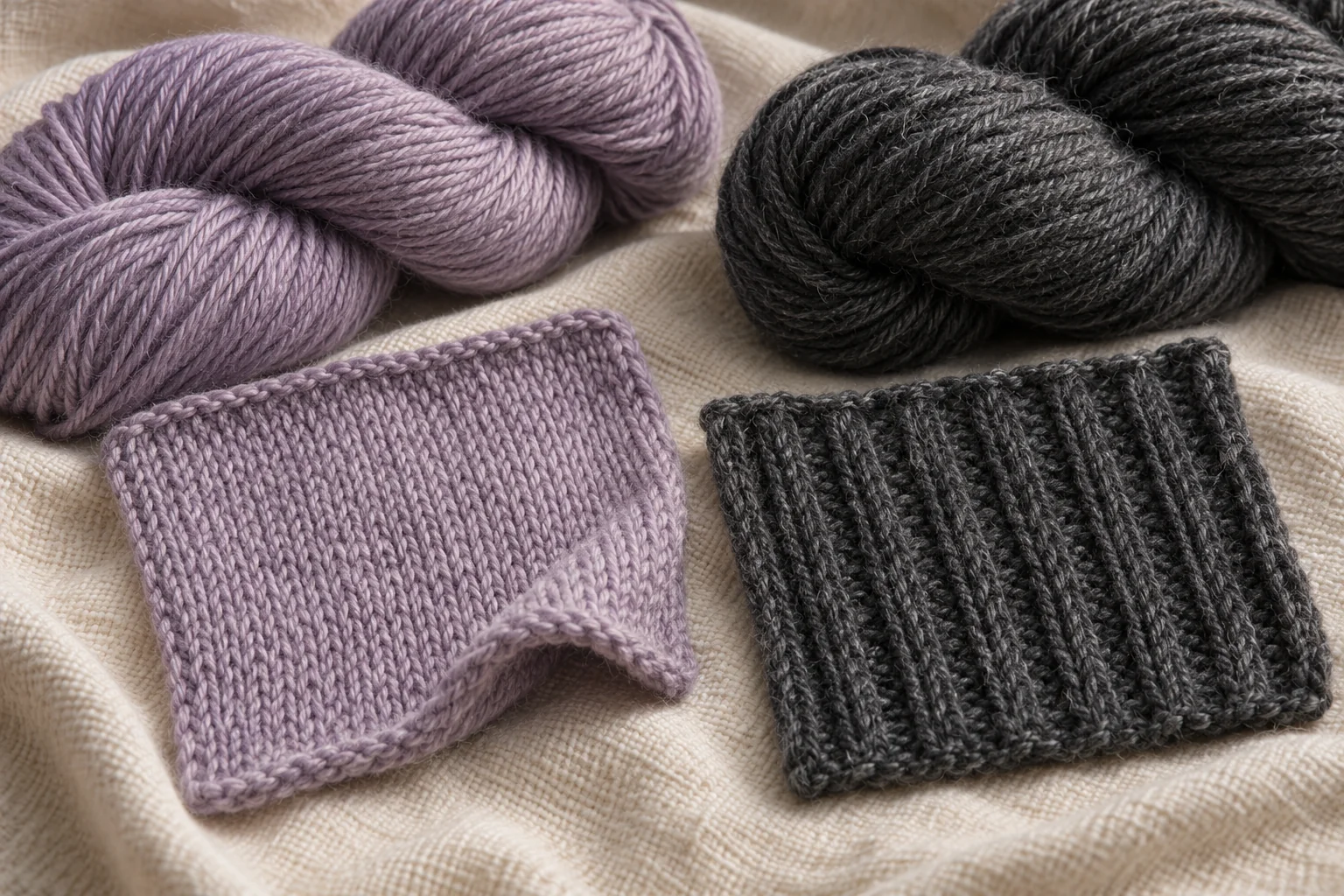
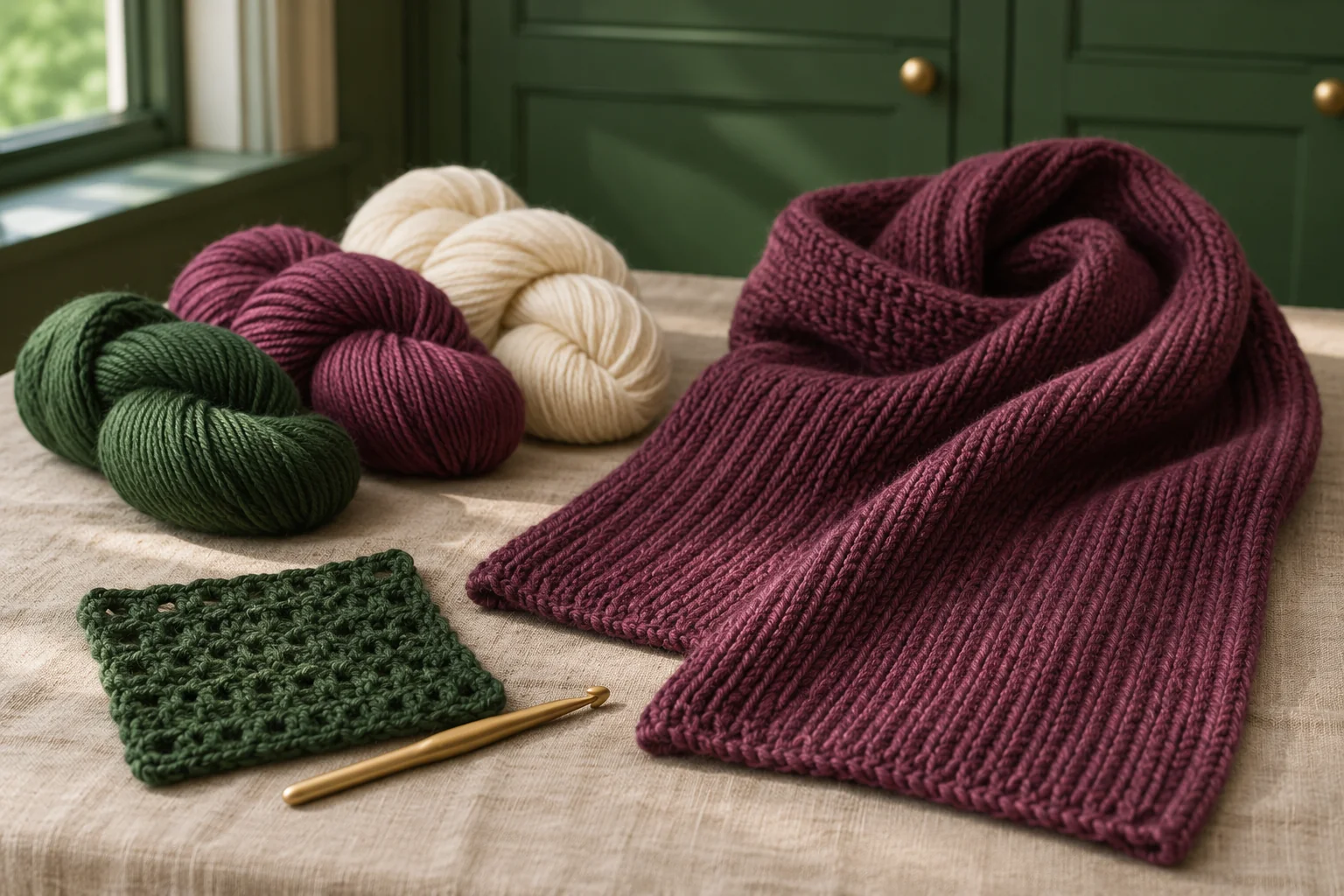
Editorial disclosure: This research-based guide draws on textile references, published studies, industry education and manufacturer specifications. We have not personally tested the yarns discussed. Images are AI-generated editorial illustrations, not product photographs or test results.
Acrylic Yarn vs Wool Yarn: Key Differences at a Glance
These are starting points for shopping, not promises about every skein. The sections below explain the evidence and exceptions.
| Consideration | Acrylic yarn | Wool yarn |
|---|---|---|
| Origin | Manufactured synthetic fiber | Natural animal fiber, usually sheep wool in this comparison |
| Feel | Can be smooth, soft, firm or fuzzy | Varies with fiber fineness, breed, construction and finish |
| Warmth | Can make insulating fabrics | Can make insulating fabrics; crimp helps create loft |
| Moisture | Low moisture uptake within the fiber | Absorbs moisture vapor within the fiber |
| Elasticity | Depends on processing and construction | Natural resilience, with finished-fabric behavior varying |
| Washing | Many products permit machine washing; check the label | Untreated and superwash yarns require different care checks |
| Durability | Abrasion, heat and laundering matter | Abrasion, felting and laundering matter |
| Pilling | Possible; construction affects performance | Possible; construction affects performance |
| Typical cost | Often a budget option, with exceptions | Broad range; specialty yarns can cost more |
| Environment | Fossil-derived material; plastic microfiber concerns | Renewable fiber; livestock, land and processing impacts |
| Project starting points | Washable blankets, toys and everyday gifts | Sweaters, hats, scarves and suitable sock yarns |
What Is Acrylic Yarn?
Acrylic is made from a synthetic polymer. The Museum of Fine Arts Boston’s CAMEO reference describes acrylic fibers as manufactured materials based largely on acrylonitrile. They absorb relatively little moisture internally and are sensitive to heat.
That description does not tell you whether a particular skein will feel silky, springy or rough. Fiber processing, twist, ply structure, thickness, finishing and blends all influence the yarn you buy.
Read the composition line carefully: an acrylic blend is not the same as 100% acrylic. Also separate composition from yarn weight. In the Craft Yarn Council’s weight system, categories describe thickness ranges. A worsted-weight yarn can be acrylic, wool or another fiber; “worsted weight” does not mean wool, nor does it mean worsted-spun.
What Is Wool Yarn?
Here, wool means sheep-wool yarn. Woolmark’s fiber explanation describes its protein structure, natural crimp and capacity to absorb moisture vapor. Those properties are useful, but wool is a broad category:
- Untreated wool has not received a shrink-resist treatment and can felt under unsuitable washing conditions.
- Superwash wool has been processed to reduce felting shrinkage. Use the specific label for washing and drying permissions; see our superwash wool guide.
- Merino and coarser wools can differ substantially in feel. Breed names alone do not describe every characteristic of a finished yarn.
- Wool blends combine fibers in particular proportions, changing the choices you need to evaluate.
- Woolen-spun and worsted-spun yarns use different fiber preparation and spinning approaches. Our woolen vs worsted-spun yarn comparison explains the construction distinction.
Softness and Comfort: Judge the Actual Yarn
Neither “wool is itchy” nor “acrylic is soft” works as a buying rule. Finer wool fibers generally bend more readily against skin, which helps explain why some Merino yarns feel less prickly than coarser wool. Acrylic also comes in noticeably different textures.
For a scarf or sweater neckline, handle a finished sample if one is available. A skein squeezed in your palm cannot fully predict how stitches will feel against your neck after washing.
Consider the recipient, too. A texture that feels pleasantly rustic to one person may bother another. Do not assume an unfamiliar yarn will suit someone’s sensitive skin merely because it is natural or synthetic.
Which Yarn Is Warmer?
There is no universal winner. Warmth depends on the thickness and structure of the finished fabric, its fit, trapped air and the conditions in which it is worn.
A study of wool and acrylic sock fabrics found that fabric structure had the largest effect on several measured thermal and moisture-transfer properties. It compared specific constructions under laboratory conditions; it does not rank every hand-knit sweater or crochet blanket.
Wool’s moisture absorption and acrylic’s low internal water uptake are different fiber behaviors. Neither fact alone tells you how much air will pass through a garment or how quickly the whole item will dry. A dense fabric and an open lace fabric remain very different, even when made from the same yarn.
For winter accessories, assess the finished fabric’s coverage and fit alongside composition. For indoor layers, prioritize the combination of warmth and comfort the wearer actually wants.
Stretch, Elasticity and Stitch Definition
Stretch is how far a fabric extends; recovery is how well it returns. Wool’s natural resilience can be useful in ribbing, but stitch pattern, twist, ply and finishing also affect the result. An acrylic knit can stretch, too; fiber names do not establish its recovery.
For cables or textured crochet, inspect whether the yarn lets individual stitches remain visible. A pronounced fuzzy surface can soften their outlines. For a scarf or cardigan, check whether the swatch hangs as intended rather than choosing the softest skein automatically.
Test the actual stitch pattern. A springy ribbed hat, a structured crochet basket and a flowing shawl call for different fabrics. Our wool yarn buying guide provides more background on weight and construction.
Durability, Pilling and Long-Term Wear
Both acrylic and wool can pill. Pills form when loose surface fibers become entangled through rubbing; their presence does not provide a simple fiber-quality ranking.
Research on wool/acrylic knitted fabrics examined composition, twist, yarn count, knit structure and density. Several factors influenced pilling, reinforcing why a fiber label cannot predict every finished item’s appearance.
Separate surface appearance from structural wear. A fuzzy scarf, a stretched cuff and a thinning sock heel are different problems. Evaluate the yarn for the friction and washing your project will experience, and inspect a washed swatch for changes in size, texture and stitch clarity.
Save leftover yarn for repairs and keep the care label. For wool garments that develop pills, our Merino wool pilling guide explains cautious removal. No responsible comparison can promise that one entire fiber category always lasts longer.
Washing, Drying and Blocking
Choose a yarn whose care requirements fit the finished item’s household. “Easy care” is useful only if the recipient can follow the actual instructions.
Two manufacturer examples show why the label matters:
- Red Heart Super Saver: The listed solid colors are 100% acrylic. The manufacturer permits a gentle warm machine wash and low tumble drying, and says not to iron. Some variants have different fiber content.
- Cascade 220 Superwash: This specific yarn is 100% superwash wool, with instructions for cool machine washing and low tumble drying.
These are product examples, not instructions for every acrylic or superwash yarn. Always check the current label on your own purchase.
For untreated wool, unsuitable agitation and laundering can cause felting, shrinkage or distortion. Woolmark’s sweater-care manual emphasizes following the care claim and supporting wool sweaters while drying. Superwash treatment does not make every finished garment immune to changes in size or shape.
Blocking should also follow the yarn maker’s guidance. Acrylic’s heat sensitivity means steam or an iron can alter it permanently; do not assume a technique intended for wool is suitable. Test an allowed method on a spare swatch first. Our guide to blocking wool knitting covers wool-specific options and limitations.
Which Costs More?
Acrylic often occupies the budget end of the yarn market, while wool spans basic utility yarns through specialty and hand-dyed options. Exceptions make blanket price claims unhelpful.
Compare the cost of completing the project, not the price of one ball. Check usable yardage, the pattern’s requirements and how many balls you will need. A larger-looking skein is not necessarily better value.
For an ambitious first sweater, buying one ball for a swatch can be a sensible preliminary expense. It is better to discover an unsuitable fabric before committing to the full quantity.
Environmental Considerations
Acrylic’s synthetic origin brings fossil-resource use and plastic microfiber concerns. The European Environment Agency describes these pressures across synthetic textile production, use and disposal. This is broader textile evidence, not a footprint calculation for your chosen skein.
Wool regrows on sheep, but renewable does not mean impact-free. Textile Exchange’s Material Pathways report identifies livestock methane, animal-welfare concerns and risks from poor land management. Processing, finishing and subsequent care also belong in the comparison.
Wool can biodegrade under suitable conditions. That does not guarantee rapid breakdown of a dyed, treated or blended yarn in any disposal setting. A wool/acrylic blend does not acquire the same end-of-life behavior as pure wool simply because it contains some natural fiber.
There is no well-supported universal environmental winner for every project here. Ask about sourcing and composition, buy an appropriate quantity, use the finished item and repair it when practical. Do not discard useful yarn solely to replace it with something marketed as greener.
Best Yarn for Different Projects
These are practical starting points, not results from testing every yarn category.
- Sweaters and cardigans: Consider wool when resilience and moisture handling are priorities. Acrylic can suit a washable everyday layer. For either, check a washed swatch’s dimensions and drape before committing to a garment.
- Scarves and hats: Prioritize comfort against the neck or forehead. Choose a suitable wool for a resilient winter accessory, or a comfortable acrylic when budget and washing convenience matter. Examine the actual ribbing and fabric coverage.
- Blankets: Machine-washable acrylic can be practical for a large, frequently used throw. Suitable wool can also work when its care instructions fit the household. Confirm that the finished blanket can be washed and dried as directed.
- Baby blankets: Choose for comfort, sound construction and the caregiver’s washing routine; neither fiber is automatically right. Whatever the material, NIH safe-sleep guidance says to keep loose blankets out of a baby’s sleep area.
- Socks: Start with a yarn and pattern intended for socks. Wool-containing sock yarns can be a useful option, but reinforcement, gauge, fit and care matter. Do not substitute a soft generic acrylic or delicate wool solely because the thickness matches.
- Crochet toys and amigurumi: Choose yarn that produces firm, consistent stitches at the pattern’s gauge and tolerates the intended washing. Acrylic can be practical, but suitable wool is also possible. Fiber choice does not establish a toy’s safety for a child.
- Home accessories: For cushion covers or decorative baskets, prioritize structure, appearance and care. Acrylic’s heat sensitivity makes it unsuitable as a casual substitute in a project meant to handle hot cookware; use a pattern and material explicitly intended for that job.
- Everyday gifts and frequently washed items: Put the recipient’s routine first. An acrylic or expressly machine-washable wool may fit better than a hand-wash-only yarn. Include the original care instructions with the gift.
Can You Substitute Acrylic Yarn for Wool?
Often, yes, but matching the weight category is only a starting point. The Craft Yarn Council specifically cautions that its weight categories are not an interchangeability chart; gauge, feel and drape still matter.
Before replacing a pattern’s wool with acrylic, or vice versa:
- Check composition and purpose. Identify whether the design relies on resilience, drape or deliberate felting. Acrylic is not an equivalent substitute for wool in a project designed to felt.
- Check yardage and gauge. Compare stitches and rows, then calculate the quantity needed. Ball count alone is not enough.
- Make a representative swatch. Use the intended stitch pattern and needles or hook, with enough fabric to judge its behavior.
- Wash and dry it as permitted. Measure again once fully dry, and assess the surface, stretch and drape.
- Accept the fabric, not just the numbers. Matching gauge does not help if the replacement produces a stiff scarf or an unsuitably loose cuff.
When combining yarns in one project, choose compatible care requirements before starting. One washable component does not make the entire item machine washable.
Frequently Asked Questions
Is wool yarn better than acrylic for beginners?
Neither is automatically easier. A smooth yarn with clearly visible stitches, a manageable thickness and instructions you understand is a useful starting point. Consider the full project cost and the care you are willing to provide.
Does acrylic yarn pill?
It can. Wool can pill too. Construction, rubbing and laundering influence the result, so assess the particular yarn rather than assuming either fiber is pill-proof.
Can wool and acrylic be blended?
Yes. Read the actual percentages and care instructions. A blend offers a different material choice, but it does not necessarily combine every advantage of its component fibers or remove their limitations.
Which yarn is easier to wash?
Many acrylic yarns are convenient to machine wash, and some wool yarns also permit machine washing and drying. The easiest option is the specific product whose label matches your routine.
Final Verdict
Choose acrylic when a suitable product meets your budget, color preferences and washing needs. Choose wool when the particular yarn’s feel, resilience and moisture behavior suit the project and you can follow its care instructions. If neither satisfies all your priorities, consider a blend. The most useful decision comes from the label, pattern and washed swatch together.