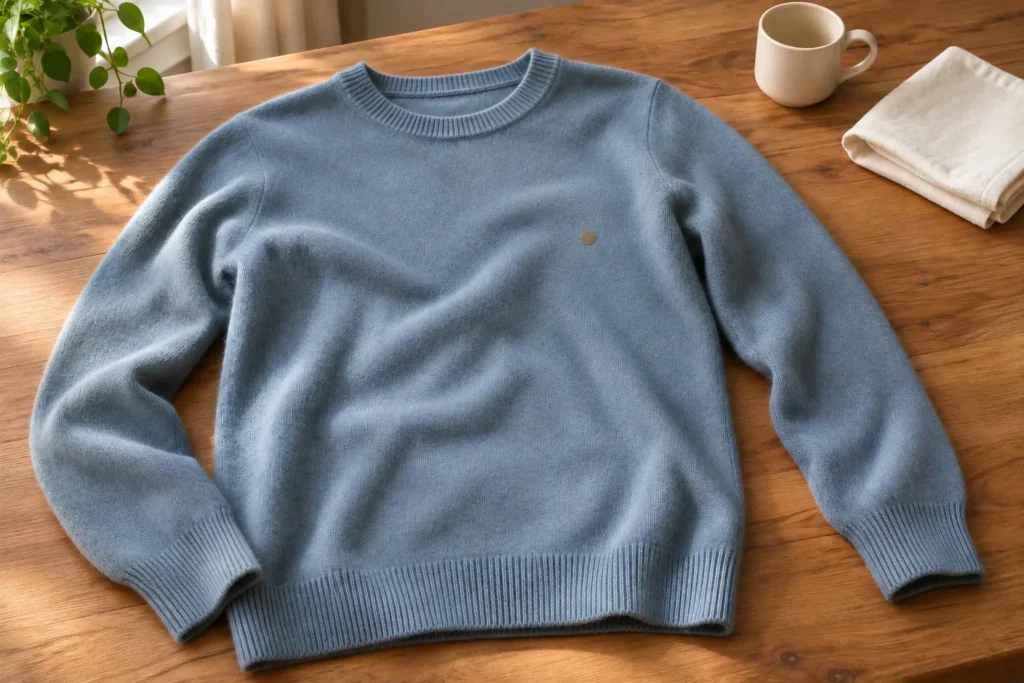
Learning how to remove stains from wool safely starts with restraint: blot the spill, check the care label, and use the gentlest method the finished item allows. Wool sweaters, scarves, tailored coats, rugs, and filled bedding are not interchangeable. A technique that is reasonable for a machine-washable merino sweater may distort a structured jacket or leave a ring on upholstery.
This guide gives practical first-response steps for common stains without promising that every mark can be removed at home. When the label says dry clean only, the stain is old or unknown, or the item has a lining, trim, unstable dye, or sentimental value, a professional cleaner is usually the safer choice.
Quick answer: what to do first
- Stop and read the care label. Confirm whether the item is machine washable, hand-wash only, or dry-clean only.
- Lift solids; blot liquids. Use a spoon for food or mud and a clean, absorbent white cloth for liquid. Work from the outer edge toward the center.
- Do not rub, scrub, twist, or wring. Friction can spread the stain, roughen the surface, and encourage felting or distortion.
- Keep heat away. Hot water, a dryer, an iron, or a hair dryer can set some stains and can damage wool or the garment’s construction.
- Test first. If the label permits spot treatment, test the chosen solution on an inconspicuous seam and stop if color transfers or the surface changes.
For a washable item, a small amount of mild wool detergent and cool or lukewarm water is the most useful starting point. Our guides to washing merino wool and choosing a detergent for wool explain the full laundering step after spot treatment.
Check the label before treating a wool stain
The care label applies to the complete item—not just the wool fiber. Dyes, seams, shoulder structure, interfacing, leather trim, decorative finishes, and blended fibers can all change what is safe. The U.S. Federal Trade Commission’s Care Labeling Rule guidance explains that manufacturers and importers must provide instructions for at least one safe regular-care method.
Machine-washable wool
Use the temperature, cycle, detergent, and drying method specified on the label. Machine-washable or superwash treatment improves resistance to felting shrinkage, but it does not make every stain remover, wash temperature, or drying method safe. Woolmark explains that untreated fiber scales can interlock during moisture and agitation, producing irreversible densification and shrinkage. For more detail, see why wool shrinks.
Hand-wash-only wool
Limit handling. The Woolmark care-symbol guide advises careful agitation rather than rubbing, pulling, or wringing. Support a wet knit with both hands because absorbed water adds weight and can stretch it out of shape.
Dry-clean-only and structured pieces
Blot a fresh spill without saturating the fabric, note what caused it, and take the item to a cleaner promptly. Tailored coats, lined skirts, suits, pleated garments, and pieces with bonded interfacing can lose shape even when the visible wool seems water-tolerant. Tell the cleaner what the stain is and what, if anything, you already applied.
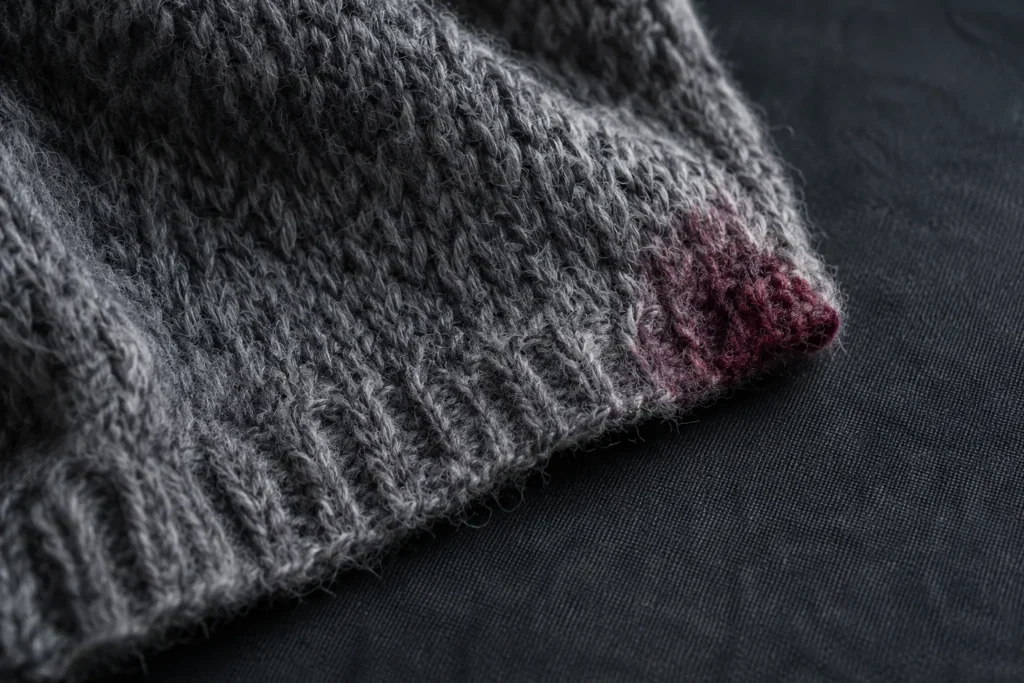
How to remove stains from wool: a quick treatment table
The table below gives conservative first steps. Follow them only when they agree with the care label, and do not combine products or household chemicals.
| Stain | Safe first response | Avoid | Escalate when |
|---|---|---|---|
| Coffee or tea | Blot; for washable wool, dab with cool water, then diluted wool detergent | Rubbing, hot water, heat drying | Milk, sugar, or old discoloration remains |
| Red wine or colored drink | Blot immediately with a white cloth; use cool water only if wet treatment is allowed | Salt rubbing, heat, random stain removers | Dye transfers or color remains after gentle treatment |
| Oil or grease | Lift solids and blot excess without spreading | Ironing, hot water, scrubbing, household solvents | The mark is large, old, or on a structured item |
| Food or sauce | Lift with a spoon; blot; treat a washable item with diluted wool detergent | Grinding food into the knit, hot water | The sauce contains oil, dairy, strong pigment, or unknown ingredients |
| Makeup | Lift residue; blot; use diluted wool detergent if the label permits | Makeup wipes, vigorous rubbing, bleach | The product is oil-based, waterproof, or highly pigmented |
| Ink | Blot without spreading; place a clean cloth beneath the area | Flooding, hairspray, acetone, rubbing alcohol without label guidance | The mark is permanent ink, large, or color is lifting |
| Blood | Blot with cold water on washable wool; use wool detergent if permitted | Warm or hot water, aggressive enzyme products | The stain has dried or the item cannot be wet-cleaned |
| Sweat or discoloration | Launder by the label with wool detergent | Chlorine bleach, concentrated acids, heat | The fiber or dye is permanently changed |
| Mud or dirt | Let mud dry; gently lift loose soil, then clean as labeled | Smearing wet mud, hard brushing on delicate knits | Soil is oily, embedded, or covers a large area |
Stain-by-stain guidance
Coffee and tea
Blot from both sides with a white cloth or paper towel. If the wool is washable, dab the area with cool water, then work in a very small amount of diluted wool detergent by pressing rather than rubbing. Rinse the treated area according to the label and blot away moisture. A drink containing milk, cream, or sugar is a mixed stain and may need professional attention if residue or odor remains.
Red wine and other colored beverages
Absorb as much liquid as possible immediately, changing to a clean section of cloth as it picks up color. Do not scrub in salt or use hot water. On washable, colorfast wool, cool-water blotting can reduce the concentration before label-approved laundering. Strongly colored juice, sports drinks, or cocktails may include several dyes and sugars, so stop if the garment color transfers. Woolmark publishes a broader stain-removal reference for wool clothing, but solvent-based steps are better left to a cleaner unless the item’s manufacturer explicitly approves them.
Oil, grease, food, and sauce
Use a spoon or dull edge to lift butter, dressing, or sauce without pushing it farther into the fabric. Blot, then treat a small washable mark with diluted wool detergent. Do not iron through absorbent paper or apply white spirit, dish degreaser, or an aerosol spot remover unless the garment maker specifically allows it. Heat and solvents can affect dye, finishes, adhesives, and trim even when they remove oil. Persistent grease, tomato sauce, curry, and combination stains are good candidates for professional cleaning.
Makeup and cosmetics
Lift powdered makeup before adding moisture. For liquid foundation or lipstick, blot without wiping the pigment outward. If wet treatment is allowed, try diluted wool detergent after a hidden-area test. Waterproof mascara, long-wear lipstick, sunscreen, and cream foundation combine pigment with oils or waxes; repeated home treatment can create a larger ring, so professional cleaning may be more economical than repeated experimentation.
Ink
Place a clean absorbent cloth behind the stained layer and blot the surface. Do not use hairspray, acetone, or rubbing alcohol as a universal fix: ink formulas vary, and solvents can spread the mark or strip color. A tiny water-based pen mark on washable wool may respond to diluted wool detergent, but permanent ink and large stains should go to a cleaner with the pen type identified if possible.
Blood
Use cold water, never hot. Blot a fresh mark from the reverse when construction allows so residue moves out rather than deeper into the textile. For washable wool, follow with diluted wool detergent and rinse as directed. Avoid choosing an enzyme stain product simply because it is marketed for protein stains; some garment and detergent instructions restrict enzyme use on wool. Dried blood or a dry-clean-only piece needs professional advice.
Sweat, yellowing, and discoloration
Wash a washable garment promptly according to its label, especially around collars and underarms. Deodorant, body oils, dye change, and fiber damage can look similar, and not all discoloration is removable soil. Do not use chlorine bleach on wool. If gentle laundering does not improve the area, further chemical treatment may weaken the fiber or create a pale patch rather than restore the original color.
Mud and dirt
Let ordinary mud dry before removing it. Shake off loose particles outdoors and gently lift remaining soil. A soft clothes brush may be suitable for a sturdy woven coat, while an open or fuzzy knit can snag and should be handled more cautiously. Then spot-clean or launder only as the label directs. If the mud contains road oil, clay pigment, or an unknown contaminant, treat it as a combination stain.
Wool-safe cleaning agents—and their limits
- Water: Use cool or lukewarm water only when the label permits wet treatment. Saturating just one part of a structured item can leave a water ring.
- Wool detergent: Dilute it first and use the minimum effective amount. More detergent is harder to rinse and can leave residue.
- Commercial stain removers: Use only when both the product label and the garment instructions say they are suitable for wool. Test a hidden area.
- Solvents: These may be used by professionals, but they are not automatically safe for home use, dyes, coatings, buttons, or bonded construction.
- Bleach: Do not use chlorine bleach on wool. Also avoid assuming that every “oxygen” or color-safe bleach is wool-compatible; read both labels.
Current manufacturer guidance varies. For example, Smartwool’s care guide recommends spot-cleaning minor stains with mild detergent and cold water without rubbing, while other brands specify a particular cycle or prohibit spot treatment. Product-specific instructions should win over generic internet advice.
Common mistakes that make wool stains worse
- Scrubbing a knit until the surface becomes fuzzy or felted.
- Using hot water or direct heat before the stain is gone.
- Applying several products in sequence or mixing cleaning chemicals.
- Treating a dry-clean-only coat as if it were an unlined sweater.
- Over-wetting one spot and creating a ring or stretching the fabric.
- Putting the item in a dryer to “see if the mark disappears.”
- Repeating treatment after dye begins to transfer to the cloth.
When to stop and use a professional cleaner
Stop home treatment when the label says dry clean only; the piece is tailored, lined, vintage, embroidered, or trimmed with another material; the stain is old, large, unknown, oily, or ink-based; color is transferring; or the texture is changing. Also seek help when the item has high monetary or sentimental value. Bring the care label, identify the stain, and disclose every product already used.
Construction-specific items need separate guidance. A rug’s backing and dyes, a mattress topper’s filling, and a blanket’s size change the cleaning decision. Use our dedicated guides for dog urine on a wool rug, cleaning a wool mattress topper, and washing a wool blanket rather than transferring sweater advice to those products.
Dry without setting the stain or changing the shape
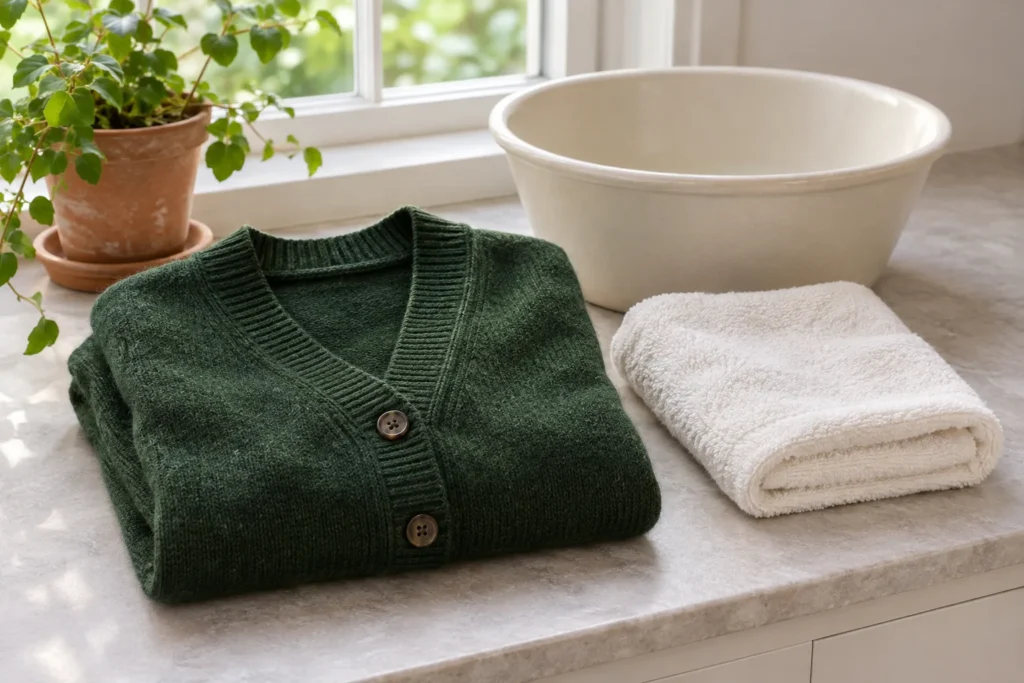
Before drying, inspect the area in good light. Heat can make later removal harder. Press excess water out gently—do not wring—then support the item. Woolmark’s sweater-care guidance recommends drying wool knits flat in shape, away from direct sunlight or heat. Place the garment on a clean, dry towel or mesh surface with seams aligned. Replace a saturated towel, and allow airflow around the item. Follow the care label if it gives different instructions.
Frequently asked questions
Can I use dish soap to remove grease from wool?
Do not assume dish soap is safe. Formulas vary, some are strongly degreasing, and heavy rinsing can distort a garment. Use a detergent labeled for wool when wet treatment is allowed, or take persistent grease to a professional.
Can I use vinegar or baking soda on wool stains?
Neither is a universal wool stain remover. Concentration, dye, finish, and stain chemistry matter. Do not combine them or build a DIY mixture. Use the garment maker’s directions or a wool-specific product whose label approves the application.
Is machine-washable wool easier to spot-clean?
It gives you more laundering options, but it does not guarantee that every stain treatment or tumble-drying method is safe. The item’s own care label still controls the process.
Why is there a ring after spot-cleaning?
A ring can come from detergent residue, dissolved soil moving to the wet edge, or a change in the finish or dye. Do not keep enlarging the wet area. A professional cleaner can judge whether full cleaning is needed to even out the appearance.
What if the stain is still visible after one gentle treatment?
Let the item dry as directed and reassess it. Repeated rubbing or stronger chemicals can cause more visible damage than the original stain. If a second label-approved wash is not appropriate, stop and consult a cleaner.
The safest approach is stain-specific and label-first
To remove stains from wool safely, act promptly but gently: identify the stain, blot instead of rubbing, obey the care label, and keep heat and unapproved chemicals away. A washable sweater can often be treated with cool water and a small amount of wool detergent. A structured, dry-clean-only, valuable, or badly stained item deserves professional care. Knowing when to stop is part of protecting the wool.