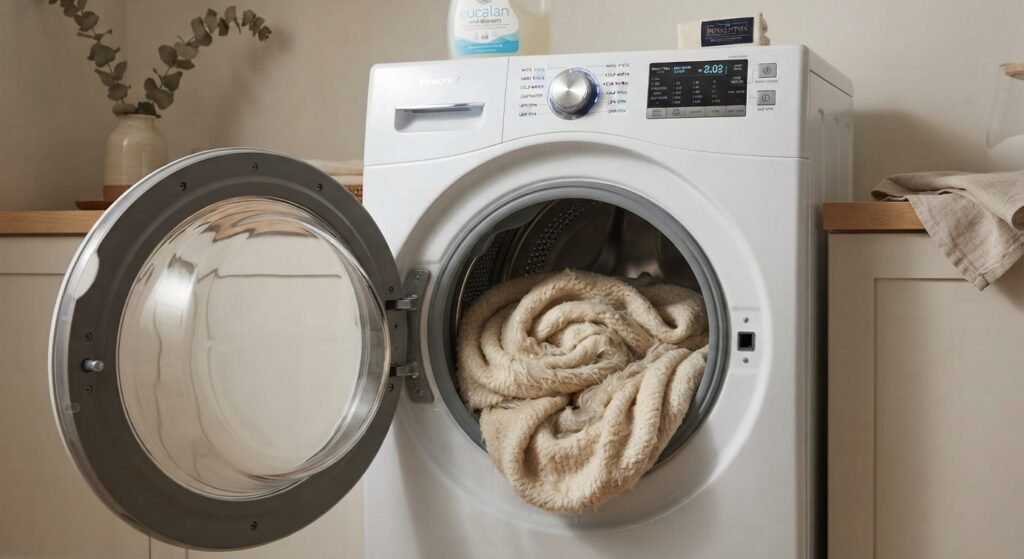
Quick Summary: To wash a wool blanket safely without shrinking it, always use cold water, a gentle wool-safe detergent (like Eucalan), and a delicate cycle or hand-wash method. Never use hot water, aggressive agitation, or a tumble dryer — instead, lay it flat to air dry.
How to wash a wool blanket safely without shrinking it comes down to a few core rules: always use cold water, a gentle wool-safe detergent, and a delicate cycle or hand-wash method.
There’s something almost sacred about a good wool blanket. It’s the one you reach for on the coldest nights, the one that somehow still smells faintly of cedar from that closet you keep it in during summer. Which is probably why so many people are terrified to actually wash it. I get it — nobody wants to pull their favorite blanket out of the wash only to find it’s shrunk down to the size of a hand towel.
If you are wondering how to wash a wool blanket at home safely, the good news is that it isn’t nearly as risky as it feels. Learning how to wash a wool blanket correctly just comes down to knowing the rules and actually following them. Let’s walk through exactly how to wash a wool blanket step by step, so your blanket stays soft, warm, and fully intact for years.
Can You Machine Wash a Wool Blanket?
Yes — but this is where a little caution goes a long way. A lot of modern wool blankets, including well-known ones like the Pendleton Eco-Wise, are specifically treated to handle a machine wash. That doesn’t mean you can toss it in on a normal cycle and walk away, though.
The rule of thumb: only machine wash it if your washer has a dedicated Wool, Hand Wash, or Delicate cycle, and only with cold or lukewarm water. Hot water is the fastest way to felt and shrink wool, sometimes in a single wash, so this isn’t a step to skip or guess on.
How to Wash a Wool Blanket in the Washing Machine (Step-by-Step)
If your blanket’s care tag confirms it’s machine-washable, here’s how to actually go about it:
- Use the right detergent: Reach for a wool-specific detergent or a mild, pH-neutral soap — Eucalan and Woolite are both solid choices. Skip regular laundry detergent entirely; the enzymes in most standard formulas are designed to break down protein-based stains, and wool is, itself, a protein fiber. For help choosing a formula, see our wool detergent guide.
- Set the right cycle: Choose the Gentle, Wool, or Hand Wash setting, and double-check the water temperature is set to cold.
- Keep agitation to a minimum: Set the spin cycle as low as it goes, or skip it altogether if your machine allows it. Less movement means less risk of stretching or distorting the weave.
- Handle it gently when coming out: Once the cycle ends, support the wet blanket with both arms as you lift it out rather than pulling it by one corner. And whatever you do, don’t wring or twist it.
How to Hand Wash a Wool Blanket (The Safest Method)
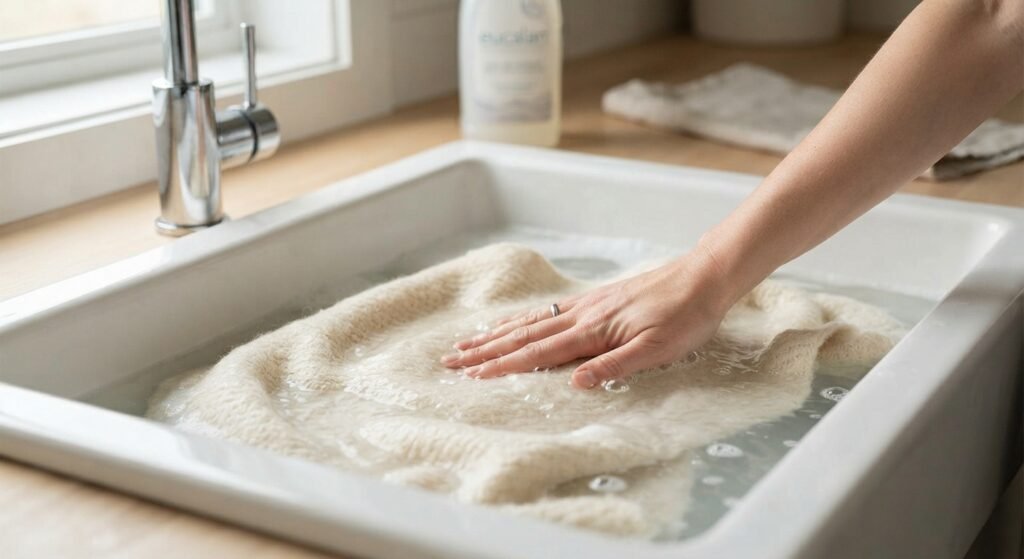
If your blanket is vintage, delicate, or made from untreated 100% wool, hand washing is genuinely the safer route — it just takes a bit more patience.
- Fill a tub or basin: Use cool or lukewarm water — never hot.
- Add your detergent: Mix in a small amount of wool-safe detergent before you submerge the blanket, so it’s already dispersed in the water.
- Soak, don’t scrub: Lower the blanket into the water and press down gently to let it absorb the soapy water. No rubbing, no scrubbing, no twisting — just let it sit for about 15 minutes.
- Rinse until it runs clear: Drain the soapy water, refill with clean cool water, and press gently to rinse. You may need to repeat this two or three times until there’s no more soap residue.
How to Wash a Pendleton Wool Blanket
Pendleton blankets deserve their own quick note, since not every line is treated the same way. Some of their classic collections are strictly dry-clean-only, while their washable lines — like the Eco-Wise — are designed to handle a gentle, cold machine wash.
Before you do anything, check the care tag sewn into your specific blanket; it’ll tell you exactly what you’re working with. When it does allow washing, stick to a mild liquid detergent, and skip fabric softener completely — it coats wool fibers and quietly undoes the natural moisture-wicking and thermal qualities that make wool worth owning in the first place.
How to Wash a Wool Blanket Without Shrinking It
When figuring out how to wash a wool blanket, shrinkage is the fear that keeps most people from ever washing it at all. Master how to wash a wool blanket safely by following these three rules:
- Never use hot water: Heat causes the microscopic scales on wool fibers to lock together permanently—a process called felting —and it’s irreversible.
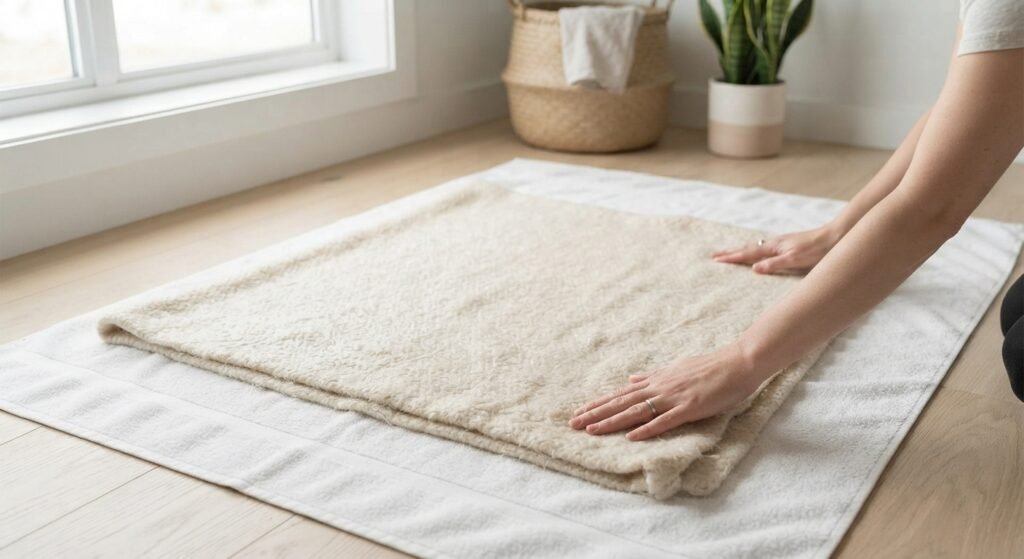
- Never wring or twist it: That kind of force stretches and distorts the weave. Instead, gently press out the water, or roll the blanket in a clean, dry towel to help absorb the extra moisture.
- Never use a tumble dryer: Heat and tumbling together are about the worst combination for wool. Always lay it flat to dry, away from direct sunlight or any heat source.
Frequently Asked Questions (FAQ)
- Q: Can you put a wool blanket in the dryer?
- A: No — a tumble dryer combines heat and tumbling, which is exactly the recipe for permanent shrinking and felting. Always air dry your wool blanket flat instead.
- Q: How often should you wash a wool blanket?
- A: Less often than you’d think. Wool is naturally odor-resistant and tends to repel dirt on its own, so washing it once or twice a year — or simply airing it outside between uses — is usually plenty.
- Q: Can regular laundry detergent be used on wool?
- A: It’s best not to. Regular detergents often contain enzymes that break down natural animal fibers over time. Stick with a specialized wool wash or a mild, pH-neutral soap instead.
Pingback: Merino Wool Bedding Maintenance: Ultimate Care & Washing Guide