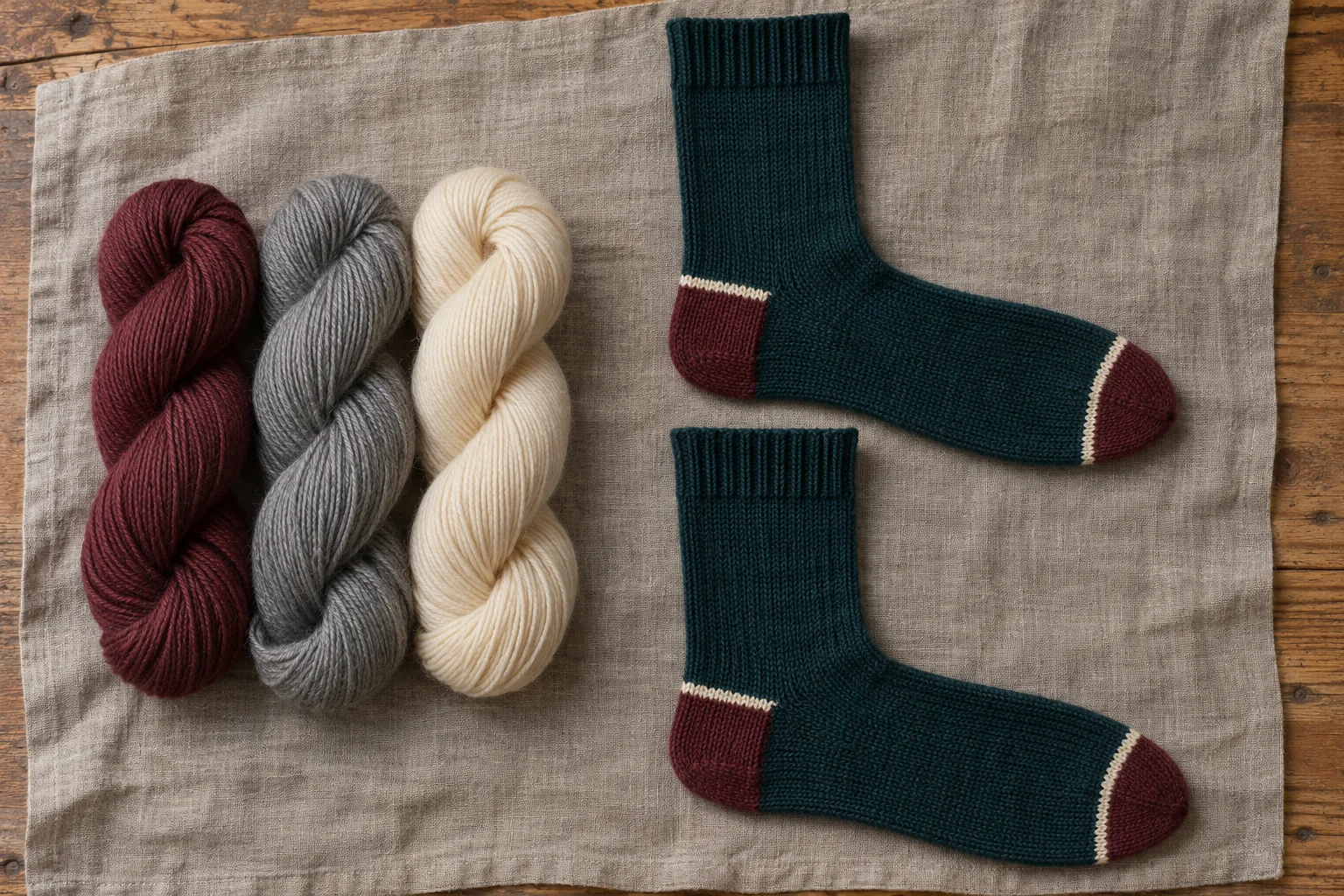
Best Yarn for Socks: Fibers, Blends & What to Choose
For socks you’ll wear inside everyday shoes, the best yarn for socks is usually a smooth, plied fingering-weight sock yarn made with wool and nylon. It gives you a fine fabric at the gauge many sock patterns use, with wool for spring and nylon for reinforcement. Start somewhere else if your priorities differ. A wool-free blend may suit the wearer better, a DK yarn may suit a roomy house sock, and a crocheted sock needs a stitch pattern that will stretch over the heel.
Before choosing a color, take out the shoes and read the yarn’s care label. A pair that crowds your toes or needs a drying routine you’ll never use can spend a long time in the drawer.
Editorial disclosure. This guide draws on published textile research, knitting and crochet educators, and current yarn specifications. The product comparisons are based on labels and documented care directions. The Editorial Team did not knit, wear-test or launder samples of these yarns.
Best yarn for socks at a glance
| If you’re making… | A good starting point | Check before buying |
|---|---|---|
| A first pair for everyday shoes | Smooth, light-colored fingering sock yarn in a wool/nylon blend | You can see the stitches and match the pattern’s washed gauge. |
| A pair without wool | A purpose-made cotton blend with a stretch component, or an acrylic-based sock yarn | A sample pulls over the heel and springs back around the foot. |
| Socks for roomy boots or home | Sport or DK yarn in a pattern written at that weight | The thicker sole leaves enough room for toes to move. |
| A pair without synthetic fiber | Firmly plied all-wool yarn suited to socks | The wearer accepts the care routine and occasional darning. |
Give the pattern’s gauge and finished measurements the first vote. A yarn that makes a limp heel at that stitch count is a poor substitute.
What makes a good sock yarn?
What happens where the shoe rubs?
Think about the back of a heel sliding against a shoe lining and the ball of the foot pressing down with every step. Those areas need a fabric that resists thinning. Merino can feel wonderfully soft around the ankle, but squeezing the ball in a store tells you very little about how its strands will stand up to repeated rubbing.
In laboratory tests, Özdil and colleagues found that adding polyamide improved abrasion resistance in the socks they studied. Yarn size and finishing also influenced results. A useful takeaway for makers is to consider reinforcement alongside yarn construction. The study gives no wear-life estimate for a hand-knit or crocheted pair. Read the sock abrasion study.
Will the fabric stretch and recover?
Stretch is how far the sock opens. Recovery is how well it draws back afterward. You need both when the cuff has to pass over the heel and then sit comfortably around a narrower ankle. Wool’s natural crimp contributes spring, while the loops in the fabric, the ribbing and the finished circumference affect how much of that spring you actually feel. Finer wool fibers tend to bend more readily against skin. Finishing and the feel of the particular yarn still matter to an individual wearer. Woolmark explains the structure of a wool fiber.
Will it feel warm or stay damp?
Wool can take up water vapor within the fiber. Wicking moves liquid along the fabric. Drying means that water leaves it, and breathability concerns how readily air or vapor can pass through the material. A yarn can contribute to one of these behaviors while the shoe limits another. A sock that airs out quickly on a rack can still feel damp after hours in a closed boot.
In a study comparing wool and acrylic sock fabrics, Van Amber and colleagues found that stitch structure had the largest effect on several thermal and moisture properties under static laboratory conditions. The thicker terry fabrics behaved differently from plain jersey. Compare the thickness of a cushioned sole with a plain one inside your own shoes. Read the sock-fabric study.
Sock yarn fibers compared
| Fiber or blend | What it brings | What to watch | Where it fits |
|---|---|---|---|
| Wool with nylon or polyamide | Wool’s spring plus a reinforcing fiber | The percentage alone says little about twist, gauge or drying instructions | Frequently worn shoe socks |
| All wool, including Merino | A wide choice of textures and a resilient knitted fabric | A loosely spun single can wear thin. Untreated wool needs careful washing | A plied wool pair for someone happy to follow its care label |
| Cotton with a stretch fiber | A wool-free option with some give from the blend | Pure cotton has less natural spring. Check how the washed cuff recovers | Lightweight socks for someone who likes cotton against the skin |
| Acrylic-based sock blends | Wool-free choices that may fit a modest budget or machine-care routine | Check the dryer setting. A bulky craft acrylic can make a rigid sole or bunch inside a shoe | A washable gift or an acrylic-based pair designed for shoes |
| Specialty blends with alpaca, silk or other fibers | Can change the drape, hand or surface of a yarn | A silky or lofty skein still needs suitable construction and recovery | A special pair when a swatch suits the intended use |
Merino tells you which sheep supplied the wool. Superwash tells you that wool has been treated to reduce felting and shrinkage during washing. The two terms can describe the same yarn. Untreated wool can felt with the wrong combination of moisture, heat and agitation. Superwash opens up care options, but the exact label decides the wash and dryer settings. How superwash wool is made and cared for.
Wool-free shoppers should also read past the word bamboo. Much soft yarn sold using that term contains regenerated cellulose such as rayon or viscose made from bamboo. Ask for the generic fiber description if it matters to your purchase. And if you’re considering an ordinary acrylic from your stash, our acrylic and wool yarn comparison explains the broader handling and care differences. FTC guidance on bamboo fabrics.
Is wool or a wool/nylon blend better for socks?
For a first pair that will get frequent shoe wear, a wool/nylon blend is a sensible choice. A label might say 75/25 or 80/20. Neither ratio is a durability rating. If two skeins have the same percentages, the one that holds its strands together and produces a comfortable, close fabric at your gauge is the better candidate for that pattern. Nylon is one member of the polyamide family, so a label may use either term.
For an all-wool pair, look for a yarn with distinct plies, sold for socks or supported by a sock pattern. Consider a smooth heel or the reinforced heel stitch specified in your pattern. Set aside some matching yarn if you like to darn. Nylon is optional, but a large, airy single chosen for a scarf asks a lot of a small patch of knitting under a heel. Sock designer Kate Atherley explains how yarn choice, stitch density and fit work together in her guide to longer-lasting handknits.
Sock yarn weight, twist and gauge
Fingering, sport or DK?
In the US Craft Yarn Council system, sock and fingering commonly fall under 1 Super Fine, sport under 2 Fine, and DK under 3 Light. Fingering is a useful starting point for close-fitting shoes. Sport adds substance for shoes with more room. DK can work well for a boot or lounge sock when the pattern is written for it. A thicker yarn can also make a tight shoe uncomfortable before its extra cushioning does you any good. Craft Yarn Council’s Standard Yarn Weight System.
A weight category tells you about thickness. A structural ply is one strand spun together with others to make the yarn. In British patterns, “4-ply” can name a fingering-type thickness even when the yarn contains a different number of strands. Likewise, worsted weight describes thickness and worsted-spun describes how fibers were prepared and spun. A skein can be worsted-spun and fine enough for socks. Woolen and worsted spinning explained.
How to read a sock swatch
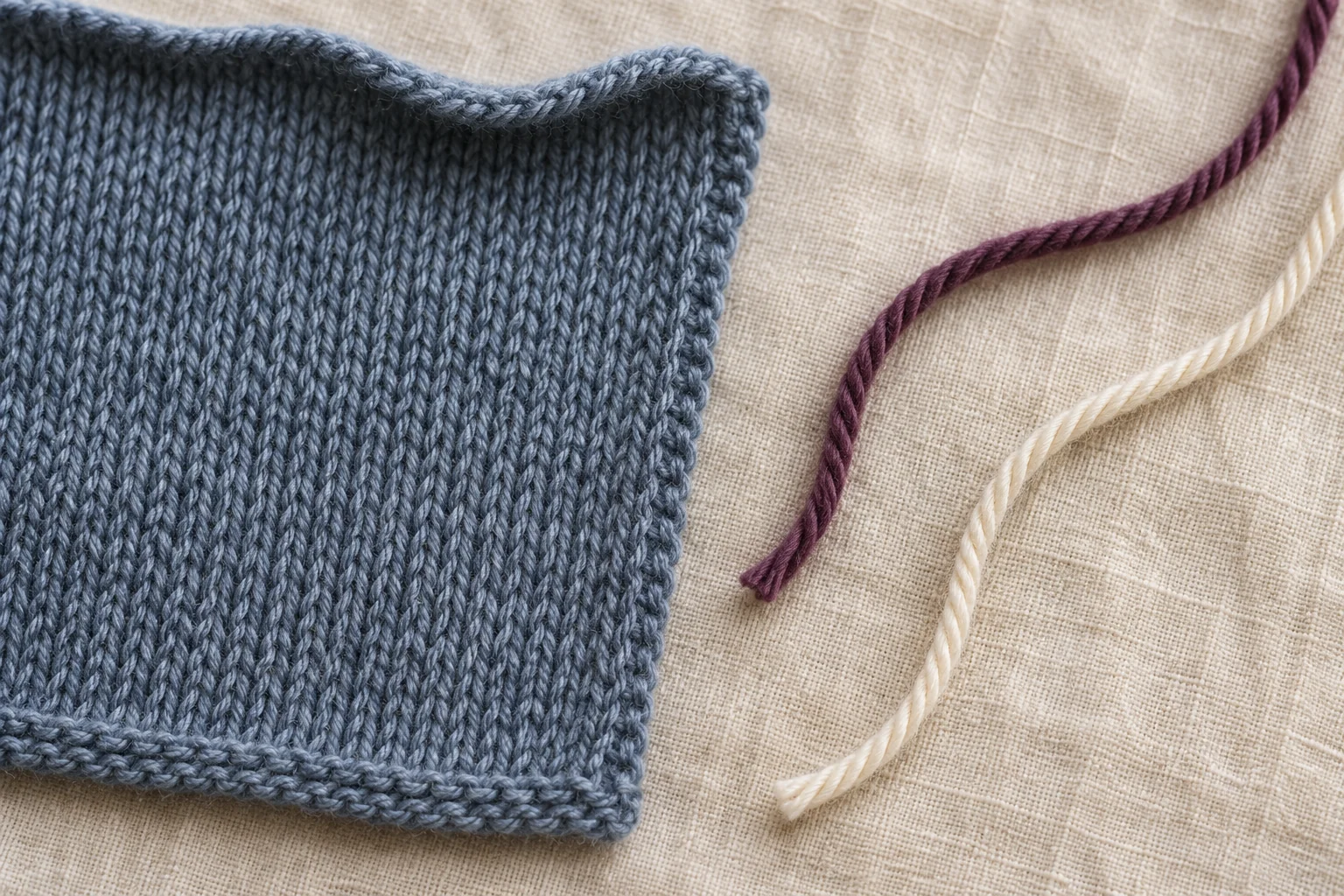
Work the pattern’s stitch in the round if that is how you’ll make the sock. A smooth strand with several plies twisted together is a useful starting point underfoot. Now look at what that yarn makes. If you can push the stitches far apart with little effort, the heel may be too open for the job. If the fabric feels like a board or barely stretches across the foot, going down another needle or hook size is unlikely to help.
Wash and dry the swatch the way the yarn maker directs, then measure it relaxed. The arithmetic matters. A 64-stitch foot at eight stitches per inch measures eight inches around. The same 64 stitches at seven and a half per inch measure about eight and a half inches. That extra half inch can turn a close-fitting sock into one that slips at the heel. Compare against the pattern’s finished measurements and intended ease. How to block and measure wool knitting.
Choosing yarn for different sock projects
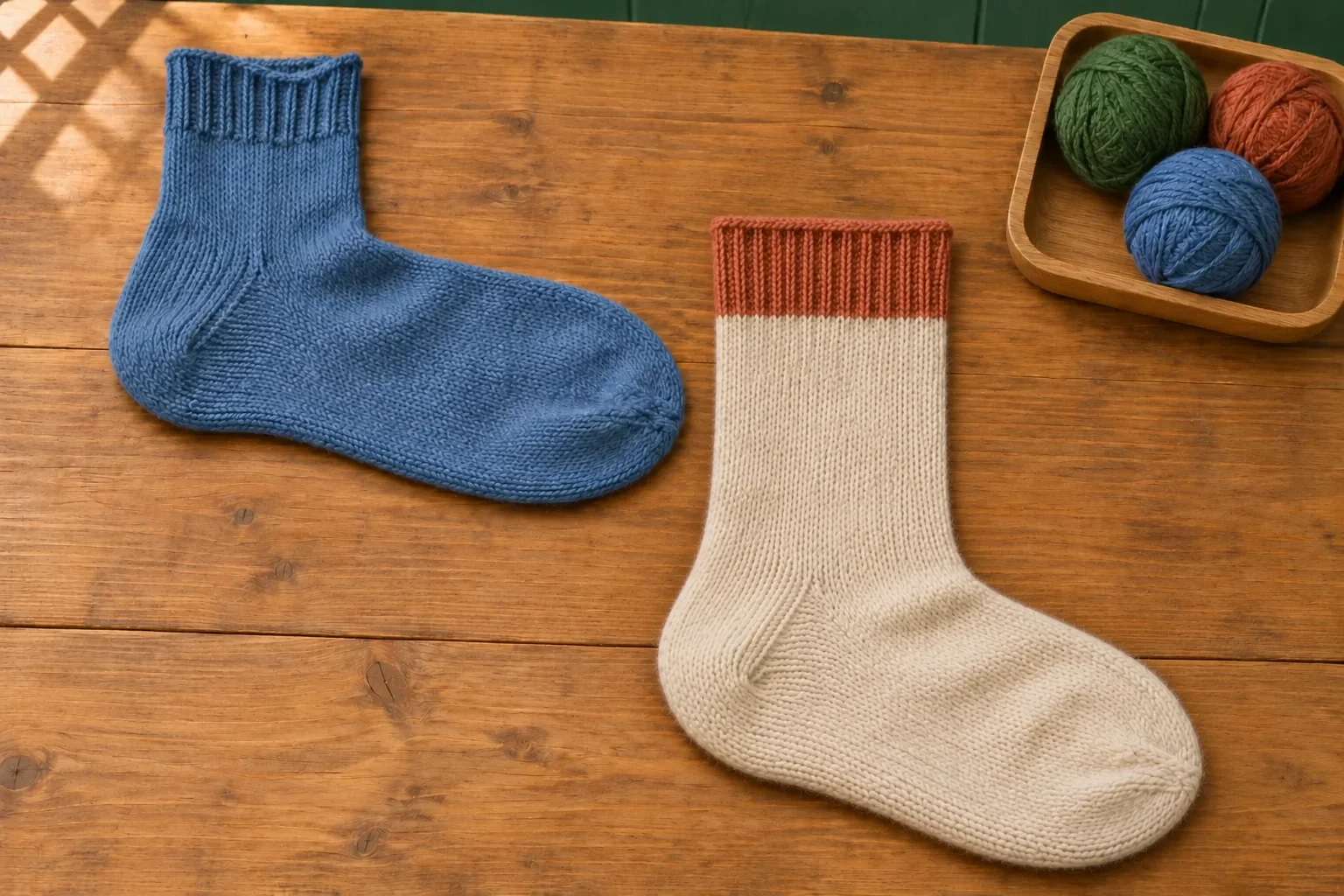
For daily shoes, hiking or winter boots. Start with a sock the wearer already finds comfortable in that footwear. Fold it across the sole and compare its bulk with your washed sample. A slim everyday shoe may call for plain fingering-weight fabric underfoot even if the leg has cables. A roomy hiking boot may accommodate a denser or thicker sole. For winter, check toe room with the actual boot and insole. For a comparison of finished socks by use, see wool versus cotton socks for everyday wear and hiking.
For house socks or a sensitive wearer. A thicker house sock lets you use a yarn that would take up too much room in a shoe. A low ridge underneath may be far more noticeable to the wearer than the difference between two soft skeins. Let them feel a washed swatch, especially the side that will sit against the sole. For a gift that will go into the family laundry, write both the wash and drying instructions on the gift tag. How to wash wool socks.
For crochet. Use a sock pattern written for crochet and swatch its actual stitch. Try stretching the sample in the direction that will run around the foot. A cuff can stretch generously while the stitches in the leg stop the heel from passing through. A textured crochet stitch may also feel bulky inside a shoe even at the specified stitch count. Try the first sock on as soon as the leg and heel allow, before repeating it for the second. Dora Does explains stretch and construction in crocheted socks.
Five real sock yarns worth comparing
These examples show what changes when you choose a different ball size, fiber mix or laundry routine. All five carry a fingering or super-fine designation. Specifications apply to the named yarn line. Check the band on the ball you buy, especially when using an older skein.
| Yarn | Fiber and construction as listed | Yardage | Washing and drying |
|---|---|---|---|
| Patons Kroy Socks | Four-ply, 75% washable wool and 25% nylon | 166 yd / 50 g | The product’s Care panel specifies a cool machine wash and flat drying. |
| Cascade Heritage | 75% superwash Merino wool and 25% nylon | 437 yd / 100 g | Cold machine wash. Tumble dry cool. |
| Rosa Pomar Mondim | Three-ply, 100% Portuguese wool, non-superwash | 421 yd / 100 g | US retailer Wild Hand specifies gentle lukewarm hand washing and flat drying. |
| Universal Yarn Bamboo Pop Sock | Manufacturer lists 55% bamboo, 37% cotton and 8% PBT | 492 yd / 100 g | Warm machine wash and dry flat. |
| Premier Fruits Sock | 93% acrylic and 7% PBT, a synthetic polyester strand plied with the acrylic | 235 yd / 50 g | Machine wash and tumble dry. The listing rules out ironing. |
Kroy and Heritage illustrate why the ball band deserves a second look. Two 50-gram balls of Kroy supply 332 yards. One 100-gram skein of Heritage supplies 437. For a pattern calling for 380 yards for your size, two Kroy balls come up short. One Heritage skein covers the stated yardage if the gauge works. Remember to allow for swatching, a longer leg or yarn used to match stripes.
Mondim gives an all-wool shopper a documented three-ply option. Bamboo Pop Sock and Fruits Sock offer two quite different routes around wool. Choose between them by the fabric you want, how you’ll wash it and whether you have space to lay socks flat to dry. A self-patterning yarn can do the colorwork for you, but it won’t necessarily put the same stripe at each toe.
A shopping checklist that catches common mistakes
- Bring the pattern and the shoe. Note the stitch, gauge, size and finished foot circumference. Check the shoe’s depth at the toe as well as the width.
- Shop by total yards. Multiply yards per ball by the number of balls, then compare with the requirement for your size. For contrast heels and toes, check the yardage for each color separately.
- Look beyond softness. Check whether the maker uses the yarn for socks and whether it has a firm, coherent strand. For sensitive feet, feel the washed interior and consider the toe finish.
- Read both laundry instructions. A machine-washable yarn may still need flat drying. When combining yarns, pick a routine that both labels permit.
- Buy enough of the same dye lot if the pair should match. Self-striping repeats, taller cuffs or a bigger foot can all use more yarn than the photographed sample. Keep the band and a little yarn for repairs.
Frequently asked questions
What sock yarn is easiest for a beginner?
A smooth, solid, light or mid-tone yarn at the pattern’s weight makes it easier to count stitches and spot a missed decrease. If small needles are the main obstacle, try a first-sock pattern designed for DK rather than substituting DK into a fingering pattern.
Is Merino the best wool yarn for socks?
Merino is worth considering for a wearer who prioritizes next-to-skin softness. Check how the particular yarn is spun, whether it includes reinforcement and what care it requires. A firmly plied non-Merino wool can be a better fit for someone who values a sturdy-feeling everyday sock.
Can I use regular cotton or acrylic yarn for socks?
Yes, if the pattern, gauge and resulting fabric work for the wearer. Try a short cuff before committing to the pair. If it stays stretched out, choose a cotton blend with a stretch component. If a general-purpose acrylic makes thick, rigid fabric, try a finer acrylic-based sock yarn.
Do I need different yarn for knitting and crocheting socks?
The same yarn can suit either craft. What changes is the fabric your stitch produces and the yardage the pattern asks for. Use the crochet instructions and gauge for a crocheted pair, even when a knitted sample on the yarn label looks like the sock you have in mind.
Which yarn should you take home?
For a first pair to wear in shoes, take home enough plied fingering wool/nylon to meet your pattern’s yardage, in a color you can read while you work. Switch to a wool-free sock blend for a wearer who avoids wool, or a purpose-chosen all-wool yarn for someone happy to hand wash and mend. If the decision is down to two skeins, let the washed swatch and the care instructions break the tie.