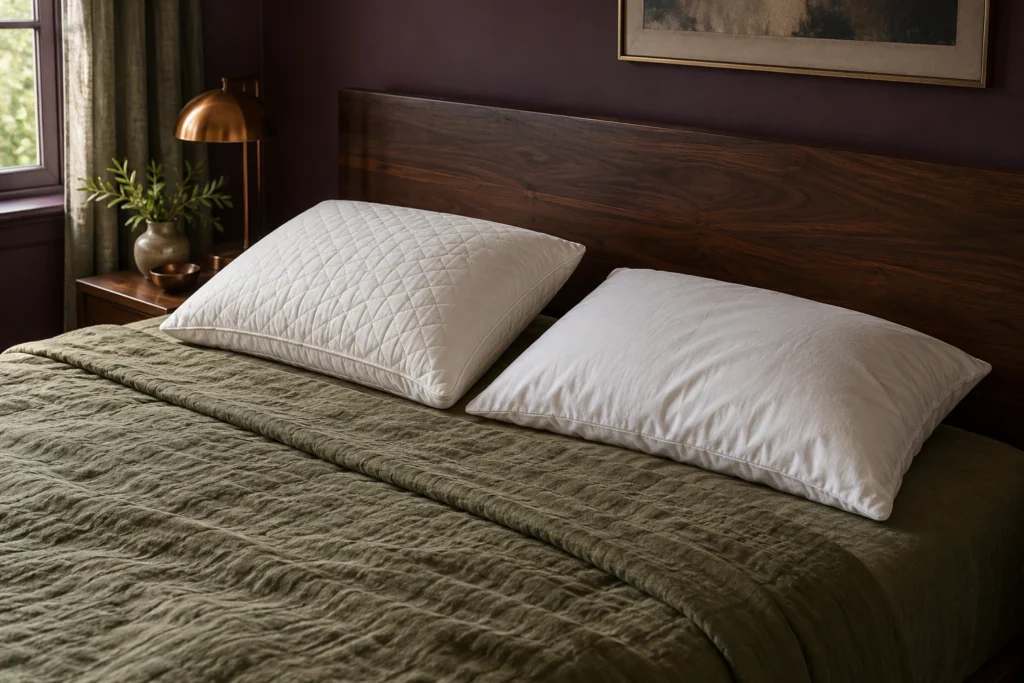
The useful distinction in a wool vs down pillow comparison is how the finished pillow holds your head, not which filling sounds more luxurious. Adjustable wool can make sense when you want to change the amount of filling. A down-rich pillow is worth considering if you like a yielding pillow you can gather and reshape. But layered wool, loose wool clusters and feather-containing down pillows can feel quite different from one another.
Start with the height you need after the pillow compresses, then check its construction, cleaning instructions and return terms. Neither filling is automatically cooler, better for allergies or more supportive for every sleeper.
Research note: Editorial Team reviewed manufacturer specifications, care policies and relevant textile and health sources on November 2, 2026. We have not physically tested these pillows. Named products illustrate construction differences; they are not a tested ranking.
What is inside a wool or down pillow?
Wool batting and loose wool clusters behave differently
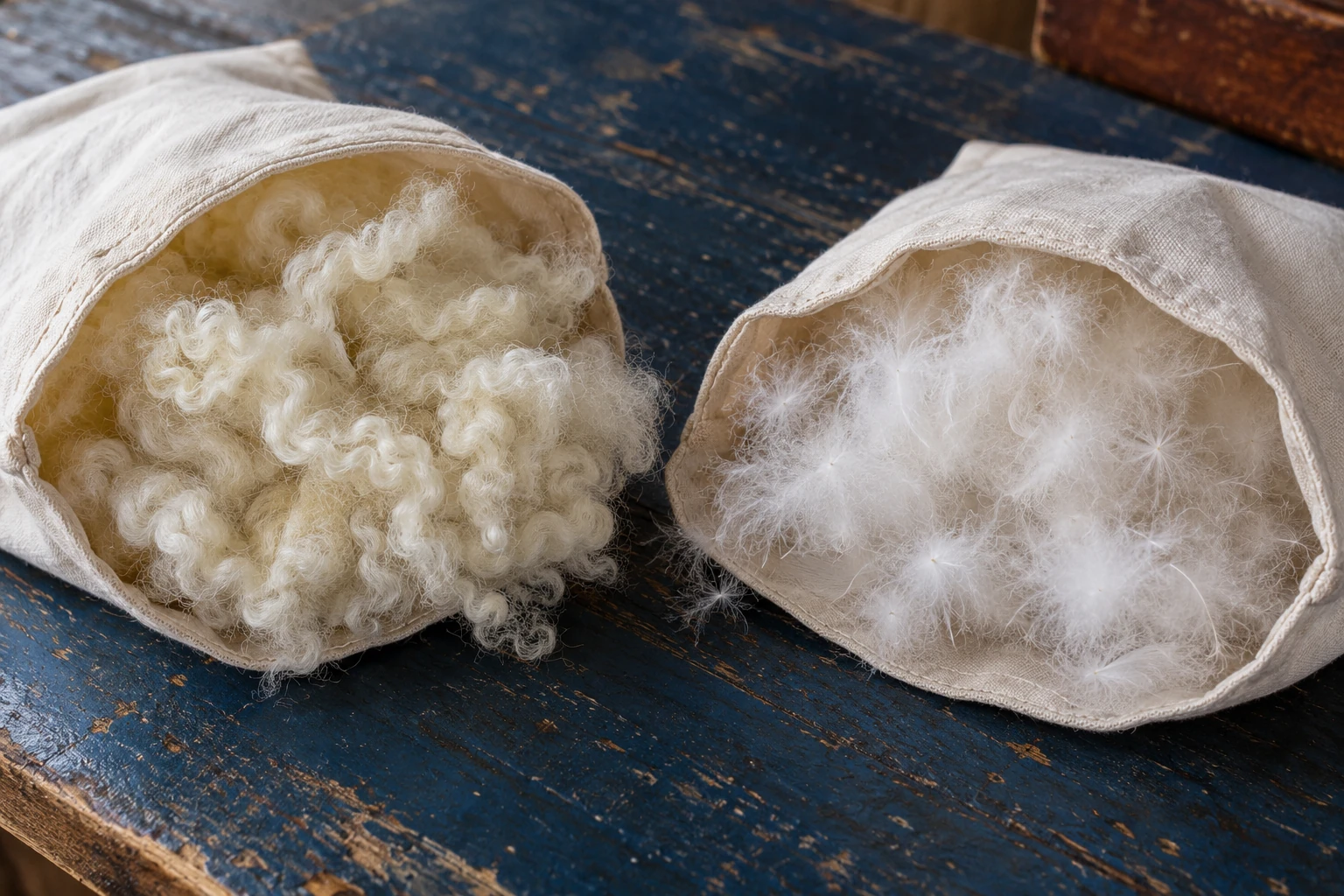
A wool pillow may contain sheets of batting arranged in layers, or loose clusters that can be redistributed. That distinction matters more than a photograph of a plump pillow.
For example, Holy Lamb Organics’ Certified Organic Wool Bed Pillows use layered wool batting inside an organic cotton sateen case. The manufacturer offers different fill levels rather than describing owner-adjustable filling.
The Woolroom Deluxe Washable Wool Pillow, by contrast, contains loose wool balls that owners can add or remove. The practical advantage is the ability to change the fill amount after purchase. A zipper alone does not establish adjustability: it might open only a removable cover, so check whether the manufacturer permits access to the filling.
Both constructions can settle with use. Holy Lamb Organics explicitly anticipates compression of its layered wool. That is a reason to understand the model’s expected behavior, not permission to buy an uncomfortably high pillow and assume it will eventually fit.
Down is not the same as feathers
The American Down and Feather Council distinguishes down’s branching, three-dimensional clusters from feathers, which have quills. A pillow sold in the down category may contain both, sometimes in separate chambers.
Pacific Coast’s 3 Chamber Feather DownAround Bed Pillow is a useful example: its inner chamber contains goose feathers, while the outer chambers contain white duck down. It has a cotton shell and is described by the manufacturer as medium support. The page does not disclose exact down-to-feather percentages, so it should not be treated as an all-down pillow or assigned an assumed blend ratio.
Read the filling disclosure, not just the product name. Also watch for wool products called “wooly down”: that wording can describe wool clusters, not bird down. Down alternative is another separate category, commonly using a different filling altogether.
Wool vs down pillow: a practical comparison
These are buying distinctions, not universal performance ratings.
| Decision | Wool pillow | Down or down-and-feather pillow |
|---|---|---|
| Changing the height | Some loose-fill models let you add or remove wool; layered batting models may have fixed fill. | Check the exact design. Fluffing redistributes filling but does not change its amount. |
| Feel and reshaping | Batting and clusters offer different structures; fill density and shell affect how yielding the pillow feels. | Down-rich fill may suit a preference for a yielding, moldable pillow; feathers and chamber design change the feel. |
| Support after compression | Judge the height remaining under your head, including expected settling. | Judge the same thing. A high fill-power number is not a firmness score. |
| Temperature and moisture | Wool absorbs moisture vapor, but that does not establish a cooling advantage for every pillow. | Fill quantity, shell, protector and room conditions matter; a universal temperature ranking is not justified. |
| Cleaning | Instructions may permit only cover washing, spot cleaning or a specific whole-pillow method. | Some models permit machine washing; drying requirements and equipment limits still matter. |
| Allergy considerations | A wool label does not guarantee freedom from allergens. | A down label alone does not establish allergy suitability. Consider encasements, cleaning and individual triggers. |
Compare compressed height, not just fluffy loft
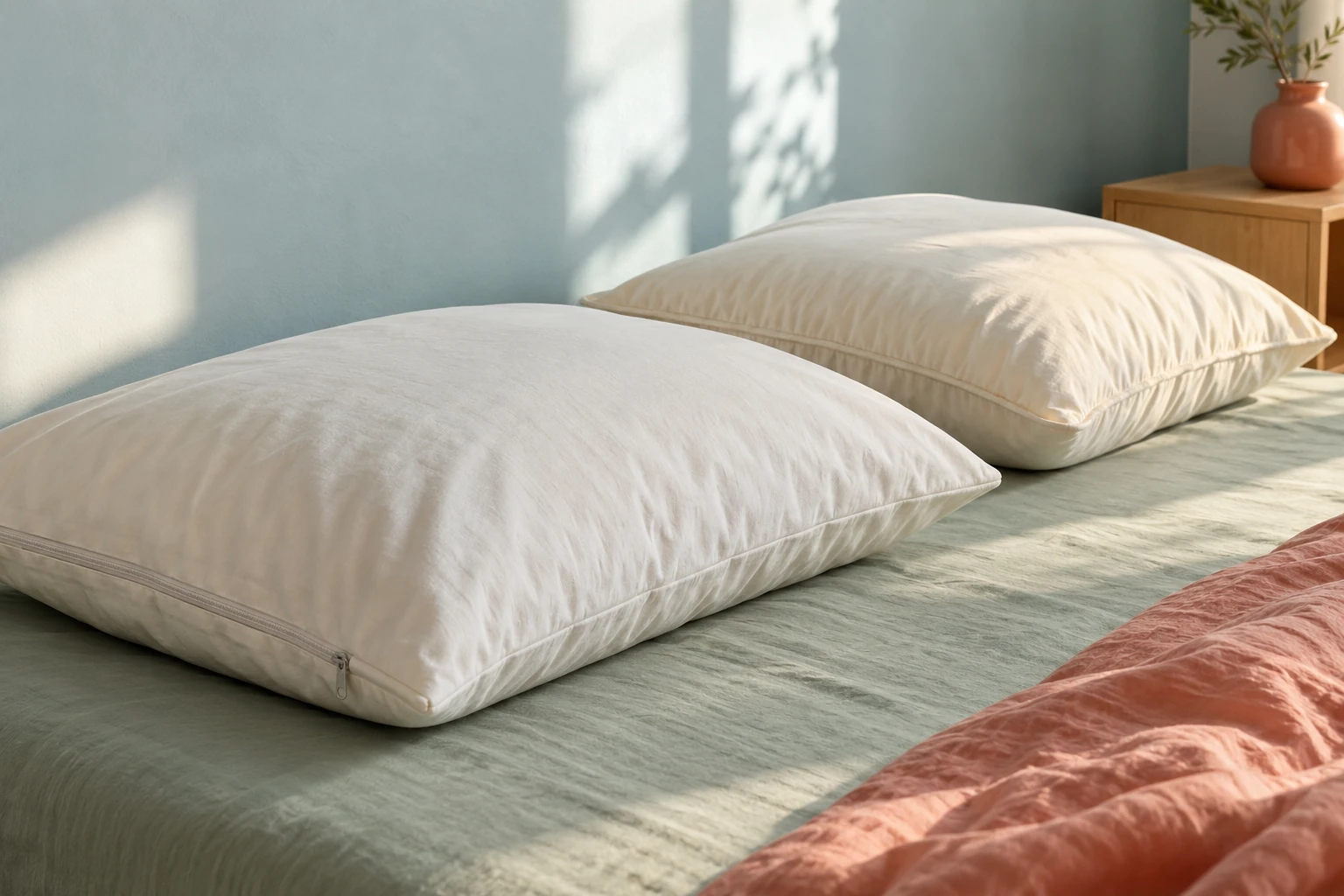
Loft is the pillow’s height; useful support is what remains when your head is resting on it. A pillow can look tall on the bed and become much lower in use. Conversely, a densely filled pillow may leave your head higher than you want even if its advertised dimensions seem ordinary.
A small biomechanical study involving ten healthy participants found that changing pillow height affected head-and-neck pressure and alignment. It did not compare wool with down, establish a universal ideal height or demonstrate that either filling treats neck pain.
For a practical fit check, try the pillow on your own mattress in your usual sleeping positions. Notice whether you have to stack it, fold it or repeatedly push filling around to feel comfortable. Your shoulder position and how far you sink into the mattress affect the space the pillow needs to fill; a “side sleeper” label cannot account for every combination.
If your current pillow collapses too far, simply replacing down with wool may not solve the problem. Look for a construction and fill amount that maintain a suitable height. If it holds your head too high, an adjustable model offers a way to remove filling rather than hoping that compression will correct it.
Fill power and fill weight answer different questions
IDFL’s testing definitions distinguish fill power—the volume occupied by a standardized mass of filling under specified test conditions—from net fill weight, the amount of filling in the product.
That means a high fill-power claim cannot tell you, by itself, how firm a finished pillow will feel. You also need its fill amount, size, chamber design and shell. Compare like sizes, and check whether a listed weight describes the filling or the entire pillow. Those numbers are not interchangeable.
Which feels softer, cooler or less clammy?
Softness has several meanings: a smooth cover against your face, low resistance as your head sinks, or filling you can shape around your neck. Decide which one you want. A thick quilted cover can change the initial feel of either filling, while a tight protector can limit how freely the pillow reshapes.
Down-rich designs are worth trying if you enjoy a yielding, scrunchable pillow. They are less appealing if you dislike regularly redistributing fill. A feather-containing design may feel different from an otherwise similar all-down one; check the chamber arrangement rather than assuming the word “down” promises the same sensation.
For moisture, Woolmark describes wool’s ability to absorb water vapor within the fiber. This is a material property, not proof that every wool pillow keeps every sleeper cooler. Absorbing vapor is also different from quickly drying a saturated pillow.
The sources reviewed do not establish a universal wool-versus-down cooling winner for finished pillows. Cover fabric, protector, fill density, room humidity and personal preference remain relevant. Nor should a result about a duvet be presented as a measurement of what happens beneath your head.
If you are choosing the rest of your bedding too, our wool vs down comforter comparison addresses that separate decision. A pillow’s feel and an entire bed’s warmth are not the same question.
Allergies and dust mites: avoid blanket promises
Neither wool nor down is a universal allergy solution. A reaction to a particular material and exposure to dust-mite allergens are different issues; a broad “hypoallergenic” description does not resolve either one for every person.
The Asthma and Allergy Foundation of America recommends allergen-barrier covers for pillows and mattresses as part of controlling dust-mite exposure. Its guidance focuses on barriers and the bedroom environment, not choosing wool as a substitute for those measures.
For a buyer, the useful question is whether the pillow and its covers fit the cleaning routine you need. Do not apply hot-washing advice intended for washable bedding to a filled pillow whose label prohibits it. If you have a diagnosed material allergy or a clinician-recommended cleaning routine, use those requirements to narrow the options rather than relying on natural-fiber marketing.
Read care instructions before choosing a filling
A washable case and a washable filled pillow are different purchases. Separate the pillowcase you sleep on, any removable outer cover, and the inner shell containing the filling.
On the Woolroom model above, the manufacturer says to remove the wool balls before washing the outer cover, use the specified wool/delicate care routine and hang it dry. The product’s name should not be interpreted as permission to put the filled pillow through an ordinary wash and tumble-dry cycle.
Holy Lamb Organics specifies spot cleaning for its layered organic wool pillow. Yet it would also be wrong to call every wool pillow spot-clean-only: Shepherd’s Dream’s Customizable Wooly Down Pillow explicitly permits hand washing and air drying. Follow that model’s complete instructions rather than transferring the method to another wool pillow.
Pacific Coast identifies the chambered example above as machine washable. Its laundry-care guidance still makes the care label decisive and emphasizes drying the pillow completely, including its center. Permission to wash is only useful if you can also meet the product’s drying instructions.
Excessive agitation and unsuitable washing can change wool’s structure; our guide to why wool shrinks explains that mechanism. It is not a reason to disregard a manufacturer’s specifically approved washing method.
For long-term maintenance, distinguish redistributing loose fill from replacing lost height or correcting permanent changes. Fluffing is not a guarantee of restoration. Assess lumps, shell damage, persistent unwanted odors and whether the pillow still feels suitable after permitted care. The evidence reviewed does not justify a single replacement interval or a claim that either filling always lasts longer.
Check sourcing, total price and the actual return policy
Both fillings involve animals. For wool, the Responsible Wool Standard addresses sheep welfare, land management and social requirements within a certified supply chain. The Responsible Down Standard addresses down and feather sourcing, including prohibitions on live plucking and force-feeding.
Check which certification applies to the exact product or filling, and what its current scope covers. Neither standard is a pillow-comfort test, a medical endorsement or, by itself, proof of organic status. A natural filling also does not establish which finished pillow has the lower overall environmental impact.
For price, compare the same size and selected firmness or fill level. Add any required protector, extra filling, delivery and return costs. A lower advertised starting price can describe a different configuration from the one you need. This guide omits dollar comparisons because equivalent, selectable configurations were not consistently verified.
Return wording can change the value calculation substantially. At review time, Woolroom’s 30-night trial for eligible pillows permitted trying them at home, including used or washed returns under its terms. Its returns policy says return shipping is the buyer’s responsibility without the applicable return-protection option.
Pacific Coast’s 180-day return policy requires eligible products to remain clean and unwashed and excludes washed, dry-cleaned or otherwise cleaned items. A long window is therefore not unrestricted permission to wash a pillow and then return it. Confirm the current terms, destination restrictions and retailer before ordering.
Which pillow should you choose?
Consider adjustable wool if the main problem is finding the right fill amount. Choose a model that explicitly lets you remove and replenish filling, and check the cleaning requirements before buying. If you prefer a fixed construction, compare the available batting fill levels instead. Our Best Wool Pillows guide provides a wool-only shortlist once you have made that decision.
Consider down-rich filling if you want a pillow you can gather and reshape. Check whether the design contains feathers, whether the filling sits in separate chambers, and whether the remaining height feels right after compression. A firmer chambered design and a lightly filled down pillow are not interchangeable purchases.
Let practical requirements override the material preference. If frequent whole-pillow washing is essential, eliminate models that cannot accommodate it. If your current pillow already suits you, identify its fill, size and construction before switching. And if you are uncertain about feel, prioritize a return policy that genuinely allows the kind of at-home evaluation you need.