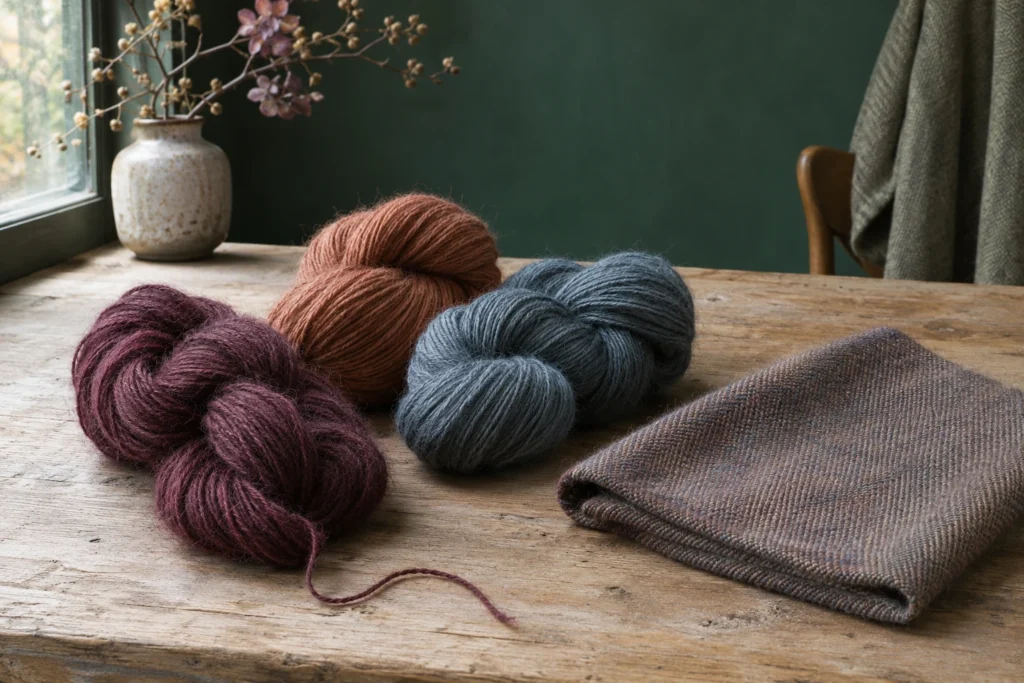
What is virgin wool? It is wool that has not been reclaimed from an earlier manufactured or used product. Under US labeling rules, “virgin” and “new” describe that history. They do not mean the wool came from a lamb’s first shearing, and they do not specify its softness or grade.
That distinction matters when comparing a sweater, blanket or length of fabric. A virgin-wool label answers one sourcing question; you still need the fiber composition, construction and care instructions to decide whether the item suits you.
Research-based guidance from the Editorial Team. Sources checked November 3, 2026. This article explains US labeling terminology and buying considerations; it does not report hands-on product testing.
What is virgin wool on a US product label?
The specific rule is 16 CFR § 300.20. It prohibits describing a product, fiber or part as virgin or new if that material has been reclaimed from a previously spun, woven, knitted, felted or otherwise manufactured or used product. An adult sheep’s fleece can qualify; a first shearing is not required.
Nor does the rule mean “never processed.” Cleaning, dyeing, spinning and weaving wool into its present product are different from reclaiming fiber from an earlier product. For the production stages themselves, see where wool comes from.
The FTC’s wool-labeling guidance covers products including wool clothing, blankets, fabrics and yarns. It identifies separate coverage for rugs and carpets under the Textile Act, and excludes upholstery from the Wool Act. The distinctions here focus on clothing, yarn and blankets rather than treating every home textile as legally identical.
Read the percentages as well as the descriptive name. A hypothetical label stating “80% virgin wool, 20% nylon” describes a blend. The virgin claim applies to its wool component; it does not turn the nylon into wool. A full composition label is more useful than a retailer’s shortened “virgin wool sweater” heading.
Virgin wool, new wool, lambswool and Merino compared
These names answer different questions. Several can accurately describe the same fiber, so treating them as a simple quality ranking creates confusion.
| Label term | What it tells you | What still needs checking |
|---|---|---|
| Virgin wool | Prior manufacturing or use history | Not a breed, fineness measurement or comfort guarantee. |
| New wool | The same history restriction as virgin wool under the US rule | Does not mean the finished item was recently manufactured. |
| Lambswool | Wool associated with young sheep, commonly their first shearing | Check the seller’s definition and the full blend; it is not a universal micron grade. |
| Merino wool | Wool from Merino sheep | Can be virgin or recycled; the name alone does not specify a finished garment’s feel. |
| Recycled wool | Wool returned to fiber form from qualifying earlier wool products | Can come from manufacturing material as well as consumer-used textiles. |
| “Regular wool” | An informal comparison term | Ask for the actual composition and any available breed or fiber specifications. |
Woolmark’s spinning education material defines lamb’s wool by the first shearing of lambs and discusses variation in commercial “lambswool” usage. That is a different question from whether fiber has been reclaimed. Merino lambswool can therefore also be virgin wool. Our Merino wool vs lambswool comparison explains how to assess those garment descriptions without assuming one is always softer.
“Virgin wool vs regular wool” is a less precise comparison: regular wool is not a defined premium or economy grade. If a listing uses only that phrase, request the composition label rather than inferring a breed, age or processing history.
Virgin wool vs recycled wool: what changes?
The Wool Products Labeling Act distinguishes wool from recycled wool and requires their contents to be identified separately. Its recycled category includes wool recovered from certain products before consumer use as well as from used wool textiles. An unworn garment can consequently contain recycled fiber; “recycled” does not mean the new item is secondhand.
In mechanical recycling, textiles are opened back into fibers. A study of post-consumer wool and cashmere recycling found that retained fiber length depended on starting material and processing. Opening can break fibers, and manufacturers may blend recovered wool with other fibers to meet yarn and fabric requirements. That does not establish that every recycled garment is weaker or rougher than every virgin one.
For a purchase, examine the resulting fabric and blend. If a recycled-wool coat includes nylon, ask what that blend is intended to achieve rather than treating the additional fiber as automatic evidence of poor quality. Equally, a virgin-wool claim cannot establish how well a loosely knitted sweater will resist abrasion.
“Reclaimed wool” is often used to describe recovered material. For a US purchase, the practical question is how that material is identified in the fiber-content disclosure, including the recycled percentage. A broad environmental slogan is not a substitute for the label.
Is virgin wool softer, warmer or higher quality?
Softness and itch depend on the fibers and fabric
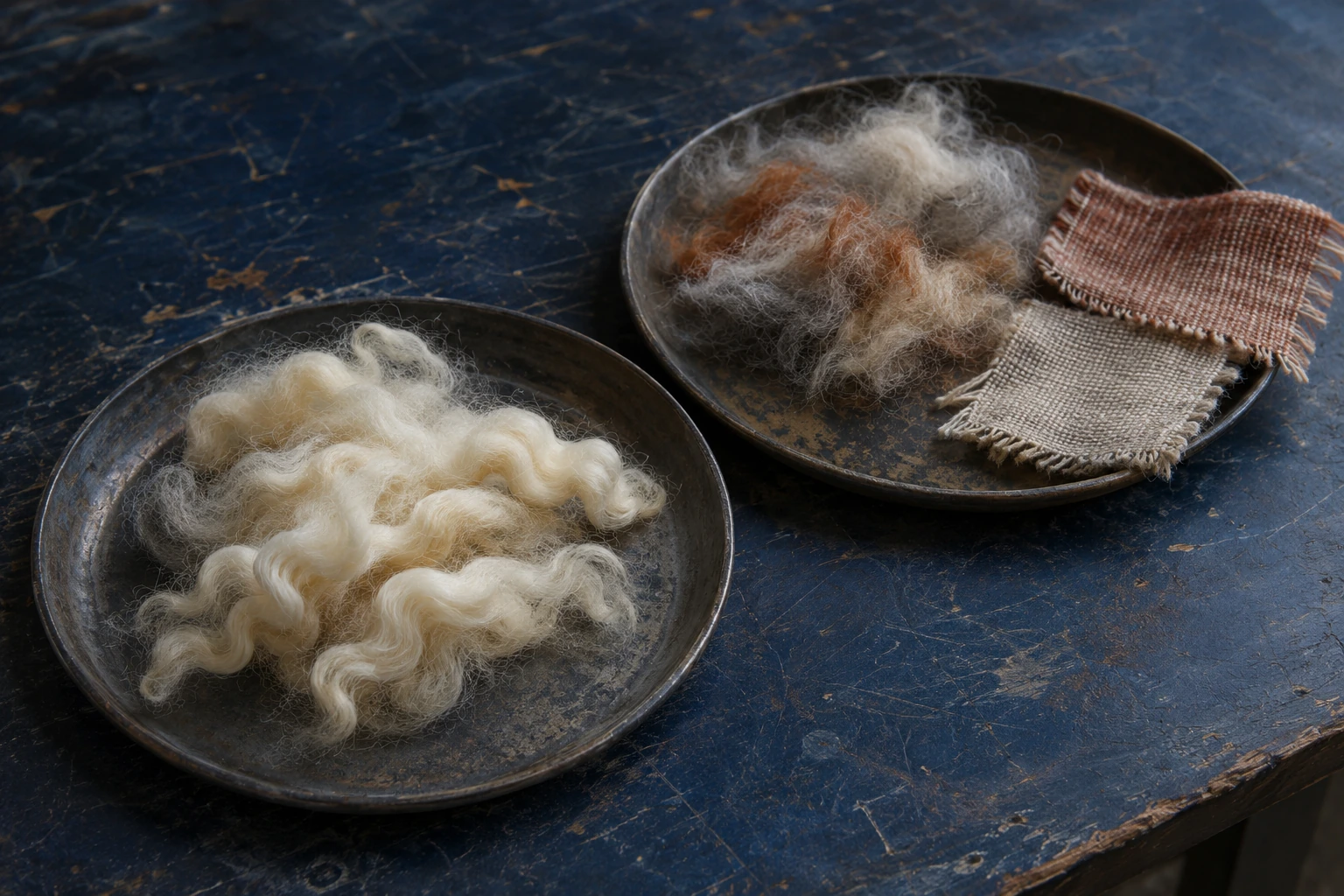
Virgin wool can feel fine and smooth or relatively coarse. Woolmark identifies fiber diameter as an important influence on softness. A micron measurement, when documented for the product, tells you more about fineness than the word virgin does. It still cannot describe every aspect of a finished fabric.
Coarser fiber ends protruding from a textile can cause mechanical prickle; Woolmark’s research summary discusses this distinction. Yarn, fabric surface, fit and personal sensitivity also affect wearing comfort. Neither Merino nor lambswool is an automatic promise that a garment will feel comfortable to everyone.
For a sweater worn against bare skin, assess the actual neckline, cuffs and inner surface if you can, and check return conditions before buying online. For an outer cardigan worn over a shirt, direct skin contact may matter less. If you already own an uncomfortable garment, our guide to making wool less itchy separates practical comfort measures from unsupported fiber-softening claims.
Warmth and durability need finished-product information
The virgin label does not provide an insulation rating. When comparing blankets, ask about thickness, loft, fabric weight and dimensions; when comparing clothing, also consider coverage, fit and layering. Without comparable construction or thermal data, there is no sound basis for declaring a virgin-wool item warmer than a recycled-wool alternative.
Pilling is also more complicated than fiber history. Woolmark’s pilling guidance identifies fiber length, yarn twist, fabric construction and abrasion as relevant factors. Virgin wool can pill. Look at seams, fabric density and how the product will be used, and treat an unsupported “pill-free” promise cautiously.
A higher price may reflect fine fiber, careful spinning, construction, finishing or brand positioning. To judge value, ask which of those differences is actually documented. Paying extra for the word virgin alone does not establish a better purchase.
Does virgin wool mean organic or sustainably sourced?
No. Fiber history does not establish organic production, animal-welfare conditions or the environmental impact of the finished item. Those require separate evidence.
The Responsible Wool Standard addresses animal welfare, land management, social requirements and supply-chain certification. Its purpose differs from an organic-content claim or a test of how a sweater feels. Check the named standard and the scope of the product’s claim rather than treating all certification language as interchangeable.
Woolmark certification addresses specified product-quality requirements, including fiber content and performance testing. Its current programs also include a recycled-wool certification. Read the particular mark and claim; the word virgin by itself is not a certification.
Recycling makes further use of existing fiber, but a whole-product environmental comparison needs more information than two label words. Ask about the proportion recycled, the other fibers, sourcing evidence, care requirements and expected use. Do not assume that either “virgin” or “recycled” settles every environmental question.
What to check before buying
Choose according to the job the textile will do. A sweater, a woven coat and a blanket need different balances of feel, structure and weight; they should not be judged by one universal softness standard.
- For next-to-skin knitwear: prioritize the actual feel, any documented fineness information, neckline construction and return policy. A premium name cannot resolve personal comfort.
- For a coat or tailored garment: inspect the lining, seams, fabric structure and fit over your usual layers. Ask whether the care cost suits your routine.
- For a blanket or throw: compare dimensions, weight, drape, edge finishing and permitted cleaning. Decide whether it will touch bare skin or sit over a sheet.
- For yarn: check the complete blend, yarn weight, twist and the maker’s care guidance. Plan a swatch for the project; fiber history does not specify gauge or dimensional behavior.
- For every item: obtain the full fiber percentages and verify any specific origin or certification claim. If essential specifications are missing, ask before treating a higher price as evidence of quality.
How should you care for virgin wool?
There is no single virgin-wool wash setting. Follow the finished item’s care label: treatments, dyes, linings and construction can change what it tolerates. Woolmark’s washing guidance makes machine washing conditional on the garment’s care claim, while other items may require hand washing or professional care.
Drying needs its own check. Do not assume that washing permission includes tumble drying. Woolmark’s general care guidance permits tumble drying for garments carrying the appropriate care claim and distinguishes storage for knits from woven garments.
Before washing an unfamiliar item, read our explanation of why wool can shrink. If a secondhand garment has lost its care label, seek item-specific advice rather than choosing a temperature solely because its composition says virgin wool.