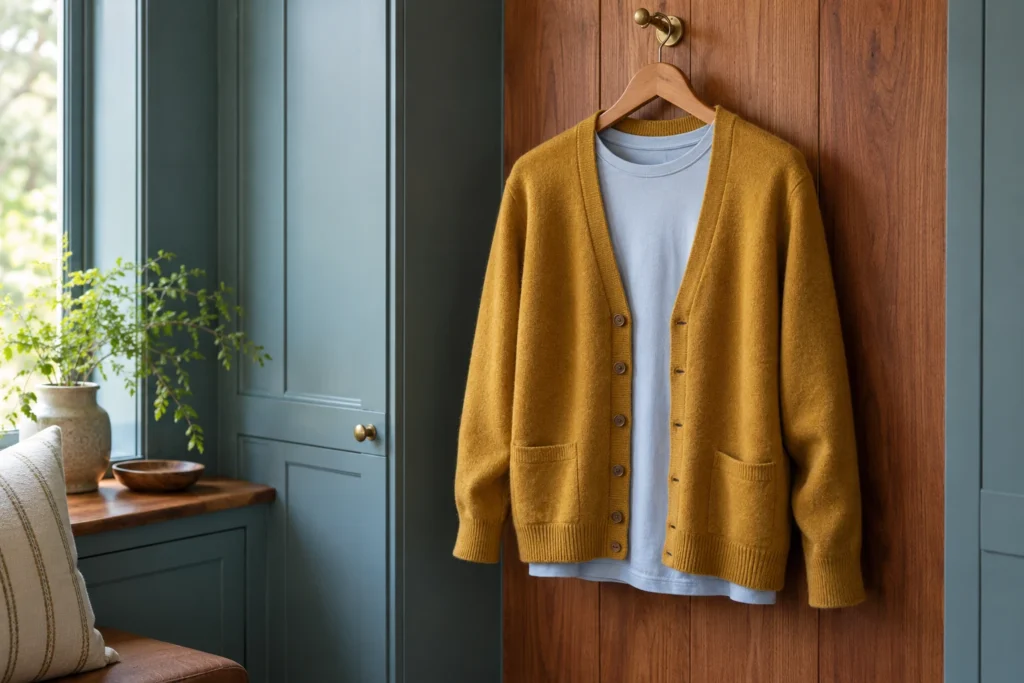
The most practical first step is a comfortable layer between the wool and your skin, especially at the neck and wrists. If a sweater needs cleaning, wash it only as its care label allows, using a compatible wool detergent. These measures may improve comfort, but they will not make coarse fibers finer. A garment that stays prickly after appropriate care may simply be unsuitable next to your skin.
Working out how to make wool less itchy starts with identifying what is bothering you. A scratchy collar, a sweater that feels different after washing, and a persistent rash do not call for the same response.
Choose the next step that fits the problem
| What you notice | Reasonable next step | Important limit |
|---|---|---|
| The garment prickles wherever it touches bare skin | Try a smooth, comfortable layer underneath. | This reduces contact; it does not soften the wool itself. |
| Only the neckline, cuffs or a seam bothers you | Check that area for rubbing and adjust your layers or garment choice. | Treating the entire sweater may miss the actual problem. |
| Discomfort began after a change in laundry products | Review the product, dose and garment instructions before washing again. | Timing is a clue, not proof of residue or an allergy. |
| The clean, dry garment still feels scratchy | Use it over another layer, or consider returning or replacing it. | Further soaking is not a dependable fix for coarse fibers. |
| There is a rash, burning or persistent irritation | Stop wearing the item and seek medical advice if symptoms persist or are severe. | Do not keep applying softening treatments to troubleshoot a skin reaction. |
Why is wool itchy?
Mechanical prickle happens when protruding fiber ends press against the skin instead of bending away easily. Finer wool fibers generally bend more readily. Woolmark explains this relationship between fiber fineness and flexibility; it helps explain why two wool sweaters can feel very different.
An average micron measurement is useful, but it does not describe every fiber in a garment. A micron is one-millionth of a meter. In research on knitted wool fabrics, the proportion of coarse fiber ends affected prickle even when the wool had a similar average diameter. There is no single micron number that guarantees comfort for everyone.
The finished fabric matters, too. A study of 177 commercial wool garments used an instrument to assess prickle-related properties. Average fiber diameter had the largest effect, while diameter variability, fabric thickness and knit structure also mattered. This was an assessment of particular garments, not evidence that every ribbed sweater will feel scratchier than every smooth knit.
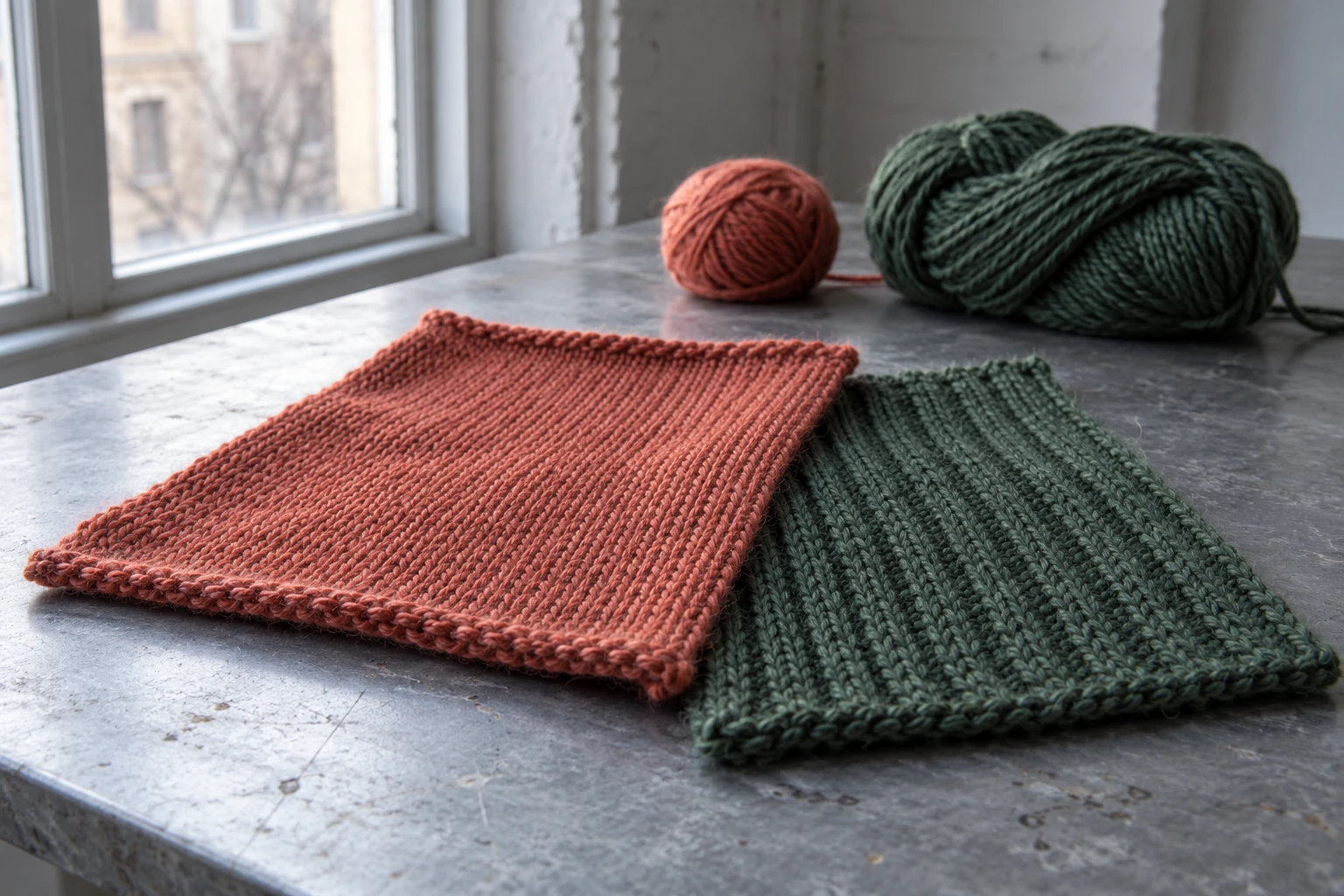
A tight collar or cuff can keep an uncomfortable surface pressed against you. Movement adds rubbing, and different people tolerate that contact differently. Your own response matters more than someone else’s description of a sweater as wonderfully soft.
Prickle is not the same thing as an allergy. Separately, laundry products can irritate skin, and some people develop allergic contact reactions to particular substances, including textile dyes or finishes. The NHS distinguishes direct irritation from allergic contact dermatitis. You cannot identify which is happening just from the word “wool” on a label.
How to Make Wool Less Itchy With a Comfortable Base Layer
For an otherwise useful sweater, a base layer is a practical first option because it does not require changing the garment. Choose a smooth fabric you already tolerate: a comfortable cotton shirt, for example, or another suitable layer from your wardrobe. This is a way to interrupt contact with the wool, not a treatment that changes its fibers.
Coverage matters. A camisole will not protect your arms from scratchy sleeves, and a low neckline leaves the upper chest exposed. Check whether the underlayer reaches the areas that bother you when you bend your elbows or turn your head. A shirt collar may help with a wool neckline; a different neckline may be more comfortable altogether.
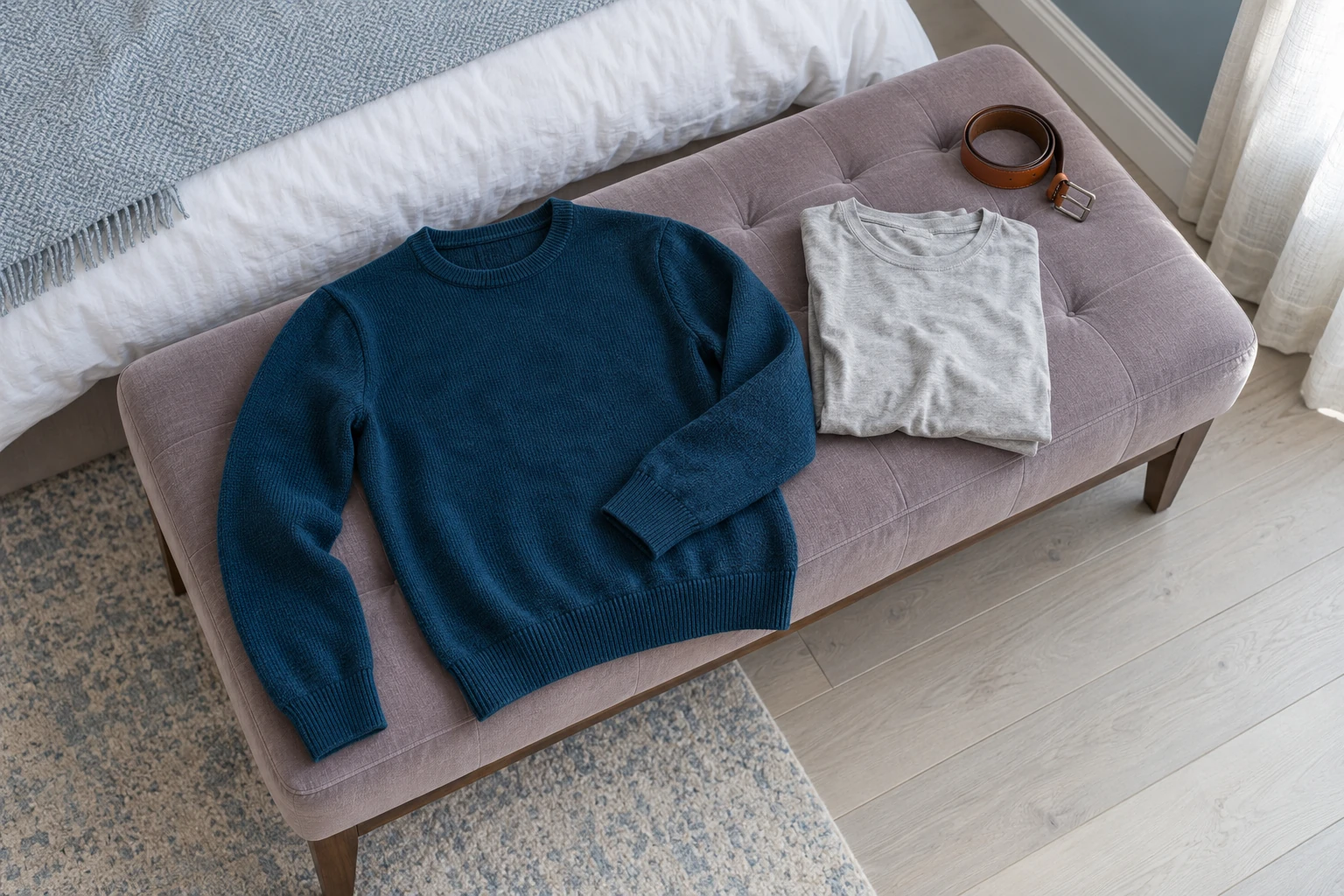
Leave enough room for both garments. Adding a thick layer under a close-fitting sweater can make the combination tighter and warmer than you want. If the wool still reaches your skin or the extra layer makes wearing it unpleasant, layering has reached its limit.
Also inspect seams, cuffs and labels rather than assuming the entire fabric is at fault. Avoid stretching a tight neckline or cutting into knitted seams as an itch remedy. Choosing a different fit is safer than trying to force the existing garment into a new shape.
Do not push through ongoing irritation to “get used to” wool. NHS guidance on itchy skin advises avoiding irritating clothing and seeking medical help for severe, persistent or recurring symptoms. A new or concerning rash deserves attention rather than another laundry experiment.
Does washing make wool softer?
Washing can change how a garment feels, but it is not a reliable cure for mechanical prickle. If the item needs cleaning, appropriate washing may remove dirt or removable product residue. It cannot be assumed that residue caused the discomfort, and an extra wash will not reduce the diameter of its coarse fibers.
Start with the finished garment’s care label. A washable sweater and a structured dry-clean-only jacket need different handling. For a delicate item or unclear instructions, ask the manufacturer or an experienced cleaner before experimenting.
Woolmark’s detergent guidance recommends a mild, neutral product suitable for wool. Follow the product’s dose and rinsing instructions rather than adding extra detergent or an improvised finishing rinse. Rinse-out and no-rinse products have different directions; “no-rinse” should not be read as a promise that nothing remains on the fabric.
Our Merino wool washing guide covers the washing process, and the wool-detergent comparison can help you assess suitable products. A detergent’s job is compatible cleaning, not turning a coarse sweater into fine knitwear.
If fragrance is a concern, look for an appropriate fragrance-free formulation and check its ingredients. In its advice for children with eczema, the American Academy of Dermatology distinguishes fragrance-free from unscented labeling. That is useful context, not a diagnosis or a guarantee that any particular wool wash will suit your skin.
Once the garment has been cleaned appropriately and dried as directed, reassess it. If the same scratchy contact remains, repeating the wash is unlikely to address the underlying fiber problem. Additional wet handling can introduce other problems if it exceeds the garment’s care instructions; our explanation of why wool shrinks covers the roles of moisture, agitation and drying.
Do conditioner, vinegar or freezing actually help?
Internet advice often treats a softer surface feel and a permanent change to wool as the same thing. They are not. Textile finishing can alter friction: a controlled study of fabric-evoked prickle found reduced prickle with silicone treatments in the fabrics studied. That finding does not establish that a household hair conditioner is effective, compatible with a particular garment, or a lasting solution.
Hair conditioner: We did not find adequate garment-specific evidence to recommend it as a reliable treatment for itchy wool. Products differ, and suitability for hair does not establish suitability for a sweater’s dyes, finishes or construction. Added fragrance or other ingredients also complicate matters if product irritation is already a concern. Avoid a blanket soak-and-rinse recipe.
Fabric softener: This requires a more qualified answer than “always use it” or “never use it.” Woolmark permits limited use of final-rinse softeners but warns that excess can promote pilling. By contrast, Icebreaker’s current garment-care guidance says to skip fabric softener. Follow the garment maker’s instructions first. Where a suitable conditioner is permitted, that permission is not a promise that it will eliminate prickle.
Vinegar: We did not find adequate evidence that a kitchen-vinegar treatment reliably reduces wool prickle. A household recipe does not establish compatibility with every dye and finish. If the concern is detergent residue, use the garment and detergent instructions—or ask their manufacturers—rather than adding an unverified acid treatment.
Freezing: We found no adequate evidence to recommend freezing a sweater for lasting itch relief. Claims that a home freezer permanently makes coarse fibers finer or reliably “locks down” scratchy ends should not be treated as established textile science.
Repeated soaking or excessive washing: More treatment is not automatically more effective. A sweater that remains uncomfortable after proper care has not necessarily been washed too little. Avoid escalating to longer soaks, stronger mixtures, hot water or aggressive rubbing. None is a justified substitute for addressing fiber choice, fit or skin contact.
How to choose wool that is more comfortable for you
If a garment cannot be made comfortable in the way you intend to wear it, replacement may be a better decision than another treatment. For a new purchase, look beyond a fiber name and check the following:
- Documented fiber fineness. A manufacturer’s micron specification provides more information than “luxuriously soft.” Finer fibers generally offer better flexibility, but an average alone does not capture the coarse-fiber distribution or finished fabric.
- The whole composition and inside surface. Check the full fiber percentages, seams, neckline and cuffs. Judge the side that will touch you, not just the smooth appearance of the outer surface.
- The intended way of wearing it. A sweater that works over a shirt may be a poor choice as a next-to-skin base layer. Try the relevant combination, without continuing if it irritates your skin.
- Return conditions. Check what assessment is allowed before removing tags or washing. An experimental softening treatment may leave you with an uncomfortable garment you can no longer return.
Merino is not automatically itch-free, and lambswool is not automatically scratchy. Merino describes a sheep breed or wool type; lambswool generally refers to wool from young sheep, often their first shearing. The categories can overlap. Our Merino-versus-lambswool comparison explains what those labels can—and cannot—tell you when buying.
The useful stopping point is simple: if proper care and a comfortable layer do not solve the problem, stop treating the sweater as a project that must be rescued. Keep it for a use that avoids uncomfortable contact, return it if eligible, or choose a garment better suited to your skin.
Research note: This guide draws on textile-research abstracts, Woolmark care guidance, manufacturer instructions and public dermatology guidance reviewed on October 27, 2026. We did not perform garment tests or home-treatment experiments. Practical suggestions are editorial interpretations of those sources, not guaranteed results.