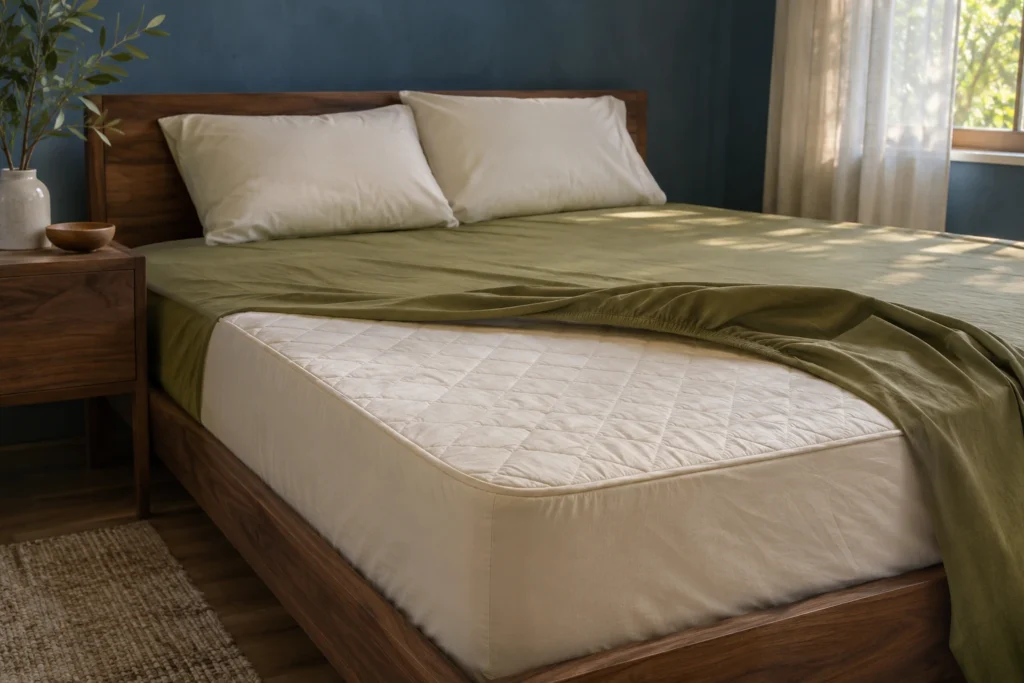
Is a wool mattress protector worth it? It can be worth the extra cost if you want a thin wool layer, modest surface padding and a removable barrier against everyday soil. It is a poor purchase if you assume wool alone will stop a spilled drink or urine from reaching the mattress. For that job, look for a finished product explicitly described as waterproof, with suitable coverage and care instructions.
The useful buying question is what you need protected—and what you can realistically wash and dry. Some wool protectors combine cotton-covered filling with a separate waterproof layer. Others contain no membrane at all. A comfortable surface and reliable liquid protection are separate features.
Research note: The Editorial Team reviewed US-facing manufacturer specifications and care policies on November 5, 2026. We have not slept on, washed or spill-tested these products. Examples illustrate construction differences; buying recommendations are editorial judgments, not a tested ranking.
Protector, pad, topper or encasement?
A mattress protector is primarily a removable protective layer. It may be a thin fabric sheet, a quilted wool-filled cover or a membrane-backed design. The name does not establish waterproofness.
A mattress pad may combine limited padding with protection. Retailers use the terms inconsistently, so inspect the materials, depth and intended function.
A mattress topper primarily changes surface comfort. A thin protector cannot provide the cushioning of a substantial topper. If cushioning is your main goal, start with our wool versus latex topper comparison.
An encasement surrounds the mattress, usually with a zip closure. A fitted protector commonly leaves the underside uncovered. For waterproof or allergen-barrier protection, verify the finished encasement’s fabric, seams, closure and specific claims; neither “encasement” nor “wool” guarantees those functions.
Moisture management is not waterproof protection
Woolmark explains that wool absorbs moisture vapor and releases it as surrounding conditions change. Wool also traps insulating air. Those fiber properties help explain why wool can influence the bed’s moisture and thermal environment, but they do not establish how cool a particular protector will feel.
Vapor absorption, liquid absorption and waterproofing are different. Perspiration includes moisture vapor and liquid sweat. Wool may buffer humidity, while a protector’s fabric catches some everyday soil and moisture. Neither ability means liquid cannot pass through to the mattress.
Water-resistant or water-repellent describes resistance to wetting, not an unlimited spill barrier. Waterproof protectors use a construction intended to block liquid, often incorporating thermoplastic polyurethane (TPU). Coverage still matters: a waterproof top does not automatically give waterproof sides, seams or a sealed underside.
For bedwetting, recurring pet accidents, heavy liquid exposure or drinks in bed, prioritize a suitable waterproof barrier. You can choose a wool-containing waterproof model or, if the bedding manufacturers permit it, use a separate barrier with a wool layer. Check the order of the layers and what each protects. A barrier beneath a nonwaterproof wool layer may protect the mattress while leaving that wool layer soiled.
What current protector constructions actually offer
These are manufacturer-listed features for the named products, not independent performance measurements. The cotton option is included to show what wool adds—and what it does not.
| Exact product | Construction and protection | Buying implication and care limit |
|---|---|---|
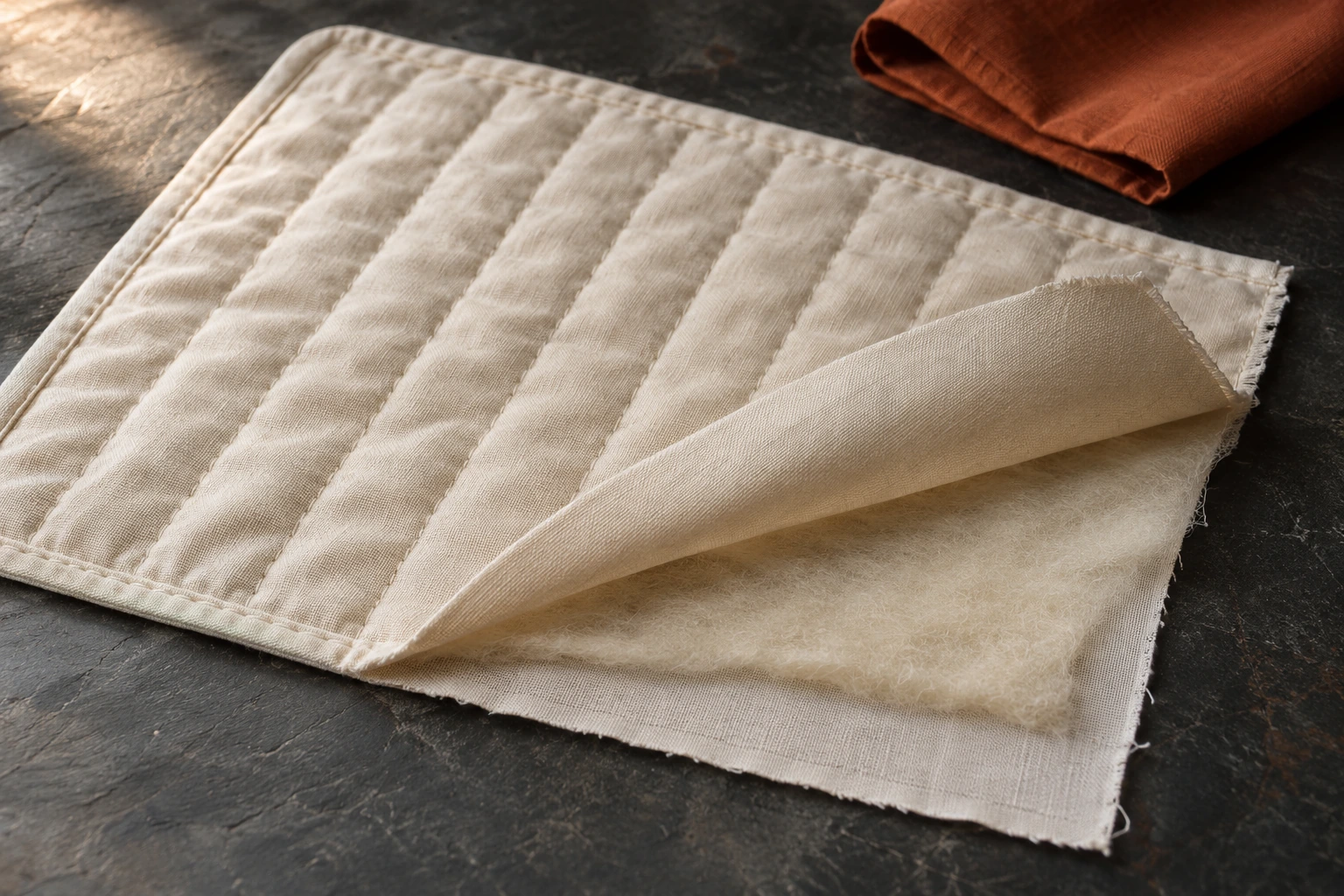
| Woolroom Deluxe Washable Wool Mattress Protector — US | Washable British wool inside an organic cotton cover; no waterproof layer. Listed depth: 0.5 inch; elasticated skirt: 18 inches. | A thin wool comfort layer, rather than dependable accident protection. Wool/delicate wash; line dry, not tumble dry. |
| Woolroom Deluxe Washable Wool Waterproof Mattress Protector — US | Wool filling and organic cotton, plus TPU-coated cotton waterproofing fabric. Listed depth: 0.5 inch; 18-inch skirt. | Combines wool with a liquid barrier. Its drying restriction remains line drying; waterproof does not mean dryer-safe. |
| Sleep & Beyond myProtector | Washable wool filling, cotton percale top, TPU-coated microfiber lining and TPU-coated cotton jersey skirt. The maker specifies waterproof coverage across the top and four sides; adult fit up to 18 inches. | A wool-filled option when side coverage matters. Restricted machine washing and low-heat tumble drying are permitted. |
| Holy Lamb Organics All-Natural Wool Moisture Barrier | Tightly woven, slightly felted 100% wool; no separate filling, cotton shell or synthetic membrane. Lies beneath the fitted sheet. | A membrane-free water-repellent textile, not an equivalent waterproof guarantee. Cold washing and line drying; shrinkage is possible. |
| Naturepedic Waterproof Organic Mattress Protector Pad | Organic cotton jersey with a thin TPU barrier; no wool filling. Elastic perimeter; listed fit approximately 9–16 inches. | An alternative when the priority is liquid protection without wool padding. Machine washable; confirm conflicting online drying directions against the supplied label. |
Holy Lamb Organics listed its moisture barrier as out of stock when checked. Its inclusion explains a different construction, not immediate availability. Woolroom’s waterproof page lists conflicting fill weights in its description and specification; we have omitted that figure rather than choosing one.
Will wool feel more comfortable than cotton?
It may, but the complete bed determines the result. Wool filling adds a textile layer between you and the mattress; quilting, fill amount, cover tension and compression affect its feel. Cotton-only fabrics can provide a lighter, less padded surface. Cotton products can also contain filling or a membrane, so “cotton” is not a single construction.
If you already like your mattress, a relatively thin protector is less likely to make the large comfort change associated with a topper. It can still alter the surface. More wool is not automatically better, and initial loft is not a promise that the layer will keep precisely the same feel.
Do not choose between “breathable” and “waterproof” as though the terms are mutually exclusive. Airflow through a fabric and water-vapor transfer through a membrane are different properties. A membrane-backed design can permit vapor transfer while blocking liquid; that alone cannot predict your sleeping temperature. Sheets, upper bedding, room conditions and the mattress remain important.
If a seller promises dramatic cooling or universal allergy relief, ask what evidence applies to that exact product. General wool research does not verify a percentage reduction in bed temperature or make the protector an allergen-proof enclosure.
Check fit across the whole bed
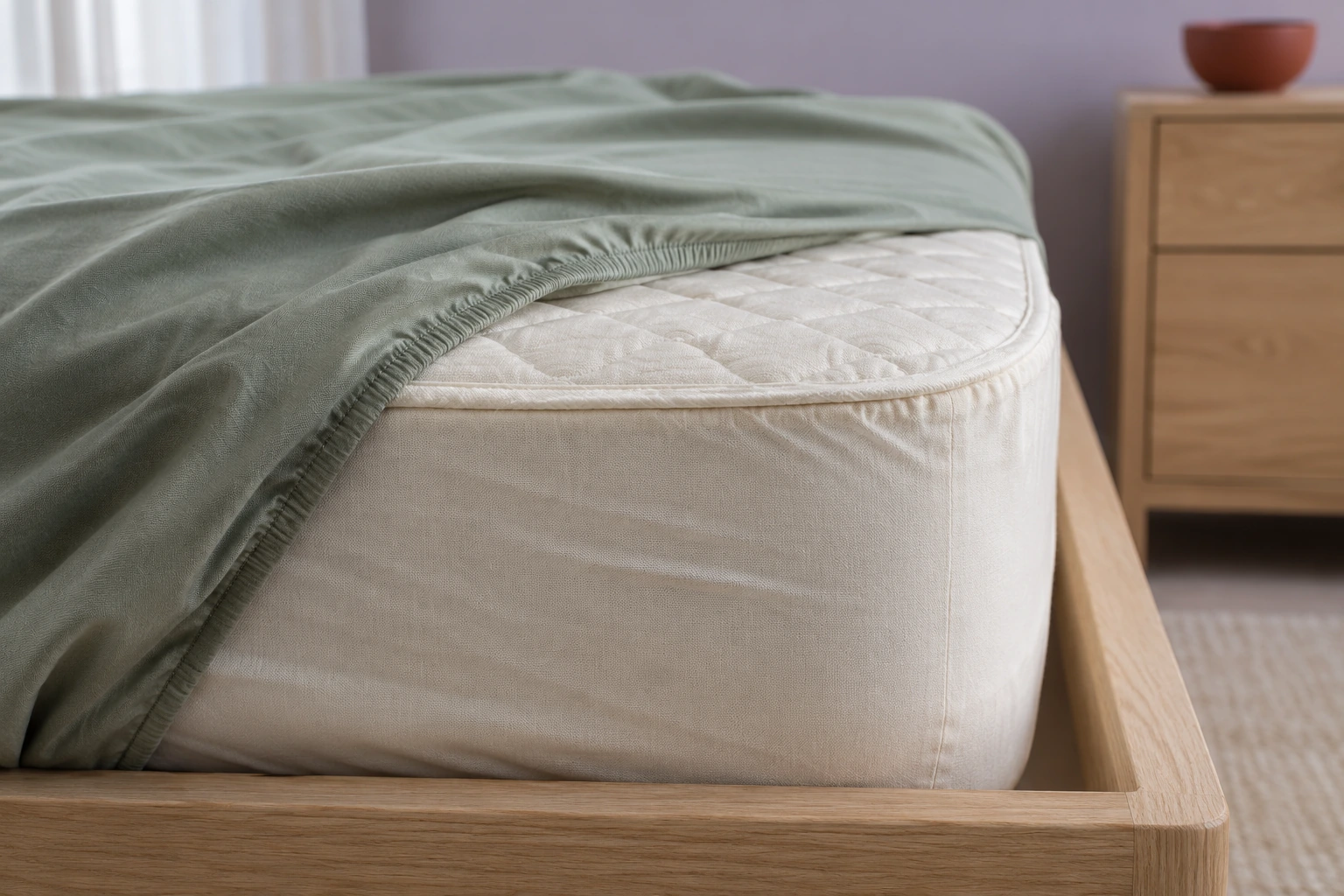
Measure the mattress plus any topper that the protector must cover. The stated skirt depth describes fit, not the thickness of the wool filling. A nominal 18-inch skirt is not an 18-inch cushion, and it does not ensure every sheet will fit over your final bedding stack.
Ask whether the waterproof layer covers the sides or only the top panel. Check elastic, corner seams and the manufacturer’s size guidance. An overly tight fitted sheet can pull corners loose or compress the layer; an oversized protector may bunch beneath you.
For an existing wool topper, follow its layering instructions as well as the protector’s. Our wool mattress topper care guide explains why a washable removable protector does not make the filled topper underneath washable.
Can you maintain the protection you are buying?
Read washing and drying instructions before ordering, not after the first accident. A washable protector that cannot be dried conveniently may be a poor fit for a household needing frequent changes. Do not apply directions for a removable cover to the whole filled product.
Woolroom specifies a wool/delicate cycle with wool detergent for the two Deluxe models above, followed by line drying; the waterproof model also specifies a spin below 800 rpm. Sleep & Beyond instead permits cold-to-warm washing without agitation and low-heat drying for myProtector. It recommends a front-loader and warns that excess heat can damage the TPU lining. These are model-specific permissions, not a general wool-washing recipe.
Holy Lamb Organics’ care page recommends soak-and-spin for its wool moisture barriers to minimize shrinkage, while allowing a normal cycle with more shrinkage. It requires air drying. The product page also warns that dimensions may change. That matters when a flat barrier has little spare coverage.
Naturepedic’s current product page says tumble dry low in one place but also mentions medium/hot washing and drying in its shrink-to-fit guidance. Do not resolve that contradiction by selecting the hotter setting. Follow the label supplied with the item and ask Naturepedic to clarify if necessary.
There is no single washing interval established by the product pages reviewed. Inspect at sheet changes and follow the model’s routine-care directions. Address spills promptly using its permitted method; do not leave contamination because wool is marketed as odor-resistant. Plan a spare protector if drying will leave the mattress unprotected.
Use the specified detergent and machine settings, allow complete drying, and inspect for worn seams or damaged backing. Do not assume generic wool-care advice authorizes vinegar, bleach, softener or stain treatments on a membrane. Our wool-detergent guide can help with formulation questions, but the finished protector’s instructions govern compatibility. Airing is maintenance, not disinfection.
Judge the premium by function, care and returns
Compare the delivered price of your exact bed size with an alternative that meets the same protection requirement. Comparing a nonwaterproof wool pad with a waterproof cotton protector on price alone misses the most important difference. Include any separate barrier, spare protector, laundry costs and replacement sheets needed for fit.
Paying more can be reasonable for the wool layer you want, suitable coverage and care you can manage. It is harder to justify if your existing protector already feels comfortable and works well, or if the upgrade leaves you needing another product to handle the spills you were trying to prevent. No evidence reviewed supports a universal lifespan or payback period.
Woolroom’s 30-night trial covers eligible protectors even after use or washing, with exclusions and geographic conditions. Sleep & Beyond’s 30-day return policy requires new, unused products with tags and packaging; it is not a sleep trial. Read the policy of the actual seller, since a retailer may use different terms.
Holy Lamb Organics reserves refunds for unused, unwashed returns and offers store credit for used items within its conditions. Naturepedic’s bedding return policy also requires unused items in original packaging. A general “30-day returns” badge is therefore not enough to assume you can sleep on a protector and return it for cash.
Read certification claims at the right level
Check whether a claim covers the cotton fabric, wool filling, a component or the finished protector. An organic cotton cover does not establish that its wool is organic. A brand selling certified products does not make every item in its range equivalent.
OEKO-TEX STANDARD 100 addresses testing for harmful substances. GOTS labeling concerns certified organic textile requirements and controlled processing. Neither label, by itself, supplies a waterproof guarantee, a cooling score or permission to machine wash. Ask for the current product-specific certification details if certification influences your purchase.
Is a wool mattress protector worth it for your bed?
Choose a nonwaterproof wool protector when you specifically want a thin wool layer, understand its liquid-protection limit and can follow its care instructions. It is a comfort-led choice with a removable protective surface, not accident insurance.
Choose wool with verified waterproof construction when you want both features. Confirm the coverage, fit, drying restrictions and any warranty conditions before paying a premium.
Choose a simpler cotton or other membrane-backed protector when liquid protection, minimal padding and an affordable spare matter more than adding wool. Compare finished constructions rather than treating either fiber as a universal comfort winner.
If your real complaint is a hard bed, a protector is unlikely to provide the change you want; our wool mattress topper buying guide addresses substantial cushioning. If the problem is recurring contamination and you cannot meet a wool model’s laundering requirements, choose protection that matches your cleaning routine. The right purchase is the layer that solves your actual problem without creating an unmanageable care obligation.