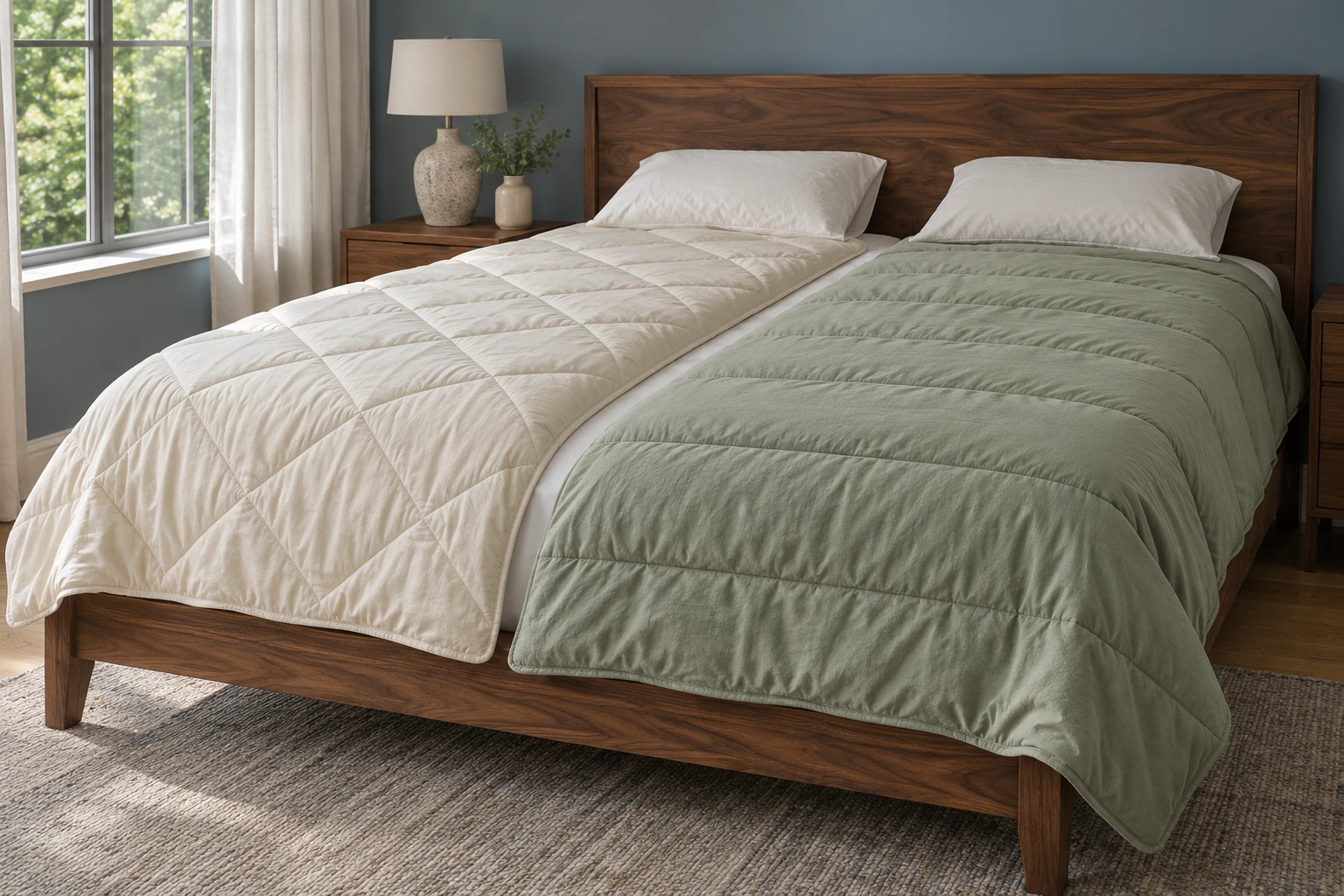
Wool vs Cotton Comforter: Fill, Warmth & Care Compared
By Editorial Team
Choose cotton if you want plant-fiber filling. Choose wool if you like springy batting and can find the right warmth grade for your bedroom. For weight on your feet or easy washing after a spill, check the exact insert. In the same queen size, White Lotus Home lists its cotton duvet at about 12 pounds with spot cleaning only and its washable wool duvet at about 5 pounds.
Start with the materials label. Fill is the material inside the comforter. The shell is the fabric sewn around it. A label that says “100% wool fill, 100% cotton shell” describes a wool-filled comforter. Both products in a wool vs cotton duvet comparison can have cotton on the outside.
Editorial disclosure. This independent guide draws on manufacturer specifications and published textile research. We have not slept under, weighed or washed the comforters. The four examples show how to compare listings for US buyers.
Wool vs cotton comforter at a glance
Start with what you would change about your current insert. A lighter load, less warmth and easier cleanup call for different specifications.
| Buyer’s question | Wool filling | Cotton filling |
|---|---|---|
| Fill and shell | Sheep’s wool inside a sewn shell, often cotton. | Cotton batting inside a sewn shell, which may also be cotton. |
| Warmth | Crimp can help the batting hold still air. Ask for the model’s loft and warmth grade. | Layered cotton also traps air. Check the amount and thickness of the batting. |
| Weight and drape | A lighter wool insert or a fuller, heavier one may suit the same bed. | A thin quilted insert and a substantial tufted duvet can feel very different on your feet. |
| Moisture | Wool can absorb humidity from the air. Shell and cover also influence comfort. | Cotton takes up moisture. Drying depends on the whole insert and its surroundings. |
| Washing and drying | Examples include machine-washable and hand-wash-only models. Check dryer instructions separately. | Examples include machine-washable and spot-clean-only models. A washable cotton insert may need line drying. |
| Stability and care | Ties, tufts or stitching can secure the batting. Inspect broken attachments before cleaning. | Diamond quilting or tufts can hold layered cotton in place. Check for persistent lumps or thin areas. |
What is a wool-filled comforter?
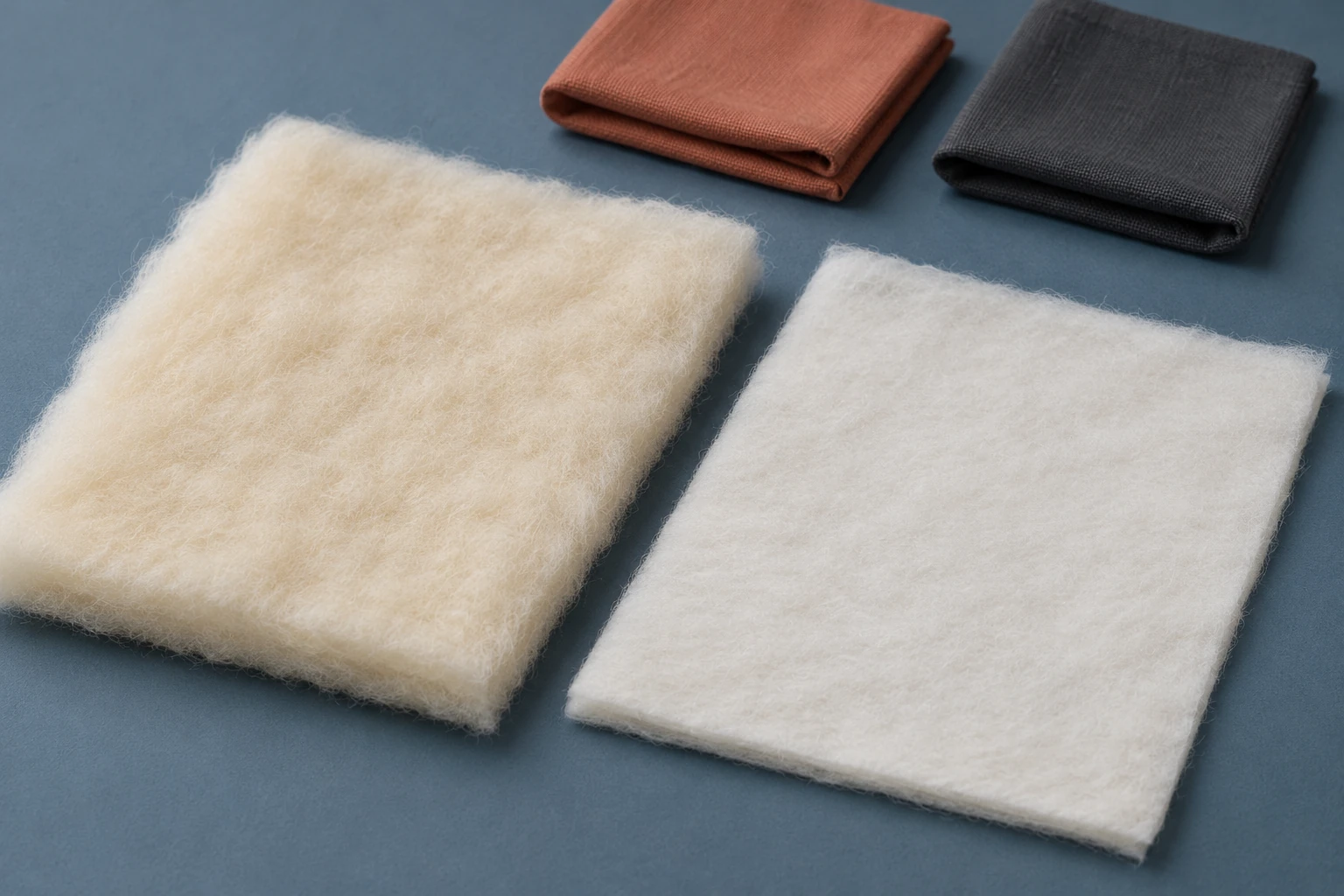
Wool batting is a layer of wool fibers arranged inside a shell. Wool fibers have a natural wave called crimp. It helps the fibers stand apart and gives the batting room to hold small pockets of insulating air. The maker decides how much wool to use and how closely to secure it. A light wool insert and a substantial winter version can therefore feel quite different. How crimp affects wool’s structure.
A duvet insert is a filled layer generally intended to go inside a removable cover. A comforter can go directly on the bed or inside a cover if its size and design allow. US sellers use the names somewhat interchangeably. A listing for a duvet cover alone usually buys you the empty case. Sleep Foundation’s guide to duvet terminology.
What is a cotton-filled comforter?
A cotton-filled insert has cotton in the insulating layer. White Lotus Home secures layers of cotton batting with tufts. Whisper Organics uses diamond stitching. “Cotton sateen,” “cotton percale” and a thread count can all describe a shell without identifying a single fiber inside it. Look for a separate filling percentage, particularly if you want to avoid a blend.
A woven cotton blanket gets its substance from interlaced yarns. If you want one layer without batting or quilting, our wool vs cotton blanket comparison covers that choice.
Which filling is warmer?
Batting slows heat loss in part by holding still air. Its thickness as it sits on the bed matters: flattening a thick pad changes the air space available, even though the amount of fiber stays the same. Stitch lines draw the shell and batting together locally. The number and spacing of those lines help explain why two inserts with the same fill weight can have different profiles.
In a study of commercial and laboratory quilt samples, thickness explained most of the differences in resistance to heat flow under steady conditions. That finding supports asking about loft and construction when comparing warmth. It does not establish a sleeping temperature for a finished insert. How far the bedding covers the body also matters. If a partner pulling the duvet aside leaves your shoulder cold, a wider insert may help more than heavier filling. Quilt-sample study · Research on bedding coverage and insulation.
For a cooler bedroom, compare lighter and heavier versions in one product line first. Ask how their batting and warmth grades differ. When comparing brands, look for a comparable tested warmth rating if available. “All-season” alone gives you little to go on. If you specifically want a puffy insert that feels light for its bulk, our wool vs down comforter comparison explains how down clusters differ from wool batting.
Weight, loft and drape on the bed
Fill weight is the amount of batting in one size. GSM means grams per square meter. Castle Home’s 240 GSM specifies cotton filling per unit area. If a different listing just says “240 GSM cotton,” ask whether it describes the shell or the fill. Equal fill GSM can still give different thicknesses.
Finished weight includes filling, shell and stitching. Ask for it if weight on your feet matters. Frankenmuth lists 4 pounds of filling for its queen. Castle Home lists 6.3 pounds for its complete Full/Queen cotton comforter. Subtracting those figures would not tell you how much heavier either insert is on the bed.
Loft describes the depth the filling occupies. Drape describes how the finished layer bends and settles around you. A tall fold in a styled photograph gives little indication of either. Look for an uncompressed side view and a view of the stitching across the middle. If two inserts have similar finished weights but one is considerably wider, some of its extra fabric and fill may hang over the mattress rather than rest on you.
Moisture, airflow and sleeping comfort
Wool takes up moisture vapor as humidity rises. Cotton is absorbent too. Its cellulose attracts water, and the fibers can take up moisture from humid air as well as liquid. That ability alone says little about how quickly a damp patch deep in batting will dry. Thickness, the enclosing fabric, airflow and the humidity of the room all affect the conditions for drying. Cotton Incorporated’s technical fiber guide.
Airflow and moisture absorption are separate properties. Research on woven cotton shows that yarn spacing and weave influence how readily air passes through the fabric. Even with the same batting, a closely woven shell and a heavy duvet cover change the path air must travel. Research on woven-fabric air permeability.
The quilt-sample researchers also raised the humidity around a heated plate. The plate briefly needed less energy under wool than under polyester to stay at its set temperature. The authors attributed that response to heat released as wool absorbed water vapor. A separate industry-commissioned report compared duvets containing wool, polyester, a feather/down blend and down. It included no cotton-filled duvet. Neither experiment establishes that a wool-filled insert will prevent sweating or that cotton will keep an individual sleeper cooler. Quilt study and test conditions · British Wool report and tested fillings.
Which is easier to wash and dry?
A removable cover handles everyday grime. Once a spill reaches the batting, the insert’s own label governs cleaning. Batting, fiber treatments and stitching vary even within a single maker’s range.
Whisper Organics allows a gentle machine wash and specifies line drying. White Lotus Home calls for spot cleaning its cotton duvet. Frankenmuth specifies hand washing and line drying, while the White Lotus washable Merino insert allows a cold gentle machine cycle. For that Merino model, air drying is the option its care section and FAQ agree on. Check the sewn-in label before using a dryer.
For a large insert, consider the whole job. Is there room in the washer for it to move as directed? Is there a suitable place to support it until the thick center is dry? A line-dry queen may be impractical in an apartment even when the washer is large enough. Our guide to washing a wool comforter explains how to read insert and cover directions separately.
What keeps the filling in place over time?
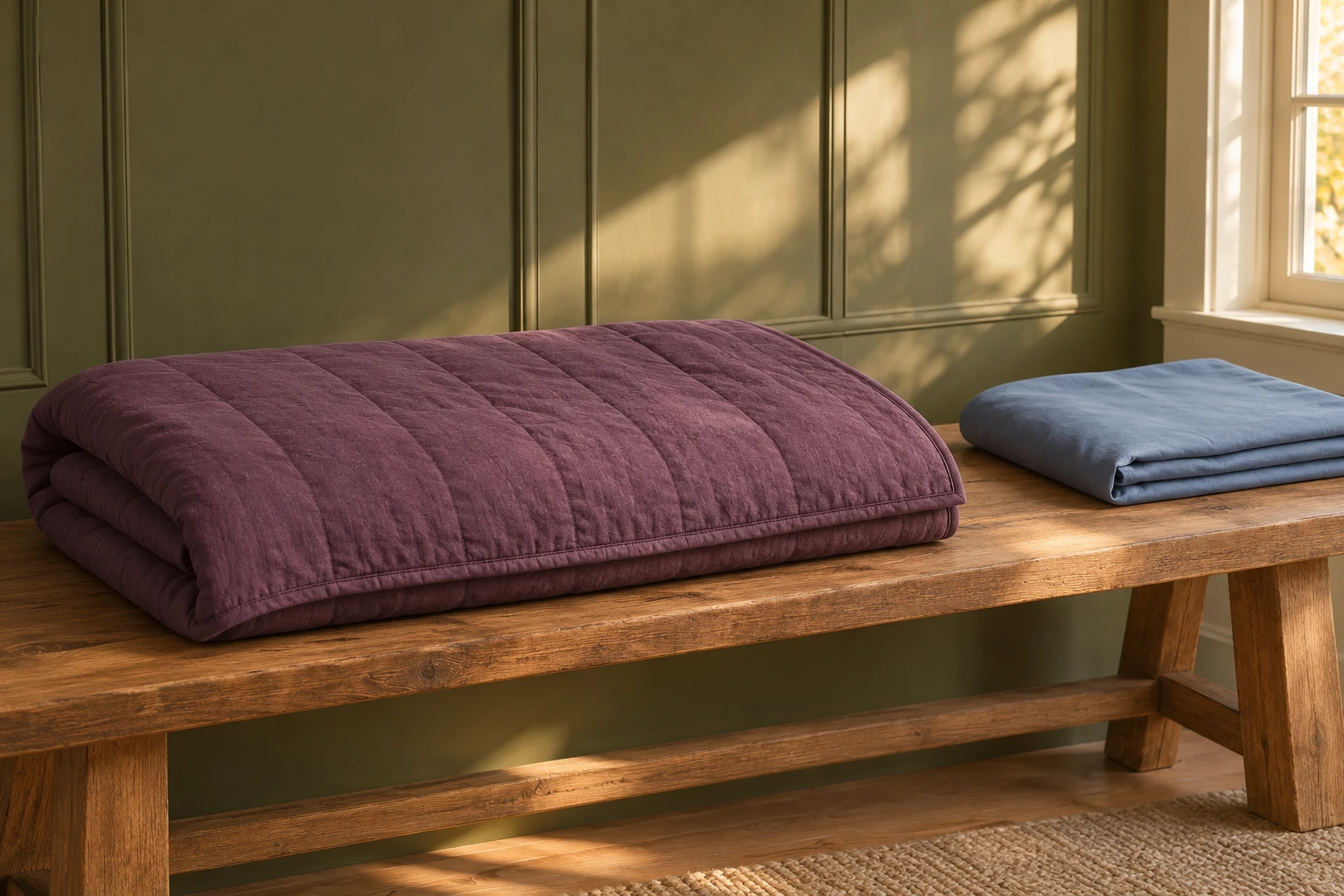
Quilting, tufting and internal ties anchor the batting to the shell. Corner loops serve a different purpose: they attach the whole insert to its cover. If the top corner of the cover feels empty, take the insert out and lay it flat. An even insert points to fit or attachment inside the cover. A thin patch beside a persistent lump, especially near a broken stitch, is a reason to ask the maker about repair before washing or pulling at the filling.
For seasonal storage, let the insert dry completely and check thick edges and stitched areas before putting it away. Fold it loosely, give it enough room and choose a dry storage space. Avoid keeping a lofty insert under heavy boxes or in prolonged vacuum compression unless the maker specifically allows it. Keep the care label and purchase record in case a seam or tie fails. Warranty coverage, permitted cleaning and repair options depend on the product. The Company Store’s bulky bedding storage guide.
Four wool-filled and cotton-filled comforters compared
All four models below have cotton shells. The second column identifies the filling. Each link leads to the maker’s specifications.
| Product | Actual fill | Sewn shell | Construction and weight | Care for this insert |
|---|---|---|---|---|
| Whisper Organics 240 GSM | Organic cotton, 240 g/m² | Organic cotton, 300 thread count | Diamond-stitched. Full/Queen, 90 × 92 in., 6.3 lb complete. | Hand wash or use a gentle cycle up to 86°F (30°C). Line dry. The care section also lists dry cleaning. |
| White Lotus Home Organic Cotton Duvet | Layers of organic cotton | Organic cotton sateen, 300 thread count | Hand-tufted. Queen, 92 × 96 in., about 12 lb complete. | Spot clean the insert only. |
| Frankenmuth Wool Comforter | Wool batting | Organic cotton percale | Hand-tied every 9 in. Queen, 90 × 90 in., contains 4 lb of wool fill. | Hand wash in lukewarm water with mild detergent. Line dry only. |
| White Lotus Home Washable Wool Duvet | Fine Merino wool | Organic cotton sateen, 300 thread count | Handmade. Queen, 92 × 96 in., about 5 lb complete. | Machine wash cold on gentle. Air dry, or verify the dryer setting on the tag. |
The White Lotus queens are the same size. Their finished weights differ by about 7 pounds, which matters when lifting the duvet or changing its cover. Neither listing supplies a matched warmth test.
Which should you choose for your bedroom?
For a warm room or two sleepers who disagree about warmth, start with the lightest suitable warmth grade and check the weight in your size. If one partner likes more insulation, try a separate layer on that side. In a cooler room, look for adequate loft and enough width to cover both people. Swapping fibers while buying the same dimensions will leave the same cold gap.
For a particular feel, decide whether you want less weight when turning over or the close drape of a more substantial layer. Ask for finished weight for the first preference and inspect stitching and flexibility for the second. If you have narrowed your choice to wool, our guide to wool comforters compares several builds. If home laundering matters most, the Woolroom washable Light model review gives another example of checking the exact insert.
For plant-fiber or organic preferences, check fill and shell separately. If certification matters, look for the named standard, the scope of the claim and the certifier or license information for the finished item. Keep the listing or label for the exact model. A purchase decision about organic materials is separate from how warm the insert feels. Global Standards’ certification and labeling FAQ.
What to check before buying
- Read the fill percentages and the sewn-shell composition. Check the cover separately if one is included.
- Ask for fill weight or fill GSM and finished weight in your size. Write the unit beside each number.
- Measure width and length against your mattress and existing duvet cover, including the drop you prefer.
- Identify stitching or tufting across the body and any corner attachments for a removable cover.
- Check both washing and drying directions against your equipment and drying space.
- Verify any certification that matters to you. Read the return conditions and warranty, including restrictions on laundering or trying the insert.
Frequently asked questions
Can wool-filled and cotton-filled comforters have the same shell?
Yes. Both White Lotus examples use cotton sateen. If a listing only identifies the shell, ask for a photo of the fill label.
Is cotton the lighter choice for summer?
Sometimes. A thin cotton insert can suit a warm room, but cotton batting also comes in substantial layers. Use a summer duvet you already like as your weight and warmth reference.
Can I machine wash either type of insert?
Yes, when the insert’s label allows it. The Whisper Organics cotton and White Lotus washable wool models both permit gentle machine washing. Check their drying directions separately.
Final verdict
Pick cotton if you want plant-fiber filling. Pick wool if you prefer its springy batting and can find the right warmth grade. If both are on your shortlist, let the practical details settle it: the finished weight you want over your feet, the width you need when sharing the bed and the cleaning method you can manage after a spill.