Introduction to Wool Bedding Excellence
Merino wool bedding maintenance is the secret to why people keep coming back to wool, even after decades of synthetic fabrics promising to replace it. If you’ve ever spent a night under a polyester throw and woken up sticky and overheated, or pulled a thin acrylic blanket tighter around yourself at 3 a.m. and still felt cold, you already understand the problem wool solves. It’s not nostalgia keeping wool blankets on the bestseller lists of high-end home brands — it’s that nothing synthetic has ever quite matched what a well-made wool blanket does for your sleep.
Wool has been prized for its warmth and durability for thousands of years, and proper merino wool bedding maintenance has had a real resurgence lately as more people build out what you might call a “sleep sanctuary” — a bedroom designed specifically around better rest, not just aesthetics. Whether you’re trying to get through restless winter nights, deal with a bedroom that swings from freezing to stuffy depending on the season, or just want a structured, elegant throw draped at the foot of your bed, understanding what actually separates a great wool blanket from a mediocre one matters more than most shoppers realize.
Here’s the core difference between wool and its alternatives: down and synthetic fills tend to trap moisture against your body, which is exactly what leads to that overheated, slightly damp feeling in the middle of the night. Wool works differently. It’s an active, breathing material — it pulls humidity away from your skin and releases it into the air rather than holding onto it. That single property is behind most of what people love about sleeping under real wool, and it’s worth understanding in a bit more depth before you go shopping.
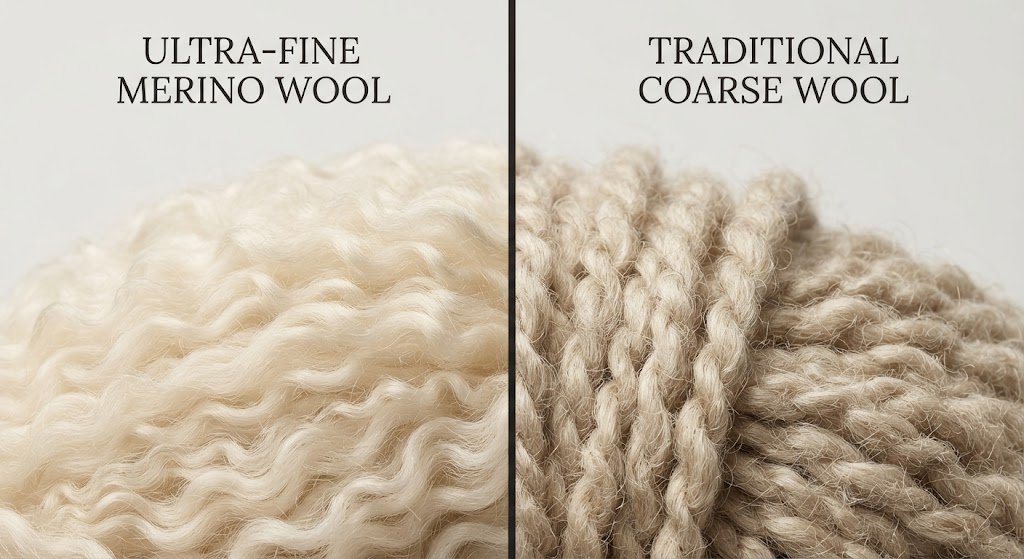
Close-up comparison showing the exceptionally fine, crimped texture of ultra-fine merino wool on the left versus the heavier, coarser weave of traditional sheep wool on the right.
The Science of Sleep: Why Wool Outperforms Synthetics
This isn’t just marketing language — the way wool behaves on a bed is genuinely rooted in the structure of the fiber itself, making proper merino wool bedding maintenance essential for long-term comfort, and textile researchers have studied it for years. People who switch from synthetic bedding to wool consistently report fewer night sweats and steadier body temperature through the night, and the mechanics behind that are worth breaking down.
Natural Micro-Climate Control: Each individual wool fiber has a tiny natural crimp — a wave-like structure that traps microscopic pockets of air between fibers. Effective merino wool bedding maintenance works hand in hand with these natural micro-climate properties to preserve the fabric’s integrity. Those air pockets act like a dynamic thermal buffer: they hold onto your body heat when it’s cold, but they also let excess heat and moisture escape once things warm up. It’s essentially a built-in climate control system, and it’s a big part of why wool blankets feel right in both January and a chilly April.
Moisture-Wicking Properties: Wool is naturally hygroscopic, meaning it can absorb close to a third of its own weight in moisture without ever feeling wet or clammy against your skin. That’s the mechanism behind wool’s reputation for keeping you dry — it’s actively pulling perspiration away from your body rather than trapping it the way synthetic fleece tends to. Proper merino wool bedding maintenance also involves letting your blankets air out naturally rather than using high-heat tumble dryers to preserve this wicking ability, making daily care remarkably straightforward.
Hypoallergenic and Air-Purifying Qualities: Proper merino wool bedding maintenance ensures that wool’s natural keratin proteins continue to effectively bind to and neutralize common indoor allergens, dust particles, and even some volatile organic compounds floating around your bedroom air. On top of that, wool has a naturally antimicrobial quality, which means it resists odor and bacterial buildup far better than synthetic fibers do over years of regular use — a real advantage for anyone who wants their bedding to stay fresh between washes. Ultimately, mastering merino wool bedding maintenance is a small investment of time that ensures your luxury investment stays as warm, soft, and pristine as the day you bought it.
Deconstructing Wool Grades: From Lambswool to Merino
Here’s where a lot of guides fall short — they talk about “wool” like it’s one single material, when in reality the sheep breed and the way the fleece is processed change almost everything about how a blanket feels, weighs, and performs.
- Merino Wool: This is the fiber most people mean when they picture a genuinely luxurious wool blanket. Merino sheep produce an exceptionally fine fiber — so fine, in fact, that the individual strands bend easily against your skin instead of poking or scratching the way coarser traditional wool can. The result is a butter-soft, almost weightless feel that’s earned Merino its reputation as the top choice for premium bedroom blankets and high-end throws.
- Lambswool: Harvested from a sheep’s very first shearing, lambswool has a plush, cloud-like quality that’s genuinely different from anything sheared later in a sheep’s life. It’s lightweight without sacrificing durability, giving you that soft, first-touch comfort while still holding onto the structural resilience mature wool is known for.
- Virgin Wool (100% Pure Wool): “Virgin” simply means the wool hasn’t been previously processed, spun, or recycled from another textile. Blankets made from 100% virgin wool tend to have the deepest natural crimp and the strongest fiber structure, which translates into serious longevity — this is the category people mean when they call a wool blanket an heirloom piece, the kind that gets passed down rather than replaced.
- Blended Wool Options: Not every household needs (or wants) pure wool. Many manufacturers blend wool with cotton or a resilient synthetic like acrylic to bring the price down, improve drape, and simplify washing instructions, while still holding onto a good amount of wool’s natural warmth. It’s a reasonable middle ground if you want the wool feel without the higher price tag or the more careful laundering routine.
Market Analysis & Merino Wool Bedding Maintenance Insights
If you start shopping seriously, you’ll notice the market splits into a few clear categories, each built around a different priority.
- The Luxury Lambswool Standard: Brands like Brooklinen and The Company Store have built their reputation in this category using European-milled lambswool. These pieces have a heavy, substantial drape that still breathes — the kind of blanket that looks completely at home folded at the foot of a well-made bed, with a plush hand-feel that’s immediately noticeable.
- Heritage Washable Wool Innovations: For most of wool’s history, the one real drawback was the dry-cleaning requirement — an ongoing cost and hassle that kept a lot of people away from wool bedding entirely. That’s changed. Heritage mills like Pendleton Woolen Mills have developed specialized anti-felting treatments for select wool lines, which are also distributed through partners like L.L.Bean. The treatment works by smoothing down the microscopic scales along each wool fiber so they can’t lock together and felt during a normal home wash — which forms a foundational baseline for effective merino wool bedding maintenance on modern machine-washable textiles.
- Rugged and Outdoor-Ready Wool: Brands like Ektos and Woolly Mammoth take a completely different approach, focused on dense, high-GSM (grams per square meter) construction built to survive real outdoor use. These blankets do double duty as camping gear, emergency preparedness layers, or rugged cabin bedding — less about softness underfoot, more about serious, weatherproof durability.
How to Choose the Right Wool Blanket for Your Space
Picking the right one really comes down to matching the blanket to how you’ll actually use it, rather than just buying whichever one looks best online.
- Determine your primary use: If this blanket is going to be your everyday sleep layer, lean toward lightweight Merino or a certified washable wool. If it’s more of a decorative living room throw or an outdoor companion, a heavier, unwashed virgin wool or structured lambswool piece will likely serve you better.
- Check the sizing and drop length: Your blanket needs to actually match your mattress. A standard Queen wool blanket typically runs around 90 x 90 inches, while King sizes stretch past 108 inches to properly drape over the sides of a thicker modern mattress.
- Be honest about your care routine: Look closely at the tag for any anti-felting or machine-washable designation. If you don’t have the time for hand-washing or regular dry-cleaning drop-offs, investing a little extra attention in proper merino wool bedding maintenance—or paying a bit more upfront for certified washable wool—will save you money and stress over the life of the blanket.
Mastering Wool Maintenance: Cleaning and Preservation
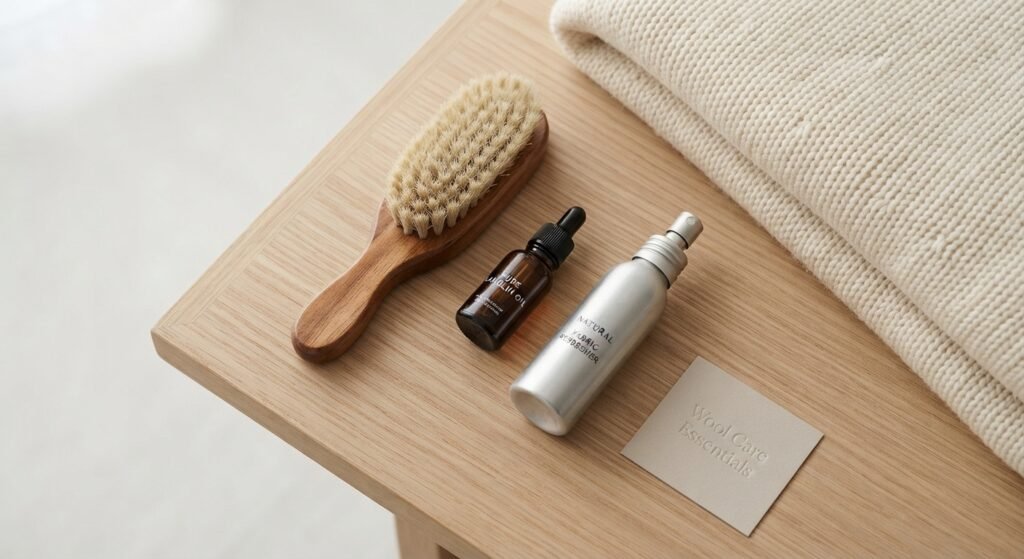
Merino wool bedding maintenance starts with understanding that wool doesn’t need to be washed as often as cotton or synthetics.”
One thing that surprises a lot of new wool owners: it needs far less washing than you’d think. Wool has natural self-cleaning properties, thanks to residual lanolin and the microscopic scale structure of the fiber itself, and washing it too often actually strips away those protective natural oils rather than helping.
- The Airing-Out Method: Between deeper cleanings, simply hanging your blanket outside in fresh, indirect air and sunlight for a few hours is usually all it needs. This alone clears out ambient odors and refreshes the fibers without any water involved at all.
- The Washing Protocol: When it is time for a real wash, never use hot water and never subject the blanket to aggressive agitation — both will trigger permanent felting and shrinkage almost immediately. Stick to cold water with a specialized, pH-neutral, protein-safe wool detergent, like Eucalan, and if you’re using a machine, choose the gentle wool or hand-wash cycle specifically.
- Drying Techniques: A tumble dryer is never the right call for a wool blanket, full stop. Instead, gently press out the excess water with a clean, dry towel — no wringing, no twisting — and lay the blanket flat on a clean surface, away from direct sunlight or any heat vents, to air dry naturally back into its original shape.

Frequently Asked Questions (FAQ)
- Q: Do pure wool blankets feel scratchy against the skin?
A: Traditional, coarser sheep’s wool can feel a bit textured, but the wool used in modern luxury blankets — fine Merino or young lambswool — is genuinely smooth and plush, with none of the itchiness people associate with “old-fashioned” wool. - Q: Why do some new wool blankets have a distinct earthy scent?
A: That’s residual lanolin, the natural oil that acts as a sheep’s own waterproofing and antimicrobial defense in the wild. It’s a sign of quality, authentic wool, and the mild scent fades naturally within a few days of airing it out, or disappears after the first gentle wash. - Q: How long can a well-maintained wool blanket last?
A: Wool fiber is remarkably resilient — it can bend and flex tens of thousands of times without breaking down. With proper care, a good wool blanket can realistically last for decades, which is exactly why so many people treat theirs as a household heirloom rather than a seasonal purchase.
Final Thoughts
At the end of the day, a wool blanket isn’t just another bedding purchase — it’s closer to an investment in how well you actually sleep. Between the natural temperature regulation, the moisture-wicking that keeps you from waking up damp, and the sheer staying power of the fiber itself, it’s easy to see why wool has outlasted every synthetic trend that’s tried to replace it.
Whether you land on a featherlight Merino throw, a substantial lambswool piece for the foot of the bed, or a fully washable wool blanket that fits into a busy household’s laundry routine, the right choice comes down to matching the wool to how you actually live — and once you do, it’s genuinely hard to go back to anything synthetic.
Ultimately, mastering merino wool bedding maintenance is a small investment of time that ensures your luxury investment stays as warm, soft, and pristine as the day you bought it. When paired with careful merino wool bedding maintenance routines, these natural blankets will easily outlast any synthetic alternative on the market, giving you unmatched comfort year after year.