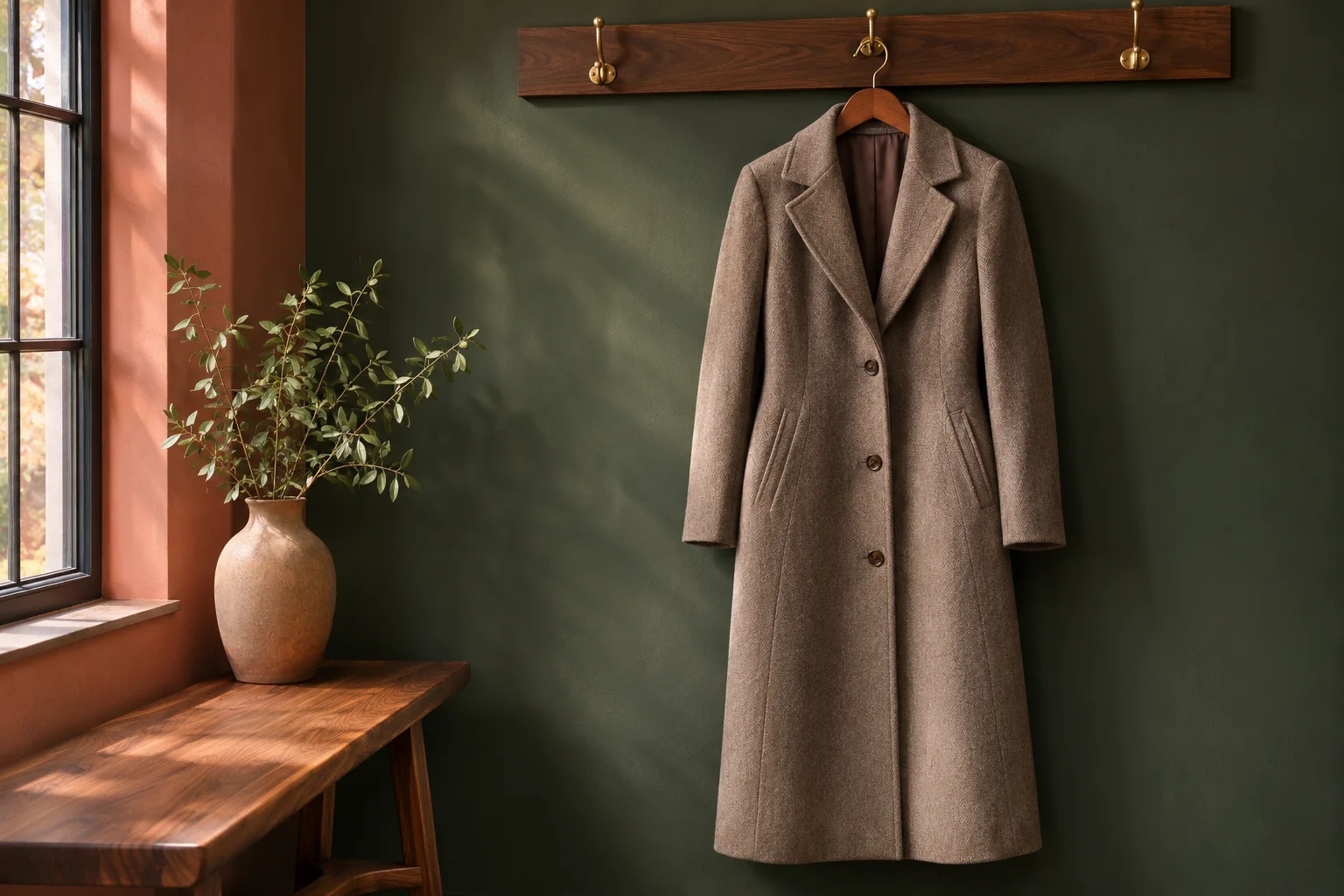
How to Wash a Wool Coat Safely: Care Labels, Hand Washing & Dry Cleaning
By Editorial Team
You can wash a wool coat at home only when its care label permits washing. If the label says hand wash, follow that method. If it says machine wash, use the specified wool or delicate program and temperature. A coat marked Dry Clean Only or Do Not Wash should not be fully washed at home.
That distinction matters because linings, interfacing, shoulder shaping, dyes, buttons and trims can react differently to water, movement and heat. A method that works for a simple sweater may permanently distort a tailored coat. This guide explains how to wash a wool coat safely when the manufacturer allows it, what to do with a dry-clean-only coat, and how to reduce unnecessary full cleanings. It is based on published care standards and manufacturer guidance, not hands-on product testing.
Can You Wash a Wool Coat at Home? The Quick Answer
Start with the sewn-in care label, not the percentage of wool on the fiber label.
- Machine washable: Wash only with the program, temperature, spin and drying method allowed on the label.
- Hand wash: Use a supported, low-agitation hand-washing method and the permitted water temperature.
- Dry clean only or do not wash: Do not submerge or machine-wash the coat. Use permitted routine surface care and take it to a qualified cleaner when a full cleaning is needed.
- Missing or unreadable label: Do not guess. Ask the manufacturer or choose a cleaner experienced with structured outerwear.
The U.S. Federal Trade Commission’s Care Labeling Rule guidance explains that manufacturers must provide a care method for which they have a reasonable basis. A garment may contain washable wool but still require professional cleaning because the finished coat includes components that are not safely washable together.
Check the Wool Coat’s Care Label First
Care symbols communicate the maximum treatment the finished garment is designed to tolerate.
According to the official GINETEX care-symbol guide, a crossed-out wash tub means do not wash. A hand in the tub permits hand washing under the conditions represented by the symbol, while bars beneath a wash tub indicate reduced mechanical action. Numbers inside the tub show the maximum water temperature, not a target that must always be reached.
Woolmark’s explanation of washing symbols adds practical context: a very mild wash requires reduced mechanical treatment, and hand-washed wool should not be rubbed, pulled or wrung. Drying, bleaching, ironing and professional-cleaning symbols matter too. Permission to wash does not automatically mean permission to tumble dry.
Read the full label for the permitted cleaning method, maximum temperature, cycle severity, spin and tumble-drying restrictions, drying position, ironing limits and bleach warnings.
If wording and symbols seem inconsistent, pause and contact the brand. Do not resolve uncertainty by choosing whichever instruction is more convenient.
Why Wool-Coat Construction Changes the Cleaning Decision
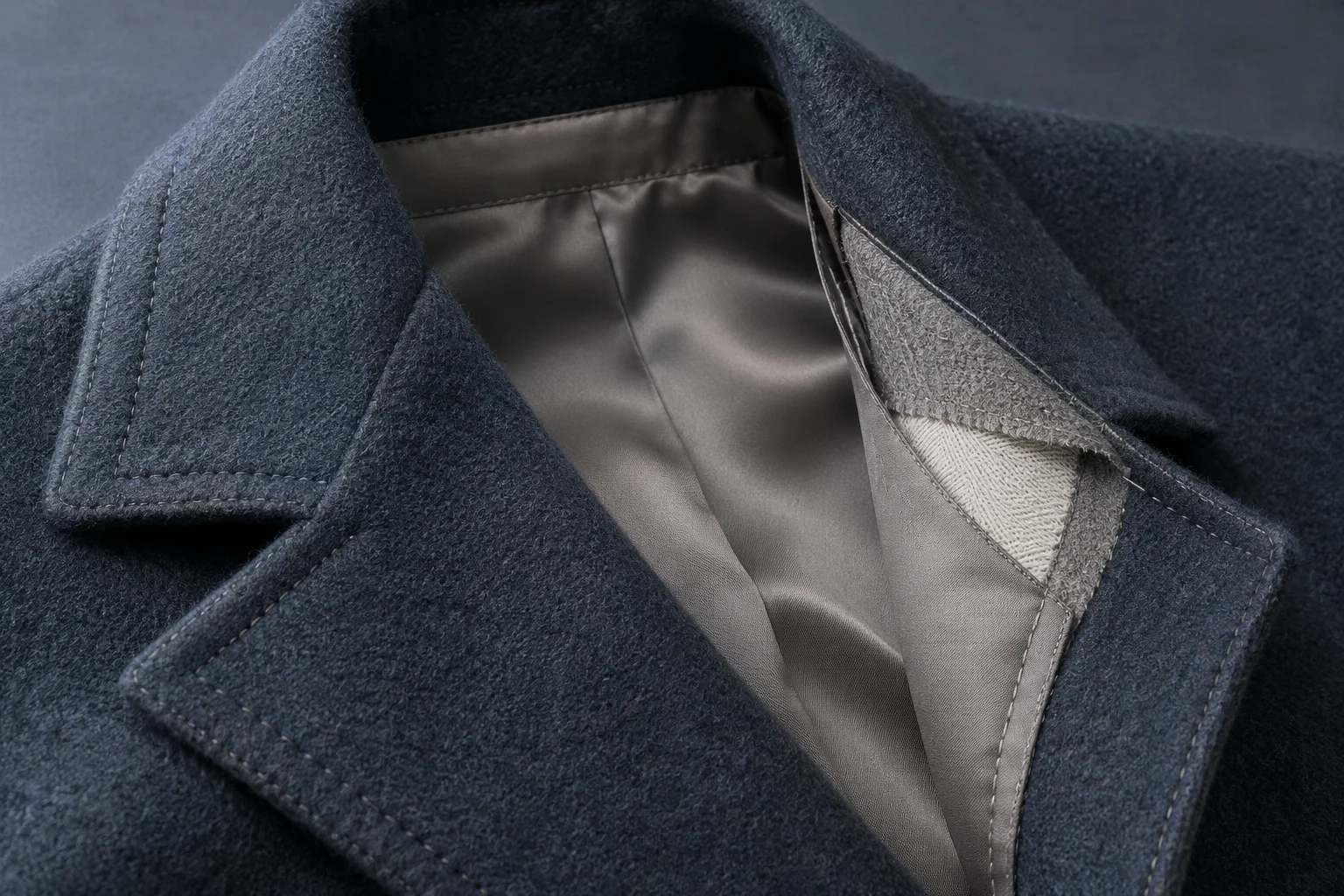
A knitted sweater is usually one flexible textile layer. A tailored wool coat may combine woven outer fabric, lining, chest canvas or fusible interfacing, shoulder support, sleeve heads, padding, pocket bags, reinforced lapels, buttons and decorative trim.
Water can make a heavy coat difficult to support. The shell and lining may shrink at different rates; interfacing can ripple; shoulder structure and lapel roll can shift. Leather, fur, glued decoration and some buttons may require separate care.
That is why fiber content alone cannot determine washability. A coat that is 100% wool may be washable if its complete construction was designed and tested for it, while a wool-blend coat may still be dry-clean-only.
Manufacturer guidance illustrates the difference. UNIQLO’s wool-coat guide instructs owners to check the product label and identifies its referenced wool coats as dry-clean-only. COS separates wool coats from wool jumpers: its coats are not recommended for machine washing, while some jumpers may be washed as labeled. These examples do not set the rule for every brand; they show why the exact garment instructions control the decision.
Wool-Coat Care Decision Table
| Care-label situation | Appropriate next step | Important restrictions |
|---|---|---|
| Machine washable | Follow the label’s exact cycle, temperature, load, spin and drying instructions | A wool cycle does not authorize washing a coat labeled Dry Clean Only |
| Hand wash | Hand wash gently at the permitted temperature, support the coat when wet, and dry as directed | Do not rub, wring, twist or assume that soaking is allowed |
| Dry Clean Only or Do Not Wash | Use a qualified professional cleaner for full cleaning; limit home care to methods the label or manufacturer permits | Do not submerge the coat or test a washing-machine cycle |
| Label missing, unreadable or uncertain | Ask the manufacturer or consult a cleaner experienced with wool outerwear | Do not infer washability from wool percentage, softness or an unstructured appearance |
How to Hand Wash a Wool Coat When the Label Permits It
Use this method only for a coat explicitly labeled for hand washing. If the label gives additional product-specific directions, those take priority.
1. Inspect and prepare the coat
Empty pockets, follow the brand’s fastener instructions, and remove only accessories designed to detach. Check loose buttons, open seams and lining damage before wetting the garment.
Test any permitted detergent or spot treatment on an inconspicuous area if colorfastness is uncertain. Do not wash different colors together when dye transfer is a concern.
2. Prepare water and detergent according to the label
Use a clean basin large enough to avoid compressing the coat. Add water at the label-permitted temperature and correctly dosed detergent intended for washable wool. Our best wool detergent guide explains why compatibility and dosing matter.
Do not substitute chlorine bleach, an aggressive stain remover or a standard heavy-duty detergent unless the coat manufacturer explicitly allows it.
3. Lower the coat into the water and handle it gently
Distribute the coat loosely and press water through it with slow movements. Do not scrub, rub sections together, twist sleeves or agitate it.
Follow any manufacturer-stated washing or contact time. If none is supplied, avoid creating an arbitrary long soak: prolonged wet handling can increase dye, lining and shape risks.
4. Rinse without temperature shock or friction
Drain while supporting the coat. Refill with rinse water that follows the label’s temperature guidance, then press gently to release detergent. Repeat only as needed.
5. Remove excess water without wringing
Support the coat’s full wet weight with both forearms or hands and press water out gently. If allowed, use a clean, colorfast towel to press or roll it without twisting.
Never lift a saturated coat by one shoulder, lapel or sleeve. Concentrated wet weight can stretch seams and distort the garment.
How to Machine Wash a Wool Coat When the Label Permits It
Machine washing is appropriate only when the finished coat is explicitly labeled machine washable.
- Check capacity. The coat needs room to move and rinse without being packed tightly.
- Prepare the garment. Empty pockets and follow instructions for fasteners, removable pieces and any recommended laundry bag.
- Select the permitted program. Use the labeled wool, delicate or very-mild cycle at the specified maximum temperature. Follow any spin restriction.
- Use the correct detergent and dose. Choose a product approved for washable wool and follow both garment and detergent instructions.
- Remove the coat promptly. Support it with both hands instead of pulling it from one point.
- Dry exactly as labeled. Machine washable does not mean dryer-safe.
Woolmark’s general guide to washing wool can help interpret wool cycles, but the coat’s label remains the controlling instruction. If a coat says Dry Clean Only, selecting a gentle cycle does not make washing safe. For less structured washable knitwear, our guide to how to wash merino wool covers additional garment-care principles, but a coat’s label still takes priority.
How to Wash a Dry-Clean-Only Wool Coat
The safe answer is: do not fully wash it at home.
“Dry Clean Only” applies to the finished garment. It can reflect risks involving shape, dyes, finishing, lining, interfacing or trim—not just the wool shell. Submerging the coat may produce shrinkage, felting, rippled fronts, a twisted lining, flattened lapels or misshapen shoulders that cannot be corrected reliably after drying.
Official product guidance can be stricter than generic tutorials. Assembly Label states that its referenced wool coats cannot be hand- or machine-washed, while Sandro distinguishes structured woven coats from washable knitwear and recommends professional care for the former.
For a dry-clean-only coat:
- air it between wears in a ventilated place away from direct heat and prolonged strong sun;
- use a suitable soft garment brush lightly, if the manufacturer permits brushing;
- address a spill promptly by lifting solids or blotting liquid without rubbing;
- tell the cleaner what caused a stain and what, if anything, has already been applied;
- ask the brand before attempting any surface treatment not covered by its instructions.
Home “dry-cleaning” kits do not override a Dry Clean Only label or repair structural damage caused by wet washing.
Spot Cleaning and Routine Wool-Coat Care
Routine maintenance can delay a full cleaning, but it should remain gentle and construction-aware.
After wearing, empty pockets and air the coat before storing it. Use a broad hanger when recommended. Lightly brush surface dust in the direction of the nap or weave.
For a fresh spill, Woolmark’s stain-removal guidance recommends lifting excess solids and blotting liquid with a white absorbent material rather than rubbing. It also advises testing treatments in an unseen area and recognizing that stain methods suited to cotton or synthetics may not be appropriate for wool.
Our detailed guide to removing stains from wool can help identify the initial response for different stain types. On a structured coat, however, stop sooner: difficult stains, dye movement, water rings, oily marks, unknown finishes and marks near leather or decorative trim are reasons to seek professional treatment.
How to Dry and Reshape a Washable Wool Coat
Follow the coat label because woven, knitted, lined and unlined garments may require different support.
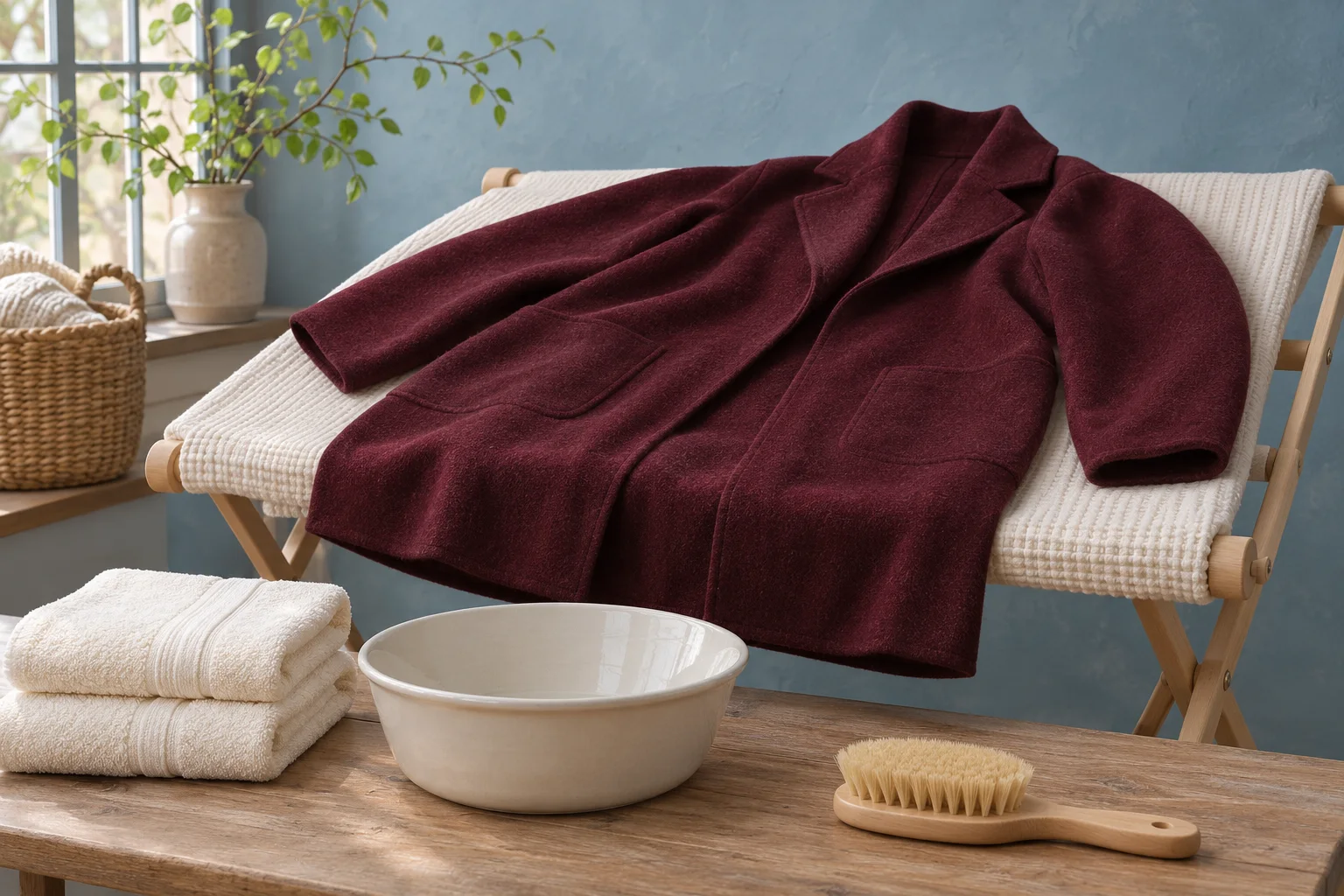
Smooth the collar, fronts, pockets, sleeves and hem into position. Woolmark’s care advice recommends drying wet wool at room temperature away from direct sunlight or heat.
If the label says flat dry, lay the coat on a clean, colorfast towel or ventilated drying surface that supports its full length. Reposition it carefully as needed for airflow. If the manufacturer permits hanger drying for a woven coat, use a broad, sturdy hanger that supports the shoulders and make sure the garment is not so saturated that it stretches under its own weight.
Do not tumble dry unless the label explicitly permits it. Heat and mechanical action can contribute to shrinkage and felting; our explanation of why wool shrinks covers those mechanisms in more detail.
Wait until the coat and its lining are fully dry before wearing or storing it. Damp internal layers may take longer than the surface.
Common Wool-Coat Washing Mistakes
- Ignoring Dry Clean Only or Do Not Wash: The wool may survive while the structure does not.
- Assuming every wool cycle is safe: It matters only when the label permits machine washing.
- Exceeding the allowed temperature: Heat combined with movement can increase damage risk.
- Rubbing, scrubbing or wringing: Friction and twisting can encourage felting and deform seams.
- Using unsuitable detergent or bleach: These may damage wool, dyes or finishes.
- Overloading the washer: A bulky coat may not move or rinse correctly.
- Lifting a wet coat by one point: Saturated fabric can stretch at a shoulder or sleeve.
- Using uncontrolled heat or pressure: Radiators, prohibited tumble drying and heavy steaming may shrink, shine or distort the coat.
- Forgetting trims and linings: Wool-safe treatment may still be wrong for other components.
How Often Should You Clean a Wool Coat?
There is no universal cleaning calendar. Frequency depends on wear, climate, visible soil, odor, spills, storage plans and the manufacturer’s instructions.
A coat does not need full cleaning after every wear. Airing, light brushing and prompt attention to marks can reduce unnecessary treatment. Clean it when genuinely soiled, persistently odorous, stained or ready for long-term storage.
Clean before storing a visibly soiled garment because residues can set and may attract pests. Use the principles in our guide to storing wool sweaters while adapting the support and space to a structured coat.
Frequently Asked Questions
Can I wash a wool coat in a washing machine?
Only if the finished coat’s care label explicitly permits machine washing. Use the listed program, maximum temperature, spin and drying method. Do not machine-wash a coat marked Hand Wash, Dry Clean Only or Do Not Wash.
Can I hand wash a wool coat that says Dry Clean Only?
No home method can be assumed safe. The warning may reflect risks to the lining, interfacing, shoulder structure, dyes, trim or finish. Choose professional cleaning and limit home care to manufacturer-permitted surface maintenance.
Is “dry clean” the same as “dry clean only”?
Not necessarily. U.S. labels can provide one or more substantiated care methods, and wording matters. Treat “Dry Clean Only” as a restriction against washing. If a label simply lists professional dry cleaning alongside a permitted wash method, follow either complete set of instructions exactly. Ask the manufacturer when wording is unclear.
What detergent should I use to wash a wool coat?
For a coat labeled washable, use a detergent suitable for wool and follow the garment and detergent directions. Do not assume that a wool detergent makes a nonwashable coat safe to submerge.
Should a wool coat dry flat or on a hanger?
Follow the label. A knitted or heavy wet garment often needs full flat support, while some woven coats may be allowed to dry on a broad hanger. Construction and wet weight determine the risk, so do not substitute a generic sweater rule for the coat’s instructions.
Can I steam a wool coat instead of cleaning it?
Steam may release wrinkles when permitted, but it does not remove all soil or stains. Excess heat or pressure can affect the nap, finish and shape.
Conclusion
The safest way to wash a wool coat is to let the finished garment’s care label make the first decision. Hand wash only when hand washing is permitted, and machine wash only when the coat is explicitly machine washable. Support the coat’s wet weight, minimize friction, use the allowed detergent and temperature, and follow the stated drying method.
For a Dry Clean Only coat, do not treat wool content as permission to experiment. Routine airing, careful brushing and prompt blotting can help between professional cleanings, but they do not replace the cleaning method selected for the coat’s complete construction.
Sources
- Federal Trade Commission — Clothes Captioning: Complying with the Care Labeling Rule
- GINETEX — Care Symbols
- Woolmark — Washing Instruction Symbols Explained
- Woolmark — How to Wash Wool
- Woolmark — Removing Stains from Wool
- Woolmark — Caring for Wool
- UNIQLO — Outerwear Care Guides
- COS — Wool Product Care
- Assembly Label — Wool Coat FAQs
- Sandro — Wool Care Guide