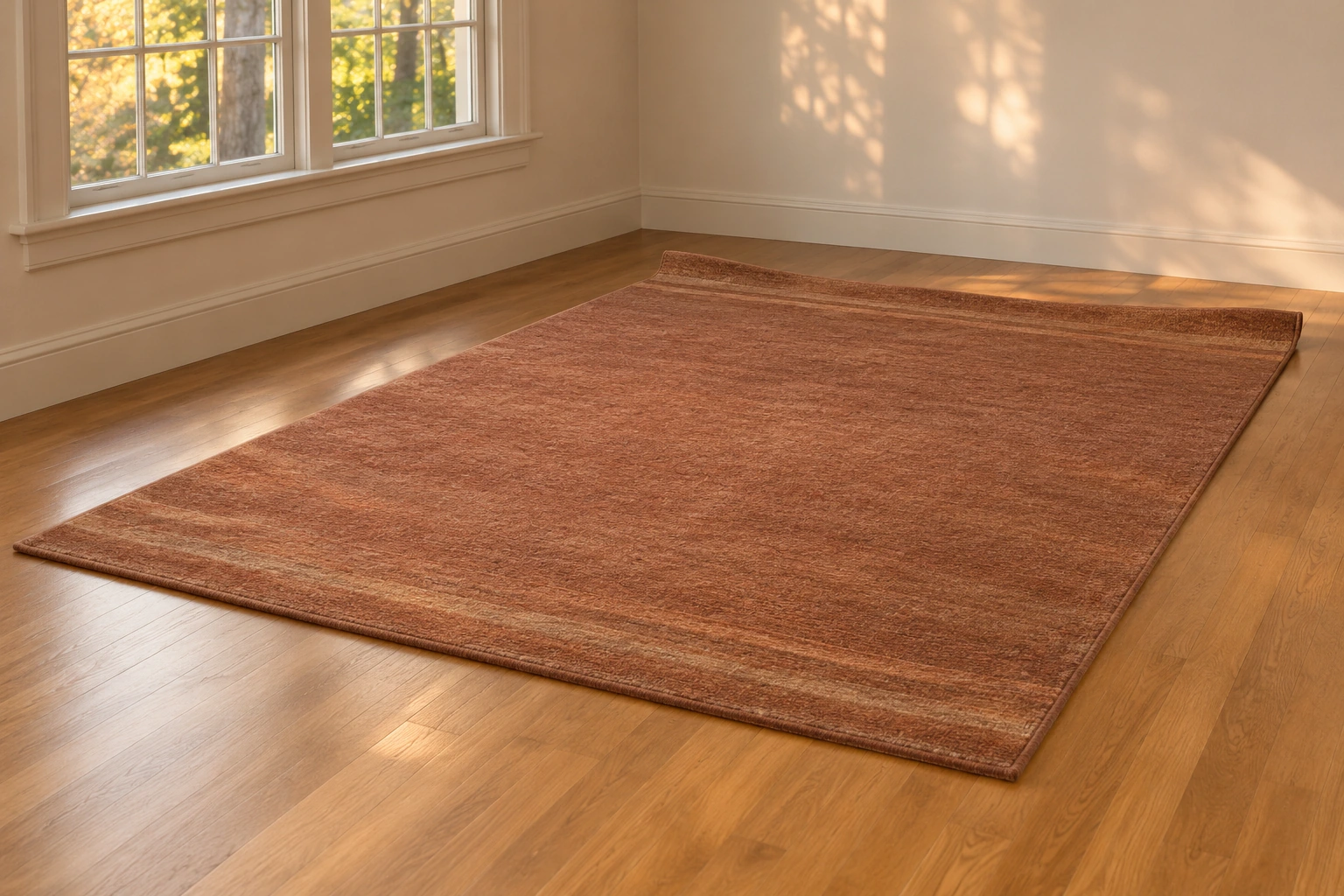
Here’s how to flatten a rug after delivery: unpack it promptly, open it to its full size on a clean, dry floor, and give it room to settle before moving furniture onto it. If an end curls toward the shipping roll, a gentle reverse roll may help when the maker allows it. A ridge along a packing fold or a wave over a rug pad calls for a different first step. Rugvista’s guide to shipping creases and curled edges.
What shape do you see on the floor?
Look across the rug from floor level before pressing anything down. Keep a raised corner out of the walking path while you check it.
| What you see | What to do first |
|---|---|
| One end curves upward in a smooth arc. The middle lies flat. | Let the end rest open. If it keeps curling in the direction it was packed, check whether the maker allows reverse rolling. |
| A straight ridge crosses the rug where the package was folded. | Open the fold fully and let the rug rest flat. Check whether the ridge gets lower before applying pressure. |
| A bubble appears as you lay the rug on its pad. | Lift that section and check for a wrinkle, gap, or overlap in the pad. Realign the layers according to the assembly guide. |
| A ridge stays in the same spot after you correct the pad, or the backing has split. | Photograph the area. Ask the seller to assess a persistent ridge. Report visible damage as soon as you see it. |
How do you flatten a curled end or corner?
If the rug arrived rolled, check the insert or product page for reverse-rolling instructions. With a flexible, intact rug whose maker permits it, start at the curled end and guide it into a broad curve opposite the one it held in the package. Keep the curve rounded, follow the maker’s timing, then lay the rug face up again. Stop if the backing resists, cracks, or starts to separate. Never fold a corner under and step on it to make a sharp crease.
For a single lifting corner, gentle weight can be an easier option if the maker permits it. Ease the corner flat and set a light, broad, flat-bottomed box over it. Check underneath for compression. A sofa leg concentrates the load on a small patch of pile. Rugvista’s guidance on using light weights.
What if the rug arrived folded in a box?
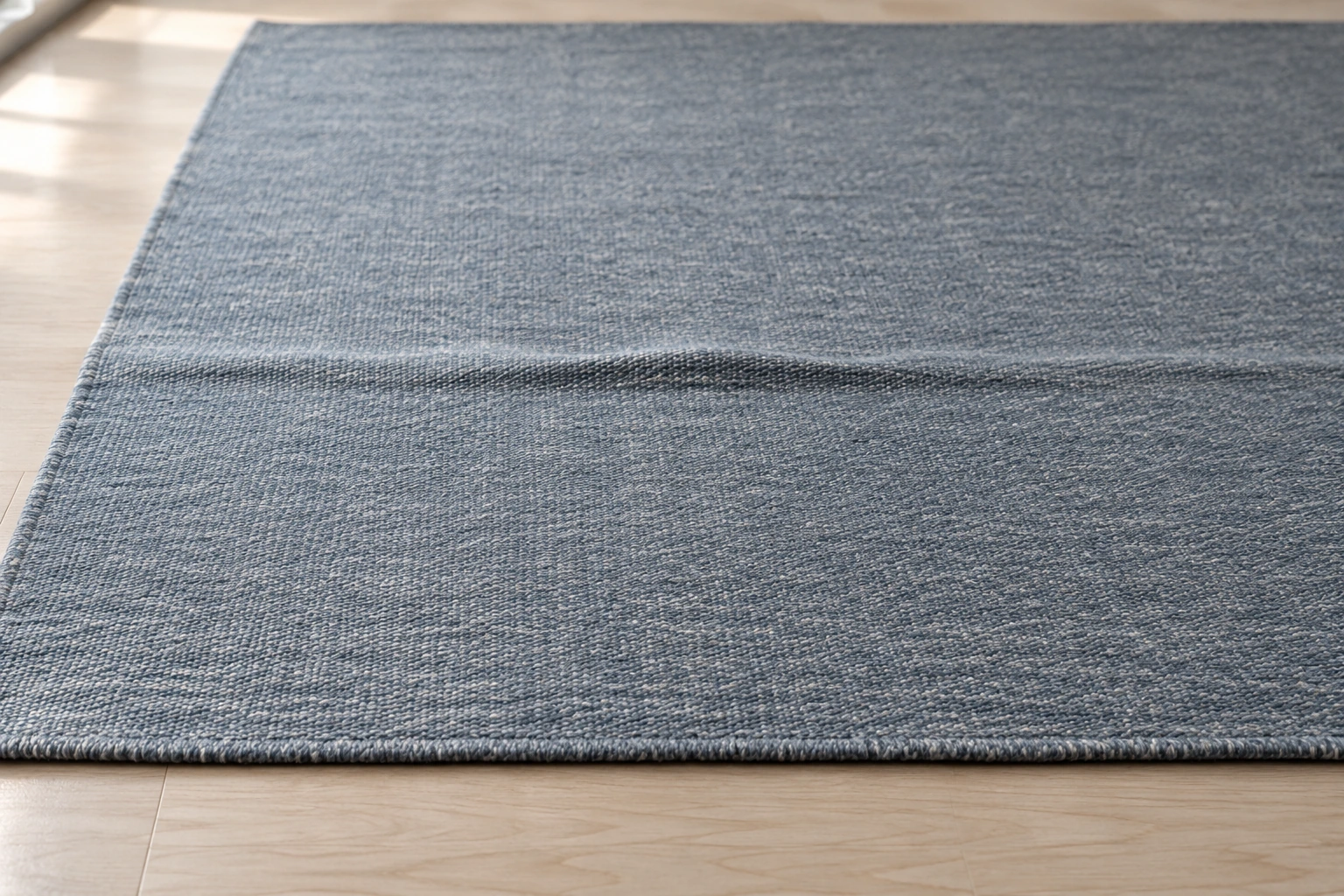
Unfold it completely and leave the folded area free of furniture so you can watch the ridge. Take a photo from the side when you unpack it. On your next check, use the same angle: a lower ridge is a reason to give it more time. If the rug already sits flush with the floor and all you see is a lighter or darker stripe, look from the opposite end. Pile brushed in a different direction can reflect light differently. A change in shade alone is a poor reason to bend the rug again. Rugs.com on packing creases and pile shading.
What if ripples appear over the rug pad?
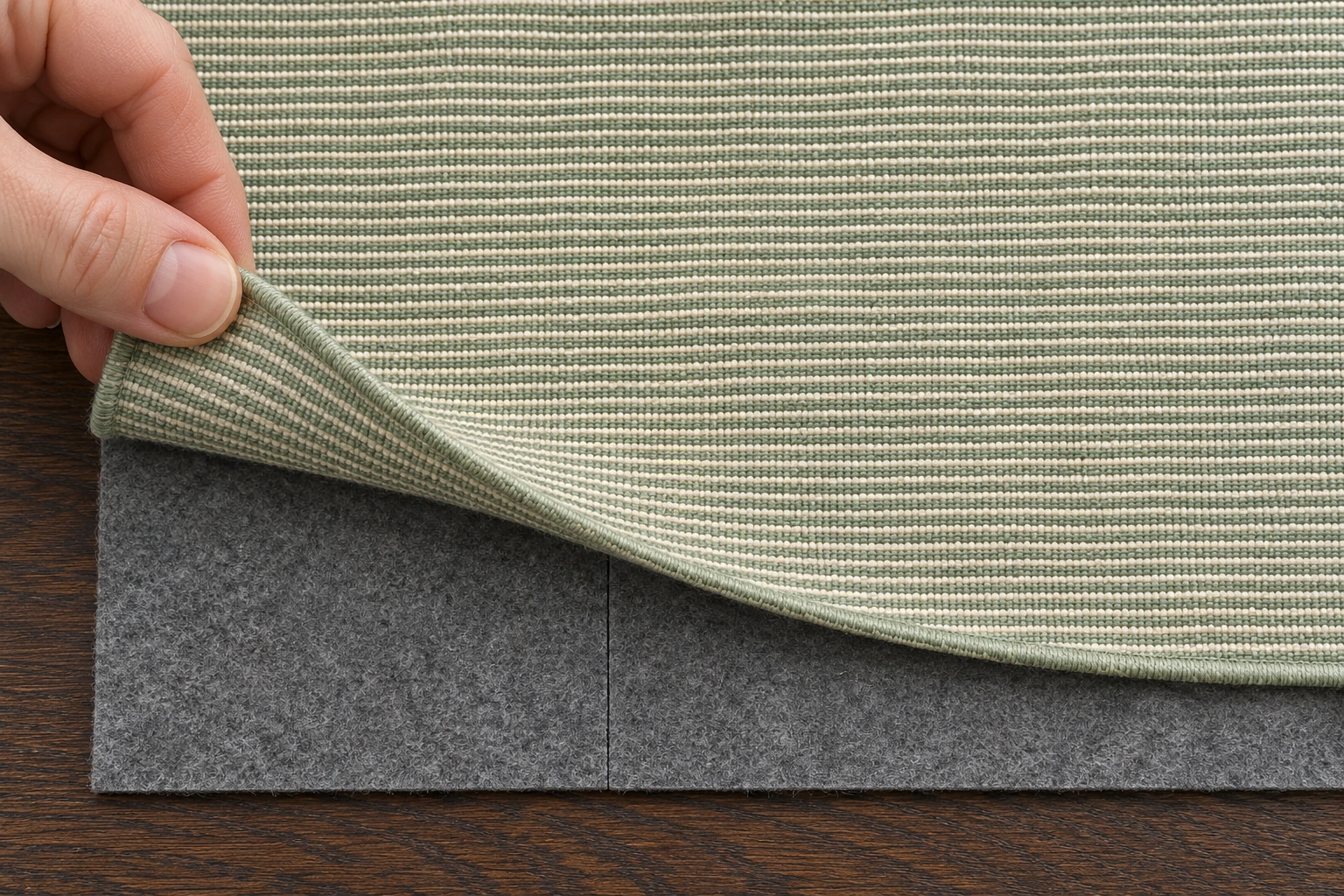
Check what is directly underneath the ripple. For example, if a straight hump runs across the join in a pad made of multiple sections, lift the cover and check that the pad edges meet evenly. On Ruggable’s two-piece system, align the starting corners before the cover grips the pad, then unroll it slowly and smooth from the center toward the edges. If the hump disappears once the pad lies flat, you can leave the rug fibers alone. Ruggable’s illustrated assembly guide.
If a separate pad lets the whole rug slide even after the surface lies flat, check compatibility with both the floor finish and the rug backing before replacing it. Our guide to choosing a pad for a wool rug explains grip, thickness, and fit.
What changes when the new rug is wool?
Check how the rug is made. “Wool pile” identifies the yarn you walk on. A hand-tufted rug can have a separate backing bonded behind that yarn. If that layer is peeling away at the crease, leave the rug open and contact the seller before bending it again. Our guide to hand-knotted and hand-tufted rugs explains what to look for on the reverse.
Two wool-rug makers give different settling periods. Beni Rugs says the edges of its hand-knotted and handwoven wool rugs often relax over the first few days. MINDTHEGAP tells owners of its hand-tufted wool rugs that transit creases may take a week or two and that an overnight reverse roll may help. Use the directions for the rug you bought. Beni Rugs care guide · MINDTHEGAP hand-tufted wool care sheet (PDF).
Keep the steamer, iron, and spray bottle out of the initial setup. Beni’s ironing directions for a stubborn corner specify different surfaces for particular knotted and flatwoven collections. Ruggable tells owners of its Easy Care Wool rugs to avoid direct heat when drying them. A wool setting on an appliance does not tell you what the backing, binding, or other fibers in your rug can tolerate. Ruggable’s Easy Care Wool instructions.
When should you contact the seller?
Contact the seller promptly if the backing is split, the bound edge is coming apart, or a raised section makes the rug unsafe to use. For an intact rug, get in touch if a ridge or twist persists after you have checked the pad and followed the maker’s settling advice. If the return deadline is approaching, ask while your options are still open.
Send your order number, a photo of the whole rug, and a low side view of the raised area. Say whether it arrived rolled or folded and whether the ridge is still there with the pad out of the way. Keep the shipping label: Rugs.com, for example, asks customers reporting transit damage for photos of both the damage and the label. A useful question for the seller is, “Does this model’s backing allow reverse rolling, or would you like to inspect it as delivered?” Rugs.com shipping and damage FAQ.
If you are bringing an older rug back into use, start with the inspection steps in how to unroll a wool rug after storage, especially if its backing has stiffened or changed since it was packed.
Research note: The Editorial Team reviewed manufacturers’ setup and care instructions and retailers’ delivery guidance. The product examples are documented instructions. We did not test flattening methods on these rugs.