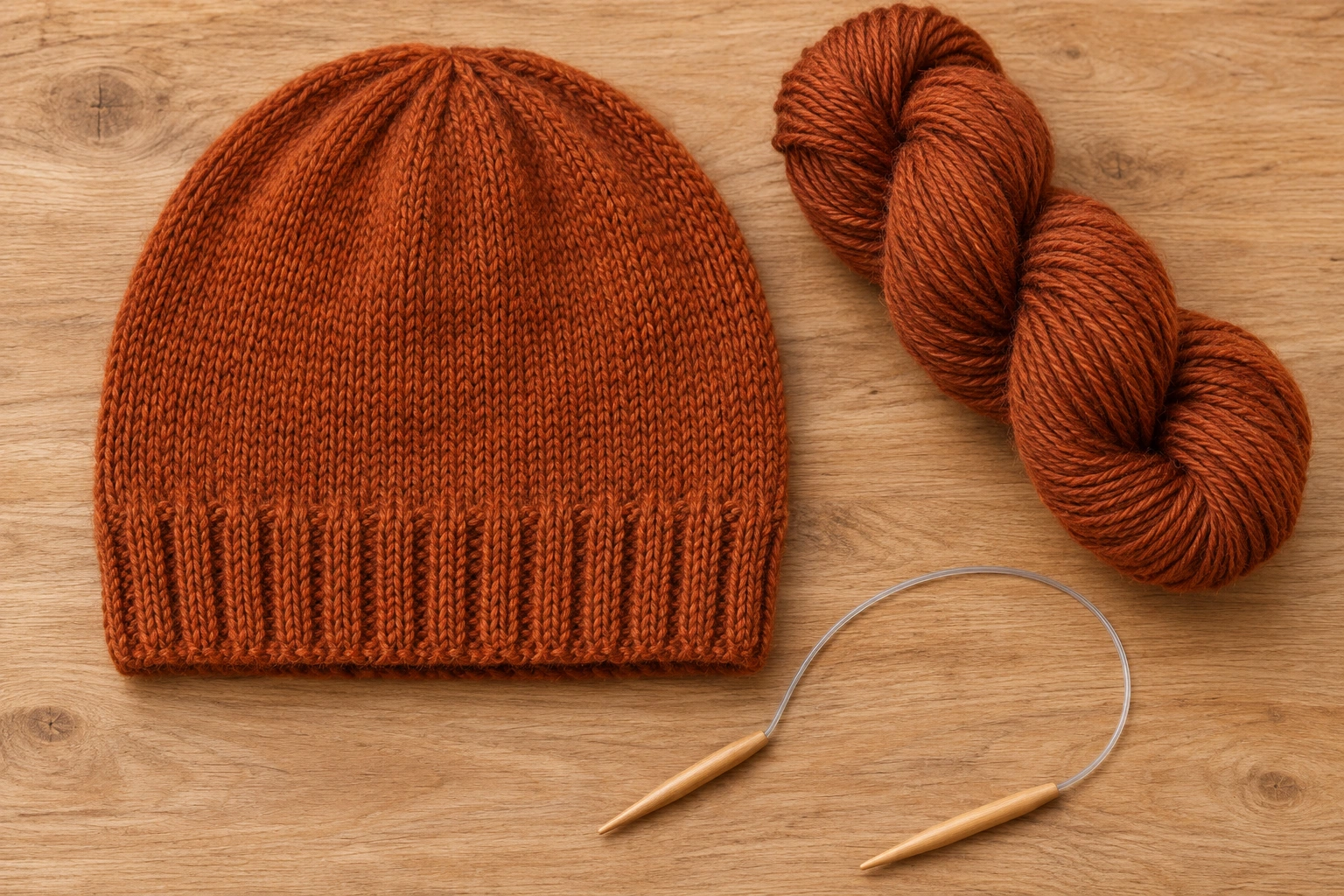
Aran wool weight is a medium yarn thickness. The Craft Yarn Council groups Aran and worsted together in US category 4, so if your UK pattern calls for Aran, a US worsted-weight yarn is a reasonable place to start looking. To decide whether a particular yarn will work, make a swatch in the pattern stitch. Once it’s finished and dry, it should match the pattern’s gauge and feel right for the project. Craft Yarn Council weight chart · Brooklyn Tweed swatching guide
What does “Aran” tell you on a yarn label?
Aran tells you roughly how thick the strand is. Read the other label details separately. On a skein marked Aran, 100% wool, 100 g, 170 yd, “Aran” gives the thickness category, “100% wool” identifies the fiber, “100 g” tells you what the skein weighs, and “170 yd” tells you how much length you’re buying. Those are the actual specifications for Quince & Co.’s Osprey. Another 100-gram ball can contain a different length of yarn. Guide to reading wool yarn specifications · Osprey yarn specifications
Watch for one similar-looking term. Worsted weight describes thickness. Worsted-spun describes how fibers were prepared and spun. If a listing says only “worsted-spun wool,” you still need its weight category or suggested gauge to judge whether it’s a candidate for an Aran pattern. How woolen-spun and worsted-spun yarns differ
Can you use US worsted yarn for a UK Aran pattern?
Often you can. Start with the pattern’s tension line, the term you may see in a UK pattern for gauge. It gives a stitch count over a stated width, usually with a row or round count as well. Keep the named stitch with those numbers. A target of 18 stitches in stockinette tells you something different from 18 stitches across a cable pattern. Craft Yarn Council weight chart · Brooklyn Tweed swatching guide
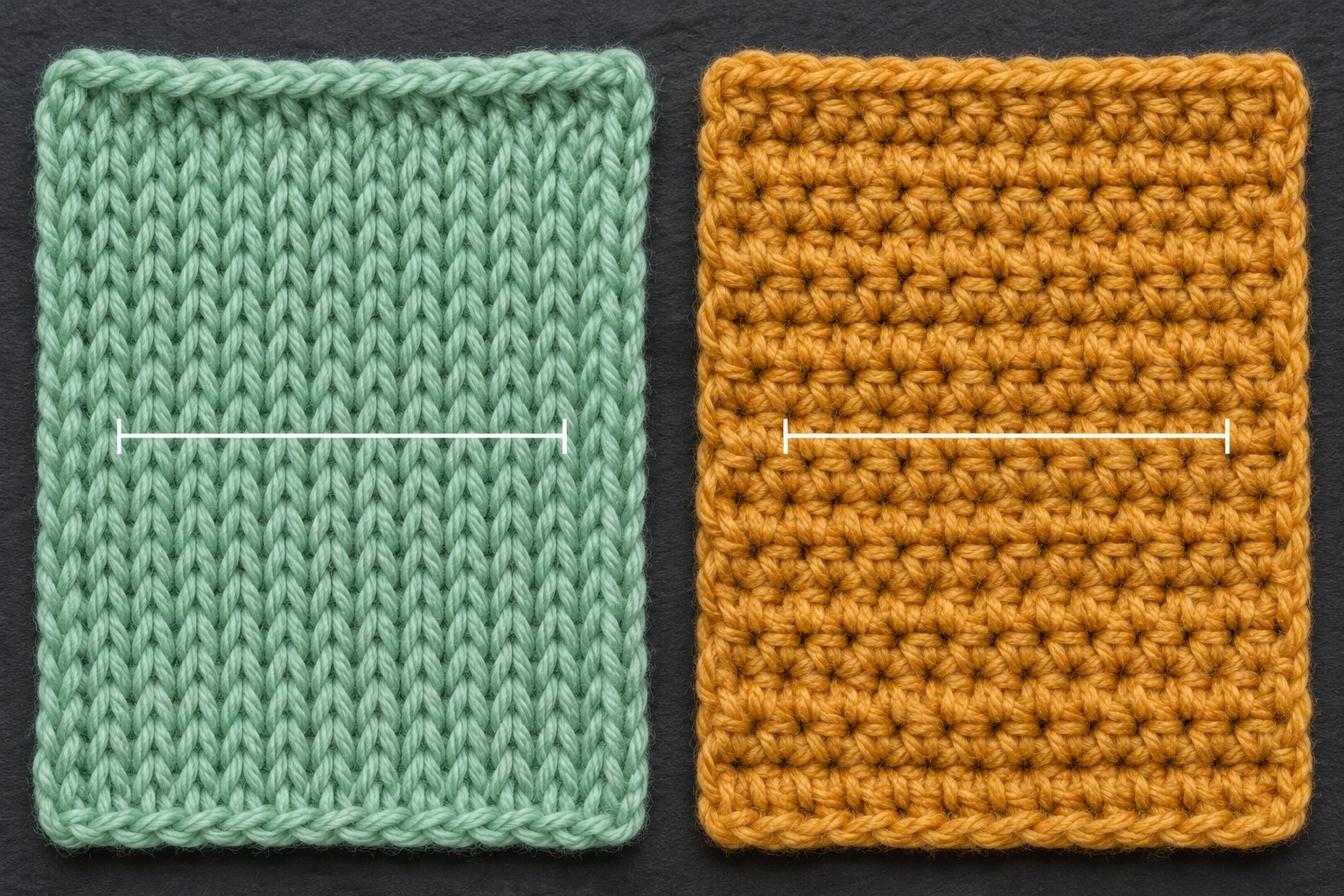
For perspective, the Craft Yarn Council’s medium category spans 16–20 knit stitches in stockinette or 11–14 US single crochet stitches per 4 inches. Those are reference ranges. They aren’t a conversion between knitting and crochet, and a designer can deliberately work outside them. Here’s how to use the chart when shopping. Craft Yarn Council weight chart
| What you find | What to do |
|---|---|
| The pattern says Aran. The US yarn says worsted or medium #4. | Compare the suggested gauge with the pattern, then swatch the actual stitch. This is a plausible substitute. |
| The yarn says DK or bulky. | DK sits one category lighter and bulky one heavier. For a first fitted project, look for a medium-weight option before trying to bridge that difference with a tool change. |
| The label gives knitting gauge. Your pattern is crochet. | Use the label to shortlist the yarn. Use the crochet pattern’s stitch, hook, and gauge to test it. |
| The swatch has the right stitch count but feels too stiff or too open. | Try another yarn. Meeting the measurement solves the width problem, but you still have to like the fabric. |
How do you check an Aran substitute before buying a project’s worth?
- Copy the gauge line for your size and version. Write down the stitch, the number of stitches and rows or rounds, the measured area, and any direction such as “after blocking.” For knitting, check whether the piece is worked flat or in the round and swatch the same way. For crochet, check whether the designer uses US or UK terminology before choosing the stitch. If the gauge counts pattern repeats, measure those repeats. Brooklyn Tweed swatching guide · Quince & Co. hat pattern · Lavi crochet hat pattern
- Compare the labels and do the yardage math. Use the total yards or meters specified for your size. Divide by the length in one replacement skein and round up to a whole skein. If the pattern lists only balls, multiply the original ball count by its length first. That gives you the length supplied; the project may use less. Calculate each color separately, and check whether your quantity leaves room for the swatch. Guide to reading wool yarn specifications · Quince & Co. hat pattern
- Make the fabric you’ll actually use. Start with the pattern’s suggested needle or hook. Make the swatch larger than the area you’ll measure so edge stitches won’t affect the count. A smooth stockinette square can tell you very little about how a ribbed cuff will stretch. Likewise, a single crochet square won’t answer a gauge question written for half double crochet or a textured repeat. Brooklyn Tweed swatching guide · Lavi crochet hat pattern
- Finish, dry, and measure. Follow the project’s finishing directions and the yarn’s care instructions. Lay the dry swatch flat and measure across the center without pulling it to size. Count rows or rounds as well as stitches, especially when the pattern shapes a crown, sleeve, or armhole over a fixed number of rows. Too many stitches in the stated width? Try a larger needle or hook. Too few? Try a smaller one. Finish and measure the new sample before committing. Brooklyn Tweed swatching guide · Simple Hat pattern · Craft Yarn Council weight chart
Finally, pick up the swatch. For a hat, stretch it gently and see whether it springs back the way you want. For a scarf, let it hang over your hand. If changing tool size gets the count right but leaves you with a fabric you wouldn’t want to wear, the next thing to change is the yarn.
Worked example: Can worsted-weight Lark replace Aran-weight Osprey in a hat?
If you’re using Lark to knit Quince & Co.’s Simple Hat, follow Version B for your size and swatch to its gauge. The designer wrote separate instructions for Osprey and Lark, and the two versions produce different stitch sizes.
The wording is worth a closer look. Quince & Co. labels Osprey Aran/heavy worsted, while the Simple Hat pattern describes Version A as Bulky. Version A uses Osprey at 14 stitches and 20 rows per 4 inches in stockinette. Version B uses worsted-weight Lark at 20 stitches and 28 rows per 4 inches in stockinette. Use the gauge for the version you’re making. Osprey yarn specifications · Simple Hat pattern
How much yarn does each skein give you? Osprey has 170 yards per 100-gram skein, and Lark has 134 yards per 50-gram skein. To match or exceed the available length of one full Osprey skein, divide 170 ÷ 134 ≈ 1.27. Round up to two Lark skeins, which give you 268 yards. This calculation compares full skeins. For the hat itself, Version B calls for one Lark skein for baby, toddler, or child sizes and two for adult or XL adult. Lark yarn specifications · Simple Hat materials by size
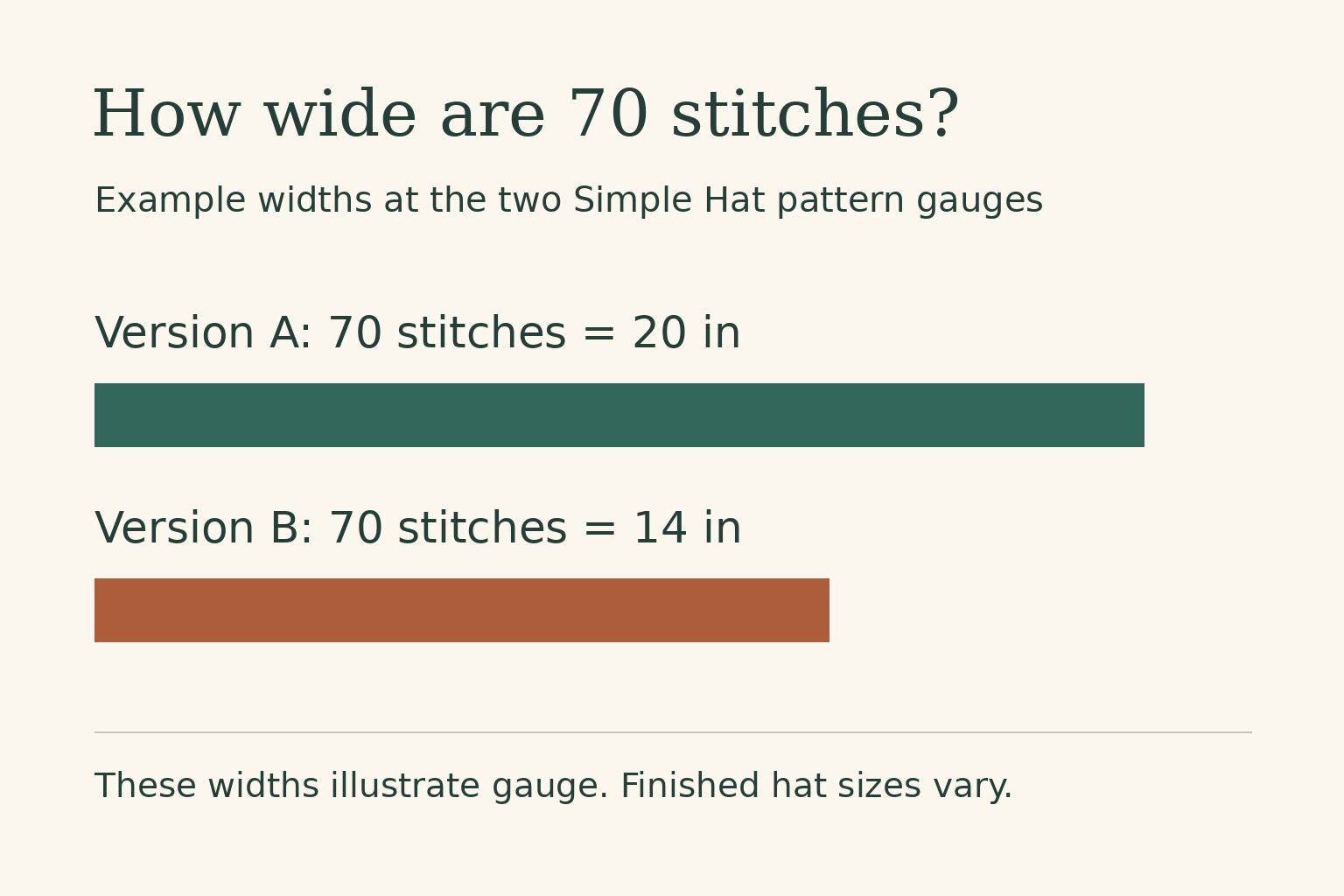
Why does the version matter? Imagine a section that’s 70 stitches wide. At Version A’s gauge, those stitches span 20 inches. At Version B’s gauge, the same 70 stitches span 14 inches. That six-inch difference is why buying enough yarn solves only half the problem. With Lark, use Version B’s stitch counts and check that your finished swatch measures 20 stitches and 28 rows per 4 inches before starting the hat.
Research note: The Editorial Team compared the Craft Yarn Council standard, Quince & Co.’s published yarn specifications and pattern gauges, and Brooklyn Tweed’s swatching guidance. The calculations use those published figures. We did not knit or crochet samples for this guide.