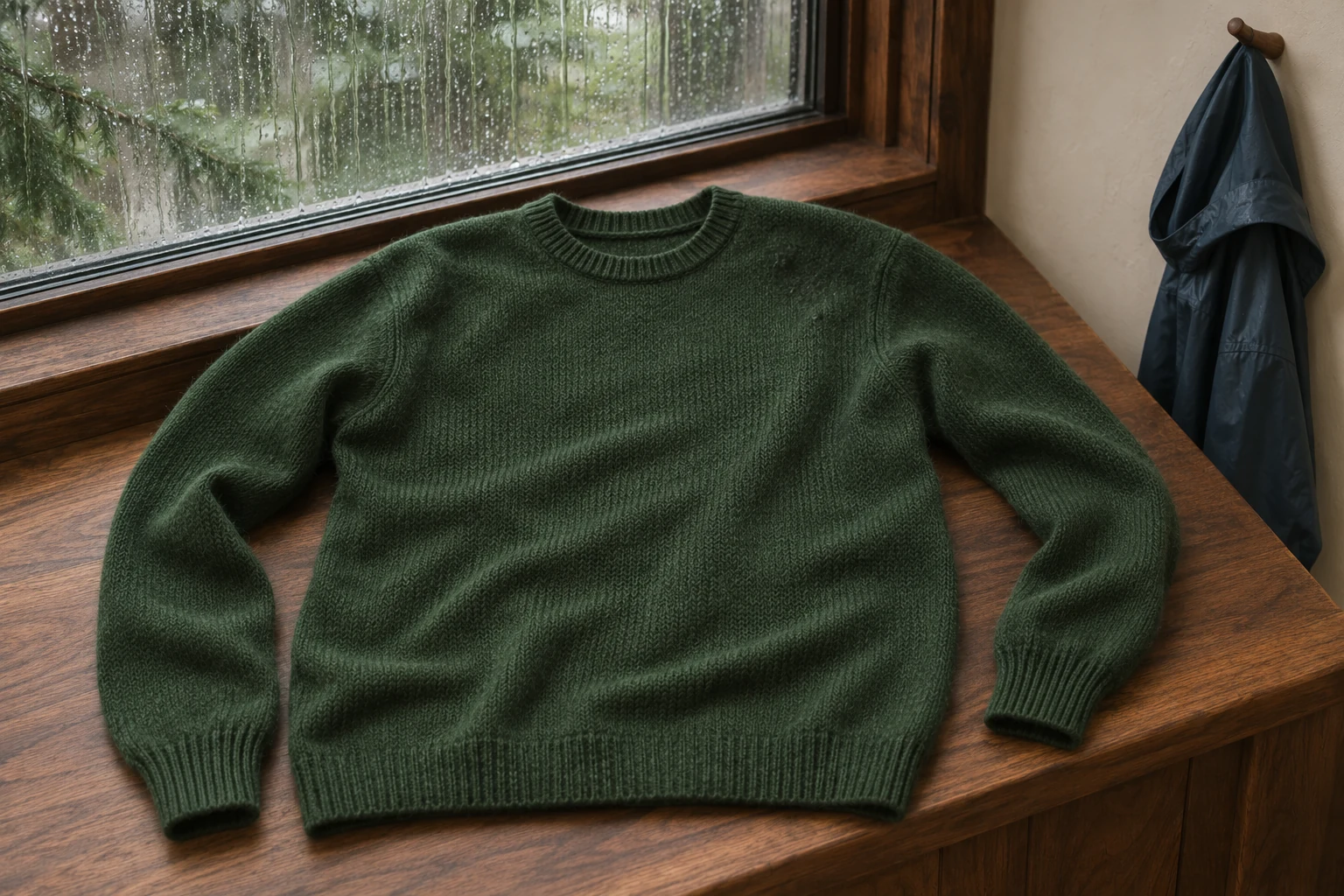
Does Wool Keep You Warm When Wet? Damp vs. Soaked Explained
By Editorial Team
Yes, wool can still help keep you warm when it’s damp. A sweater that has picked up a little sweat can still hold pockets of insulating air. If rain soaks it through, liquid fills many of those spaces and the sweater can lose much of its insulation. For a cool walk, a slightly damp wool layer under a rain shell can be useful. For a cold stop in dripping clothes, seek shelter and change into dry layers.
A good first question is where the water went. A few drops on a sleeve, moisture inside the wool fibers, and a shirt plastered to your back can all register as “wet.” They have different consequences for how quickly your body loses heat.
Editorial disclosure. This guide draws on textile research, human clothing studies, and public outdoor-safety guidance. We did not test garments or blankets.
Dry, damp, very wet, or soaked?
Use these descriptions to decide what to do with the layer you’re wearing. There is no reliable touch test that converts a damp cuff or a dripping hem into a percentage of warmth left.
| Condition | What you may notice | What to do |
|---|---|---|
| Dry | The knit holds its usual loft and the spaces between yarns contain air. | Match the thickness to the weather and activity. |
| Damp | The fabric is lightly moist and still springy. Much of the air space can remain. | Vent if you’re sweating and keep rain off the layer. |
| Very wet | Large patches cling or feel heavy. Some areas may still have loft. | Get under cover and use a dry layer for a long stop. |
| Soaked | Water has reached through the fabric. Even the inside is wet and may drip when pressed. | Seek shelter and change into dry insulation. |
One garment can fall into several rows at once. On a rainy walk, the shoulders of a sweater may be soaked while the chest is dry under a jacket. After an uphill climb, your jacket might shed the rain while sweat wets the lower back beneath your pack. When you stop, check the area against your skin as well as the outside of the garment.
Why dry wool keeps you warm
Look at the edge of a wool sweater. The fine waves in the fibers, called crimp, help the yarn hold its shape and leave small pockets of still air in the fabric. That air slows the passage of heat from your warm skin to colder surroundings. The thickness a textile maintains in use is its loft. Both fiber crimp and the way a yarn is spun, knitted, or woven influence how much loft a finished piece has. See how Woolmark describes the structure of a wool fiber.
Think about a sweater under a backpack strap. The strap flattens the knit across one shoulder while the sleeve stays springy. Both areas contain the same wool, but the shoulder has less room for insulating air. A rain jacket that fits over your sweater without flattening the knit leaves more of that air in place. A loose, open knit offers a different problem. Its thickness helps in still air, yet a breeze can pass through it unless you cover it.
What happens when wool gets damp?
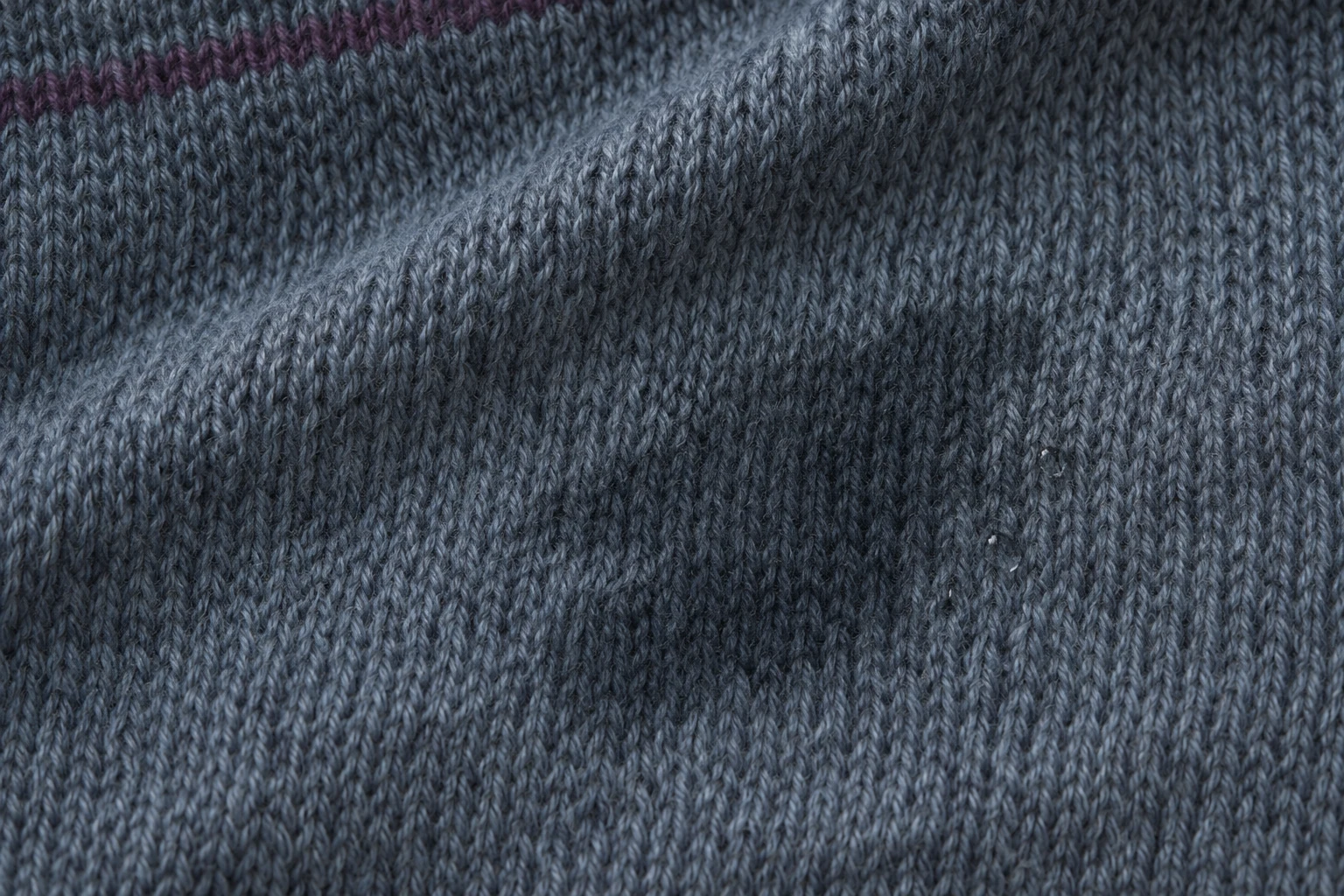
Your skin gives off moisture even before you notice beads of sweat. Wool is hygroscopic, meaning it can take up water vapor from humid air. Moisture can enter the fiber while the spaces around the yarn still contain air. That helps explain why the back of a wool shirt might feel fairly dry to your hand early in a walk, even though moisture has already entered the material.
Absorption, wicking, and drying describe three different things. A fiber can take moisture into its interior. Wicking moves liquid along narrow channels between fibers or yarns. Drying requires that water actually leave the garment. A patch of sweat can spread across a larger area while much of it is still in your shirt. A close-fitting base layer and the jacket over it both influence what happens next. The textile-science chapter on fibers for sportswear explains how wicking works.
Feeling comfortable is useful information about that moment. It tells you little about how the shirt will perform when you stop making as much body heat. Researchers can measure thermal resistance by tracking the energy needed to maintain a temperature difference across a fabric. You notice how cold or clammy the fabric feels against your skin. A shirt can score well on one of those measures while disappointing you on the other.
Why soaked wool is different
Once liquid reaches through a garment, water occupies spaces that previously held air. Water conducts heat more readily than still air. A heavy wet knit may also sag against the skin, leaving less insulating space between you and the fabric. If moisture evaporates, that takes energy too. How much cooling you experience depends in part on the air temperature, wind, and the layers between the damp area and the outdoors.
One experiment makes the distinction particularly clear. Yang and colleagues measured clothing on a heated manikin immersed in a water tank. Their outfits included a winter combination of a cotton coat and wool pants. With the clothing saturated and evaporation out of the picture, thickness and the proportion of open space in the material were closely related to its thermal resistance. That helps explain why a drenched outfit behaves differently from a dry one. The experiment cannot give you a personal warmth rating for a damp sweater worn in air. Read the fully wet clothing study.
Even among outfits with similar insulation when dry, moisture can change how they compare. In another laboratory study, the outer layer’s permeability strongly influenced total heat loss from wet two-layer outfits on heated manikins. For someone out walking, that makes the jacket worth checking alongside the shirt. A wind-exposed sweater, the same sweater under a shell, and a sweater worn indoors while it dries present three different situations. See the study of wet heat transfer through layered clothing.
Does wool give off heat as it absorbs moisture?
Yes, briefly. When wool takes up additional water vapor, the interaction between water and the fiber releases some heat. The term is heat of sorption. Geoffrey Naylor studied this by placing fabrics on a temperature-controlled plate and raising the humidity around them. With wool on the plate, the instrument briefly needed less power to hold its temperature. The experiment involved a change in air humidity. Nobody poured rainwater over a sweater or measured a hiker’s body temperature. Read Naylor’s fabric experiment.
The word briefly matters. Once the wool approaches equilibrium with the surrounding air, it stops taking up vapor at the earlier rate. You cannot count on a soaked sweater to keep producing heat through a cold evening. The dry spare in your bag has kept its loft and can trap air as soon as you put it on.
Does merino wool keep you warm when wet?
Damp merino can retain some insulation for the same reasons as other sheep wool. Merino comes from Merino sheep and is known for fine fibers that suit next-to-skin clothing. The word on the label tells you where the fiber came from. To judge how much insulation the garment can offer, also look at the thickness of the knit, its fit, and the other layers you can wear with it.
A lightweight merino base layer might feel comfortable on a climb while providing little insulation during lunch in the wind. A bulky wool pullover has room for more still air if it keeps its loft. Soaking either garment changes the calculation. In a human study comparing wool and polyester base layers worn alone and under different outer garments, the clothing combinations had little effect on core temperature during the particular bouts of rest and exercise tested. A lab difference between fabric samples does not automatically tell you which wearer will stay warmer. Read the layering study or compare merino and polyester base layers for everyday use.
How does wet wool compare with cotton or fleece?
For a cold, wet outing where you may have to stop, wool is a more practical base-layer choice than an ordinary cotton tee. Cotton can hold liquid against you and stay wet through a break. Rocky Mountain National Park advises visitors to avoid water-holding clothing such as cotton jeans, pack layers, and carry rain protection. That advice is about managing exposure on a trip. It cannot tell you whether a thin wet wool shirt will outperform a thick cotton garment in every test. Read the park’s cold-weather guidance.
Bakkevig and Nielsen tested wet underwear made with wool, cotton, polypropylene, and a blend as part of two-layer outfits. Volunteers rested in cool, humid, nearly still air, with a set amount of water added to the wet garments. Wet underwear cooled the wearers. Among the garments tested, thickness mattered more to their thermal responses and comfort than fiber type. For damp feet, the same distinction makes fit and cushioning worth considering alongside the label. Read the wet-underwear experiment or compare wool and cotton socks.
A fleece midlayer traps air among the fine, raised fibers that give its surface a fuzzy feel. The polyester fibers take up relatively little vapor, but liquid can still sit between them. If a wet fleece drains readily and its pile stands back up, it may still work as a midlayer beneath a shell. If you squeeze a fleece cuff and water runs out, you know that part of the fabric is holding liquid, whatever its fiber label says. For home use, our wool and fleece blanket comparison covers what those differences mean for choosing a throw.
How to wear wool when rain or sweat is likely
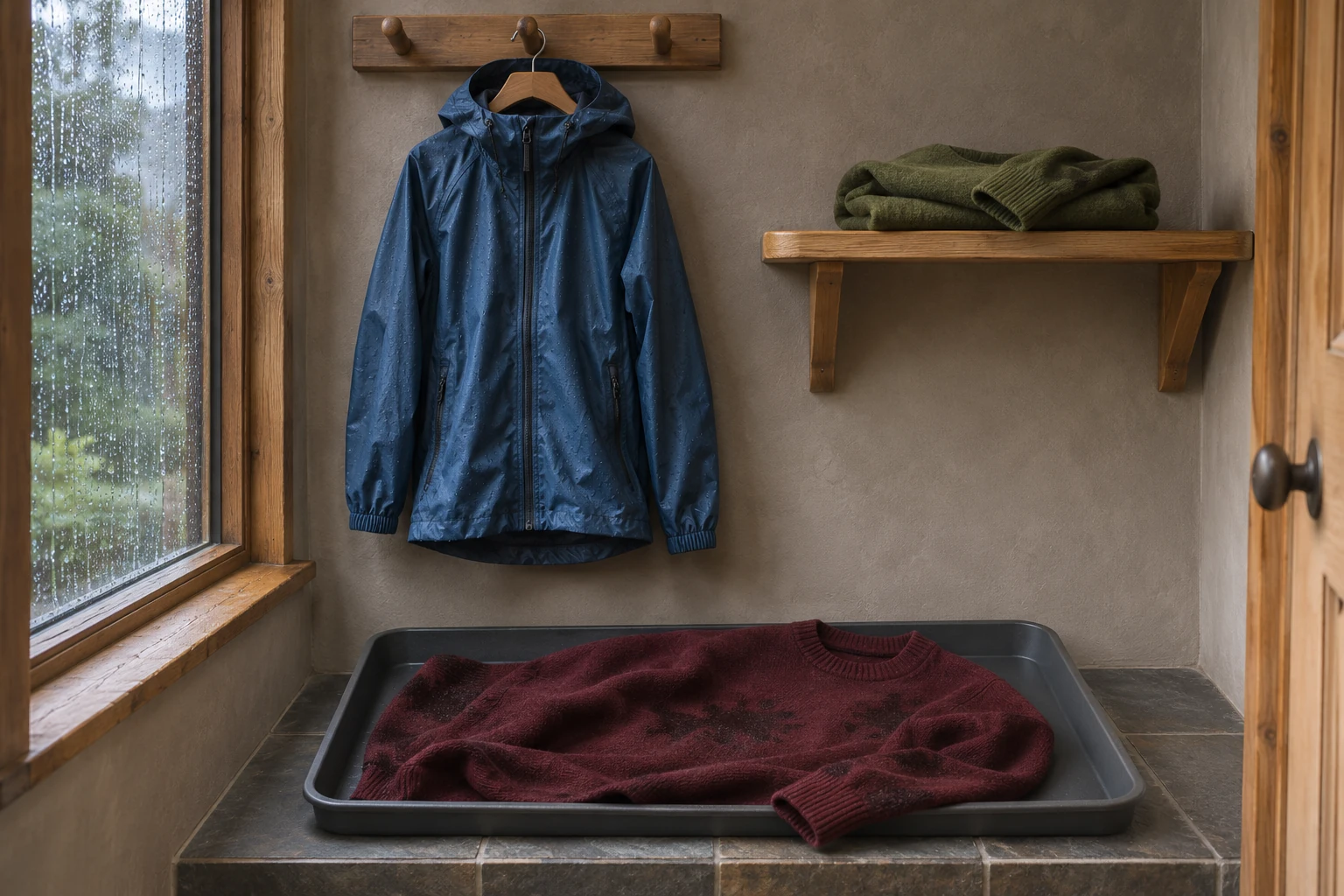
Before you leave, pack for the stop. Choose a base layer you can move in, carry insulation for breaks, and take a wind- and rain-resistant outer layer suited to the forecast. For sustained rain, use a waterproof shell. Keep a dry shirt and socks in a waterproof bag, where they’ll stay dry even if water gets into your pack. The National Park Service explains the jobs of the three clothing layers.
On the way up, adjust before sweat builds up. If you’re getting hot on a climb, open a vent or take off a midlayer while keeping the protection you need from rain and wind. Just before a long stop, find shelter and check how wet your base layer is. If it’s soaked, change under cover. Throwing a jacket over a dripping shirt may block wind, but it leaves the water against you.
For a blanket, check the underside. A throw across your knees can still be fluffy on top while a corner wicks up water from a wet bench. Keep the blanket off wet ground and keep your overnight bedding dry. The wool layer compressed beneath your body offers less loft than the part draped over you. If you’re packing for a trip, our guide to choosing a wool camping blanket explains where a blanket fits in a sleep setup.
Once indoors, dry the piece according to its label. For a washable knit that calls for flat drying, support the wet garment as you lift it, press out excess water in a towel, and lay it flat. A thick cuff or waistband can still feel damp after the thinner body has dried. Check those areas before putting the layer away or packing it as your dry spare. See our merino washing and drying guide.
If someone exposed to cold and wet conditions develops confusion, fumbling hands, or slurred speech, seek emergency help right away. In the US, call 911, get the person to shelter, and replace wet clothing with dry insulation if you can do so safely. See the CDC’s guidance on recognizing hypothermia.
Frequently asked questions
Is wool waterproof?
An ordinary wool sweater lets water through. A few droplets may sit on the surface, yet sustained rain can pass through the spaces between yarns. Use a waterproof outer layer when staying dry matters.
Can wool feel dry while it contains moisture?
Yes. Water vapor can enter the fibers before liquid accumulates where you touch the garment. A dry-feeling sleeve tells you little about a sweat-soaked patch at your back or about moisture under a second layer.
Should I take off a wet wool layer outdoors?
If it’s soaked and you have a dry replacement, change out of the wind and rain. When you lack a spare, prioritize shelter and protecting the insulation you still have. Stripping off your only layer in an exposed spot can leave you colder.
How much warmth does soaked wool retain?
There is no single percentage that applies to a sock, a sweater, and a blanket. You would need to know the textile, where the water is, how much air remains, and what the test measured. For a practical decision, ask whether the layer still has loft and whether you have dry clothing available before your next stop.
The bottom line
Keep wearing a slightly damp wool layer if you’re comfortable and protected from the weather. When water has soaked through, make the next decision around shelter, dry insulation, and how long you’ll be exposed. Wool’s ability to handle a little sweat is useful. A dry layer when you stop is more dependable.