How to Store Wool Blankets: Moths, Moisture & Long-Term Care
By Editorial Team
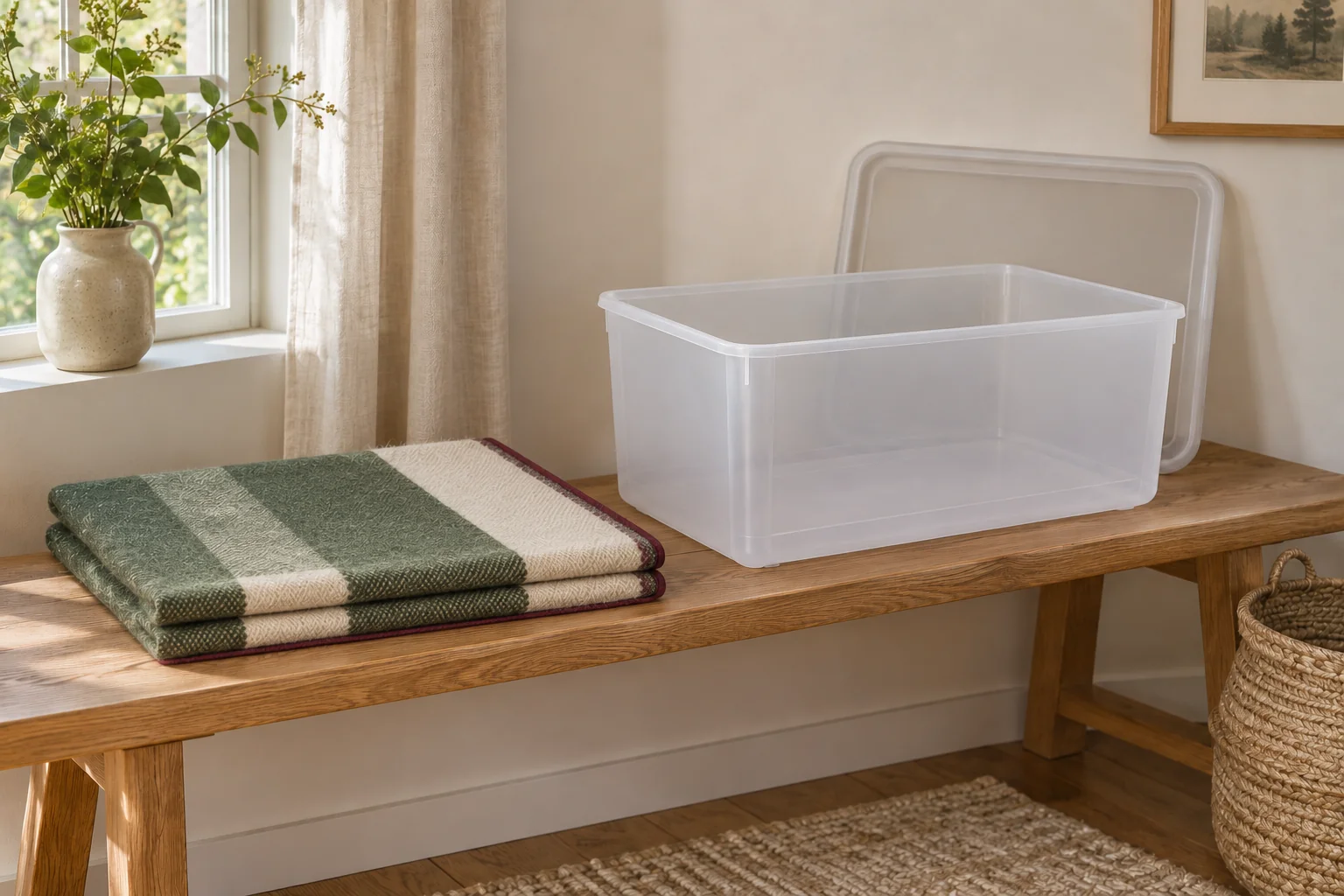
Here’s how to store wool blankets between seasons. Clean the blanket as its care label allows, dry it completely, check for insects, and fold it loosely. Put a sound modern blanket in a clean, well-sealed bin or bag if you need to keep pests out. Then put it on a shelf in a cool, dry, dark interior closet that you can get to easily. Check the blanket and the closet periodically.
A fragile heirloom needs more support and gentler handling. For an antique with weak folds, old repairs, or uncertain dyes, start with an assessment of its condition. A roomy archival box with padded folds may be a better choice than the bin you use for a sturdy modern throw.
Editorial disclosure. This guide draws on wool-care instructions, university pest guidance, and textile conservation references. We did not conduct blanket storage or pest-control tests. The images are AI-generated editorial illustrations.
How to store wool blankets in seven steps
- Read the entire care label. Check washing and drying instructions separately. A washable blanket still may need to air-dry.
- Inspect both sides. Open the folds in good light and check hems, fringe, and any old stains. Set aside items with new holes, insect debris, or visible mold.
- Remove soil safely. Air or gently brush a sound, clean blanket to refresh it. For spills, body oils, and ground-in soil, use the cleaning method the label allows.
- Dry it all the way through. Spread the blanket out with support and check the thickest hems and corners before packing. Let a freshly dried blanket cool to room temperature.
- Fold it loosely and choose a container that fits. The lid or zipper should close without pressing the blanket flat or trapping fringe.
- Store it off the floor. Use a clean interior shelf away from daylight, plumbing leaks, and direct heat. Leave enough room to lift the container out without pulling on the fabric.
- Set a reminder to look inside. Inspect during the storage season and again before putting the blanket back on the bed.
Should you wash a wool blanket before storing it?
Clean a blanket before seasonal storage, using the method appropriate to the item and its level of soiling. A clean throw that only smells a little stale may need airing in a shaded spot with good airflow. On a sturdy woven blanket, a soft garment brush used along the grain can lift surface dust. Skip brushing if loose threads, weak areas, or a delicate finish could catch. Woolmark’s blanket-care instructions
For a fresh spill, blot gently. Check the care label before introducing water or detergent, especially on dark patterns and at contrasting borders. A patch that looks like a stain could be faded dye or damage. If the care label allows spot treatment, use a method suited to the spill and dry the area fully. Stain-by-stain wool care
Machine wash only when the blanket label permits it. Pendleton, for example, specifies a cold gentle wash and hang drying for its machine-washable wool blankets and gives dry-cleaning guidance for other models. For a label-first example, see the care section of our Pendleton Eco-Wise blanket review. Check your actual blanket, even when another blanket from the same brand has different directions. At home, plan enough space to support the wet blanket’s weight, and avoid using heat to hurry drying unless the label specifically permits the method. Pendleton product care · Why wool can shrink in the wash or dryer
Check the binding and the middle of the blanket after drying. Thick seams can retain moisture after the broad surface feels dry. If a portion feels clammy compared with the rest, unfold it and let air reach both sides before packing. Woolmark’s general wool-care guidance
What is the best container for wool blanket storage?
Choose for the blanket’s condition, the room, and how often you need access. For a modern blanket going away for the summer, a well-sealed rigid bin is often practical if the blanket and bin are completely dry. A dust cover can be enough for a regularly used throw in a dry, clean closet with no signs of textile pests. Pendleton’s seasonal storage guidance
| Storage option | When it suits | What to check |
|---|---|---|
| Rigid bin with a tight seal | Clean, dry modern blanket going away for a season | Check the whole rim. Allow space for loose folds and keep the bin in a dry room. |
| Sealed storage bag without compression | Modern blanket where a rigid bin is awkward to fit | Choose a clean bag with an intact closure. Support it on a shelf where it cannot snag or get crushed. |
| Clean cotton or muslin cover | Dust protection in a stable closet or part of a suitable archival setup | Ordinary covers can admit insects at openings. Use a washed, dry cover that fits loosely. |
| Ordinary cardboard box | Short-term transport in a dry space | Ordinary cardboard has seams pests can enter and can absorb moisture. For valuable textiles, choose suitable archival materials. |
| Vacuum compression bag | Temporary space-saving when the maker permits it | Confirm complete dryness and avoid making prolonged hard compression your default. |
| Open shelf | An everyday throw you reach for and check often | Keep it shaded and dust-free. An open shelf offers little pest protection. |
Plastic bin or breathable cotton bag?
For a sound modern blanket, a well-closed bag or bin creates a physical barrier to insects. Woolmark and Pendleton both recommend sealed storage in their blanket-care guidance. Start with a blanket that is clean, dry and clear of pest signs. A seal can also hold moisture and any insects already inside. If the blanket or closet is damp, address that first. A loose cotton sleeve mainly keeps dust off and makes a blanket easy to pull out. Woolmark blanket storage guidance · UC Integrated Pest Management on clothing storage
For a historic textile, the choice also depends on fold stress, contact materials, light exposure, and how stable the storage environment is. The Smithsonian’s family-treasures guidance favors archival boxes and padded folds. The Canadian Conservation Institute identifies suitable lidded polyethylene boxes as one flat-storage option. The type of plastic, lining, item condition, and environment matter. Seek textile-conservation advice for a fragile piece with unknown dyes or finishes. Smithsonian family treasures toolkit · Canadian Conservation Institute textile guidance
How to fold wool blankets for storage
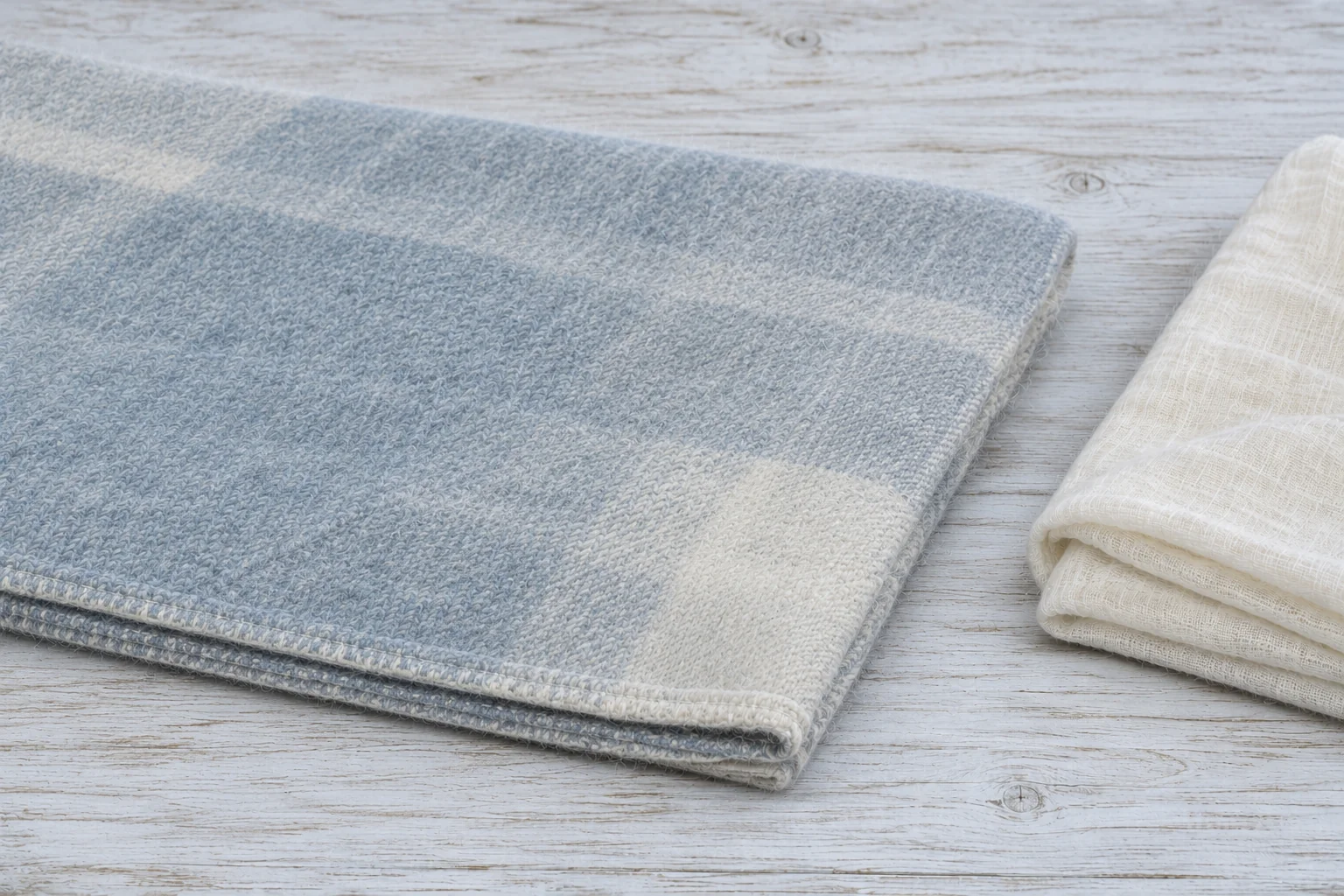
Lay a sound modern blanket on a clean, dry surface. Fold it in half gently, matching the edges without pulling them straight. Make only as many broad folds as the shelf or bin requires. Let a bulky fold keep its rounded shape. Tuck fringe loosely inside so the lid cannot pinch it. If you have to kneel on the container to close it, use a larger one.
Keep a heavy blanket below lighter pieces, and leave enough room to lift it from underneath. During inspections, vary the fold positions on a sound blanket if the fabric moves easily. If an old fold looks brittle or makes a crackling sound, stop and support the blanket as it is. Conservators can advise whether opening and refolding it is safe. Canadian Conservation Institute’s advice on supporting textiles
Where to store wool blankets in summer

Try an interior linen closet on the living level of your home. Keep containers off the floor and clear of radiators, sunny windows and pipes that sweat. Avoid a basement with a damp smell or a history of seepage. An attic that gets very hot or experiences big swings in temperature is a poor place for a valuable blanket. A deep garage shelf can be easy to forget and hard to inspect.
Check the space after heavy rain or a sudden weather change. Condensation on an exterior wall or water marks on a shelf give you a reason to move the blankets and deal with the moisture source. Silica-gel packets have limited capacity and cannot fix a persistently damp closet. EPA guide to mold and household moisture
How to protect wool blankets from clothes moths
Clothes moth larvae feed on susceptible fibers. Inspect under folds, along bindings and around old spills. Look for fresh holes or thinning, silk webbing, small cases or larvae. Food residue, sweat and body oils make storage cleaning especially worthwhile. An old hole alone tells you little about whether insects are still present. Carpet beetles can also damage wool. Ask a county extension office or pest professional for identification if the evidence is unclear. National Pesticide Information Center clothes moth guide · University of Maryland Extension on moth larvae
For prevention, vacuum the closet’s corners, shelf joints and edges, remove lint and pet hair, and clean the bin. Let washed surfaces dry. Keep a dry suspect blanket contained separately and inspect nearby woolens. Arrange suitable treatment before repacking or mending it. Pheromone traps can help monitor the moth species they target. If you keep seeing adults or find fresh damage, look for and address the source. UC IPM guidance on clothes moths · Repairing moth holes in wool
Cedar, lavender and mothballs
Aromatic cedar has limited effects. UC IPM notes that eastern red cedar oil can kill small larvae, while it does not affect large larvae and the wood loses its effect over time. Treat cedar or lavender as a scent preference. Keep oils off the blanket to avoid staining. A clean blanket, a reliable closure, and regular checks do the practical work. UC IPM’s assessment of cedar and herbal products
Mothballs are regulated pesticides. If you use one, follow the exact registered label, including its permitted container, placement and handling instructions. Keep the product away from children and pets. Avoid loose mothballs in closets, open drawers, or bedrooms, and keep them off bedding. Their vapors can expose people and animals when used improperly. National Pesticide Information Center mothball guidance
Can you vacuum seal wool blankets?
For seasonal or longer storage, choose a roomy bin or a sealing bag used without suction. Doubling the shelf space is preferable to forcing a bulky blanket to fit. A vacuum bag saves space by pressing the blanket tightly, and the seal holds in any moisture already in the fabric. Evidence for a universal safe compression duration is lacking. If the manufacturer permits vacuum packing for temporary transport, follow those directions and unpack promptly once space allows. Keep fragile, lofty, structurally weak or historic blankets out of compression bags.
Long-term storage for vintage or heirloom wool blankets
First check for weak seams, frayed fringe, splitting folds, old adhesive, or repairs under tension. Support the blanket from beneath whenever you move it. If you have room, store it flat. If a fold is unavoidable and the blanket can safely bend, support the curve with a roll of acid-free, unbuffered archival tissue or suitable clean muslin. Use an appropriately sized archival box, protect it from light, and put it somewhere dry with stable conditions. Smithsonian care for family textiles
Rolling can suit certain sturdy flat textiles when the core, protective layers and support are selected for the piece. Skip improvised bare cardboard cores for an heirloom. Ask a qualified textile conservator before unfolding a brittle textile, treating suspected mold, cleaning unknown dyes, or rolling anything with vulnerable decoration or structure. Canadian Conservation Institute on flat and rolled storage
How often should you check stored wool blankets?
For seasonal storage, set a reminder to look once midway through the season and again before use. Treat this as a practical starting routine. Check sooner after a leak, a change in humidity, or signs of pests nearby. Look for moisture on the container, new odor, stains, fresh damage, displaced padding and stressed folds. Photograph questionable areas so you can tell whether they change.
What to do when taking a blanket out of storage
Open the container somewhere dry. Look at the blanket before shaking it or putting it on a bed. If everything looks sound and there is only a closed-closet smell, air it out in shade. A persistent musty smell, damp patches or visible growth calls for a closer look at the storage space and the textile. Keep a suspect piece separate. With visible mold, avoid brushing it indoors or applying bleach, fragrance or disinfectant to the wool. Fix the moisture problem and get advice from a qualified cleaner or textile conservator as appropriate. EPA moisture and mold guidance
Common storage mistakes
- Closing the lid while thick edges or the bin still feel damp.
- Putting a clean blanket back into a dusty closet with fresh pest activity.
- Packing heavy blankets on top of fragile pieces.
- Storing a large blanket in a container that only shuts under pressure.
- Treating a fragranced closet as evidence that a pest issue is resolved.
Frequently asked questions
Can wool blankets be stored in plastic bins?
Yes, for many everyday blankets. Start with a clean, completely dry blanket and a clean, well-closing bin large enough for gentle folds. For a fragile heirloom, choose storage materials and supports based on the textile’s condition.
Is folding or rolling better?
Loose folding is practical for most modern blankets. Leave fragile historic textiles flat where possible. A suitable supported roll may be appropriate when the construction and condition permit it.
Should I wash a blanket before every summer?
Remove soil before storage. A sound, clean throw may only need airing. Treat residue safely, wash only as the label permits, and dry thoroughly before packing.
What if a stored wool blanket smells musty?
Inspect it and check the room for dampness. Air a sound blanket with an ordinary stale smell. Keep a blanket with visible growth or persistent mustiness apart and get suitable cleaning or conservation advice.
Final takeaway
Put everyday wool blankets away clean, fully dry, gently folded, and easy to inspect. Pick a sealed container when you want a pest barrier and a dust cover when protection from dust is the main job. For a fragile or historic blanket, support the fabric, use appropriate materials, and ask a conservator when condition or treatment is uncertain.