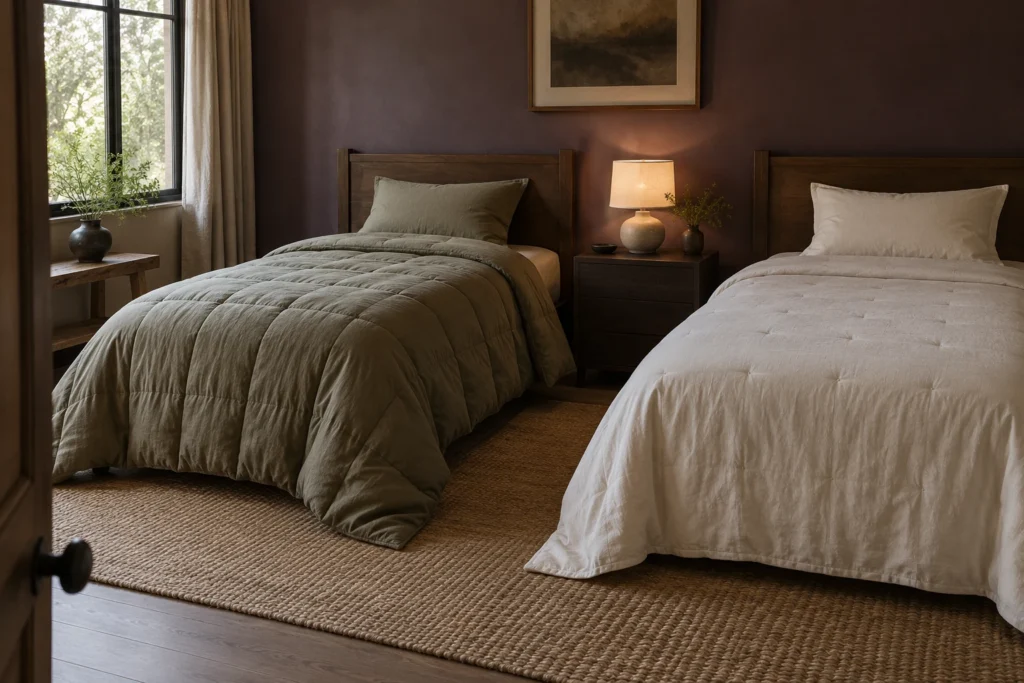
The wool vs silk comforter decision comes down to the particular bedding you want to live with. A washable wool model can be a sensible choice when home laundering matters. A silk-floss model is worth considering if you prefer a flatter, closely draping cover and can accommodate its care requirements. Neither fiber guarantees lighter weight, cooler sleep or better value.
Start with your bedroom temperature, preferred weight and cleaning routine. Then compare the actual size, filling, shell and return terms. Those details are more useful than a blanket promise that one natural fiber “regulates temperature” better.
Research note: The Editorial Team reviewed textile research and manufacturers’ US product information on October 27, 2026. This is a researched buying comparison, not a hands-on test or a ranking of comforters.
First, check what is inside the comforter
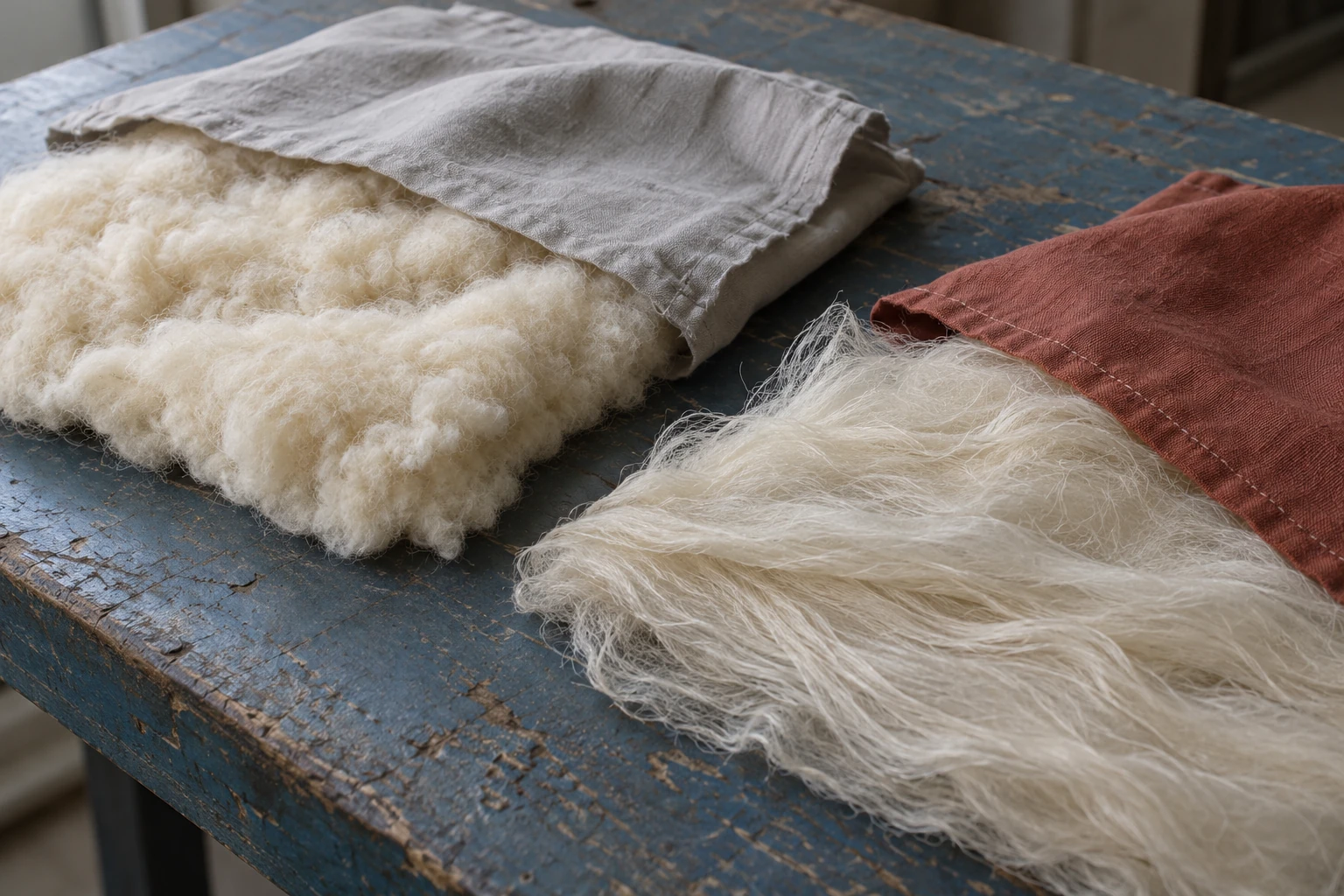
A wool-filled comforter contains wool insulation inside a fabric shell. A silk-filled comforter contains silk filling, which may be described as layered silk floss. A silk shell is a different specification: a comforter can have a silk exterior with another filling, or silk filling inside cotton.
Read the percentages for the filling and outer shell separately. “Silk bedding” on a collection page does not tell you whether you are buying a filled insert, a removable cover or sheets.
Construction also matters. Wool filling may be carded into batting and held in place by quilting. Long-strand silk floss can be spread into layers and secured within a shell; it is not a piece of woven silk fabric. Some silk-filled models use different fibers or constructions, so do not assume every silk comforter uses the same floss.
In US shopping, “comforter” and “duvet insert” sometimes describe the same filled bedding. British searches often use “silk vs wool duvet.” Check what the package includes: an insert is not necessarily supplied with a removable duvet cover.
Wool vs silk comforter: a practical comparison
| Buying priority | Wool-filled comforter | Silk-filled comforter |
|---|---|---|
| Warmth | Compare filling amount, thickness and warmth rating. | Compare the same details; silk is not automatically summer bedding. |
| Feel on the body | Quilting and batting affect loft and flexibility. | Layered floss can offer a flatter drape; construction varies. |
| Weight | Ask for finished weight in your exact size. | “Lightweight” wording is not a measured weight comparison. |
| Home laundering | Some models permit machine washing; others do not. | Some specially designed models are washable; many prohibit it. |
| Surface comfort | Shell and removable cover are the contact fabrics. | Silk filling does not provide the feel of a silk outer fabric. |
| Value | Include cleaning costs and usable return terms. | Include the same costs; compare equivalent sizes and seasons. |
Which will feel warmer—or less stuffy?
Warmth depends on the air held within the bedding and how easily heat passes through the whole assembly. Fill quantity, thickness, quilting and the cover all contribute. A heavy winter silk comforter should not be treated as equivalent to a light summer wool insert just because both are sold for a queen bed.
In a study of lofty nonwoven quilt materials, steady-state thermal and water-vapor resistance depended mainly on sample thickness, rather than fiber type, within the tested materials. That finding supports comparing construction; it does not establish that every wool and silk comforter performs alike.
A separate sleep study involving 16 participants compared quilts with different fill weights and related thermal comfort to insulation. Its fillings were down, silk and polyester—not wool. It therefore cannot identify a wool-versus-silk winner.
Moisture absorption is also different from airflow. Wool can take up water vapor within its fibers, a property described by the Woolmark Company. That does not mean air moves freely through every wool comforter, or that absorbing moisture guarantees a cool bed. Shell weave, duvet cover, room conditions and other bedding still affect the experience.
For a warm bedroom, begin with the lighter warmth option in the range you are considering. For a cold bedroom, look for a documented winter specification rather than assuming wool must be warmer. Where a manufacturer supplies an insulation rating, ask how it was measured. “All-season” alone is not a standardized promise of comfort in your room.
If you share a bed with someone who needs more warmth, separate inserts or an extra layer on one side may solve the mismatch more directly than changing filling material.
Weight, drape and softness are separate decisions
A comforter can be thin yet fairly substantial, or lofty without much weight. Fill weight describes the insulation alone. Finished weight includes the shell and other components. Neither is interchangeable with a warmth rating.
Compare finished weights in the same dimensions if pressure on the body matters to you. A larger “queen” insert can feel heavier simply because there is more of it. Grams per square meter, usually written gsm, describe mass per area when the manufacturer identifies what is being measured; they do not independently establish warmth or drape.
Close drape also depends on the flexibility of the shell and quilting. Large stiff quilted sections may sit differently from a supple, lightly secured construction. Product photographs can suggest this difference, but they cannot confirm how the bedding will settle around your shoulders. A return policy that permits sleeping under the comforter is particularly useful here.
Think about the surface you actually touch. If both inserts sit inside the same cotton duvet cover, you will touch that cover, not the wool or silk fill. Buying silk filling alone will not produce the slippery surface associated with silk sheets. If what you want is a loftier, billowing feel, our wool-versus-down comforter comparison addresses a different construction choice.
What current US products reveal
These examples illustrate purchasing tradeoffs. They are not matched for measured insulation, and the available specifications do not support declaring either one cooler or lighter.
Woolroom Deluxe Washable Wool Comforter – Medium. The US product page specifies British wool filling, 350 gsm and an unbleached organic-cotton shell. Queen/Full was displayed at $294, reduced from $420, on the verification date. The page offered ordering and listed a finished Queen/Full weight of 7.1 pounds. Its care instructions permit a wool/delicate machine cycle and require line drying rather than tumble drying.
The official size guide lists Queen/Full as 86 × 86 inches. A specification caveat: the product page’s separate fill-weight figure does not reconcile with its gsm figure and those dimensions. Confirm the current batch’s filling weight with the brand before making a numerical comparison.
THXSILK Premium Mulberry Silk Comforter Lightweight All Season Duvet. Its official product details specify 100% long-strand mulberry silk filling and a 100% cotton jacquard shell, with a Queen size of 87 × 90 inches. The care section says to use a duvet cover, air in shade and spot clean when needed; it prohibits machine washing and tumble drying. Standard sizes were offered for ordering.
A reliable Queen-specific price, fill mass and finished weight were not established from the accessible listing. We have therefore omitted them. The “lightweight” product name is the manufacturer’s description, not evidence that it weighs less than the Woolroom example.
There is an important exception to “silk cannot be washed”: THXSILK’s separate Washable Silk Filled Comforter Lightweight All Season Duvet specifies tussah silk filling, a 63% cotton/37% polyester shell, gentle cold machine washing and low tumble drying or air drying. It is a different product, not permission to wash the long-strand mulberry model.
Returns change the buying risk. Woolroom’s US 30-night trial covers eligible comforters and allows used or washed returns, subject to its terms. THXSILK’s return policy requires eligible goods to be unused and unwashed, with original packaging and tags, and generally makes the buyer responsible for return shipping. Sale and custom-made items are excluded. A 30-day return window is not necessarily a sleep trial.
Care, durability and claims worth questioning
Choose the cleaning routine before choosing the fiber. If pets, spills or frequent laundering are part of your household, a clearly washable insert may be more practical than a model limited to spot care. Check that its size and care instructions are compatible with your washer and drying space. A removable, washable cover makes routine maintenance easier, but it cannot protect the filling from every spill.
For a non-washable insert that needs more than spot cleaning, ask the manufacturer about an approved professional cleaning route. Do not assume dry cleaning is acceptable simply because machine washing is prohibited. Follow the finished product’s label rather than instructions for wool clothing, silk pillowcases or another comforter.
With wool, moisture and agitation can contribute to felting in susceptible constructions; treatments and the finished item’s care requirements affect the risk. Our explanation of why wool shrinks provides background, not substitute comforter-washing instructions.
For longevity, inspect seam quality, how the fill is secured, repair options and the warranty’s actual coverage. “Long-strand” describes a filling construction, not a guaranteed service life. We found no suitable matched evidence establishing that either category universally lasts longer. Avoid paying for a claimed lifespan without understanding its basis.
Likewise, neither fiber name guarantees an allergy-safe bed. “Hypoallergenic,” “antimicrobial” and dust-mite language on a sales page should not be treated as proof of a health benefit. If your bedding has to meet a particular cleaning requirement, verify that requirement against the product label before purchasing.
Sourcing claims need similar scrutiny. Wool comes from sheep, while silk comes from silkworm cocoons; processing and supply chains vary. For wool, Textile Exchange’s Responsible Wool Standard addresses animal welfare, land management and supply-chain controls. It does not rank a finished wool comforter against a silk one. Ask what certification covers—the filling, shell or finished item—and seek specific sourcing information instead of treating “natural” as a complete environmental assessment.
Which should you choose?
Choose a washable wool comforter when its warmth and weight suit you and laundering the insert is a priority. Check drying requirements before ordering: permission to machine wash does not necessarily include the dryer. Once you have chosen that route, our wool comforter buying guide explores the wider category.
Consider a silk-floss comforter when you want a flatter construction and are comfortable protecting a non-washable insert with a cover. Confirm the model’s actual thickness, total weight and care requirements. If easy washing matters more than long-strand construction, investigate a specifically washable design rather than assuming every silk product offers both.
With a limited budget, compare the complete purchase. Use the price for your chosen size and seasonal weight, then account for a cover, cleaning and potential return shipping. A discounted insert that cannot be returned after use may be poor value if you are uncertain about its feel.
Before buying, get these answers for both finalists:
- Composition: What are the filling and shell percentages, and is a removable cover included?
- Fit: What are the actual dimensions, and will the insert fit your existing cover?
- Warmth: Which seasonal weight is it, and is there an insulation rating with a stated test method?
- Weight and construction: What are the filling and finished weights in your size? How is the fill secured?
- Care: Can the entire insert be washed, and how must it be dried or professionally cleaned?
- Trial and cost: Can you return it after sleeping under it, what exclusions apply, and who pays return shipping?
If a seller cannot provide a measurement that matters to you, keep it marked as unknown. A clearly specified, suitable comforter is a stronger purchase than an appealing fiber name attached to uncertain care, warmth or return terms.