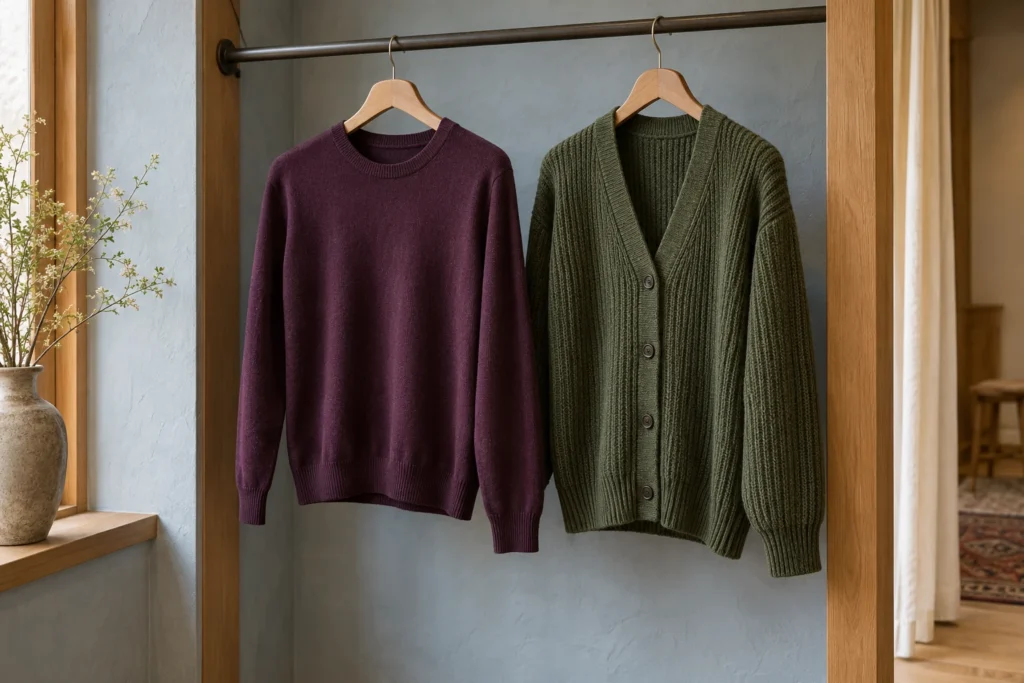
Merino wool vs lambswool is not a choice between two mutually exclusive types of wool. Merino identifies a sheep breed; lambswool generally describes wool from young sheep, usually their first shearing. A garment can therefore be both Merino and lambswool. Neither name alone tells you which sweater will feel softer, keep you warmer or hold up better.
The useful comparison is between the garments you are considering: their fiber fineness, yarn, knit, fit and care requirements. A smooth, lightweight layer and a substantial, lofty sweater serve different purposes, even when both use excellent wool.
Research by the Editorial Team, checked October 26, 2026. This guide draws on wool-testing definitions, textile research and manufacturer information. It is not a hands-on garment test.
What Merino and lambswool labels actually mean
Woolmark identifies Merino wool by its sheep breed. It is not one fixed fiber diameter or a promise of a particular sweater construction. Our guide to where Merino wool comes from explains its origins in more detail.
Lambswool is an age-and-clip description, but terminology varies. For example, Johnstons of Elgin describes lambswool as wool from a lamb’s first shearing. The Australian Wool Testing Authority’s glossary specifies a first clip from lambs up to eight months old and explicitly discusses Merino lambswool. That is a definition in that glossary, not an age guarantee carried by every retail label worldwide.
Consequently, “Merino versus lambswool” is not a clean division between two competing fibers. A lambswool sweater may use Merino wool, another breed or wool whose breed the seller does not disclose. If the distinction matters to your purchase, ask the manufacturer what its label means rather than assuming a universal age cutoff.
Merino wool vs lambswool at a glance
Start with what the label identifies, then ask for the details it cannot establish.
| Label | What it identifies | What you still need to check |
|---|---|---|
| Merino wool | Wool from Merino sheep. | Fineness, sheep’s age and garment construction. |
| Lambswool | Young-sheep wool, commonly the first clip. | Breed, the supplier’s clip definition and fineness. |
| Merino lambswool | Both breed and young-sheep clip descriptions. | Measured fineness and finished-garment specifications. |
| 100% wool | Wool fiber content, rather than a blend. | Breed, age and fineness unless separately disclosed. |
Which feels softer against skin?
Fiber diameter is a more useful clue than a broad wool name. It is measured in microns, or millionths of a meter. Finer fibers bend more readily under pressure, which helps explain why they can feel less prickly; Woolmark’s softness guidance describes this relationship.
Even Merino spans different grades. AWTA’s glossary, linked above, places fine Merino at 18.6–20.5 microns and medium Merino at 20.6–22.5 microns. Those are its grading categories, not a complete range for every Merino garment. Lambswool has no single comparable micron figure you can infer from the name.
A disclosed micron number is usually an average, not a measurement shared by every fiber. Variation within the wool, the yarn’s surface and the way the garment sits against you also matter. A lower average is useful evidence about fineness; it is not a comfort warranty.
Independent research supports taking diameter seriously. A small 1987 study comparing coarse and fine wool found greater irritation with coarser fibers in participants with a history of atopic dermatitis. Its narrow study population and particular fabrics do not establish a universally comfortable cutoff or show that every Merino garment outperforms every lambswool garment.
For a purchase: if the seller gives no micron measurement, do not fill the gap with an assumed range. Try the garment where it will touch your skin, including the neckline, and assess seams as well as fabric. For online orders, check whether the return policy permits a normal indoor try-on, whether sale items are excluded and who pays return shipping. A brushed surface that feels pleasant in your hand may still feel different at your neck.
What makes one sweater warmer or bulkier?
Neither label supplies a warmth rating. Wool’s crimp can help a fabric hold insulating air, as Woolmark explains in its fiber overview. How much protection you get in practice also depends on the finished garment and the other layers you wear.
A useful distinction is woollen versus worsted yarn processing. In Woolmark’s processing explanation, woollen production commonly uses shorter fibers and produces bulkier fabrics. Worsted processing combs and aligns longer fibers for a smoother, flatter result. These are processing choices, not synonyms for lambswool and Merino.
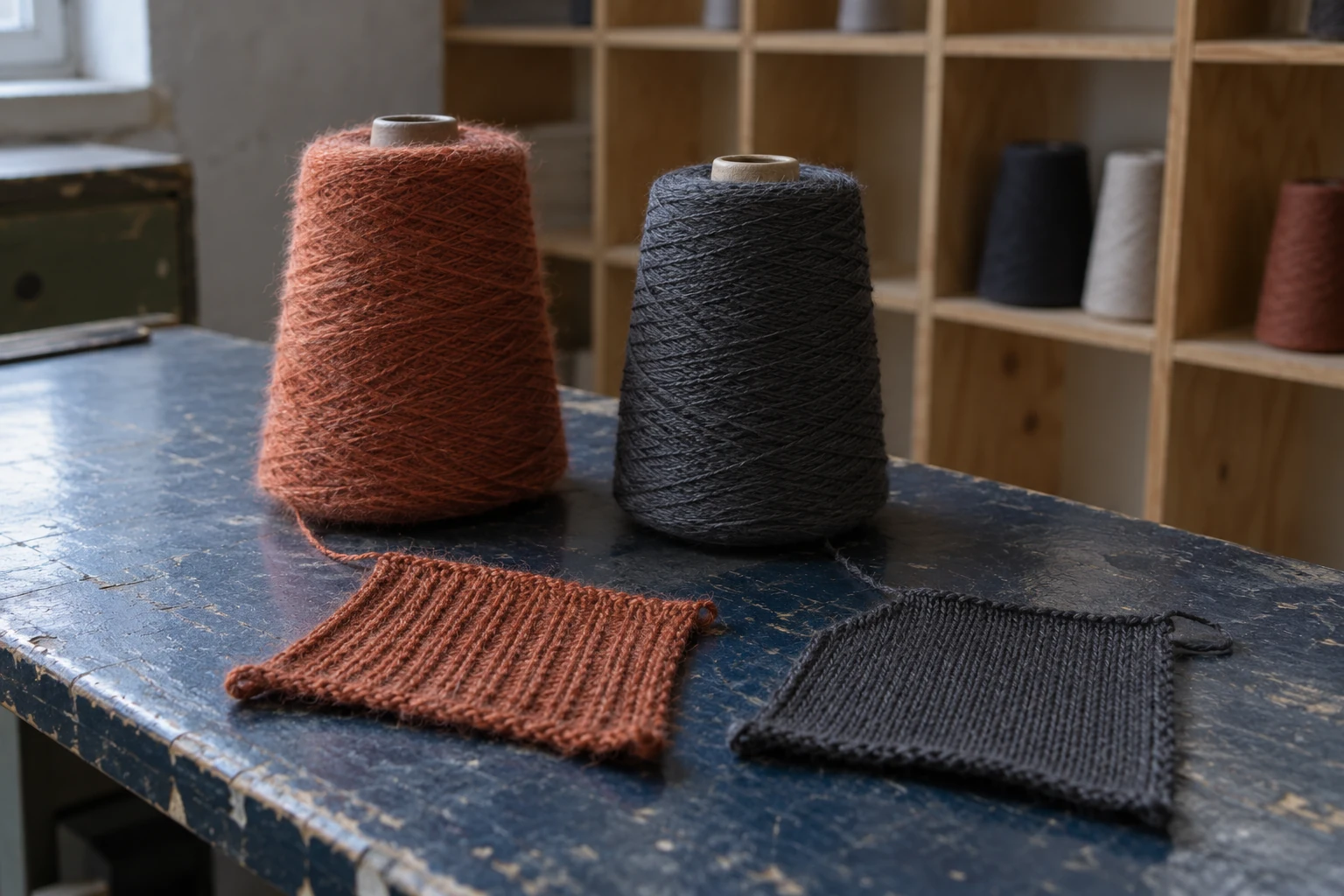
That helps explain why two wool sweaters can feel so different without one containing “better” wool. Knit structure and finishing can further change loft, drape and the surface feel. A substantial ribbed cardigan and a thin, close-fitting crewneck should not be treated as equivalent warmth options simply because their fiber percentages match.
Compare garments intended for the same job. Look at fabric thickness, openness of the knit, neckline, cuff fit and room for an underlayer. A heavier garment is not automatically the better choice for an overheated office, and a fine sweater under a wind-resistant jacket serves a different purpose from an open knit worn alone.
Choose for the way you will wear it
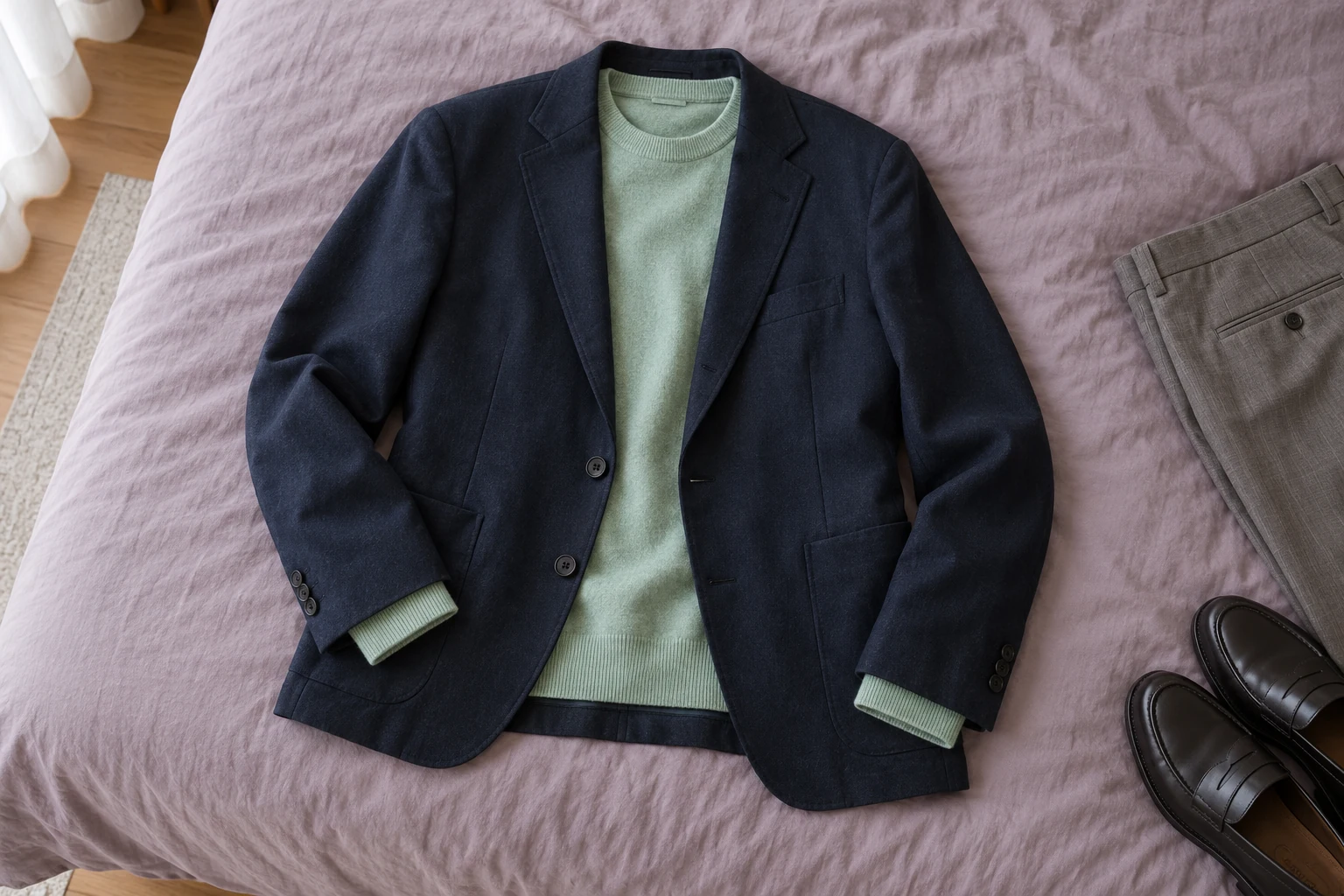
For a smooth layer under a blazer: a fine-knit Merino garment with disclosed fineness is a sensible starting point. Favor a neckline you can tolerate against skin and sleeves that move comfortably inside the jacket. A similarly fine lambswool garment could work just as well; reject excess bulk, not the alternative label.
For a substantial sweater over a shirt: consider lambswool when the actual garment offers the loft, texture and relaxed fit you want. The shirt reduces direct skin contact, which may make a texture you would dislike in a base layer more practical. A Merino sweater made in the same substantial construction is also a valid candidate.
If wool often feels irritating: choose neither on its name alone. A generous return policy and a comfortable try-on are more useful than a promise of “luxury softness.” If both garments bother you, another material or a different layering arrangement may be the better purchase.
For running or a close-fitting hiking base layer: assess an actual performance garment rather than a casual sweater. Fabric weight, seams, fit and washing requirements deserve their own comparison. Our Merino wool vs polyester guide covers that decision in more depth.
These recommendations are editorial judgments about suitability, not rankings derived from wear testing. The aim is to match a construction to your wardrobe before paying for a fiber name.
Check durability, care and value before paying
Pilling does not have a reliable winner here. According to Woolmark’s pilling guidance, friction, fiber length, yarn twist and fabric construction influence bobbling. Neither Merino nor lambswool guarantees a pill-free surface or a longer lifespan. Look for even stitching, secure joins, tidy buttonholes and an intact neckline, while recognizing that inspection cannot predict years of wear. Our guide to Merino wool pilling explains what bobbles mean and how to handle them.
Buy care requirements you can live with. Some wool garments permit machine washing; others require hand washing or professional cleaning. The name of the fiber does not decide this. Woolmark’s care-symbol guide explains why the finished garment’s instructions matter. Obtain those instructions before ordering if machine washability is essential, and use our Merino wool washing guide for the practical steps once you know what is permitted.
Read the full composition. A product name is not a substitute for its fiber percentages. The FTC’s textile and wool labeling guidance explains fiber-content disclosures. A label saying “100% wool” does not, by itself, identify a sheep breed or establish fineness. If a sweater is a blend, evaluate its complete composition and intended use rather than treating the named wool as the whole garment.
Compare like with like on price. Match garment type, approximate thickness, composition, fit and care burden before deciding a price premium is worthwhile. A lightweight crewneck and a large cardigan are not a fair comparison of raw-fiber value. Nor does a higher price demonstrate better skin comfort or longer life.
When two options are close, ask the seller for the missing facts that would change your decision: the breed behind a lambswool label, any documented micron measurement, garment dimensions, care instructions and the return conditions. If those details remain unavailable, treat that as purchase uncertainty. Paying more for a sweater you can comfortably wear and realistically maintain may make sense; paying more for an unsubstantiated softness claim does not resolve the uncertainty.
Other questions about wool labels
Is virgin wool the same as lambswool?
No. Under US wool-labeling rules, “virgin” or “new” concerns whether the fiber has been reclaimed from manufactured or used products. It does not specify a lamb’s first shearing. Virgin wool can come from adult sheep, and neither “virgin” nor “new” supplies a softness grade.
Can you identify Merino or lambswool from a photograph?
A photograph can show a ribbed knit, a brushed finish or a substantial cuff. It cannot establish the sheep’s breed, age at shearing or measured fiber diameter. Treat images as information about visible design, and rely on documented product specifications for fiber identity. Editorial textile illustrations are not evidence of a particular wool grade.