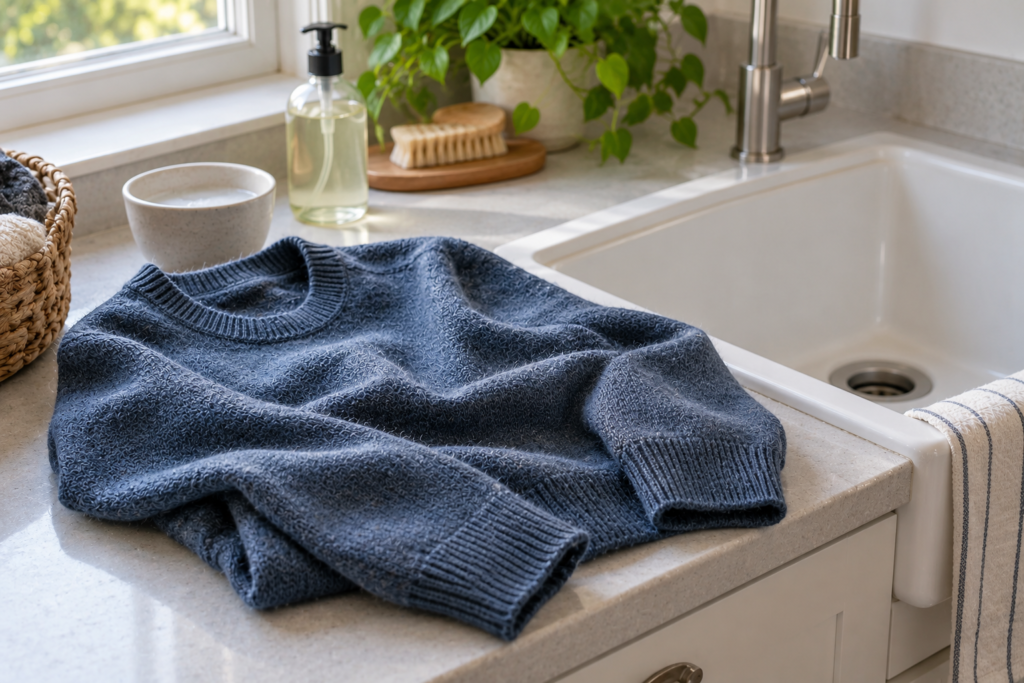
To wash Merino wool safely, follow the garment’s care label: hand wash when required, or use the permitted machine cycle and temperature. Choose a compatible detergent, avoid rough handling, and follow the drying instructions separately. Dry knitwear flat unless the label allows another method. Machine washable does not automatically mean tumble-dryer safe.
A soft sweater, hiking sock and lightweight base layer can all contain Merino, yet need different treatment. The fiber name does not tell you the garment’s finish, construction or full composition. This guide explains how to wash Merino wool without turning one brand’s instructions into a rule for your whole wardrobe.
The advice is research-based, drawing on Woolmark and garment manufacturers. It does not describe personal laundry tests or guarantee that a damaged garment can be restored.
Check the care label before choosing a method
Read washing and drying as two separate decisions. Look for the permitted method, temperature, cycle and any restrictions on detergent or finishing products. Check the label inside the garment you own, not just the description of a similar item online.
GINETEX’s care-symbol guide explains that the number in a wash symbol identifies the maximum washing temperature and that additional markings describe treatment. A “do not wash” instruction is not permission to try a cold soak. If the label is missing or unclear, ask the manufacturer about the exact item before getting it wet.
Use this table as a starting point, not a replacement for those instructions.
| What the garment allows | Washing approach | Drying decision |
|---|---|---|
| Hand wash | Use the specified water temperature and gentle handling in a basin | Follow its drying instruction; support wet knitwear |
| Machine wash | Select the label-approved cycle and temperature | Check separately for flat, line or tumble drying |
| Do not wash or dry clean only | Do not improvise a home wash | Ask the manufacturer or a suitable professional cleaner |
| No readable care information | Identify the garment and obtain guidance first | Do not assume a dryer or hanger is suitable |
“Machine washable” is a care permission under stated conditions, not a promise that any ordinary laundry program will work. Nor does it identify a particular treatment on its own. A mesh bag and a detergent labeled for wool cannot turn a hand-wash-only garment into a machine-washable one.
Prepare the garment and washing space
Check the whole item before choosing a load. Note stains, loose seams and snagged areas that need attention. Sort compatible colors and fabrics together, and avoid treating fine knitwear like a load of heavy, abrasive clothing.
Turn garments inside out where the maker recommends it. For machine washing, a mesh bag may offer useful separation, but it is optional protection rather than insurance against the wrong cycle. Patagonia’s Merino-blend guide recommends compatible colors and fabrics, with mesh bags as an optional step.
For stains, use guidance appropriate to both the stain and wool. Do not scrub a mark aggressively or add a general-purpose stain treatment without checking suitability. A persistent or unidentified stain deserves garment-specific advice rather than stronger chemistry by trial and error.
Have a clean basin, suitable detergent and a drying space ready before starting. Preparing a flat surface now is easier than looking for somewhere to put a heavy, wet sweater later.
How to hand wash Merino wool
Hand washing means controlled, gentle cleaning, not rubbing the garment vigorously until it looks clean. Use this sequence only for a garment whose instructions permit washing by hand.
- Fill a clean basin with water at the permitted temperature. Add the detergent at its stated hand-washing dose and distribute it before introducing the garment.
- Lower the item into the water and move it gently so the solution reaches the fabric. Keep rubbing, pulling and twisting out of the process.
- Follow any stated soak instructions. Do not choose an overnight soak simply because the fabric feels delicate.
- Rinse as required by the detergent and garment instructions. For a conventional rinse-required wash, remove the wash water and rinse gently with clean water.
- Press out excess water without wringing. Support the garment as you lift it, then transfer it to the drying surface specified by its care label.
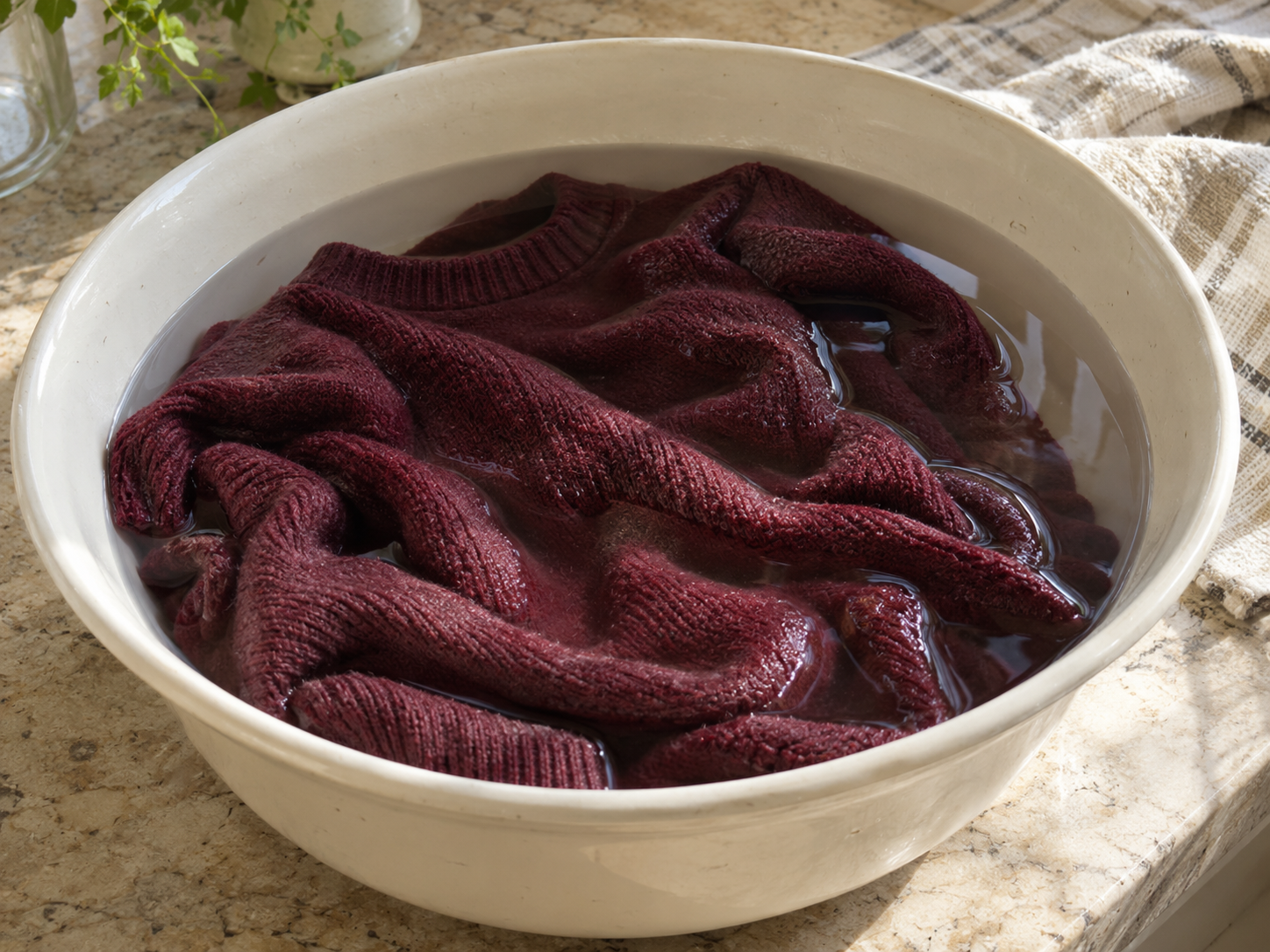
Woolmark’s washing guidance describes gentle hand washing and rinsing; it does not make a single method appropriate for every finished item. Soak times also vary between care guides and detergents. Use the instructions for your combination rather than averaging unrelated recommendations.
A no-rinse detergent is a specific formulation with specific directions. It does not mean that ordinary laundry detergent can remain in the garment. If the garment maker requires thorough rinsing, choose a compatible process instead of skipping that step for convenience.
How to machine wash Merino wool
Start with the garment’s permission to machine wash, then check your washer’s manual. Program names differ between machines. A wool cycle, delicate cycle and ordinary cold wash should not be assumed to have identical movement or spinning.
- Sort items that share compatible washing instructions. A wool label on one item does not set the rules for everything in the drum.
- Prepare and turn the garment inside out as directed. Protect delicate pieces from snagging against fastenings on other clothes.
- Add a compatible detergent using its machine dose, including any HE-machine requirements. Do not borrow the dose for a hand-washing basin.
- Select the temperature and cycle allowed by the label. Keep within the washer’s stated capacity for that program rather than filling it like a normal cotton load.
- Use the spin setting specified by the garment or machine guidance. Remove the garment when the program finishes and follow its drying instructions.
Smartwool’s general care page describes gentle machine washing in warm or cool water, while directing readers back to individual labels. That is a useful reminder that cold is not the only documented option. It is not permission to wash another brand’s cold-wash garment warm.
Choose temperature and agitation together
The safest temperature is the one allowed for the actual garment. Do not increase it because the item is dirty, or assume that selecting cold cancels out aggressive movement.
Woolmark describes machine washing on a wool setting, commonly at 40°C, where the care label permits machine washing. By contrast, several apparel brands specify cold washing for their Merino garments. These instructions refer to different products and contexts; neither supplies a universal temperature for all Merino.
DYNAFIT’s Merino care sheet also distinguishes spin recommendations for larger, heavier garments and smaller, lighter ones. That is why this guide does not prescribe one revolutions-per-minute figure for every sweater, sock and base layer.
Treat the cycle, load and temperature as a complete routine. If you cannot match the instructions on your machine, ask the garment maker rather than assuming that a short, fast program is equivalent to a wool wash.
Choose detergent without turning this into a shopping project
For general washable-wool care, Woolmark recommends a mild, neutral detergent and advises against heavy-duty products, enzyme-containing “bio” detergents and bleach. Check the current formula and directions, not simply the brand name or a “gentle” message on the front.
A wool-specific bottle is not mandatory under every manufacturer’s instructions. Patagonia’s guidance for its Merino blends permits a mild laundry detergent as well as a wool-specific product. Choose within the garment maker’s requirements; do not interpret that example as approval for every regular detergent.
Use the correct dose. Adding extra detergent is not a substitute for choosing a suitable process. Follow the bottle’s rinse requirements and avoid combining products unless their directions support it. For options and dosing distinctions, see our guide to choosing a wool detergent.
Skip fabric softener when the garment maker prohibits it. Woolmark’s general detergent guidance allows limited conditioner use but warns that excessive amounts can encourage pilling; several technical-apparel brands prohibit it. This is more precise than claiming one accidental use inevitably destroys Merino. Do not add chlorine or oxygen bleach to a routine wool wash.
Adjust the routine to the garment
How to wash a Merino wool sweater
A substantial sweater needs support when wet. Follow its permitted washing method, then arrange the body and sleeves gently rather than leaving the garment hanging by its shoulders. A cardigan, loose knit or embellished sweater may bring restrictions that do not apply to a plain hiking top.
Inspect the cuffs, collar and underarms before washing, but avoid repeatedly rubbing those areas. Fine fibers, knit construction and finishing affect maintenance; our Merino wool versus cashmere comparison explores those garment differences without treating either fiber as universally easier to own.
How to wash Merino wool socks
Read the sock label, including its drying instructions. Darn Tough’s sock-care guide specifies cold water, a gentle cycle, turning socks inside out and either low tumble drying or hanging them to dry. Those are instructions for its socks, not for every wool sweater.
Keep pairs in a clean rotation and wash according to use and condition. The fact that Merino can resist odor does not make prolonged wear automatically hygienic. For buying considerations beyond laundering, our wool vs cotton socks guide separates fiber content from construction and fit.
How to wash a Merino wool base layer
Base layers may contain nylon, elastane or other fibers, and often have brand-specific care directions. Do not transfer a sweater routine automatically to a close-fitting technical top.
Icebreaker’s care guidance and Patagonia’s blend guidance differ on drying. Follow the exact garment label instead of choosing whichever general brand article offers the fastest method. If odor persists, review the dose, rinsing and permitted wash routine before escalating to hotter water or stronger stain chemicals.
How to dry Merino wool and reshape it
For sweaters that require flat drying, spread the garment on a clean, pale, lint-free towel or suitable flat mesh drying surface. Support the whole body and sleeves. Gently arrange the seams, hem and cuffs toward their normal shape without pulling hard to enlarge the garment.
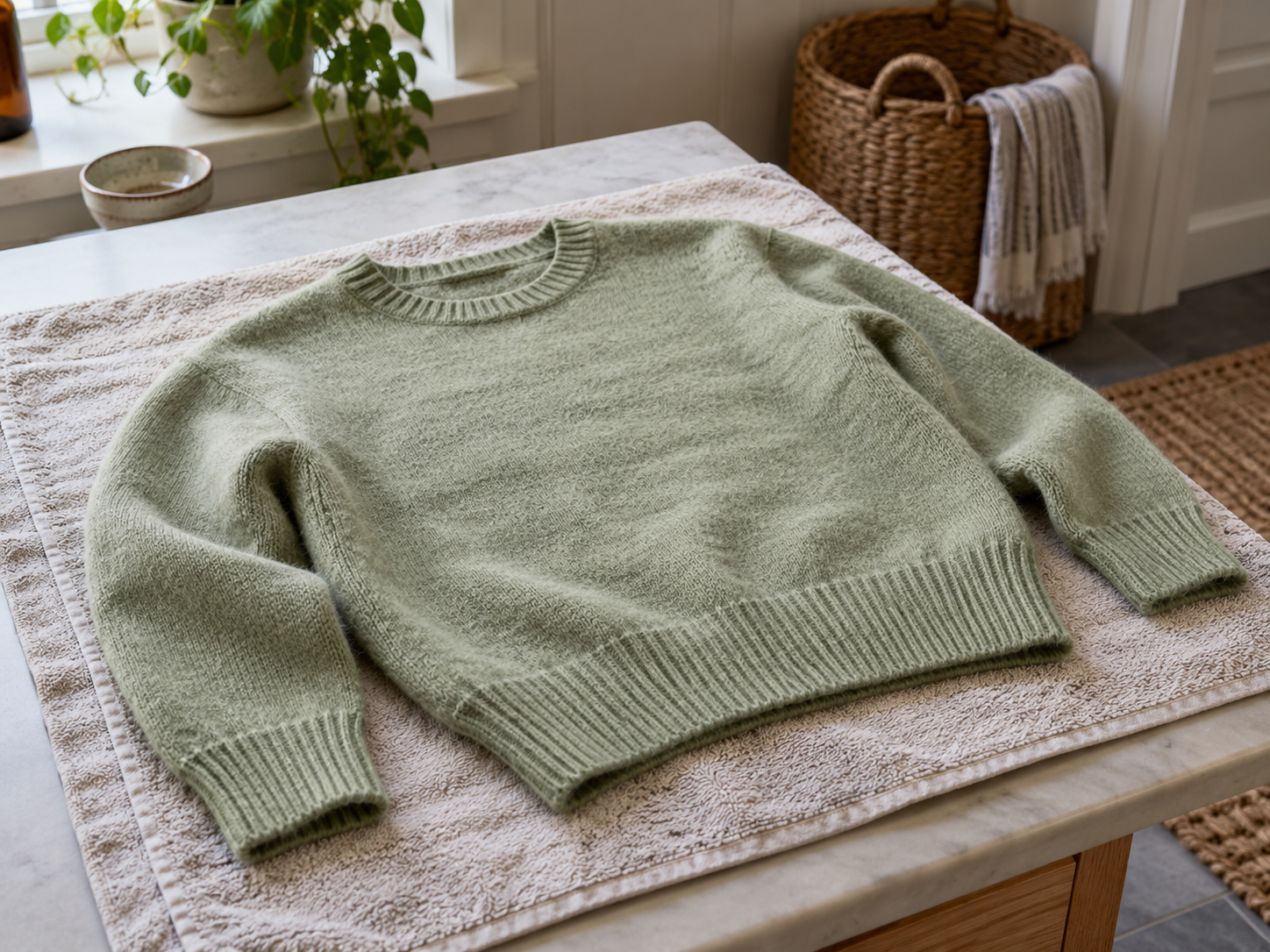
Woolmark’s drying guide recommends flat drying knitwear unless its care claim permits tumble drying. It warns that hanging wet knitwear can stretch it and advises against direct heat and strong sunlight. A radiator is not a substitute for a flat drying space.
Some socks and technical garments permit line drying or low tumble drying. Use those options only when the item’s instructions allow them. A machine-wash symbol alone does not settle the dryer question, and a low-heat setting does not override “do not tumble dry.”
Do not promise yourself a fixed drying time. Thickness, retained water, airflow and room conditions vary. Check thicker areas and the underside before folding or packing. Once the garment is fully dry, follow our guide to storing wool sweaters rather than compressing a still-damp knit into a drawer.
Common mistakes and Merino blends
The most avoidable mistake is treating the fiber percentage as a care instruction. A Merino blend is not automatically machine washable or dryer safe; 100% Merino is not automatically hand-wash-only. Read the finished garment’s directions, including any special trims or construction.
Avoid these shortcuts:
- Copying another garment’s temperature or drying setting because both say Merino.
- Using a mesh bag to justify an otherwise prohibited machine wash.
- Wringing, scrubbing or pulling wet knitwear to speed up the job.
- Using bleach or unverified laundry additives to rescue a difficult stain.
- Assuming washing more often, less often or at a hotter setting is always better.
Pilling is different from shrinkage. Woolmark explains pilling as surface fibers forming small balls, with friction and fabric construction among the factors. Gentle care may help manage abrasion, but no washing routine can guarantee a pill-free sweater. Deal with pills separately and carefully after drying rather than scrubbing them off during washing.
Frequently asked questions
Can Merino wool go in the washing machine?
Yes, when the garment label permits machine washing. Use the specified cycle, temperature and compatible detergent. Some garments require hand washing or professional cleaning instead. The words Merino, blend or machine-washable detergent do not override the garment’s own instructions.
What temperature should you wash Merino wool at?
Use the temperature allowed by its care label. Some manufacturers specify cold water, while others permit warm washing or a wool program with a stated temperature. There is no single correct temperature for every Merino garment. Check cycle and agitation requirements as well as temperature.
Can you use regular detergent on Merino wool?
Sometimes, if the garment manufacturer permits that type and the formula is suitable. Some Merino-blend instructions allow mild laundry detergent. For general wool care, avoid heavy-duty, enzyme-containing bio and bleach formulations. Check the exact bottle rather than assuming every product from a familiar brand is interchangeable.
Can Merino wool go in the dryer?
Only when the garment’s drying instructions permit it. Some socks and Merino blends allow low tumble drying; other items prohibit it. Dry sweaters flat when directed. Machine-washable and tumble-dry-safe are separate permissions, so check both before starting the laundry.
How often should Merino wool be washed?
Wash according to the garment’s use, soil, odor and manufacturer guidance rather than a universal wear count. A lightly worn outer sweater and sweaty next-to-skin clothing have different needs. Airing between wears can be useful, but it does not replace washing when the item needs cleaning.
Why did my Merino wool shrink?
Unsuitable washing or drying can cause dimensional change, and felting can permanently change wool’s structure. The cause cannot be identified from fiber content alone. Compare the routine used with the care label. Gentle reshaping may help some distortion, but it should not be presented as a guaranteed way to reverse felting.