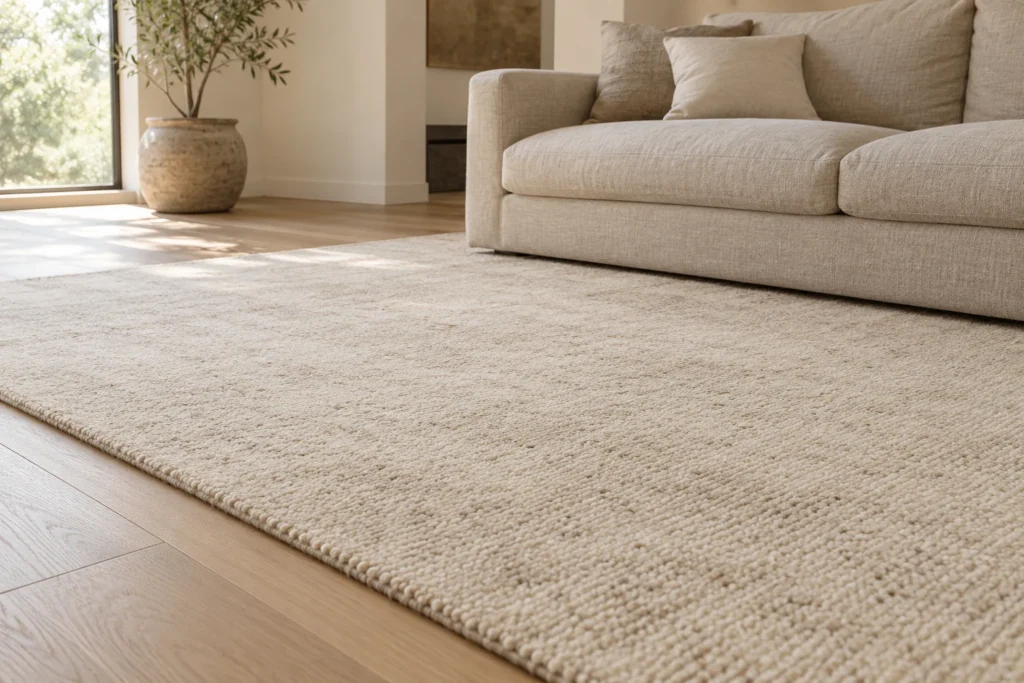
A little fuzz beside a new rug can be annoying. A patch that seems thinner every time you clean it is a different concern. The useful question is not simply whether wool rugs shed, but what is coming away and whether the rug’s surface is changing.
Some wool rug shedding comes from loose fibers left during production and finishing. Gentle care can remove that material. Persistent loss accompanied by thinning, pulled yarn or damaged edges deserves a closer look rather than an automatic reassurance that “wool just does that.”
Start with the rug’s care label, then look at the kind of material you are finding.
Why do wool rugs shed?
Making and finishing a rug can leave short fiber fragments among the pile. Those fragments may work free during use. For example, Northern’s Row rug care guide explains that cutting the pile leaves short fibers that detach from the surface.
That explanation fits some new-rug fuzz, but it does not account for every case. Rug-care specialist Lisa Wagner at Rug Chick also discusses shedding associated with weak fibers, particular constructions and damage. Continued breakage is different from clearing away finishing debris.
The label “100% wool” tells you the fiber content; it does not describe every detail of the yarn or construction. If you need that broader background, our guide to choosing a wool rug explains the main types.
How construction changes the care question
Cut pile and loop pile need different attention. A projecting cut end is not the same thing as a raised loop that remains connected to surrounding yarn. Mannington’s guidance describes how a high loop can be part of a continuous strand, which is why cutting or pulling without identifying it is a poor troubleshooting step.
Long, shaggy wool also deserves care tailored to its construction. Rug Chick discusses how loosely held fibers in shag and chunky styles can work free, and how aggressive brush action can worsen problems. A “handmade” or “hand-tufted” label alone is not enough to choose a cleaning method or judge whether fiber loss is acceptable.
Normal shedding versus warning signs
Before changing your cleaning routine, look at the rug in good light. Avoid pulling on a tuft to test it. Use the following distinctions to describe the issue to the seller, rather than trying to diagnose a fault yourself.
| What you notice | What to check next |
|---|---|
| Loose short fibers on the floor; the pile still looks even | Check the recommended care routine and watch whether the loose material becomes less noticeable |
| Small balls of fiber attached to the surface | Ask whether this is pilling and which removal method is approved for this rug |
| One strand or loop standing above nearby yarn | Leave it alone until you know the construction and the maker’s instructions |
| An area becoming sparse, missing tufts or newly exposed backing | Photograph the change and ask the seller to assess it promptly |
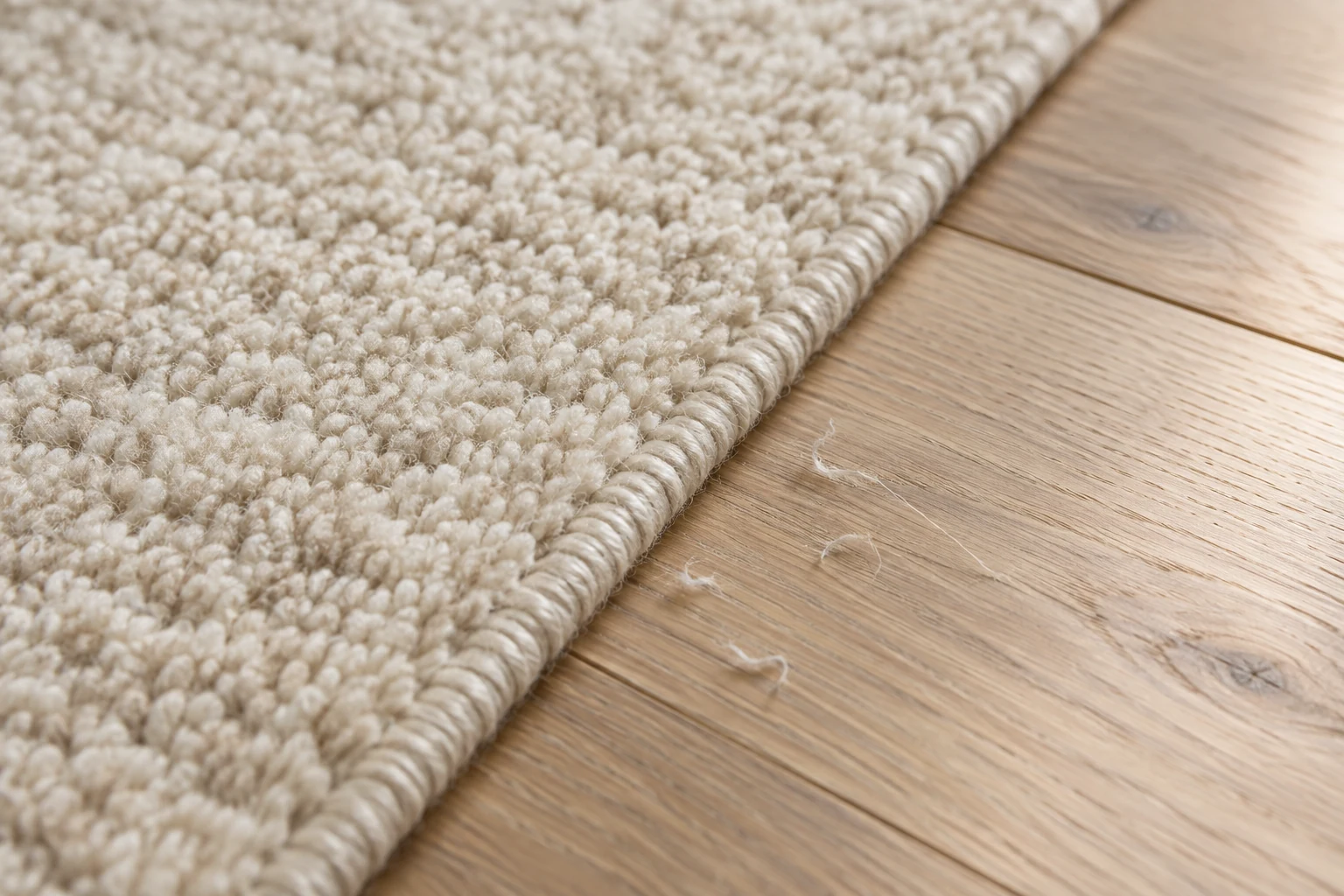
Mannington’s wool rug guidelines distinguish surface pilling from projecting tufts and loop issues. They also give different treatment instructions for cut pile and woven loops. That distinction matters: advice to trim one kind of loose end should not become permission to cut any raised yarn.
Loose fuzz with an unchanged, even surface is more consistent with ordinary early shedding than a developing bare patch. Still, this is a reason to monitor the rug, not a guarantee that it is fault-free. Compare the affected spot with a nearby area and note whether the change is general or concentrated in one place.
If you can see new gaps, stop treating the issue as a housekeeping nuisance. Contact the seller before trying to remove more material. Photographs cannot establish every cause, but they can make the change much easier to explain.
How long does wool rug shedding last?
There is no reliable deadline for every wool rug. A manufacturer’s estimate applies to its products and should be read in that context. Saatva’s shedding guidance, for instance, describes shedding that subsides after a few months. That is not a guarantee for an unrelated rug.
For your own records, compare the same small area in similar light after ordinary care. Note the date, what you noticed and whether the pile still looks even. This is a practical way to explain a trend to the seller; it is not a standardized fiber-loss test.
Check the return and warranty terms while you do this. Do not wait for an arbitrary milestone if the rug is visibly deteriorating or a return deadline is approaching.
How to reduce loose fibers without overworking the rug
Find the directions for the exact rug
Save the care label or product-care page. If the instructions only say “vacuum regularly,” ask the seller which head, suction level and brush setting are suitable. Mention whether the rug has loops, long pile or fringe.
Avoid assuming that instructions for fitted carpet, a different rug or another fiber blend apply unchanged.
Use the approved vacuum setup
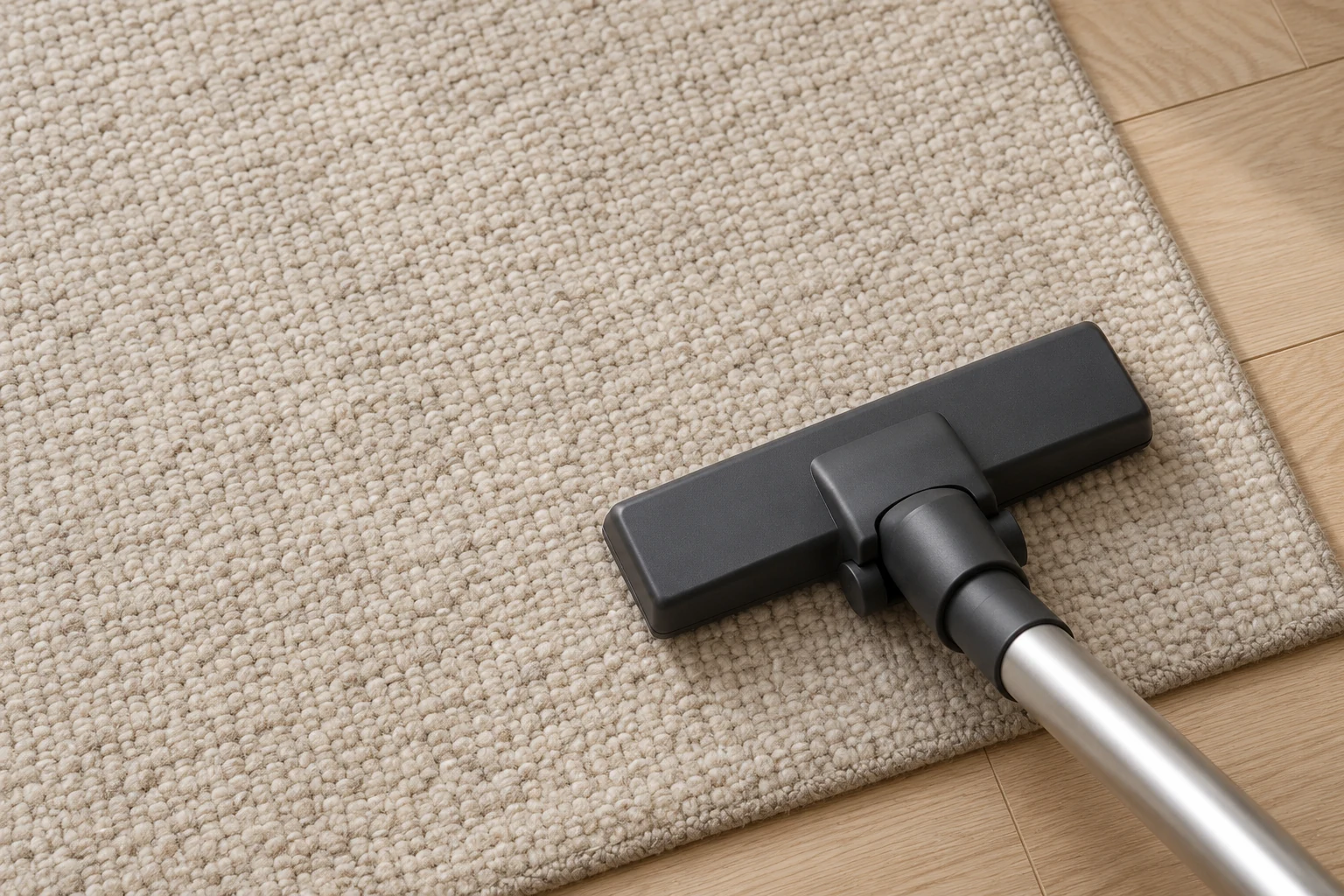
Room & Board’s wool rug care instructions warn that rotating brushes can damage rugs and advise disabling that action. Check what a setting actually does: a “bare floor” button is useful only if it provides the setup your rug requires.
Keep to the maker’s recommended routine. Do not repeatedly work one spot in an attempt to make it release every last fiber. If the head catches yarn or the surface starts changing, stop and ask for care advice before continuing.
Keep a note of the setup you used, especially if you have recently changed vacuums or attachments. If the instructions and the machine’s available settings do not match, ask the manufacturer for a suitable alternative rather than experimenting with stronger suction or extra passes.
Keep ordinary dirt under control
Loose fuzz should not distract from regular cleaning. WoolSafe’s care guide explains that vacuuming removes gritty soil that can damage fibers. It also cautions against general household soaps and detergents for wool carpets and rugs.
A bottle advertised as an anti-shedding solution is not a substitute for understanding the cause. Do not apply a spray, laundry softener or homemade treatment simply because another owner recommends it. Ask the rug maker what is approved.
Leave questionable yarn alone
Do not tug out a projecting strand. Northern’s care instructions allow trimming loose yarn to the pile level for its Row rugs, but this is product-specific advice. If you cannot tell whether the strand is a loose end or part of a loop or structure, ask before cutting it.
The same restraint applies to rakes, fabric shavers and aggressive brushes. Treat them as tools that need explicit approval for the rug, not routine shedding remedies.
Spread wear without promising a cure
Room & Board recommends periodically rotating wool rugs and using a rug pad. Rotation helps distribute exposure and wear; a suitable pad supports the rug and helps limit slipping. Choose a pad compatible with both the rug and the floor. These are supporting care measures, not repairs for weak yarn or a guarantee that shedding will stop.
When to contact the seller
Ask for help if the surface is becoming visibly thinner, yarn is coming away, or the problem appears to worsen with the recommended care. You do not need to name the defect before raising a concern.
Prepare a short record:
- Order details, model name and delivery date.
- A full-rug photo and a close-up of the affected area.
- A description of the loose material and when you first noticed it.
- The vacuum head, settings and cleaning products used.
- The care instructions you have followed.
Ask whether the seller considers the appearance expected for that model, whether the care routine needs adjustment, and whether an inspection is appropriate. Keep the reply with the purchase record. If an independent opinion is needed, WoolSafe provides information about professional cleaners and, in the UK and Ireland, registered complaint inspectors.
Common questions about wool rug shedding
Does shedding mean the rug is poor quality?
Loose finishing fibers alone do not establish poor quality. Rug Chick’s specialist discussion shows why construction and damage also need consideration. The amount of fuzz is only part of the picture; the condition of the rug matters too.
Will vacuuming stop it completely?
Vacuuming can collect loose material, but it cannot repair a failing yarn or construction problem. Use the approved routine and seek advice if the rug changes rather than increasing cleaning indefinitely.
Should a rug that suddenly starts shedding be treated like a new rug?
Do not assume the same explanation applies. Tell the seller or a qualified rug-care professional that the change is new, and mention any recent cleaning or equipment change. Check for the warning signs above before intensifying the routine. The timing is useful information, but it does not identify the cause by itself.
Should you choose a synthetic rug instead?
Compare specific products and their care requirements before switching materials. Our wool versus synthetic rug comparison covers the broader trade-offs. Ask any seller about the exact model’s expected shedding, suitable vacuum setup and return terms before buying.