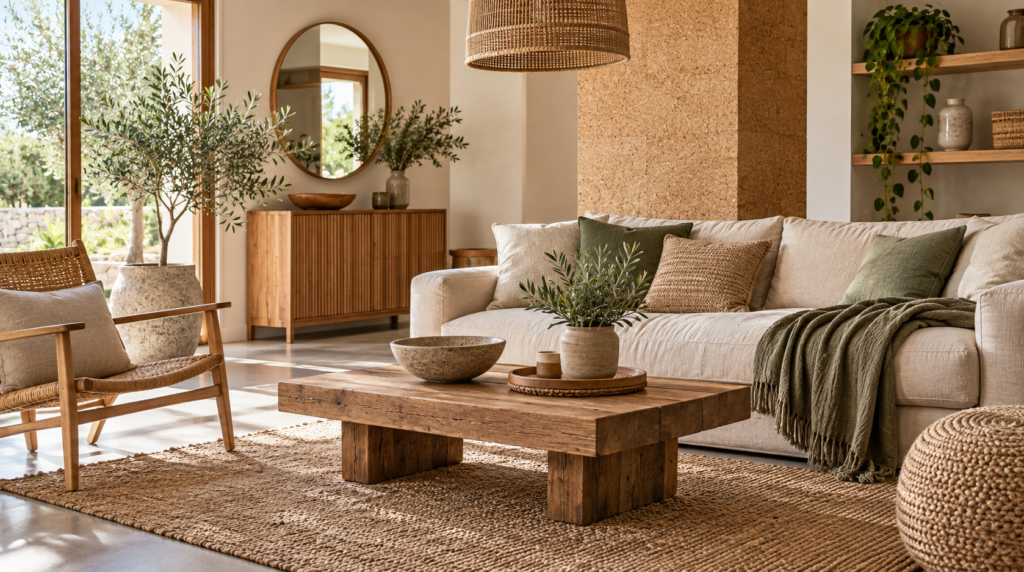
Interior design with sustainable materials is about more than choosing products that look natural. The materials used in rugs, furniture, flooring, curtains, and other home furnishings can affect comfort, durability, maintenance, and the overall feel of a room.
Wool, reclaimed wood, cork, bamboo, linen, and other natural or responsibly sourced materials each have different strengths. Some work particularly well for soft furnishings, while others make more sense for floors, furniture, or decorative finishes. Understanding those differences makes it easier to choose materials based on how a space will actually be used.
This guide looks at 7 sustainable interior design materials, where each one works best, what to consider before choosing it, and why wool can be an especially versatile option for rugs, blankets, and other home textiles.
When planning interior design with sustainable materials, it helps to compare each option by durability, sourcing, maintenance, and where it performs best in the home.
1. Wool for Rugs, Blankets and Home Textiles
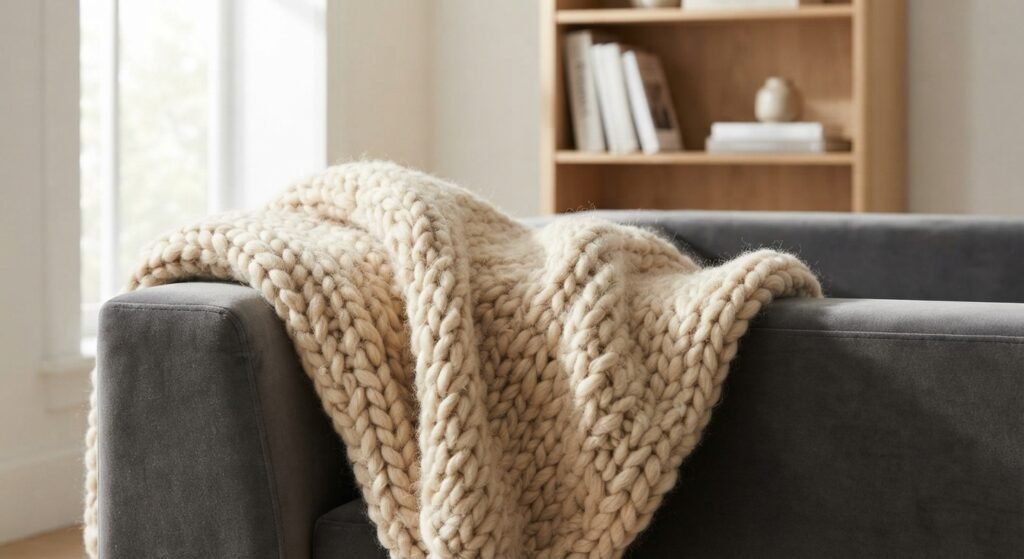
Wool is one of the most versatile natural materials used in home interiors, particularly for rugs, blankets, upholstery, cushions, and other textiles. It is a renewable fibre, and 100% wool can biodegrade under suitable environmental conditions.
Its appeal goes beyond sustainability. Wool fibres have a naturally crimped structure that helps trap air and manage heat and moisture, contributing to insulation and temperature regulation. The fibre’s outer structure also provides a degree of natural stain resistance, while wool is naturally resistant to ignition compared with many common textile fibres.
For interior design, the type of wool product matters. Finer fibres can feel softer, while broader wool fibres are commonly suited to carpets and rugs where durability is important. Construction, fibre quality, dyes, backing materials, and any added treatments should therefore be considered alongside the fact that a product contains wool.
Best for: rugs, blankets, throws, cushions, upholstery, and other soft furnishings.
Keep in mind: not every product labelled “wool” has the same fibre content, construction, treatments, or environmental profile, so check the product specifications before buying.
2. Reclaimed Wood for Furniture and Architectural Details
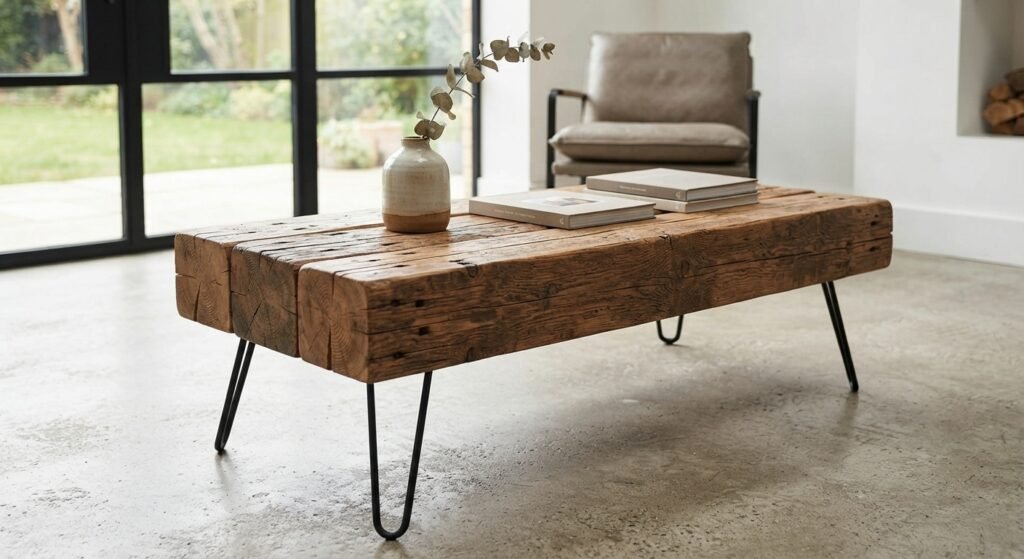
Reclaimed wood brings something new lumber cannot easily reproduce: the marks of its previous life. Nail holes, weathering, variations in grain, and aged color can give furniture and architectural details a distinctive character.
From a sustainability perspective, reclaimed wood gives existing timber another useful life instead of relying entirely on newly produced material. Reusing construction materials can also reduce demand for virgin resources and keep usable materials out of the waste stream.
In interior design with sustainable materials, reclaimed wood can work particularly well when you want warmth and visible natural texture without making every surface in the room look the same. It can be used selectively for a dining or coffee table, shelving, cabinetry, wall paneling, or other architectural details.
Best for: tables, shelving, cabinetry, accent walls, flooring, and decorative architectural features.
Keep in mind: reclaimed wood varies considerably in condition and previous use. Before bringing it indoors, check its source, structural condition, previous finishes or treatments, and whether it has been properly prepared for its intended use.
3. Linen for Curtains, Bedding and Soft Furnishings
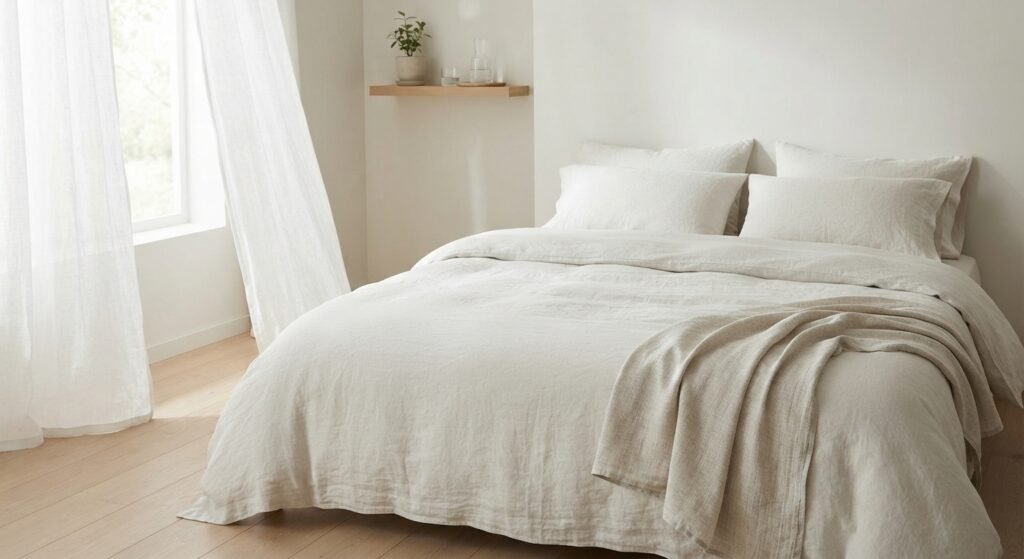
Linen is made from flax and works particularly well in interiors where a light, relaxed texture is preferred. It is commonly used for curtains, bedding, table linens, cushions, and upholstery, giving it a place in both decorative and practical applications.
Sustainability claims around linen need some context. Growing and processing practices vary by region and producer. For certified Western European flax, available industry data shows cultivation with little or no irrigation under normal conditions and relatively low agricultural inputs. Organic certification can add stricter requirements around synthetic fertilizers, herbicides, and other crop treatments.
Linen is also valued for comfort. Its ability to absorb and release moisture can make it useful for bedding and other textiles used in warm conditions. For window treatments, the weight and weave matter: lighter linen fabrics can soften incoming daylight, while heavier constructions provide more coverage.
Best for: curtains, bedding, cushion covers, table linens, and selected upholstery.
Keep in mind: “linen” does not automatically mean organic or low-impact. Look at fibre content, origin, certification, dyes, finishes, and manufacturing information when sustainability is a priority.
4. Bamboo and Rattan for Furniture and Decorative Accents
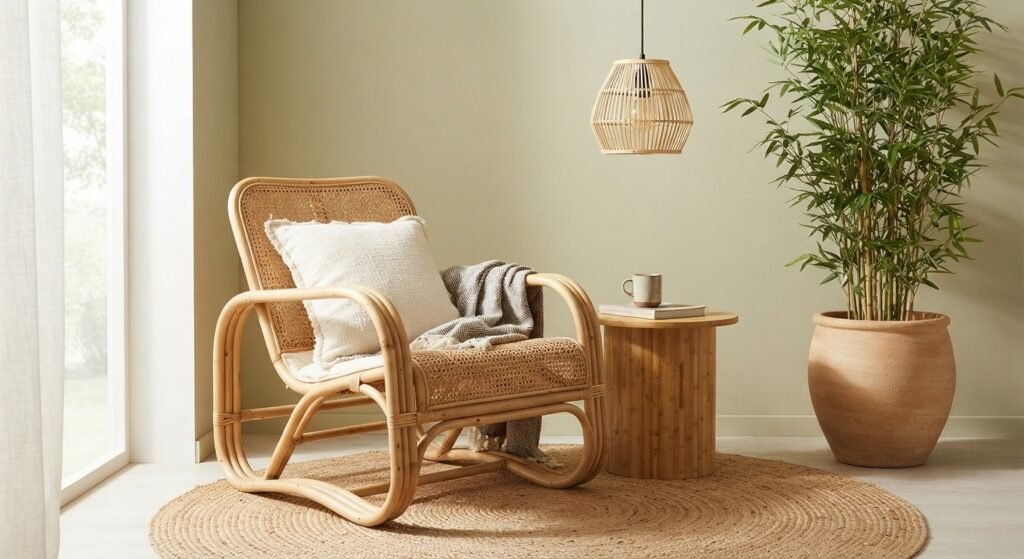
Bamboo and rattan can bring natural texture and warmth into an interior, but they are different materials with different uses. Bamboo is a fast-growing grass that can be made into flooring, furniture, panels, and household products, while rattan is a climbing palm commonly used for woven furniture and decorative pieces.
Their environmental impact depends heavily on how and where they are grown, harvested, and processed. Bamboo should not automatically be considered sustainable simply because it grows quickly; poorly managed plantations can contribute to habitat conversion, biodiversity loss, and other environmental problems. Rattan also depends on healthy forest ecosystems, making responsible sourcing an important consideration.
In the home, both materials can work well when you want to introduce texture without making a room feel visually heavy. Bamboo is used for flooring, furniture, cabinetry, and decorative products, while rattan is especially common in chairs, baskets, light fixtures, and woven accents.
Best for: furniture, light fixtures, baskets, decorative accents, and—depending on the product—bamboo flooring.
Keep in mind: look beyond the material name. Check sourcing, finishes, adhesives, manufacturing details, and credible certification where available. FSC certification can apply to bamboo and rattan products from eligible certified sources.
5. Cork for Flooring, Wall Panels and Quiet Spaces
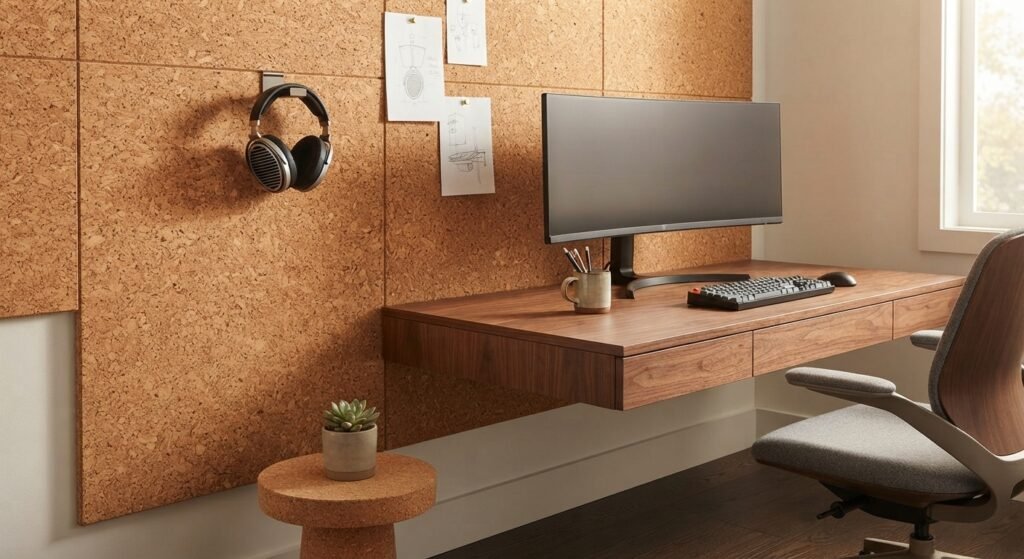
Cork is harvested from the outer bark of the cork oak tree without cutting down the tree. After harvesting, the bark regenerates and can be harvested again years later, making cork a renewable material when forests are responsibly managed. Cork oaks are long-lived trees, and their bark can be harvested repeatedly over their lifetime.
Indoors, cork is especially interesting for its structure. Its cellular composition gives it useful thermal, acoustic, and vibration-insulating properties, which is why cork is used in flooring, wall coverings, insulation, and other building applications.
Cork can also add warmth and natural texture without dominating a room visually. Wall panels can be useful where acoustic comfort matters, while cork flooring offers a softer feel underfoot than many hard flooring materials.
Best for: flooring, wall panels, insulation, home offices, bedrooms, and other spaces where comfort and noise control are priorities.
Keep in mind: natural cork has moisture-resistant properties, but that does not mean every cork flooring product is waterproof or suitable for a bathroom. For moisture-prone spaces, check whether the specific flooring system is designed and approved for that use.
6. Recycled Glass for Surfaces and Decorative Details
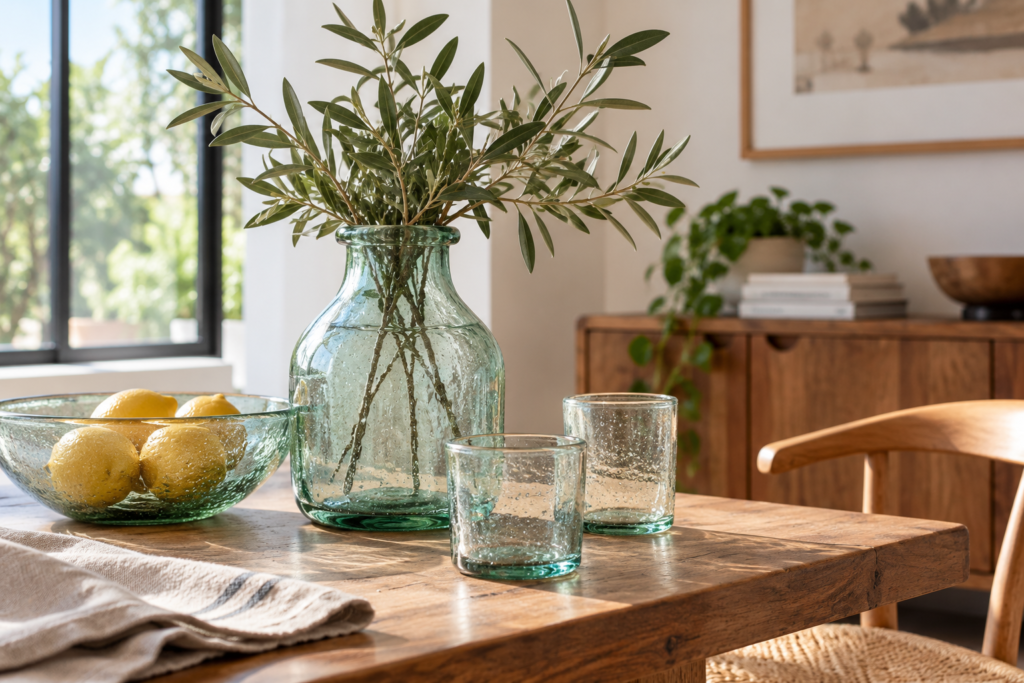
Recycled glass can give discarded material a new role in interior design. Depending on the product, recovered glass can be processed and incorporated into tiles, decorative surfaces, countertops, and other architectural or design applications.
From a sustainability perspective, the main advantage is circularity. Using recovered material can help divert usable glass from disposal and reduce demand for some virgin resources. This matters because substantial quantities of glass still enter the waste stream rather than being recycled.
In interiors, recycled glass can be particularly useful when you want a durable surface with visible texture, color, or light-reflecting details. The appearance varies considerably depending on how the glass is processed and what other materials are combined with it.
Best for: tiles, countertops, backsplashes, decorative panels, and selected home accessories.
Keep in mind: recycled content alone does not make every glass product equally sustainable. Check the percentage and source of recycled material, the other ingredients or binders in the product, manufacturing information, durability, and transportation distance when those details are available.
7. Natural Stone for Long-Lasting Interior Surfaces
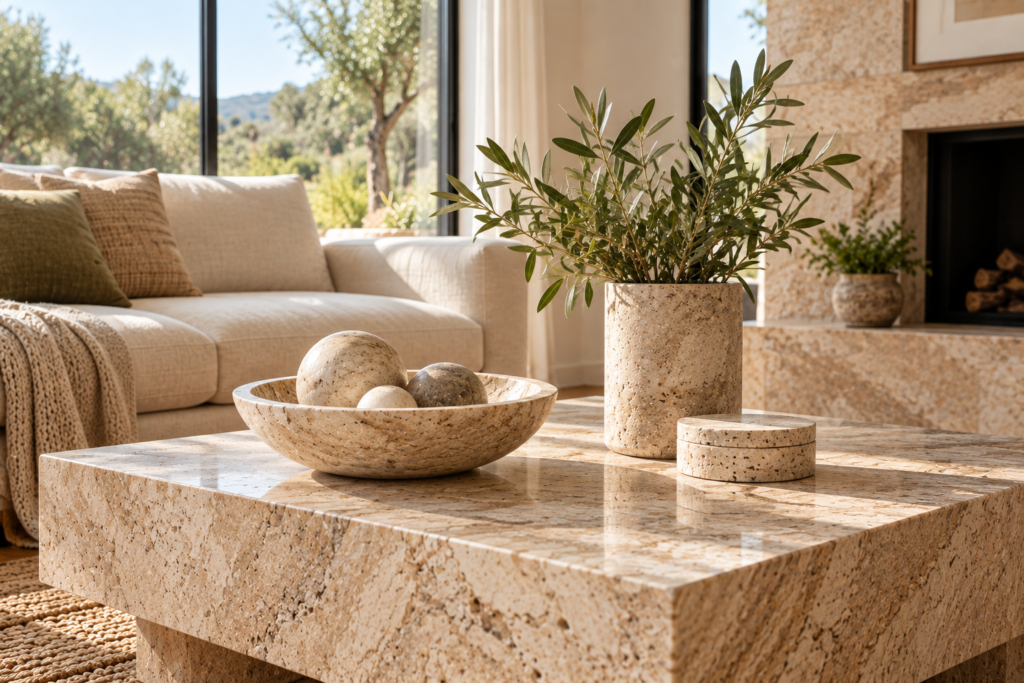
Natural stone can be a practical choice for interior surfaces where durability and long service life are priorities. Materials such as granite, marble, limestone, and slate are used for flooring, countertops, wall cladding, fireplace surrounds, and other architectural details.
From a sustainability perspective, longevity is one of stone’s main advantages. Durable stone can remain in use for many years, and some stone can also be reclaimed and reused in future projects. Natural stone itself does not directly emit VOCs, although adhesives, sealants, and other products used during installation may affect the finished system.
Stone also brings natural variation into a room. Differences in color, veining, and texture mean that it can work as a subtle background material or as a more prominent architectural feature, depending on the type and finish selected.
Best for: flooring, countertops, fireplace surrounds, wall cladding, and other durable interior surfaces.
Keep in mind: natural does not automatically mean low-impact. Quarrying, fabrication, transportation, and finishing all contribute to a stone product’s environmental footprint. When sustainability is a priority, consider responsibly sourced stone, locally or regionally available options where practical, reclaimed material, and products with credible environmental documentation or certification.
Final Thoughts
Interior design with sustainable materials does not require replacing everything in a home at once. A more practical approach is to make thoughtful choices when something genuinely needs to be replaced, renovated, or added.
Wool, reclaimed wood, linen, bamboo, rattan, cork, recycled glass, and natural stone each bring different qualities to an interior. The right choice depends on where the material will be used, how long it is expected to last, how it was sourced and manufactured, and how much maintenance it requires.
Rather than relying on labels such as “natural” or “eco-friendly” alone, look at the full product: fibre or material content, durability, finishes, certifications, sourcing, and end-of-life options. A material that performs well and stays useful for years can often make more sense than one chosen for a sustainability claim alone.
If you are starting with soft furnishings, wool can be a useful material to explore for rugs, blankets, and other home textiles. For a deeper look at choosing one of the most common wool furnishings, see our Wool Rugs Guide.