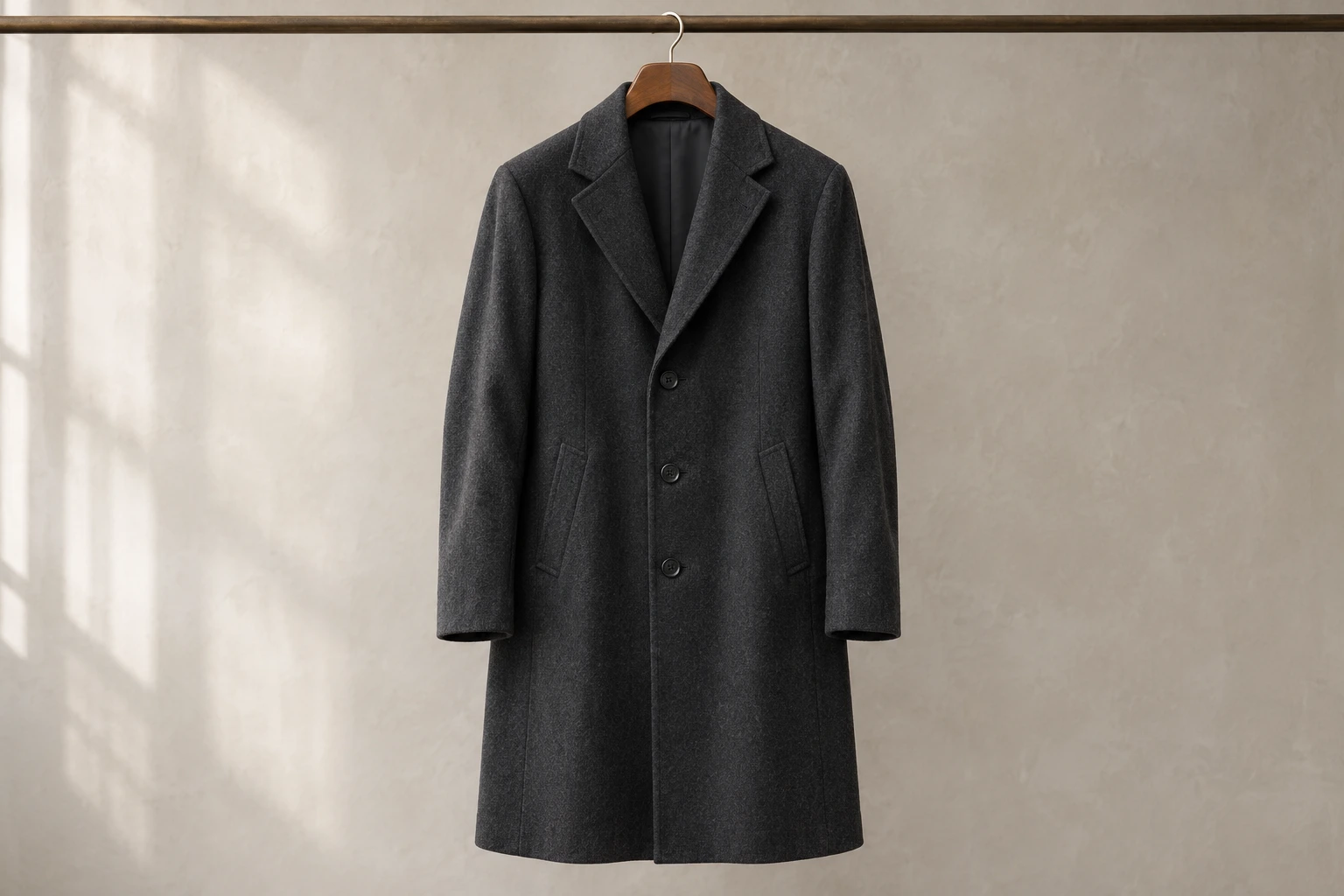
To get wrinkles out of a wool coat, start by hanging the dry, woven coat on a hanger that supports both shoulders. Light storage creases may relax on their own. If a crease remains, check the sewn-in label and the maker’s instructions before using steam or an iron. A fold across a plain back panel may be a good home touch-up; a misshapen shoulder or lapel is a job for a professional cleaner.
Which method fits the crease?
Look at the coat while it hangs naturally. A horizontal fold where it rested in a suitcase is a wrinkle. The soft curve where the lapel turns back is part of the cut. Leave that curve in place.
| What you see | What to do |
|---|---|
| Shallow folds after storage or travel | Give the woven coat room to hang. Check again before applying heat. |
| A ripple on a plain panel after hanging | If the maker permits steaming, try a light pass with a garment steamer. |
| A sharp fold on a smooth, flat section | If ironing is permitted, press the affected spot through a cloth, within the label’s limits. |
| A dent in a padded shoulder, a distorted lapel, or a lining that pulls | Ask a cleaner experienced with tailored coats to assess the shape. |
What does the care label tell you?
Read the care directions for the finished coat, including any restrictions on ironing or steam. “100% wool” may describe only the shell. An unstructured, unlined coat has fewer layers to work around. A tailored coat may have a separate lining, padding at the shoulder, and an inner layer that gives the chest and lapels their shape. A lining alone doesn’t rule out a touch-up, but permission to press the shell doesn’t tell you what heat the lining can take.
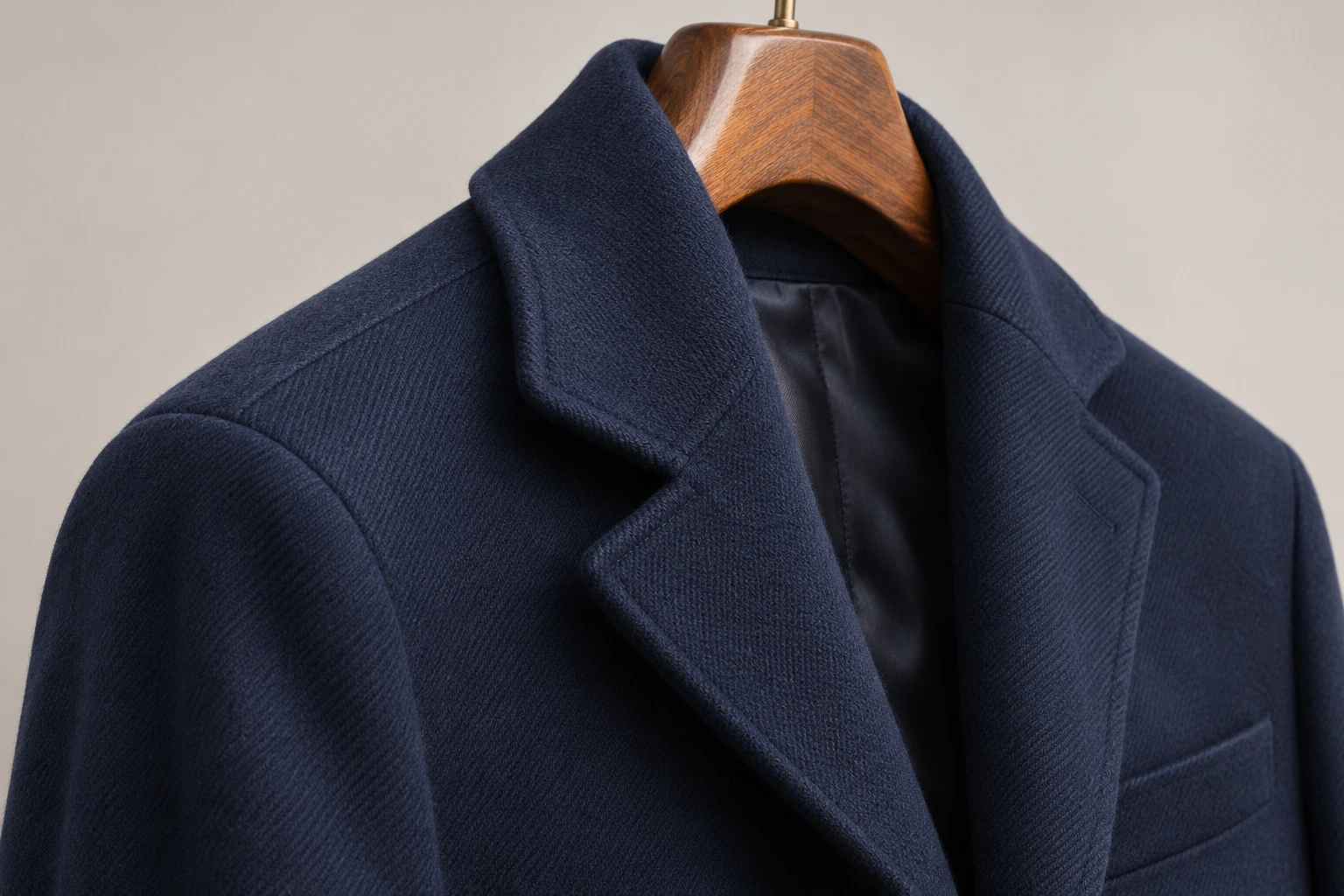
If the label says “do not iron,” keep the iron off the coat. If it rules out steam, skip the steamer. If it only says “dry clean only,” look for the maker’s finishing instructions for that style before trying either method. With a missing label or an uncertain finish, stick to hanging a dry woven coat and ask the maker or a cleaner. Woolmark’s ironing guidance starts with the garment’s care label. Rowenta’s guide to tailored jackets explains how shoulder padding, rolled lapels, and bonded layers complicate steaming.
How should you hang a creased wool coat?
Choose a broad, shaped hanger that follows the shoulders without poking into the sleeves. Empty the pockets, untie the belt, and ease out any sleeve or pocket bag that folded under the coat during packing. Give the hem room to fall and the sleeves room to hang clear of neighboring clothes.
After unpacking, try leaving the coat out overnight if you have time. Look at the same crease again in daylight. If it has eased enough to wear, you’re finished. Woolmark recommends resting woven garments on shaped or padded hangers. A soft, knitted coat that hangs like a long cardigan needs different support. Rest it flat if its care instructions call for flat storage.
How do you steam a wool coat if the maker allows it?
Steam a clean, dry coat on its hanger, starting with one inconspicuous spot on the same outer fabric. Choose a spot such as the underside of a back vent where the wool is exposed. Testing the lining tells you little about how the outside will look.
- Set up the steamer. Follow the appliance manual for filling, warming up, and working distance. Hang the coat securely and keep your free hand out of the steam path.
- Test the outer fabric. If the coat maker permits steaming, follow the steamer manual and make one light pass over the inconspicuous spot on the outer fabric. Let the spot dry completely, then check for a water mark, a change in sheen, or a flattened patch. If the spot changes, stop before treating the visible wrinkle.
- Make a light, moving pass over the wrinkle. Work on the plain panel with the nozzle clear of the fabric. Avoid lingering over one point or pulling the cloth tight. Leave shaped shoulders, rolled lapels, and trims alone if the maker hasn’t given directions for them.
- Let the coat dry on its hanger. Check the result before making another pass. If the crease persists, resist the urge to move the nozzle closer or soak the area.
Coat maker The Checkroom describes short bursts of steam held away from the coat. Use your own coat and steamer instructions to choose the setting and distance.
When can you press a stubborn crease?
Press only if the label permits ironing and the affected section can rest flat without crushing another part of the coat. A fold near the bottom of a smooth, unlined back panel is a better candidate than a crease across a pocket flap or the front of a tailored chest.
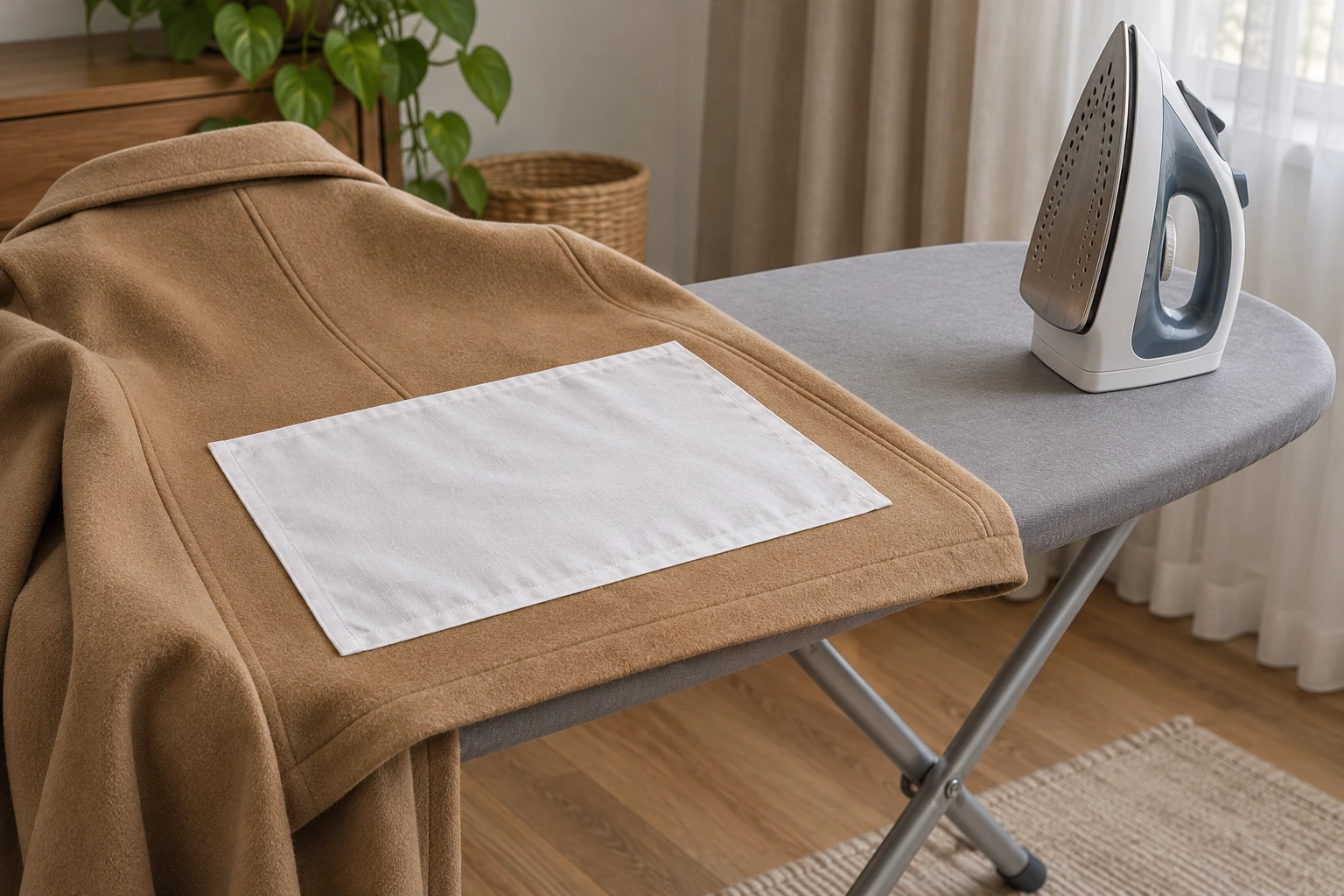
Support the section on a padded ironing board. Set the iron within the coat label’s limit and follow any steam restrictions. If you can reach the reverse of the shell, work there. If you must press the outside, lay a clean, smooth white cotton pressing cloth between the iron and the wool. Try a concealed area first. Lower the iron lightly, lift it straight up, and reposition it. Sliding or bearing down can leave shine or an impression of a seam. Let the panel cool in shape before judging whether it needs more work. See the American Wool Council’s illustrated pressing guidance and Pendleton’s instructions for protecting the wool surface.
When should you take the coat to a cleaner?
Stop if a crease survives a label-approved touch-up, if the surface develops shine or spotting, or if the shell and lining no longer hang together smoothly. For a tailored coat, show the cleaner exactly where the shape changed. “There’s a packing fold across the back, and I’d like to keep the roll of the lapels” gives them more to work with than asking to have the whole coat ironed flat. For a clean coat, ask whether professional steaming or pressing alone would be appropriate.
Frequently asked questions
Should I wash a wool coat just to get a fold out?
A fold in a clean coat is a reason to try hanging it first. If the coat also needs cleaning, choose that method separately according to the label. Our guide to when a wool coat can be washed at home covers washable and dry-clean-only styles.
What if there’s a stain right on the crease?
Deal with the stain before pressing. Heat can set the mark, making a small crease the easier of the two problems. For a washable coat, consult our stain-by-stain wool care guide and follow the garment label. For a dry-clean-only coat, point the mark out to the cleaner.
The Editorial Team prepared this guide from published textile-care and manufacturer instructions. We did not test individual coats or steamers.