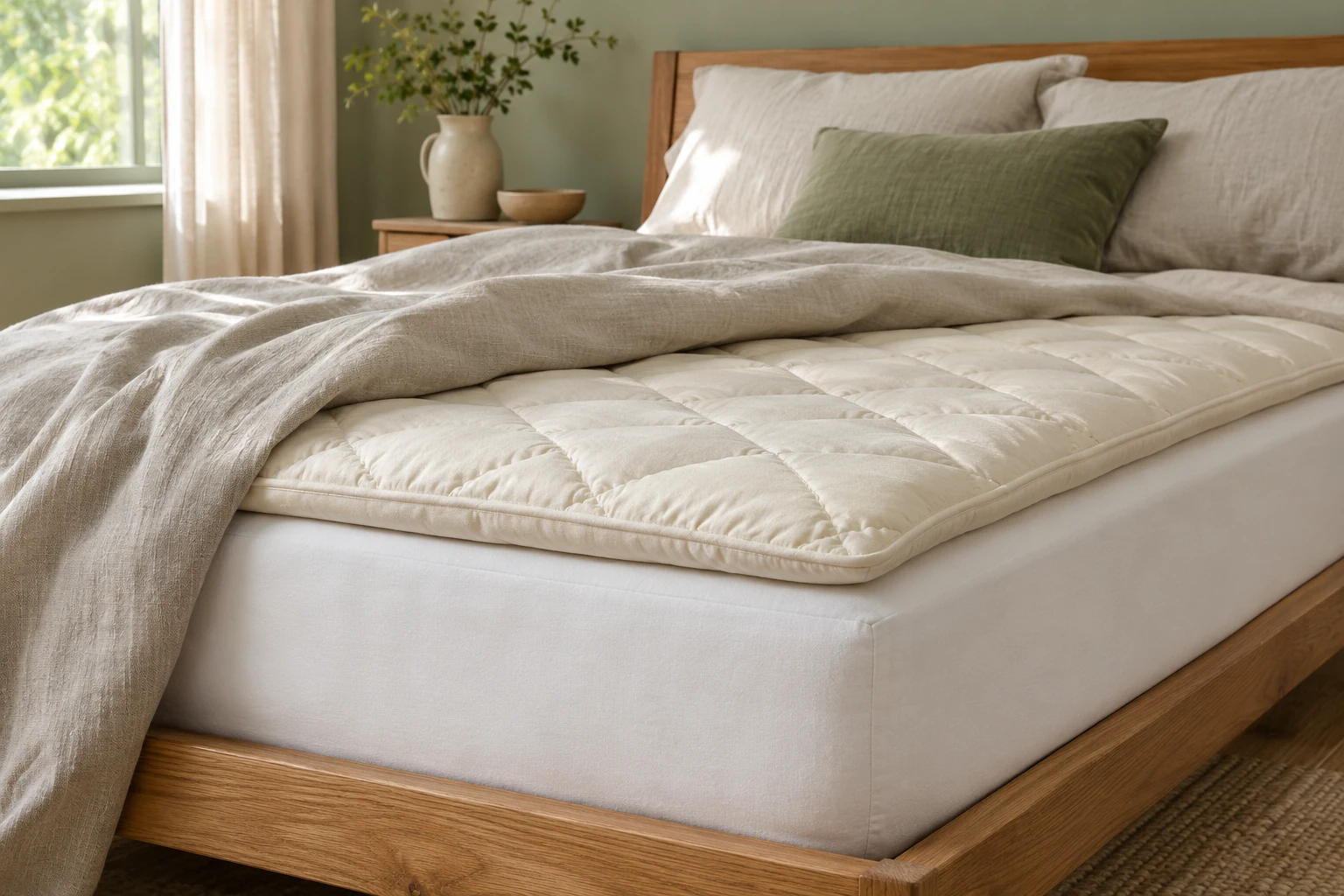
Not sure how to keep a mattress topper from sliding? First, identify which layer is moving. Center a correctly sized topper, secure its built-in straps as instructed if it has them, and use a fitted sheet with enough pocket depth for the whole bed stack. If the topper still shifts, ask its manufacturer about compatible straps or a non-slip underlay before adding accessories.
You should not have to rebuild your bed every morning. But a sheet that comes untucked, a topper that creeps sideways and a mattress that moves on its frame are three different problems. Start with a quick check before buying a gripper or tightening everything down.
This is a research-based troubleshooting guide for adult beds, not a report of hands-on product testing. Product-specific setup and care instructions take priority over general advice.
First, find out what is actually sliding
Before straightening the bed, compare the edges of the sheet, topper and mattress. Take a photo if it helps you remember their positions. Then remove the sheet gently so you do not move the topper while checking it.
- Only the fitted sheet has moved: the topper is still centered, but one or more sheet corners have come loose. Check the sheet’s depth and elastic first.
- The topper has moved: the mattress is still aligned with its base, but the topper overhangs one side or leaves an exposed strip of mattress. Focus on topper fit and its attachment system.
- The mattress has moved too: look at the mattress-to-base connection. A gripper beneath the topper will not secure the mattress to the frame. Follow the mattress and base manufacturers’ instructions rather than improvising restraints.
1. Check the topper’s size and position
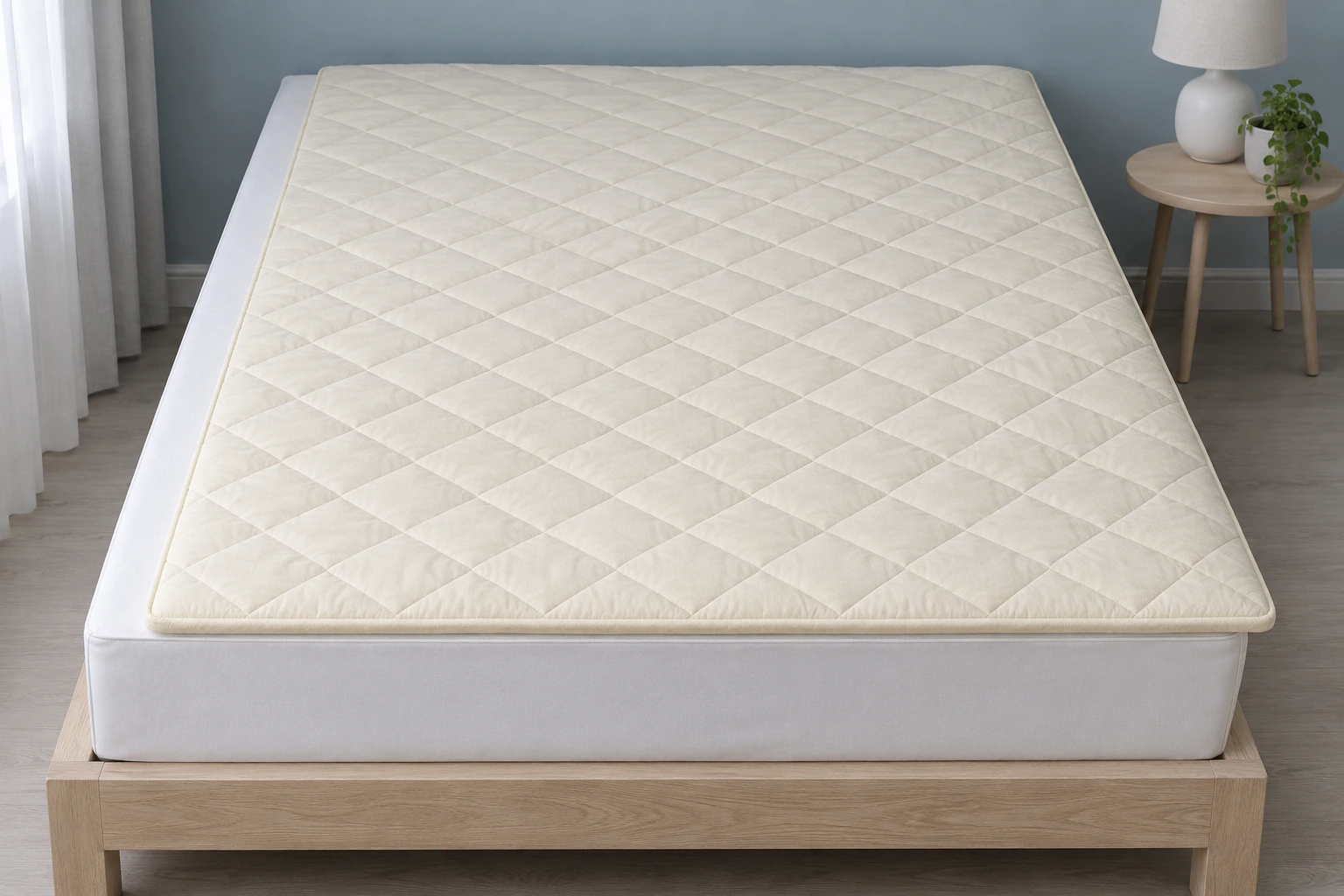
Compare the topper’s listed dimensions with your mattress, then measure the actual length and width. Do not rely only on a size name, especially with RV beds or specialty mattresses. Let a newly unpacked topper expand for the period its maker specifies before judging its fit.
Center it without stretching it to reach the corners. Check for folded edges, a twisted cover or a cover fitted the wrong way around. Follow any top/bottom orientation marks. JYSK’s troubleshooting guidance identifies mismatched sizes, insufficient grip and worn materials as possible causes of movement. A topper that does not fit needs a fit solution, not simply more tension.
2. Measure the full height before changing sheets
A sheet that fit your mattress before you added a topper may no longer reach securely underneath. Measure the height of the layers the fitted sheet must cover, including the topper and any pad that adds noticeable thickness. Compare that measurement with the sheet manufacturer’s stated fit range, not just the words “deep pocket.”
For example, a 12-inch mattress plus a 3-inch topper makes a 15-inch stack before other layers are considered. That calculation does not prove a sheet advertised with a 15-inch pocket will fit well: elastic, construction and the maker’s fit guidance still matter.
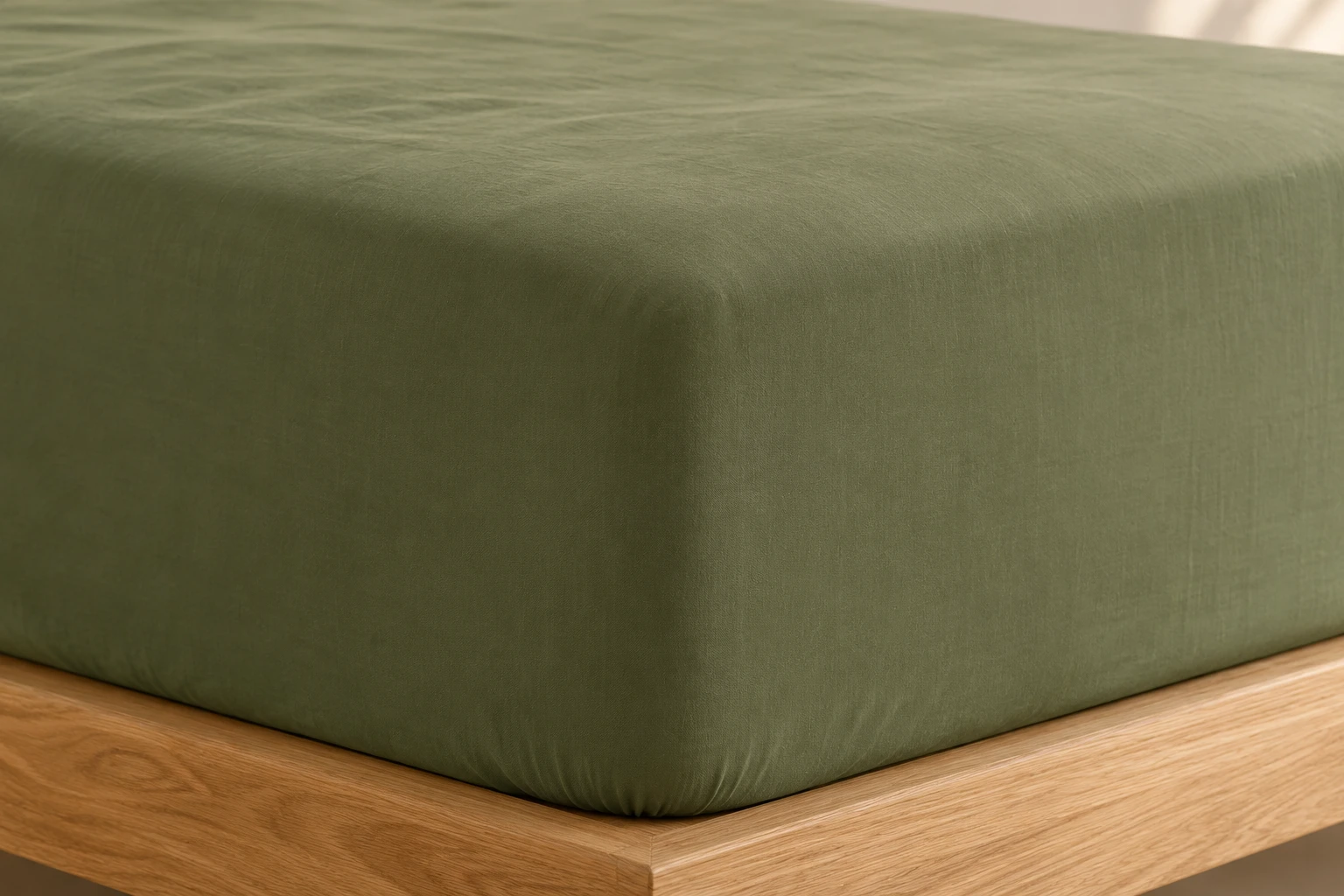
Aim for secure corners without pulling the topper into a curve. Tempur-Pedic recommends a well-fitting sheet and notes that a loose one can allow more movement. Sheet straps may help retain the sheet, but cannot compensate for a pocket that is too shallow.
3. Use the fastening system the topper already has
If there are built-in corner bands, a fitted skirt or a manufacturer-supplied anchoring system, start there. Follow the installation directions and check the supported mattress height. Smooth out twists and make sure each attachment is seated where the maker intends.
Attachment systems are not universal. Nolah’s fit guidance, for example, describes corner bands for one topper and no straps for its latex model. Do not assume instructions for another model apply to yours.
Stop tightening if the cover puckers, a seam strains or the topper buckles. Do not attach clips directly to exposed foam or loose wool filling. For a topper without straps, ask whether the maker offers a compatible cover or attachment kit before adapting one yourself.
4. Check the protector and other layers
List what is between the mattress and topper, and what covers them. Compare that arrangement with your product instructions. A protector may be intended to cover the mattress alone or the combined stack; do not assume every setup uses the same order.
Brooklyn Bedding suggests a snug protector or fitted sheet around both layers as one way to help keep a topper aligned. It also describes grippers and anchors for toppers without straps. These are options to check for compatibility, not a requirement to add all three.
Keep a required protective layer in place. If it appears to be the slipping surface, ask about a better-fitting compatible protector rather than removing protection permanently. ViscoSoft’s care instructions distinguish the removable cover from the foam inside and call for fully drying its protector before replacing it. Do not wash a topper core just because its cover is washable.
5. Consider a compatible non-slip underlay
If fit and fastening are correct but the topper still shifts, a suitable underlay between mattress and topper may help. Ask both manufacturers whether the proposed material is suitable for contact with their covers. JYSK specifically recommends checking underlay compatibility rather than assuming any rug pad will work.
Our preference is a removable, bedding-appropriate solution supported by the maker. Check its dimensions, placement and care requirements before purchase. After installing it, check for wrinkles, bunching or an uncomfortable ridge. Remove it if it changes the bed’s feel in an unwanted way or marks the fabric.
We do not recommend generic duct tape, spray adhesive, glued-on fasteners or safety pins as a default fix. These modify or puncture the product rather than solving fit, and we have not verified their suitability for your mattress or topper. Get explicit product-specific guidance before using a permanent attachment.
What changes with a wool mattress topper?
Use the same fit-first approach, but check the finished topper’s cover, quilting and care label rather than assuming wool filling makes it non-slip. Avoid pulling a quilted topper hard by one corner to reposition it; lift and support it instead.
Do not try to shrink a wool topper in the wash to improve its fit. Follow the exact product’s cleaning instructions and let it dry completely before remaking the bed. Sleep & Beyond’s myTopper care guidance specifically requires complete drying before it goes back on the bed. That product’s washing directions are not blanket permission to machine-wash other wool toppers.
For cleaning rather than slipping, see our wool mattress topper cleaning guide. If you are comparing the materials themselves, our wool versus latex topper guide covers that separate decision.
What if it still moves?
Make one change at a time and check the same edges after use. This gives you a clearer answer than adding straps, a protector and a gripper together. If movement continues, inspect for stretched straps, a damaged cover, persistent folds or an obvious size mismatch. Contact the seller with your measurements, product model and photos before buying more accessories.
For adjustable or split beds, check compatibility with both the topper maker and the base maker. Do not run improvised straps through a moving mechanism or bind independently moving sections together. Restore the manufacturer-approved setup if an accessory catches or interferes with movement.
Frequently asked questions
How do I keep a mattress topper from sliding without straps?
Start with correct size, alignment and a fitted sheet that accommodates the full height. If those are already right, ask the maker about a compatible fitted cover or removable non-slip underlay.
Can sheet suspenders hold the topper itself?
They may keep the fitted sheet taut, which can help contain the topper. That is not the same as a dedicated topper anchor. Only attach clips where the product instructions allow.
Will a heavier topper solve sliding?
Do not replace a comfortable topper on weight alone. Identify whether the problem is fit, sheet retention, a slipping layer or movement of the mattress itself first.
What should I try first tonight?
Recenter the topper, refit any built-in attachments correctly and check whether the sheet can cover the whole stack without lifting the corners. If it cannot, address the sheet fit before adding a gripper.
The bottom line
Match the fix to the moving layer. Check fit, sheet depth and the original fastening system first; use an added underlay or anchor only when it is compatible. The aim is a flat, comfortable bed that stays aligned, not the tightest possible bundle of bedding.
Sources checked November 18, 2026. Manufacturer guidance is cited for setup and care, not as independent proof of performance. No products were personally tested for this guide.
If your topper is the wrong size or needs replacing, see our wool mattress topper comparison for dimensions and thickness options.