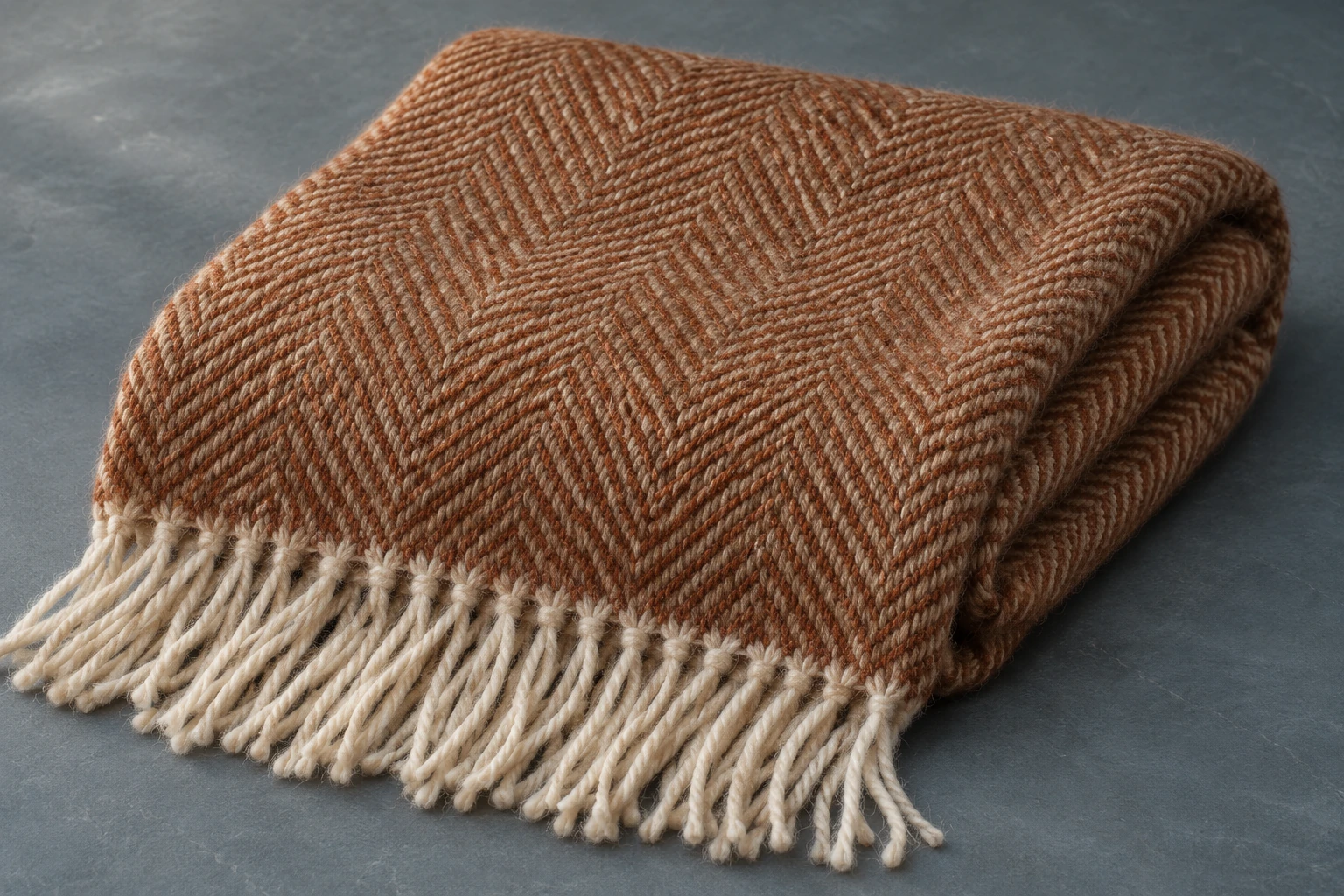
Yes. Wool is naturally fire resistant. The fiber is relatively hard to ignite, and its flame can die out when the heat source is removed. But wool is not fireproof. With sufficient exposure, it can char, smolder, or burn. A “100% wool” label tells you what a textile is made of. It cannot tell you how a particular blanket, rug, or piece of bedding will perform in a fire.
What happens when wool gets hot enough to burn?
Wool tends to char as it breaks down under heat. That darkened layer can slow the spread of a flame. If the wool burns, it can leave a soft ash. The USDA Agricultural Research Service describes both wool’s resistance to ignition and its tendency to stop flaming in its review of flame resistance in wool and wool blends.
A flame going out and all burning stopping are two different events. Smoldering is slow burning without a visible flame. In a study of sheep-wool insulation, researchers observed untreated samples that continued to smolder after a charred surface formed and the flame went out. The study concerned insulation, but it illustrates why the term self-extinguishing describes only part of what you might see.
What changes when wool becomes a finished textile?
The other fibers, the weave, the thickness, and any finishes or backing can change how the item responds to heat. Two blankets can both say “100% wool” while one is an airy weave with fringe and the other is a dense, smooth fabric. Weight alone cannot tell you which will resist a particular exposure. A National Bureau of Standards report on fabric flammability identifies weight, weave, and surface texture as factors in how readily fabric ignites and how fast it burns.
| What you’re comparing | What the fiber tells you | What to check on the finished item |
|---|---|---|
| A woven blanket | Wool fibers resist ignition and can char. | Look for the full blend, the weave, and whether the trim is a different material. |
| An area rug | “Wool pile” identifies the fiber on the walking surface. | Check what’s beneath the pile, including the backing, and read the rug’s warning label. |
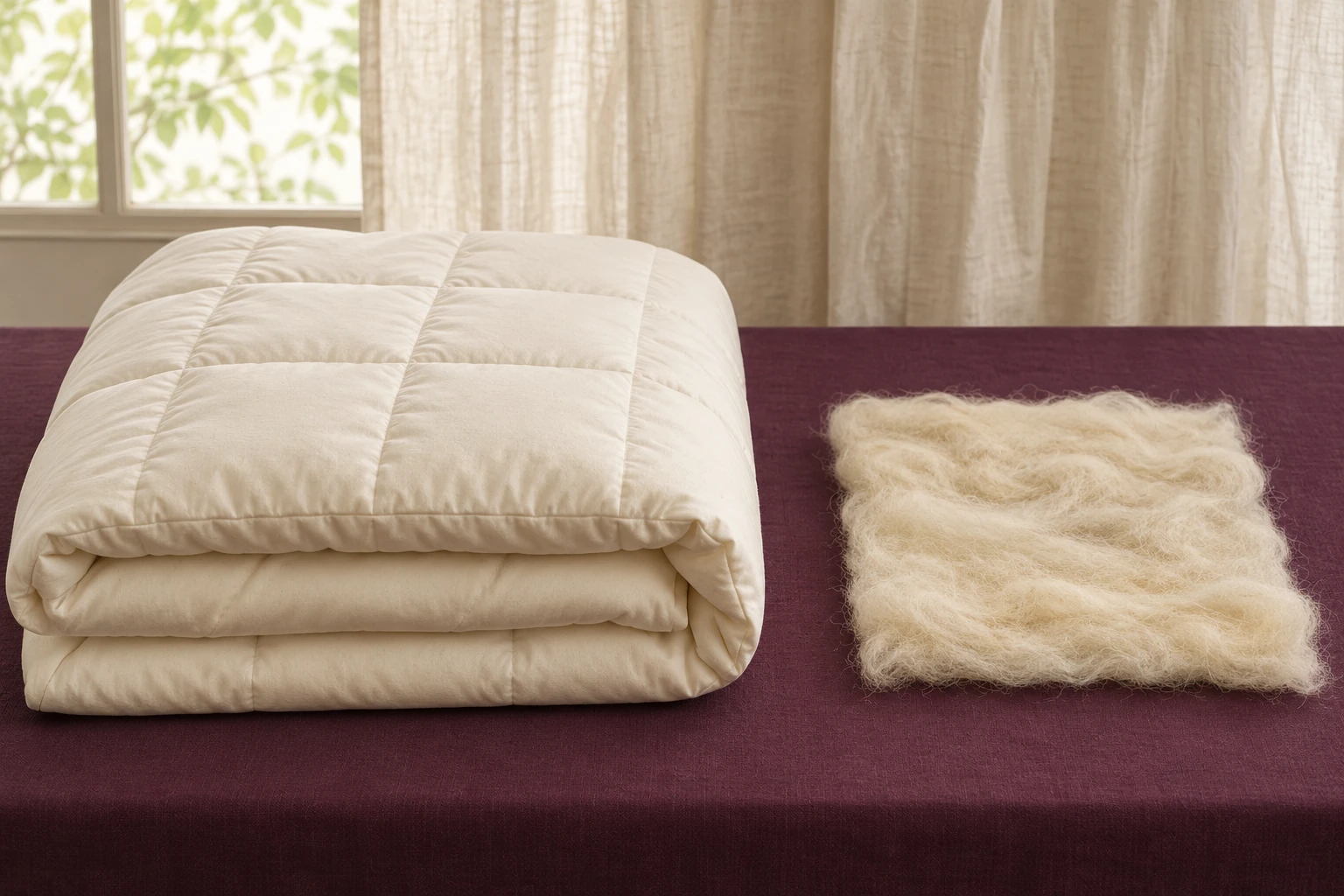
| A wool-filled comforter | “Wool fill” identifies what’s inside. | Read the shell and fill specifications separately. A cotton shell puts a different fiber on the outside. |
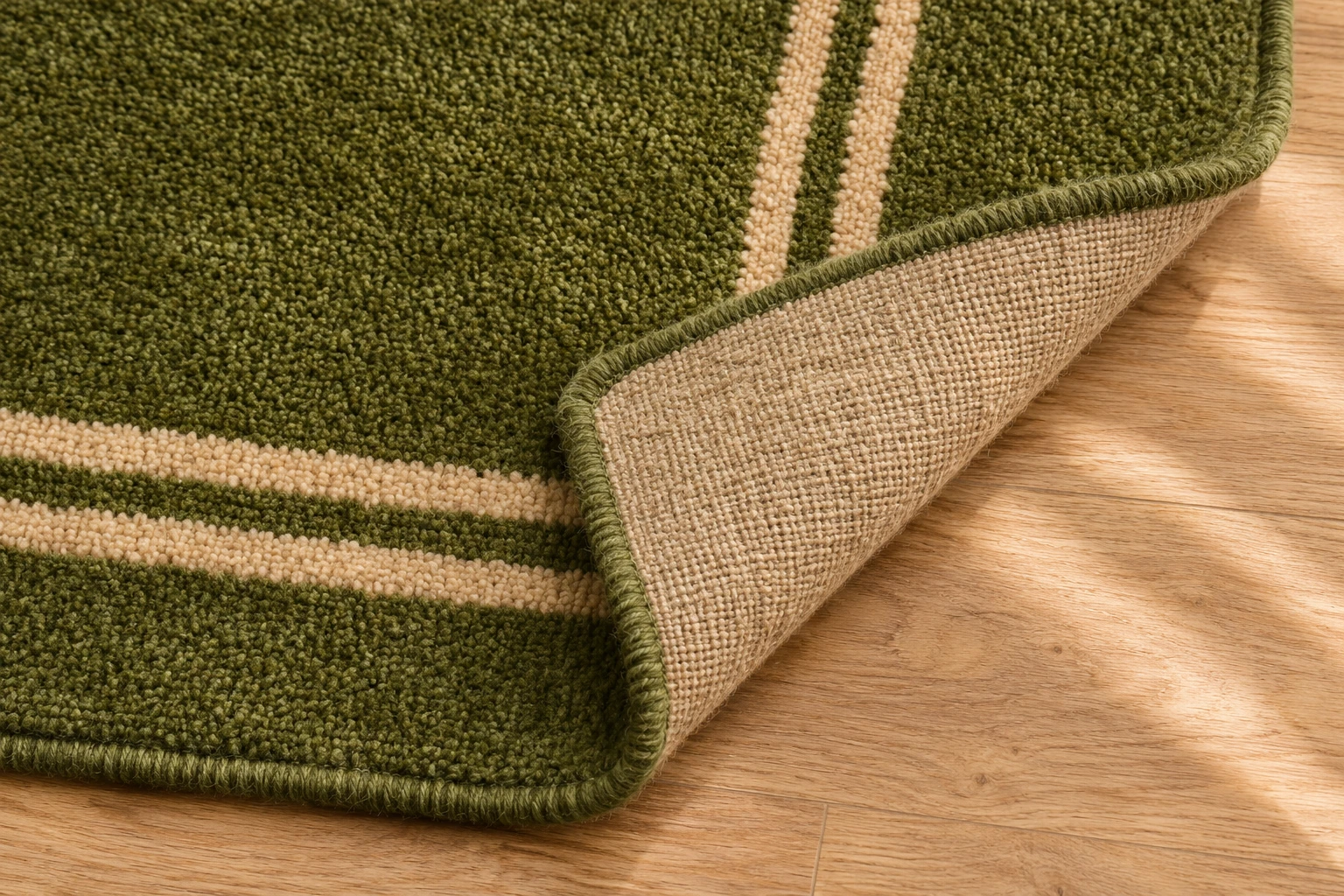
The backing can make a measurable difference. In a University of Dayton Research Institute study of wool and wool-blend fabrics, changing the insulating backing used in one laboratory test substantially changed the measured heat release. If a seller cites a test, ask which materials were tested together and whether they match the item you’re buying.
What does this mean for blankets, rugs, and bedding?
Camping blankets. Choose an ordinary wool blanket for warmth and coverage. Keep it clear of flames, flying embers, and hot equipment. Neither a high wool percentage nor the word military makes a camping blanket suitable for putting out a fire or protecting someone from flame. For choosing a blanket by size, weight, composition, and care, see our wool blanket camping guide.
Area rugs. For indoor rugs covered by US federal standards, the question is how far surface damage spreads from a small ignition source under specified conditions. Passing that test does not establish that a living room rug can serve as a hearth protector. The US Consumer Product Safety Commission (CPSC) explains what the test measures in its carpet and rug flammability guidance.
Bedding. A wool-filled comforter may have a cotton shell, as the examples in our wool comforter comparison show. A mattress has a different construction and its own rules. Under 16 CFR part 1632, mattresses and mattress pads are assessed for resistance to ignition from a lighted cigarette. For mattress sets covered by 16 CFR part 1633, the rule limits heat release during a specified open-flame test. Neither rule gives the comforter you lay on top a fire rating. See the CPSC guidance for mattresses, mattress pads, and mattress sets.
Frequently asked questions
Does “no added flame retardants” mean wool will catch fire easily?
Not by itself. Untreated wool already has some resistance to ignition. “No added flame retardants” describes a manufacturing choice. The claim alone does not establish how easily the finished product ignites or whether it meets a flammability standard. If a seller claims it meets one, ask for the name of the standard and the model it applies to.
Why would a small wool rug carry a “FLAMMABLE” warning?
US rules allow a small rug that fails the applicable surface flammability criterion to be sold if it carries the required permanent warning. That warning applies to the finished rug even if its pile is wool. Follow the label and keep the rug away from ignition sources.