Choosing an alpaca vs wool blanket is easier when you start with how you will use it. A fine alpaca blanket may suit someone who wants a supple, softly draping bed layer. A machine-washable sheep-wool blanket may be the more practical choice for frequent cleaning. Neither fiber name guarantees the warmest, lightest, or softest blanket.
The useful comparison is between two finished products: their fiber percentages, fineness, construction, dimensions, weight, and care labels. This research-based guide explains what those details mean and uses manufacturer specifications to show how they affect a purchase. We have not personally tested the blankets discussed below.
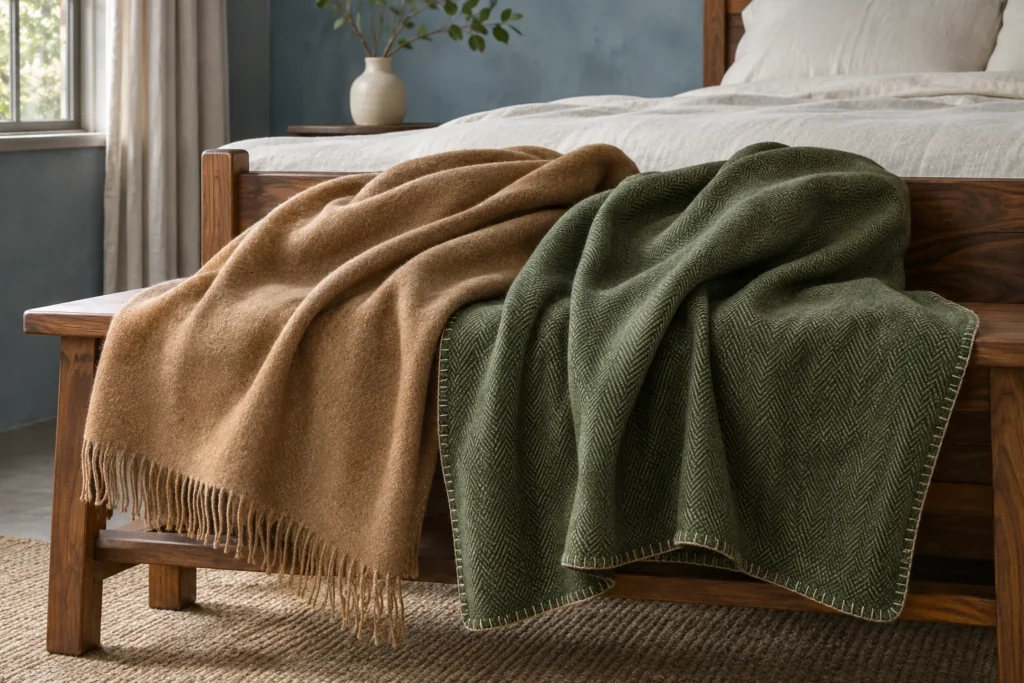
Alpaca vs wool blanket: quick comparison
| Buying factor | Alpaca blanket | Sheep-wool blanket |
|---|---|---|
| Fiber | Alpaca fleece; check whether the blanket is pure alpaca or a blend. | Sheep fleece; may be Merino, lambswool, another wool, or a blend. |
| Softness | Fine grades can feel smooth; coarse fibers can still prickle. | Fine Merino can be soft; broader fibers may feel more textured. |
| Warmth and weight | Judge thickness, coverage, and actual blanket weight. | Judge the same details; wool is not automatically heavier. |
| Drape | A supple woven construction can hang fluidly. | Construction may produce a springy, substantial or softly draping fabric. |
| Maintenance | Check the label; some premium examples require dry cleaning. | Both dry-clean-only and machine-washable products exist. |
| Value | Worth considering when the feel and finish justify the price. | Worth considering when practical care and suitable construction meet your needs. |
Treat these as shopping questions, not performance ratings. A thin alpaca throw and a thick wool bed blanket serve different purposes, even when their product descriptions use similar language.
What the fiber label tells you—and what it does not
Alpaca comes from a camelid; sheep wool comes from sheep. Retailers sometimes call both “wool,” so read the composition label instead of relying on the product name. Within each material, fiber quality varies. A comparison of unspecified alpaca against unspecified sheep wool leaves out the information most likely to affect comfort.
Fineness matters more than luxury wording
Fiber diameter is measured in microns. Finer fibers generally bend more readily against skin, while coarse protruding fibers can feel prickly. The Woolmark explanation of wool fiber diameter describes how fineness affects feel. “Wool” alone does not tell you whether you are buying fine Merino or a much coarser fiber.
The Alpaca Owners Association fiber standard uses measured micron ranges and deliberately avoids names such as “baby” and “royal baby” because their meanings vary internationally. Baby alpaca is commonly a fineness description, not a promise that the fiber came from a young animal. If a seller lists no micron range, ask rather than assuming a particular grade.
Read every percentage in a blend
A blend is not inherently inferior. It may combine qualities the designer wants, but its behavior belongs to the whole fabric. Wool, cotton, alpaca, and synthetic fibers all contribute. A product with 10% alpaca should not be evaluated as though it were 100% alpaca, and a wool blend is not necessarily machine washable.
Also distinguish fiber content from construction. A woven blanket has interlaced yarns; a knit has loops. Brushing raises a surface nap, and yarn twist and weave density influence how easily fibers move. These decisions help explain why two blankets carrying the same fiber label can look and handle differently.
Which blanket is warmer or lighter?
Both materials can make warm blankets. Insulation depends partly on air held within the textile, including spaces created by yarns and loft. Wool’s crimp helps create those spaces. Some alpaca fibers contain a medulla, but it is misleading to picture every alpaca fiber as an identical hollow tube or turn that feature into a universal warmth multiplier.
A study of alpaca fiber diameter and medullation documents variation within the fibers examined. That is useful background, not a thermal rating for a retail blanket. It does not establish that every alpaca blanket is several times warmer than every wool blanket.
For a practical comparison, ask for the finished blanket weight and dimensions. A bigger blanket naturally uses more material. If weights are available, compare similar sizes or calculate weight per area; do not confuse shipping weight with textile weight. Even equal weight per area does not guarantee equal warmth because thickness and construction can differ.
Choose enough coverage to tuck in or wrap around your shoulders, then decide how much weight you enjoy. For a cold room, consider a substantial blanket that fits your bed and existing layers. For mild weather, look for a lighter layer that is easy to fold back. A product-specific thermal test is stronger evidence than an unqualified “warmer than wool” claim.
Softness, itchiness, and next-to-skin comfort
Fine alpaca can be an appealing choice for a smooth, fluid feel, while fine sheep wool can also be comfortable against skin. Neither an expensive price nor a fluffy photograph proves softness. Fiber diameter, coarse fibers remaining in the yarn, surface finishing, and the individual person all matter.
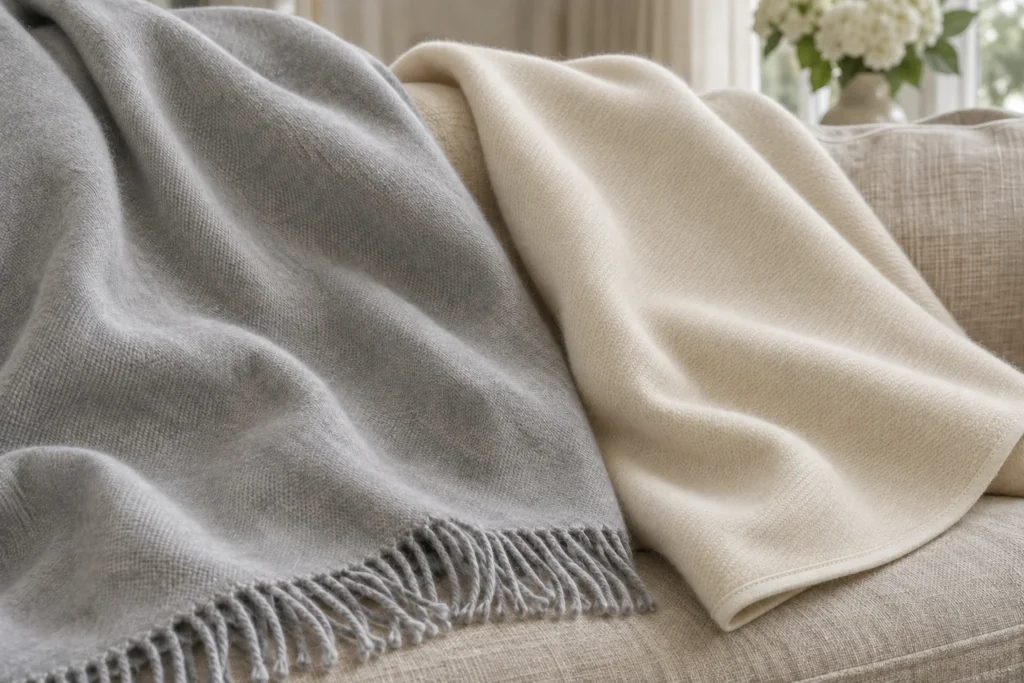
If possible, request a swatch or feel the actual blanket before purchasing. Check the return policy for bedding, including whether opening, using, or washing it affects eligibility. A small sample cannot reproduce the weight of a full blanket, but it can reveal an uncomfortable surface.
For a bed, consider whether the blanket will touch bare skin or sit above a sheet. A slightly textured blanket may work well over a sheet even if you would not want it against your neck on the sofa. Avoid treating “hypoallergenic” as a guarantee of irritation-free use; fiber-name marketing does not establish how an individual will respond.
Breathability and moisture handling
Airflow through a fabric and the movement of water vapor are related comfort factors, but they are not the same measurement. Woolmark describes wool’s ability to absorb and release moisture vapor. That characteristic does not mean any thick wool blanket will feel cool in a warm bedroom.
Research on woven fabrics using wool, alpaca, and silk yarns examines air and water-vapor permeability as fabric properties. For shoppers, the implication is to consider the weave, thickness, and all the layers on the bed. There is no reliable fiber-only answer to which finished blanket will feel less stuffy.
If you regularly overheat, start with a light, removable layer and avoid adding insulation you do not need. If your choice extends beyond animal fibers, our wool vs cotton blanket comparison covers that separate buying decision.
What real US-market blanket specifications show
These manufacturer-listed examples illustrate different purchasing choices; they are not test winners or directly matched products. Specifications were checked November 8, 2026. Confirm the selected size, color, and sewn-in label before ordering or cleaning.
Coyuchi Pacaya Alpaca Blanket
Coyuchi lists the Pacaya as 100% baby alpaca, sourced and woven in Peru, with a twill weave and blanket-stitched hem. Full/Queen measures 90 × 92 inches; King measures 108 × 92 inches. Care is dry clean only. The page describes a lightweight feel but does not provide a finished weight in the specifications reviewed, so a numerical weight comparison would be unsupported.
Pendleton Eco-Wise Wool Solid Blanket
Pendleton specifies 100% virgin wool with whipstitch binding. Its Full/Queen is 90 × 96 inches and weighs 5.5 pounds. The care instructions say to machine wash separately in cold water on a gentle cycle, use no bleach, and line dry. That is a concrete maintenance distinction from the Pacaya, not proof that every sheep-wool blanket is washable. Our Pendleton Eco-Wise blanket review explores that model separately.
Brooklinen Prism Alpaca Throw Blanket
Brooklinen’s Prism listing specifies its front as 51% cotton, 35% wool, 10% alpaca, and 4% polyamide. The throw measures 52 × 70.5 inches and is dry clean only. It demonstrates why an alpaca product name does not establish a predominantly alpaca composition. This sofa-sized throw should not be compared with a Full/Queen blanket on price or total weight alone.
Durability, shedding, and everyday wear
Separate three concerns: shedding is loose fiber leaving the surface; pilling is fibers forming small balls; snagging is yarn catching and pulling. They need different responses. A soft brushed surface can release loose fibers, while exposed loops or loose yarns can catch on jewelry or pet claws.
Woolmark’s pilling guidance identifies friction, fiber length, yarn twist, and fabric construction as relevant factors. There is no sound basis for promising that either fiber will never pill. Nor does a small amount of initial fuzz, by itself, establish poor quality.
For frequent sofa use, inspect close-up photographs of the weave, hems, and fringe. A firmly constructed blanket with secure edges may suit your household better than an airy decorative throw. Ask the manufacturer about persistent shedding, developing thin spots, or pulled yarns. Avoid aggressive brushing or shaving on a delicate surface unless the maker recommends the method.
Cleaning: the care label decides
Do not use a generic alpaca or wool washing recipe to override the label. A washable wool blanket and a dry-clean-only alpaca blanket have different care requirements; two blankets made from the same fiber can also require different treatment.
- Dry clean only: use a professional cleaner and show them the fiber label. Do not assume a cold hand wash is an equivalent alternative.
- Hand wash permitted: follow the specified temperature and wool-compatible detergent instructions. Support the wet blanket and avoid wringing or scrubbing. Use the drying method the manufacturer provides.
- Machine wash permitted: follow the exact cycle, temperature, load, and detergent directions. “Machine washable” does not automatically mean tumble-dryer safe.
- Missing or ambiguous label: contact the manufacturer before soaking, spot-treating, or putting the blanket in a machine.
Untreated animal-fiber textiles can felt or change dimensions when washed incorrectly. Heat and mechanical action are relevant risks, but cold water alone does not make every cleaning method safe. Our explanation of why wool shrinks provides background; the product’s instructions remain the rule for that blanket.
Between cleans, let the blanket air in a dry, ventilated place. Address spills promptly using the maker’s approved method rather than rubbing. Store it clean and completely dry, with protection from clothes moths. If frequent home washing is essential, choose for that requirement first; our washable wool blanket guide is a useful next step.
Price and value: compare more than the fiber name
Alpaca is often positioned as a luxury purchase, but a material label alone cannot establish good value. Fine sheep wool, intricate weaving, generous dimensions, and careful finishing can also command a premium. A lower-priced blend may be a sensible choice if its actual composition and care suit your needs.
Compare the current price for the exact size you need, then include professional cleaning, shipping, and return costs. Check whether measurements include fringe. Paying extra for a soft throw is reasonable when you will use it regularly; paying for an alpaca name without checking its percentage is a weaker basis for choosing.
For a gift, easy care and a flexible return policy may matter more than a luxury fiber description. For your own bed, suitable coverage and comfortable weight may deliver more value than an impressive material story.
Which blanket should you choose?
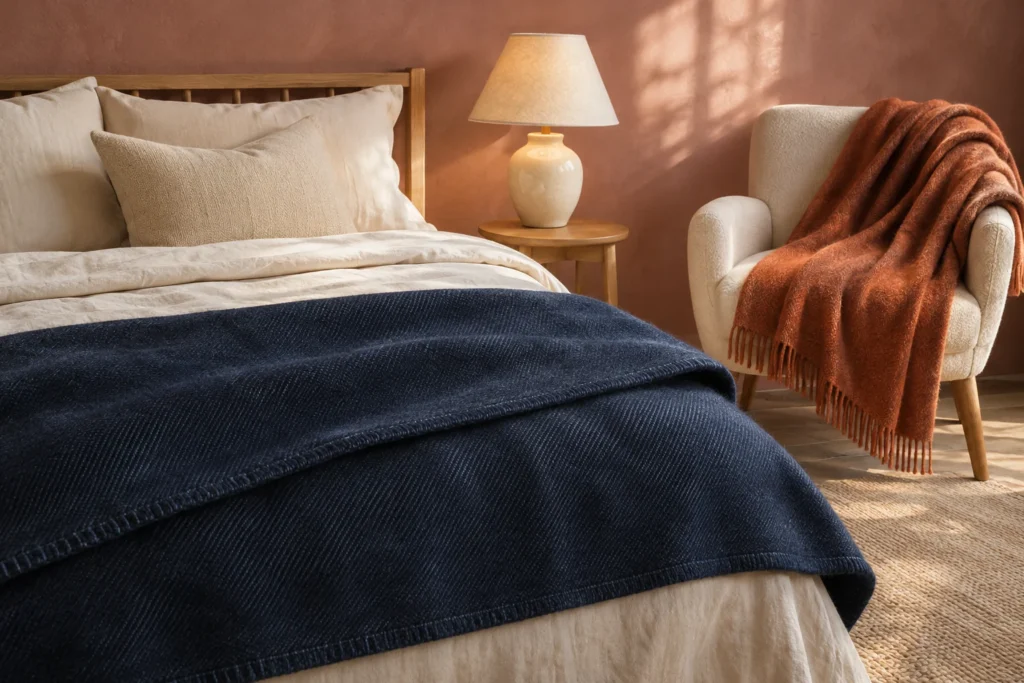
- Prioritize a soft, fluid drape: compare fine-grade alpaca and fine Merino samples, then select the finished feel you prefer.
- Need frequent home cleaning: shortlist explicitly washable products. A verified washable sheep-wool option may be more convenient than a dry-clean-only alpaca blanket.
- Want substantial warmth: compare coverage, thickness, construction, and available thermal information instead of choosing by animal alone.
- Dislike weight on your body: request the actual blanket weight. Do not assume that every alpaca option is lighter.
- Have pets or heavy daily use: prioritize a secure weave, practical edges, and suitable care over delicate surface effects.
Frequently asked questions
Are alpaca blankets warmer than wool blankets?
Some are, but there is no universal winner. Thickness, loft, weave, dimensions, and how the blanket is layered all affect warmth. A fiber-level claim or study of one fabric cannot rank every finished blanket.
Is alpaca less itchy than Merino wool?
Not necessarily. Fine alpaca and fine Merino can both feel soft, while coarser fibers can prickle. Ask about fiber fineness and judge the actual fabric, ideally through a swatch or a purchase with suitable return terms.
What are the downsides of an alpaca blanket?
Depending on the product, drawbacks can include a high price, professional-cleaning costs, an impractical size, or a delicate surface. These are reasons to check the specification, not inevitable problems with every alpaca blanket.
Is a 100% alpaca blanket better than a blend?
Only if that composition meets your priorities. A blend may offer a different feel, structure, appearance, or price. Compare the full fiber label and finished construction; neither purity nor a small alpaca percentage guarantees better performance.
A better purchase starts with the finished blanket
For an alpaca vs wool blanket purchase, choose the product that delivers your preferred feel, coverage, weight, and maintenance routine. Fine alpaca deserves consideration for a supple luxury layer, while a suitably constructed sheep-wool blanket can be equally appealing. Verify composition and care first, then let the actual specifications—not a universal fiber ranking—justify the price.