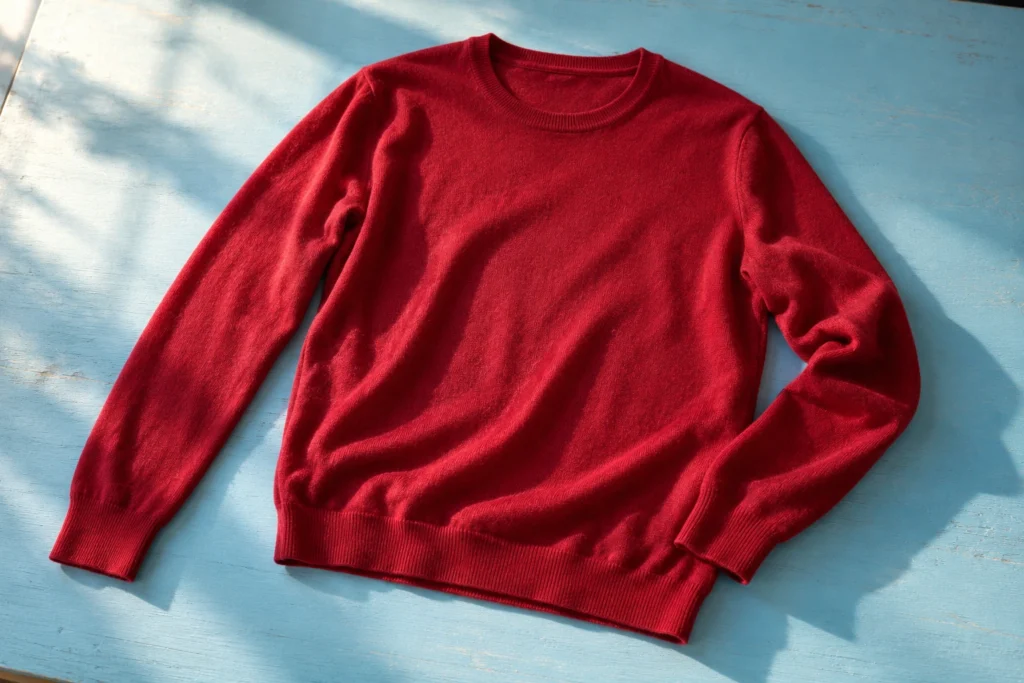
Merino wool pilling happens when rubbing draws fibers to the fabric’s surface, where they tangle into small balls. A few pills do not automatically mean a sweater is poor quality. Remove them cautiously from dry, sound fabric with a suitable comb or fabric shaver; leave thin patches, pulled loops and damaged yarn alone.
The distinction matters. A sweater with bobbles under the arms may need a little surface care. One with thinning elbows needs a different response, even if both look fuzzy. This guide explains how to tell what you are seeing, choose a removal method and reduce avoidable abrasion. It draws on textile research and manufacturer guidance, not firsthand garment or tool testing.
What causes Merino wool pilling?
Pilling begins with fibers protruding from the yarn. Repeated rubbing tangles that surface fuzz, and some of the tangled fibers remain anchored to the cloth. Pills can also wear away. In experimental research on wool knits, researchers studied both formation and wear-off: the visible result depends on these competing processes, not simply how much fuzz appeared initially.
That explains why two sweaters labeled “100% Merino wool” can age differently. Their fiber lengths, yarns, stitch structures and finishing may differ, as can the way they are worn.
Three construction details help explain the variation:
- Fiber length: Short fibers have more ends within a given length of yarn. Woolmark’s spinning guidance notes that excessively short fibers can contribute to pilling in knitwear.
- Yarn twist: Twist binds fibers into yarn. In experiments on wool knits, lower yarn twist produced more fuzz under abrasion. Twist is a design choice, not a quality score by itself.
- Fabric structure: How tightly the yarn is arranged in the knit also matters. A fluffy, open construction and a compact, smooth knit should not be expected to behave identically.
Woolmark identifies longer fibers, greater yarn twist and a higher fabric cover factor, meaning more closely packed yarn, as ways designers can reduce pilling. None makes a garment immune to wear.
Fineness is a separate measurement. The micron figure used to describe wool refers to fiber diameter, not length. “Fine Merino” therefore does not tell you that every fiber is short, nor does it predict the finished sweater’s pilling on its own.
Is it pilling, fuzz, shedding or felting?
Look closely before choosing a tool. These surface changes can occur together, but they are not interchangeable:
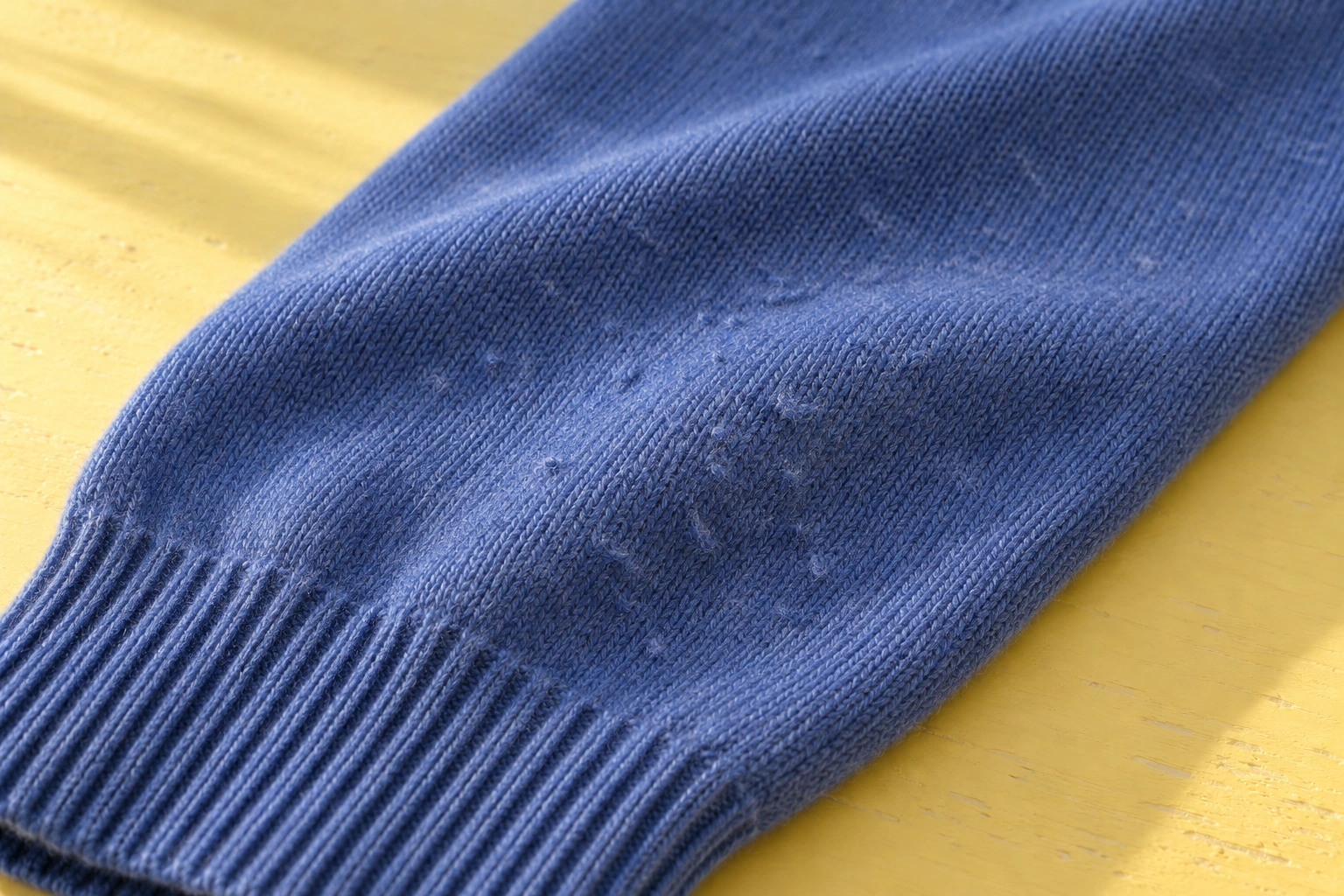
- Pilling: Distinct small balls attached to the surface. Check that the stitches underneath remain intact.
- Ordinary fuzz: A fine halo of individual fiber ends rather than compact balls. A brushed or fluffy finish may be intentional; shaving it away changes the garment’s appearance.
- Shedding: Fibers coming away from the garment, perhaps onto another layer. Loose fibers are not necessarily attached pills.
- A snag: A pulled loop or length of yarn. Do not treat it as a pill or cut it off.
- Felting: Fibers entangling into a denser structure, often accompanied by shrinkage and less distinct stitches. A comb cannot reverse it.
Woolmark’s explanation of machine-washable wool describes how wet agitation can cause wool’s surface scales to interlock. That structural change is different from a few removable bobbles. If the sweater has become smaller and matted, consult our guide to shrunken wool sweaters rather than trying to shave it smooth.
For a practical check, lay the garment in good light and examine the affected area from both sides. If you find broken yarn, a hole or noticeably thinner cloth, stop. Removing the surface balls will not replace missing material.
Does pilling mean the wool is low quality?
Not automatically. Pilling resistance is one aspect of performance; softness, construction, finishing and intended use also matter. A pill is not proof of luxury either. Neither “it pills because it is cheap” nor “it pills because it is expensive” is a reliable diagnosis.
A few localized pills are different from rapid, widespread deterioration. For a recently purchased garment with unexpectedly severe pilling, photograph it before de-pilling and ask the retailer to assess it. Include how often it was worn and how it was cleaned. That gives the seller more useful information than an already-shaved surface.
When shopping, look for guidance or test information about the actual garment, not just a fiber percentage. Our Merino wool versus cashmere comparison explains why fiber names alone cannot settle durability questions.
Where are pills most likely to appear?
Follow the friction. Underarms, sleeve sides, cuffs and the part of a sweater that rests against a desk are common trouble spots. A bag can create a more localized patch where its strap or body repeatedly moves against the knit.
REI’s care guidance highlights contact with backpack belts and hook-and-loop fasteners, as well as fabric rubbing against itself. It also notes the competing demands on soft next-to-skin clothing such as socks and base layers: comfort does not remove their exposure to abrasion.
Use the pattern to choose an adjustment. If one shoulder pills while the other stays smooth, inspect the bag strap and jacket lining that touch it. Changing a rough contact point is more targeted than replacing your detergent when the sweater has not yet been washed.
Fabric comb, shaver or hand removal?
Choose for the condition and construction of the garment, not just the number of pills. Woolmark lists hand removal, gentle combing and fabric shavers as options. The table below adds conservative selection limits; it is not a ranking based on tool testing.
| Method | When to consider it | Main reason to stop or avoid it |
|---|---|---|
| Gentle hand removal | A few loose pills on otherwise sound fabric | A pill resists or pulls a stitch with it. Do not yank. |
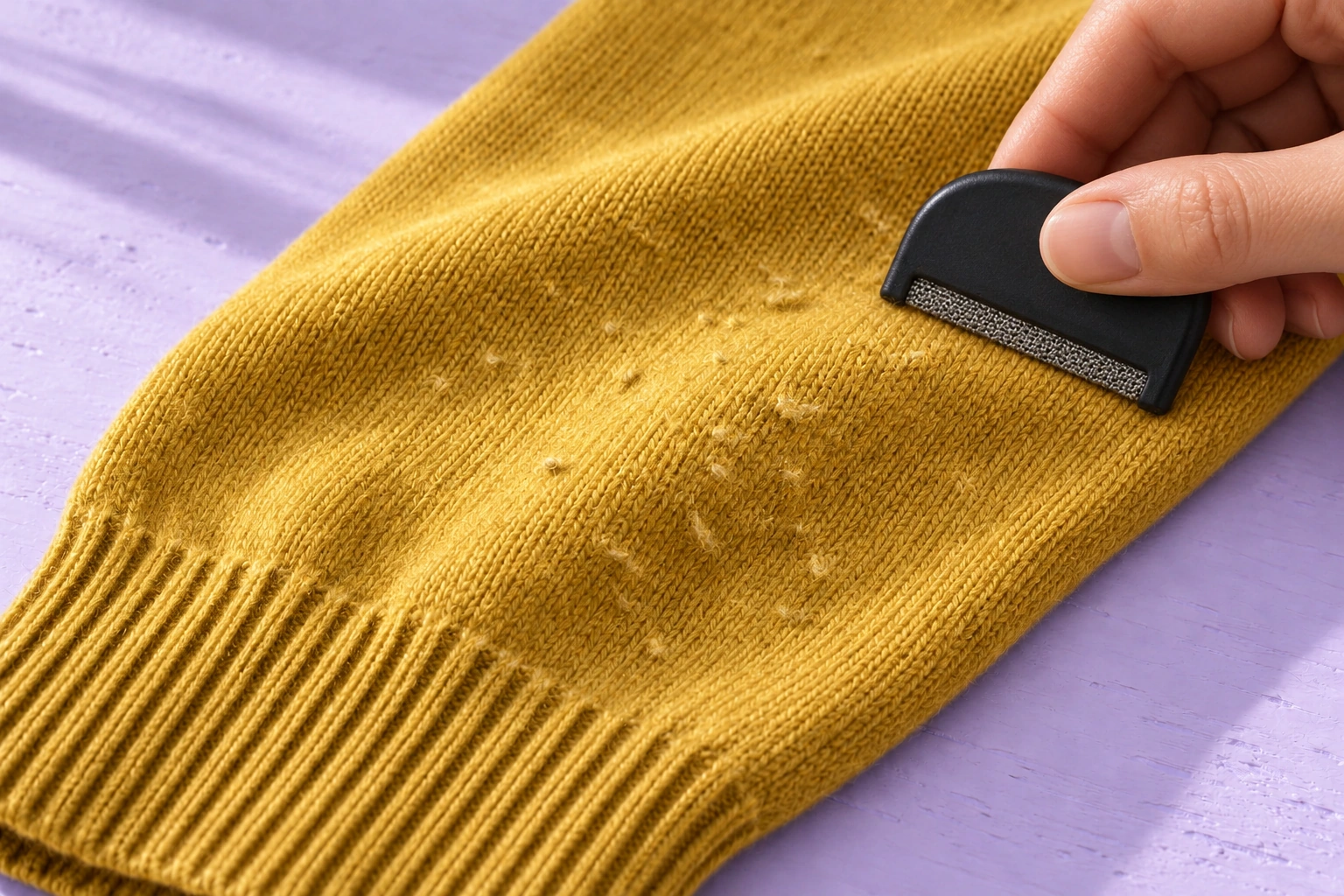
| Wool or cashmere comb | Accessible pills on a stable knit, where the garment maker permits combing | Teeth catch loops, drag the yarn or disturb an intentional fluffy finish. |
| Guarded electric fabric shaver | A smooth, sound surface compatible with the device’s instructions | Thin fabric, raised details, loose yarn, damaged areas or a guard that cannot sit safely. |
| Professional assessment | A valuable, fragile or unusually constructed garment; unclear surface damage | Do not experiment merely because another sweater tolerated the same tool. |
A comb is not automatically harmless, and an electric shaver is not automatically unsuitable for Merino. Patagonia’s de-pilling guide includes combs for Merino and cashmere as well as electric tools for suitable fabrics. Compatibility still has to be checked for your knit and device.
How to remove Merino wool pills carefully
1. Check the garment and prepare a flat surface
Read any fabric-care advice supplied with the sweater and tool. Work on a dry garment, spread on a firm, clean surface with the area you are treating fully supported. Do not work on a sweater while wearing it.
Smooth out folds without stretching the knit. Find seams, ribbing, cables, embroidery and snags before you begin. For a very fine, open or deliberately hairy knit, ask the garment maker which method it recommends instead of assuming a “delicates” setting makes shaving safe.
2. Test a small, inconspicuous area
Use the lightest workable contact and inspect after a few movements. The test should show pills coming away without newly pulled loops, a scraped-looking patch or altered texture. A hidden test reduces uncertainty; it cannot guarantee that every part of the garment will respond identically.
WoolOvers recommends a small trial area before combing a whole garment. Its instructions call for short, soft strokes in one direction on a flat surface, particularly careful handling for Merino and cashmere.
3. Remove only what releases cleanly
For a few loose balls, support the cloth and gently lift them away with your fingers. If a ball stays firmly attached, leave it for a compatible tool rather than pulling harder.
With a wool comb, hold the surface steady without drawing the stitches apart. Make light, short passes in the direction recommended by the tool manufacturer. Lift away the collected fluff so you can see the cloth; do not keep scraping until every natural fiber end disappears.
For an electric shaver, use the guard or height setting specified for the fabric. Glide rather than press. Philips’ instructions for its GC026/00 require a flattened garment and warn against running the device over buttons, zippers, embroidery or loose threads. Check your own model’s instructions, since guards and settings differ.
4. Inspect, then stop
Lift the tool away regularly and check the knit under good light. Stop immediately if it catches, pulls yarn or leaves the surface looking thinner. Do not chase one stubborn pill across a vulnerable seam.
Judge the result at normal viewing distance as well as close up. The aim is a tidier surface with the garment intact, not a perfectly hairless texture. A small amount of remaining fuzz is preferable to a shaved patch that no longer matches the surrounding knit.
How to reduce future pilling
Start with repeated contact during wear. Keep exposed hook-and-loop fasteners away from knitwear, check bag straps for rough edges and avoid dragging sleeves across abrasive surfaces. You cannot remove all friction from clothing that is being used, but you can often remove one unnecessary source.
For laundry, follow the actual care label and turn the garment inside out where appropriate. Keep fine knits separate from rough items and fastenings that can catch them. Do not add extra washes simply to make pills fall off. Cleaning and de-pilling solve different problems; our Merino washing guide covers the full routine.
Fabric softener is not an anti-pilling treatment. Woolmark’s detergent guidance warns that excessive softener can encourage fibers to move toward the surface. Follow any garment-specific prohibition and choose a compatible detergent at its stated dose. For product-selection help, see our wool detergent guide.
Dry according to the label rather than using a tumble dryer to knock off fuzz. Fold sweaters for storage once clean and fully dry, keeping snagging hardware away from their surface. Our wool sweater storage guide covers containers and seasonal packing. Storage protects the garment between wears; it does not undo existing pills.
Avoid treating removal as a weekly obligation. Inspect the garment and intervene when needed. De-pilling removes material from the surface, so repeated aggressive passes are not a sensible substitute for reducing abrasion.
Frequently asked questions
Can 100% Merino wool pill?
Yes. A pure-wool label describes composition, not a pill-free construction. Yarn structure, fiber characteristics and rubbing still matter. A blend is not automatically better either; compare evidence for the finished garments rather than assuming one percentage wins.
Is pilling after one wear normal?
It can happen, especially at a contact point, but one wear does not tell you whether the amount is acceptable. Check for an identifiable source of friction and inspect the underlying knit. Photograph unusually heavy pilling on a new item and ask the retailer before altering it.
Will Merino wool eventually stop pilling?
It may become less noticeable, but there is no dependable number of wears, washes or de-pilling sessions after which it stops. New abrasion can expose more fibers. Removing today’s pills does not make the remaining fabric permanently pill-resistant.
Can I use a disposable razor on a Merino sweater?
This guide does not recommend it. An exposed blade leaves little margin for a fold or raised stitch. Use a garment-compatible care tool with appropriate instructions, or seek help for a delicate item, rather than improvising with a shaving razor.
Should I de-pill before or after washing?
The key requirement is that the garment be dry, with its condition clearly visible. De-pilling is not a reason to wash an otherwise clean sweater. If cleaning is needed, follow the garment maker’s sequence and let the knit dry completely before working on it.
Does a fabric shaver repair worn Merino wool?
No. A shaver removes surface pills; it does not replace broken yarn, strengthen a thin elbow or reverse felting. If the fabric beneath the pills is failing, assess repair options instead of making more passes over it.