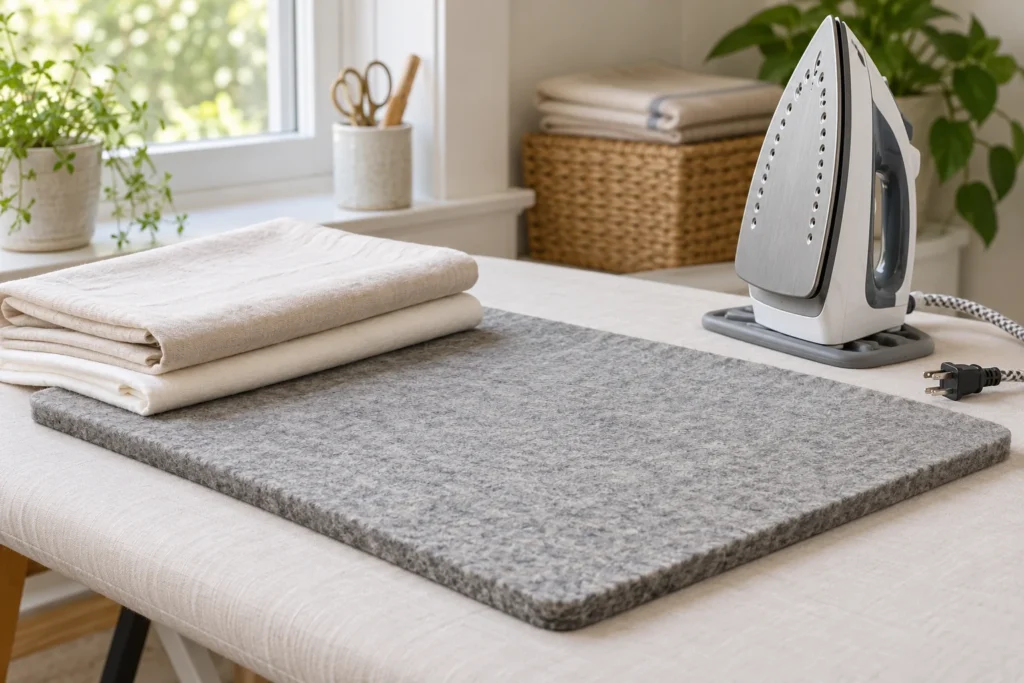
Choose a wool pressing mat by the fabric pieces you need to support, the space available beside your machine, and the manufacturer’s surface and steam instructions. A larger mat gives you more working area; it does not, by itself, establish better pressing results. Just as importantly, a bare wool mat should not be assumed to protect the furniture underneath.
For a modular setup, consider Oliso MultiMat. For a larger mat supplied with a protective tray, look at GEasy. The Gypsy Quilter offers a conventional rectangular option, while The Felt Store has a compact mat with explicitly documented composition and dry-pressing guidance. Each suits a different purchasing priority, rather than occupying a tested performance ranking.
This guide compares documented specifications and instructions. We have not physically tested these mats, measured seam flatness or pressing speed, or evaluated their protection of tables.
How the wool pressing mats were selected
The shortlist prioritizes identifiable products with published dimensions, material information, relevant use instructions and a US-facing purchase route. Manufacturer and brand-owner documentation takes precedence over retailer summaries; disagreements remain visible where they affect a buying decision.
Product pages were checked on October 7, 2026. The shortlist contains four documented options. Other familiar brands are discussed separately where availability or documentation needs clarification. Stock indicators are a snapshot, not a delivery guarantee.
Recommendations reflect workspace fit and documented features. Customer ratings, advertising claims about pressing from both sides and demonstrations without controlled comparisons were not used to assign performance scores.
Wool pressing mat comparison
These are the exact variants compared, not the shipping-package dimensions. All four list a half-inch thickness. That shared measurement does not establish equal density, construction or performance.
| Product and material | Working size and thickness | Surface or steam point | Worth considering for |
|---|---|---|---|
| Oliso MultiMat; 100% New Zealand wool | 14 × 14 in; ½ in | Heat and steam pass through; suitable resistant surface required | A connecting, expandable setup |
| GEasy Large; 100% wool mat plus silicone tray | 18½ × 23½ in; mat ½ in | Brand permits steam; brand attributes protection to included tray | Larger work with an included tray |
| The Gypsy Quilter TGQWM1724; 100% felted wool | 17 × 24 in; ½ in | Dry iron advised; wood/painted-surface instructions conflict—see below | A plain rectangular pressing area |
| The Felt Store; 95% New Zealand wool, 5% carded cast-off (remaining fiber breakdown unspecified) | 13 × 13 in; ½ in | Steam discouraged; moisture can pass through | A compact station for dry pressing |
Which option fits your workspace
Oliso MultiMat for an expandable station
The Oliso MultiMat uses ProPress Link connectors to join additional mats. Its single-pack page lists four links; extra mats are separate purchases. This makes it worth considering if you want to start with one small square and expand later.
Plan the joined arrangement before ordering: expansion still needs an adequately supported work surface. The connectors are not a tray or moisture barrier. Oliso’s warning about heat and steam passing through remains relevant when mats are connected.
The direct US product page displayed an add-to-cart option when checked. Buy the single or double pack deliberately, and do not assume an iron or carrying bag shown in promotional imagery is included. This option is recommended for its modular design, not for a claim that it presses faster.
GEasy Large for a mat with a separate protective tray
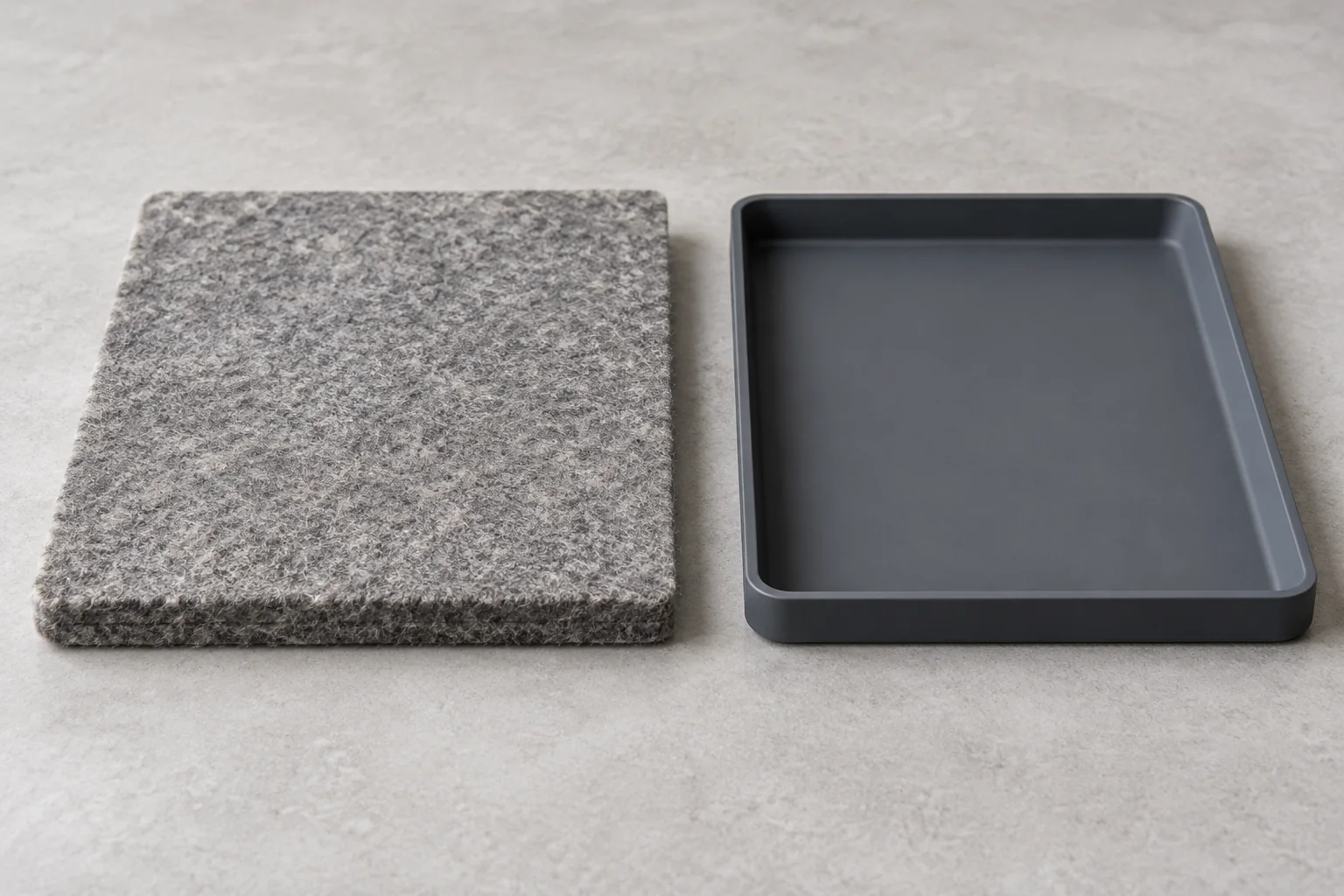
The GEasy Wool Pressing Mat Large combines the wool layer with a fitted silicone tray. GE Designs identifies the tray as the heat and moisture barrier and permits steam, spray starch or mist with this system.
It may suit someone who wants those components supplied together. The tray is a meaningful difference from buying a bare mat and then finding a compatible protective layer. Confirm the complete setup fits your workstation rather than treating the wool dimensions as a furniture-clearance guarantee.
The US brand page showed an add-to-cart option. After use, its instructions call for removing condensation from the tray and allowing damp wool to air-dry; machine washing is prohibited. This is a product-specific care routine, not permission to put any wool mat over any silicone sheet.
The Gypsy Quilter for a rectangular pressing area
The Gypsy Quilter TGQWM1724 is a single mat rather than a tray system. Its footprint may suit a workstation where a square mat is too limiting but a full board-sized pad would be awkward to store.
Checker Distributors, the specification source rather than a consumer checkout route, recommends dry pressing, cold-water rinsing when needed and hanging the mat to dry. It also warns against pressing on a rotary cutting mat.
There is a surface-instruction difference to resolve before purchase: Checker describes a protective barrier for wood or painted surfaces, while Shabby Fabrics’ listing says to avoid those surfaces. If that is your intended setup, obtain clarification for the current product instead of adopting the less restrictive instruction. The retailer showed an ordering option, with a separate domestic handling charge and no shipping of this item to Alaska, Hawaii or international destinations.
The Felt Store for a smaller dry-pressing setup
The Felt Store Wool Ironing Mat is the compact choice here. Its composition includes 5% material described as carded cast-off; the page does not identify that portion’s fiber breakdown. It should not be relabeled as 100% wool.
The US storefront displayed the 13-inch variant with an ordering option. The brand discourages steam and warns that moisture can reach the surface below. Its temperature wording gives a wool setting followed by “150 degrees” without specifying the unit. Seek clarification rather than converting that number or treating it as a universal limit.
This may suit a buyer with modest space who intends to press dry and values an explicit material disclosure. Its smaller footprint is a fit advantage only if your fabric pieces fit too.
Measure your project and your station before buying
The most useful size is the one that supports the work you actually press. Measure your usual unfinished block or fabric section, then compare both dimensions with the mat. A mat matching the finished block size may leave little room for the larger unfinished piece or repositioning.
Next, measure the clear area beside the sewing machine. Leave a separate place for the iron, and account for any protective layer or tray. A cardboard template cut to the listed footprint can reveal whether a seemingly convenient mat would crowd your sewing area.
For a wool pressing mat for an ironing board, check the usable board width along its length. A rectangular mat may not follow a tapered board’s shape. Avoid buying by the word “large” alone, and do not assume a full-board cover and a freestanding rectangular pad are interchangeable.
For classes or retreats, compare the mat’s dimensions with the bag you already use and the available storage space. If a listing provides only package weight, ask for the mat’s weight rather than using shipping weight as a portability comparison. A modular arrangement offers a different storage decision from one continuous large pad.
Thickness and density are separate specifications. None of the shortlisted sources provides a comparable numerical density specification. Terms such as dense or premium therefore do not support a density ranking. Choose the documented fit first; do not pay more simply because advertising promises better seams from thicker wool.
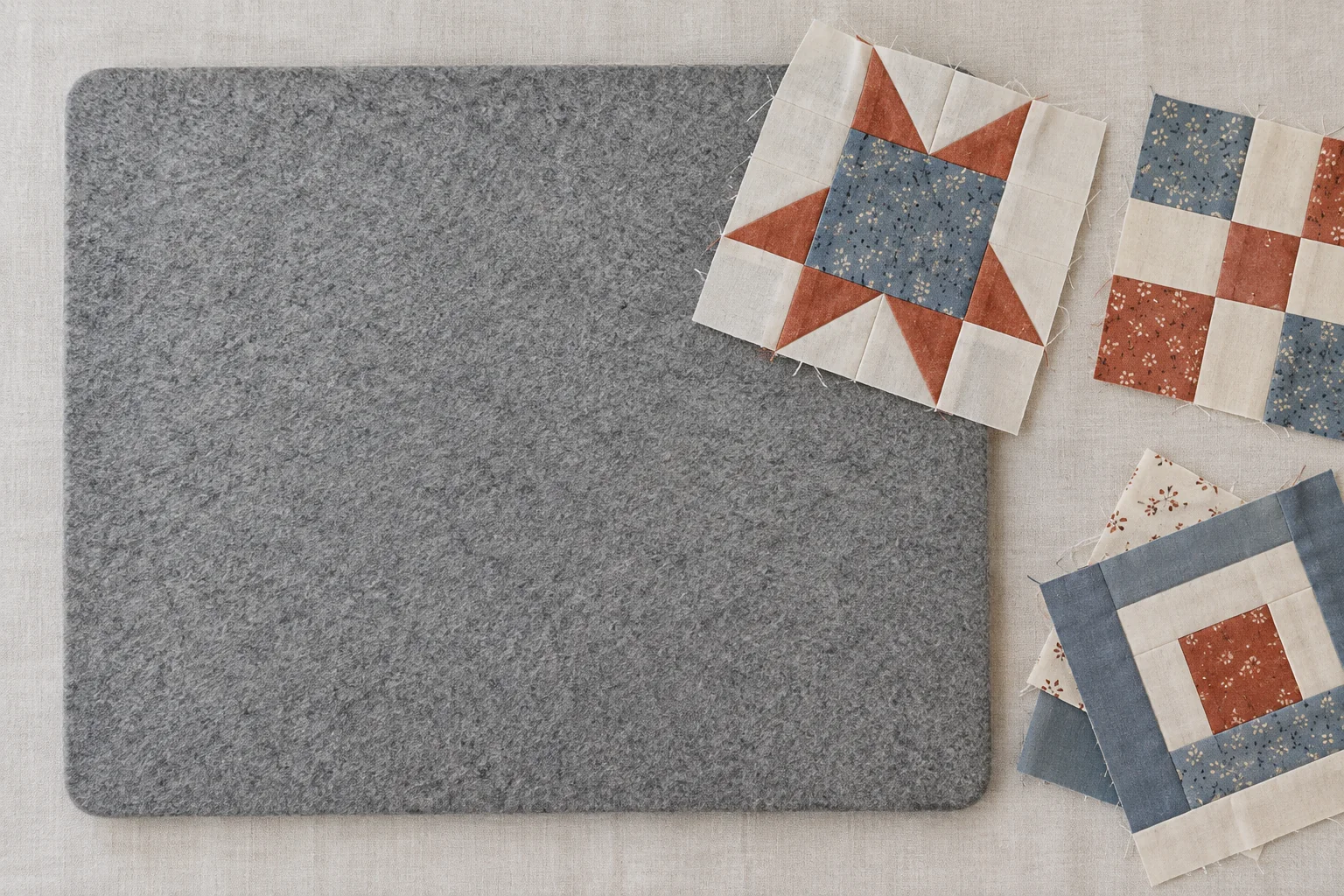
What to put under a wool pressing mat
Use a supporting surface and any protective layer approved for the exact mat and your intended use. There is no single underlay recommendation that makes every table, countertop or cutting mat suitable.
Oliso’s FAQ is particularly clear: felt permits both heat and steam to pass through, so a heat- and moisture-resistant surface is required. It also says felt pressing mats are not hot-iron rests. Even an auto-lift iron left in one position can scorch wool.
Keep three functions separate when comparing a setup: the surface that supports the fabric, the layer intended to protect what is underneath, and the place intended for resting the iron. A product can perform one of these roles without being approved for the others.
A silicone iron rest is not automatically an under-mat tray. Likewise, an included tray does not supply an independent guarantee about every furniture finish. Read its instructions alongside those for the work surface. If suitability is unclear, ask the mat or surface manufacturer before applying heat.
For steam, check more than whether the wool can become damp. Consider where condensation will collect and how the setup is meant to dry. Do not copy another brand’s steam routine just because both products are described as wool.
What pressing claims can actually establish
Manufacturers frequently describe retained heat, pressing from both sides, flatter seams and faster work. Those statements explain how the products are marketed; they do not provide a controlled comparison of the shortlisted mats.
The documentation reviewed does not justify ranking these options by measured seam flatness, time saved, heat reflection, durability or table protection. A demonstration can show how a seller uses a mat, but it does not establish the result you will obtain with different fabric, equipment or technique.
For purchasing, give more weight to specifications you can act on: whether your block fits, whether the allowed pressing method matches your project and whether the necessary accessories are included. These are useful differences even when no tested performance winner can be named.
Cleaning and storage depend on the product
Follow the instructions supplied with your exact mat. The published routines are not interchangeable, and a general wool-garment washing method is not automatically appropriate for a pressing accessory.
For GEasy’s mat-and-tray system, separate the components, wipe condensation from the tray and let damp wool air-dry. The brand says not to machine wash. The Gypsy Quilter’s published instructions permit cold-water rinsing and hanging to dry. Neither routine should be transferred automatically to another mat.
Check whether your manufacturer permits spot cleaning, rinsing or a particular cleaning tool before buying cleaners. Do not transfer stain-removal mixtures between brands. Where folding or rolling instructions are absent, ask whether the intended storage method is acceptable instead of assuming a flexible-looking pad can be packed that way.
Make drying part of the storage plan. Allow a used mat to cool and follow its drying directions before packing it away. If an odor seems unusual or persists after the prescribed care, seek advice from the seller rather than masking it with fragrance or improvising a treatment.
Check the product category and the purchase conditions
In these listings, wool ironing mat and wool pressing mat refer to the same general pressing-accessory category. “For quilting” describes an intended use; it does not establish a separate material grade.
A fitted ironing-board cover needs a compatible board underneath. A silicone tray is a separate component unless expressly included. A synthetic pressing pad needs its own instructions. And a needle-felting mat should not be selected for ironing merely because it is made from wool: its intended use is different.
Even within wool products, check the full composition rather than relying on the name. Our wool fiber guide explains preparation terminology for loose spinning fiber; a finished pressing mat still requires its own product specification.
Compare delivered cost, including any tray, extra modular units and handling charges. Do not treat the lowest mat-only price as the lowest cost for your complete setup. No price-per-area ranking is used here because a bare mat and a tray system do not include equivalent components.
Return windows also need context. Oliso describes a 30-day direct-purchase guarantee, with refunds assessed case by case. GE Designs requires prior approval and unused goods in original condition and packaging within its 30-day policy; sale items are excluded. Neither should be described here as an unrestricted pressing trial.
MadamSew’s standard mat was explicitly marked out of stock when checked. Love Sew’s mat pages displayed sold-out messaging alongside ordering controls, so immediate availability was not clear. Neither was added simply to lengthen the recommendations. If considering either later, confirm the exact variant and current conditions before ordering.
Frequently asked questions
What is the best wool pressing mat for quilting?
The best fit depends on the workstation: Oliso offers modular expansion, GEasy includes a separate tray, The Gypsy Quilter provides a larger plain rectangle, and The Felt Store offers a compact option. These are feature-based recommendations, not independently tested performance awards.
Can you use steam on a wool pressing mat?
Only follow the instructions for the exact product and underlying surface. The shortlisted brands do not give identical advice. Permission to use steam does not mean that the mat prevents moisture from reaching the table.
Can a wool pressing mat go on a wooden table?
Do not assume so. Surface restrictions and barrier requirements differ, and even the published Gypsy Quilter instructions disagree on wood. Obtain product-specific clarification or use a setup explicitly approved for the task.
How do you clean a wool pressing mat?
Use its own care instructions. Some documentation permits cold-water rinsing; other products specify different maintenance. Do not assume machine washing, detergent, vinegar or a scraping tool is appropriate merely because another brand allows it.
Can you leave a hot iron on the mat?
Do not treat a pressing mat as an iron rest. Oliso expressly warns against this use. Put the iron in the resting position or on the accessory permitted by its own instructions, and do not leave a powered iron unattended.
Is a larger or thicker mat worth paying for?
Extra area can be worthwhile if your pieces outgrow a smaller mat and your station can accommodate it. Thickness alone does not prove superior pressing. Compare usable dimensions, included components, storage and surface requirements before paying more.
Choose the setup that fits your work
Start with your project size and pressing method, then narrow the options by the surface you can safely provide. Check the exact variant, instructions and total purchase conditions before ordering. A wool pressing mat earns its place through a suitable setup and clearly documented features, not a promise of universally faster or flatter results.