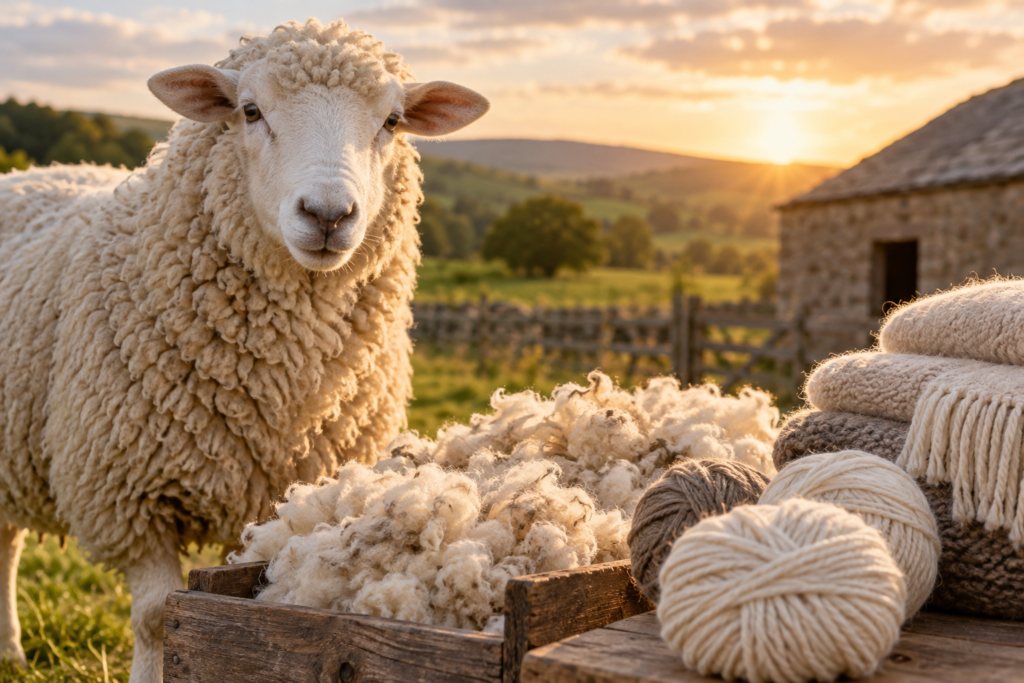
Wool is everywhere in the home, from rugs and blankets to upholstery and other textiles, but the journey behind the fiber is easy to overlook. Before wool becomes yarn or fabric, it begins as a fleece that grows naturally on sheep.
So, where does wool come from, and what happens between the sheep and the finished product? The answer involves several stages, including shearing, sorting, cleaning, carding, spinning, and finally turning the fiber into yarn, fabric, or other wool products.
In this guide, we’ll follow that journey from the source and explain where wool comes from, how it is collected and processed, where Merino wool fits in, and how different types of wool eventually become products such as rugs, blankets, and other home textiles.
Where Does Wool Come From?
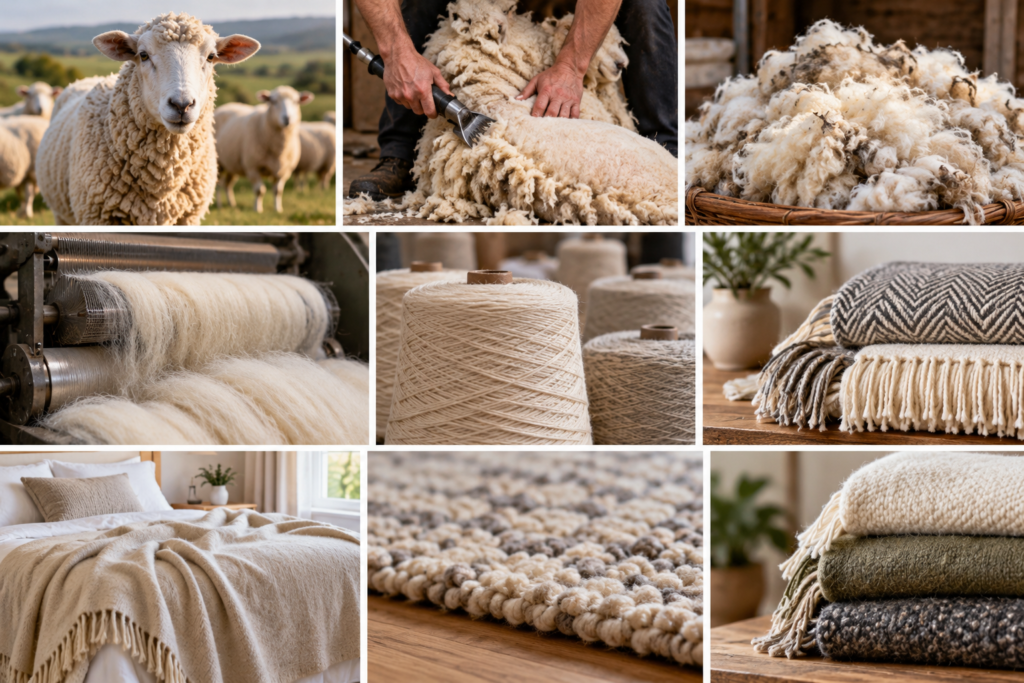
Wool comes primarily from sheep. It grows as a fleece made up of natural protein fibers, with keratin forming a major part of the fiber’s structure. Sheep are typically shorn to remove the fleece, which can then be processed into usable textile fiber.
Not all sheep produce exactly the same kind of wool. Breed, genetics, environment, and other factors can influence characteristics such as fiber diameter, length, crimp, and color. These differences help determine how a particular wool may be used.
Fine wool, including wool from Merino sheep, is well known for applications where softness is important. Broader and stronger wool fibers can be useful for products where resilience and durability matter, including some carpets and rugs.
The important distinction is that wool is the fiber itself. A wool blanket, rug, sweater, or piece of fabric is the finished product created after that raw fiber has gone through several processing stages.
How Wool Grows on Sheep
Wool grows from follicles in a sheep’s skin, forming the fleece that covers much of the animal’s body. The fibers are made mainly from keratin, the same type of structural protein found in hair and other animal fibers.
One of wool’s distinctive features is its natural crimp—the small waves or bends along the fiber. The amount of crimp, fiber diameter, length, and other characteristics vary between breeds and can influence how the wool feels and performs once it is processed.
Sheep continue to grow new wool after their fleece is removed. This regrowth is one reason wool is described as a renewable fiber: the animal can produce another fleece rather than the raw material being extracted only once.
Different breeds produce wool with different characteristics. Merino sheep are particularly associated with fine fibers, while other breeds can produce broader wool suited to applications where strength and resilience are important.
How Wool Is Harvested: Sheep Shearing
Wool is collected through a process called shearing, in which the fleece is removed from the sheep using specialized shearing equipment. The aim is to remove the fleece efficiently while keeping it as intact as practical for the next stages of handling and processing.
After shearing, the fleece is assessed and separated according to characteristics such as fiber quality and the part of the fleece it came from. Lower-quality or heavily soiled sections may be separated from the more useful portions before further processing.
At this stage, the wool is still very different from the clean fiber seen in yarn or finished textiles. Raw fleece can contain wool grease, often called lanolin, as well as dirt, dust, plant material, and other impurities. These need to be addressed during the first stages of processing.
Shearing therefore marks the beginning of wool’s transformation rather than the end. The next steps—particularly sorting and scouring—prepare the raw fleece for carding, spinning, and eventually manufacturing into textile products.
What Happens to Wool After Shearing?
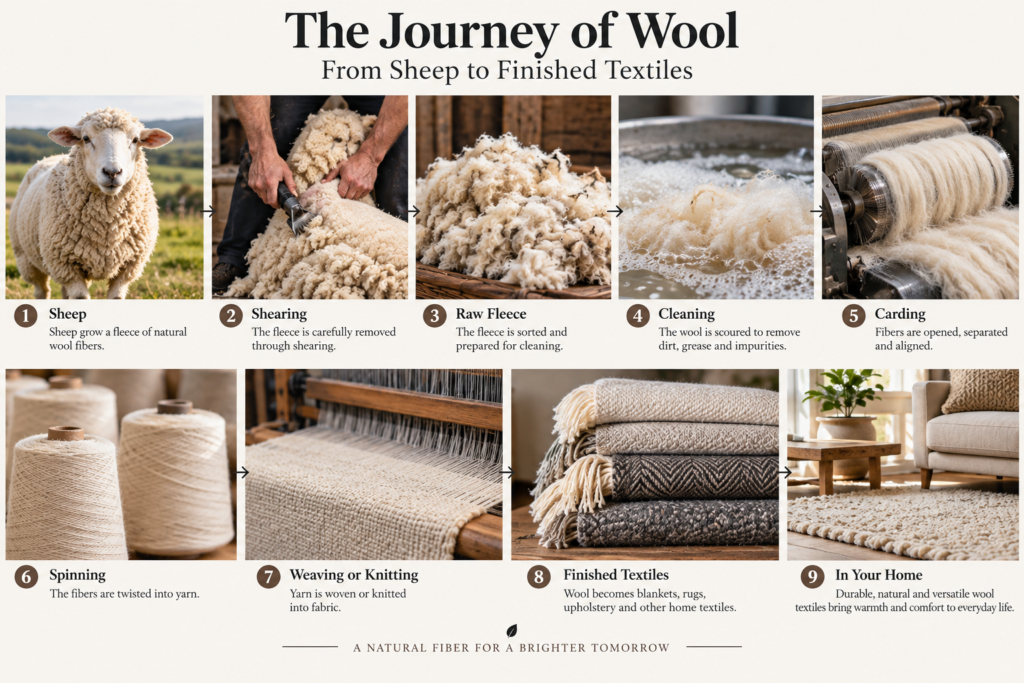
Once a fleece has been removed from the sheep, it still needs several processing steps before it can become yarn, fabric, or a finished wool product. The exact process varies depending on the type of wool and its intended use, but the journey generally begins with sorting and cleaning.
1. Sorting and Classing
After shearing, the fleece is examined and separated according to characteristics such as fiber diameter, length, strength, color, and overall quality. Different parts of the same fleece can have different characteristics, so they may not all be destined for the same end use.
This stage helps processors create more consistent batches of wool for the products they intend to manufacture.
2. Scouring
Raw wool contains more than wool fiber. It can carry dirt, dust, sweat residues, plant material, and wool grease, commonly known as lanolin.
During scouring, the wool is washed to remove much of this grease and contamination. After scouring, the fiber is considerably cleaner and ready for further mechanical processing.
3. Carding
The cleaned fibers then need to be opened, separated, and organized. Carding uses a series of surfaces fitted with fine teeth to disentangle the fibers and arrange them into a more workable form.
For some manufacturing systems, particularly those producing smoother worsted yarns, additional steps such as combing may be used to further align the fibers and remove shorter fibers and remaining vegetable matter.
4. Spinning
Once the fibers have been prepared, they can be drawn out and twisted together to create yarn.
The way the fibers are prepared and spun affects the characteristics of the resulting yarn. Some yarns are designed to be smooth and fine, while others are bulkier or more textured.
5. From Yarn to Finished Wool Products
The yarn can then be woven, knitted, or otherwise manufactured into finished textiles. Depending on the wool and the manufacturing method, it may eventually become a blanket, upholstery fabric, clothing, or another textile product.
For rugs and carpets, wool can follow manufacturing processes designed specifically for floor coverings, where factors such as resilience, fiber characteristics, construction, and durability become particularly important.
So the journey from sheep to finished wool textile is not a single step. Shearing provides the raw fleece; processing transforms that fleece into a usable textile fiber and eventually into the wool products found in the home.
Where in the World Does Wool Come From?
Where does wool come from around the world? Wool is produced in many regions, but the type and quantity of wool can vary considerably from one place to another. Climate, sheep breeds, farming systems, and the intended market all influence the wool produced in a particular country.
Australia is especially important in the global wool industry and is strongly associated with fine Merino wool. Other significant wool-producing countries include China, New Zealand, South Africa, Argentina, and the United Kingdom, although their production profiles and common sheep breeds differ.
New Zealand, for example, is known for producing substantial amounts of stronger wool as well as finer types. Stronger wool fibers can be particularly useful in applications such as carpets and other products where resilience is important.
This geographical diversity is one reason the word “wool” alone does not tell you everything about a product. The breed of sheep, fiber diameter, processing method, construction, and intended use can matter as much as the country where the wool originated.
What Is Merino Wool and Where Does It Come From?
Merino wool comes from Merino sheep, a breed famous for producing fine wool fibers. Although the breed has historical roots in Spain, Merino sheep are now raised in several countries around the world.
Australia has become particularly associated with Merino wool and is a major source of the fine wool used in apparel and other textile products. Merino sheep are also raised in countries including New Zealand, South Africa, Argentina, and elsewhere.
What distinguishes Merino wool is not simply where it comes from but the characteristics of its fibers. Merino sheep can produce particularly fine wool, which is why the fiber is widely associated with products where softness and next-to-skin comfort are important.
However, Merino is not a synonym for all wool. It refers to wool from Merino sheep, while many other sheep breeds produce wool with different fiber characteristics and suitable end uses.
That distinction is useful when comparing wool products. A label stating “100% wool” identifies the fiber content but does not necessarily mean the product is made from Merino wool. If Merino specifically matters to you, the product specifications should identify it as such.
Does All Wool Come From Sheep?
In everyday textile use, wool generally refers to the fiber obtained from sheep. However, several other animals produce natural fibers that can look or behave somewhat like sheep’s wool, which is why the terminology can sometimes become confusing.
Cashmere, for example, comes from cashmere goats, while mohair comes from Angora goats. Alpaca fiber comes from alpacas, and angora fiber comes from Angora rabbits. These are all animal-based textile fibers, but they are not simply different types of sheep’s wool.
The distinction matters when shopping for rugs, blankets, clothing, and other textiles because these fibers can differ in softness, fiber structure, durability, warmth, care requirements, availability, and price.
Blended products can make the label even more important. A textile may combine sheep’s wool with another animal fiber or with plant-based or synthetic fibers. Instead of assuming that a product described as “wool-like” or marketed around natural fibers is made entirely from sheep’s wool, check the actual fiber-content label.
For the purposes of this guide, when we use the word wool, we are referring primarily to wool produced by sheep.
How Wool Becomes Rugs, Blankets and Other Home Textiles
Once wool has been cleaned, prepared, and spun, manufacturers can turn it into many different types of textiles. The final result depends not only on the wool itself but also on how the fibers and yarns are processed and how the finished product is constructed.
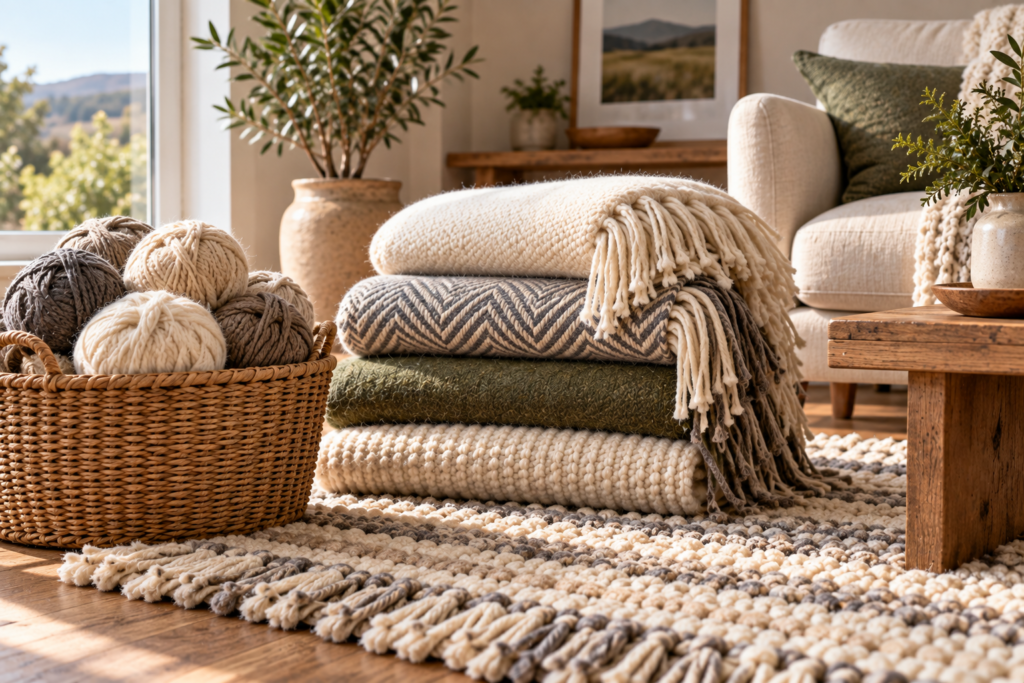
For wool rugs and carpets, manufacturers can use wool yarn in different constructions, including woven and tufted floor coverings. Fiber characteristics, yarn structure, pile, density, backing, and overall construction can all affect how a rug feels and performs in everyday use.
For wool blankets and throws, yarn can be woven or knitted into fabrics with different weights, textures, and levels of warmth. Finishing processes can further change the appearance and feel of the material.
Wool is also used in upholstery, cushions, bedding, felt, and other household textiles. This range of uses is one reason it is useful to look beyond a simple “100% wool” label. Two products made from wool can perform very differently depending on the type of fiber, yarn, construction, finishing, and intended use.
If you are considering wool specifically for flooring, our Wool Rugs Guide explains how construction, pile, size, shedding, and other factors can affect the choice of a rug.
Is Wool a Renewable and Biodegradable Fiber?
Wool is considered a renewable natural fiber because sheep can grow a new fleece after shearing. Unlike materials made from finite fossil-fuel resources, wool is produced through a biological cycle that can continue throughout a sheep’s life.
Wool can also biodegrade under suitable environmental conditions. Because the fiber is made primarily from natural proteins, microorganisms can break it down over time, returning elements such as nitrogen and sulfur to the environment.
That does not mean every product containing wool has the same environmental impact. A finished rug, blanket, or other textile may also contain synthetic backing, dyes, chemical treatments, adhesives, or blended fibers that affect its overall environmental profile and what happens to it at the end of its useful life.
How the sheep are raised, how the wool is processed, how far materials and finished products are transported, how long the product lasts, and how it is eventually disposed of can also influence its environmental footprint.
For that reason, terms such as “natural,” “renewable,” or “biodegradable” should not automatically be interpreted as meaning that every wool product is sustainable in every respect. When sustainability matters, it is better to consider the complete product and its supply chain rather than the fiber alone.
Frequently Asked Questions About Where Wool Comes From
Where does wool come from originally?
If you are wondering where wool comes from originally, the answer is primarily sheep. Wool grows as a fleece on the animal and is removed through shearing before being cleaned and processed into textile fiber.
Is wool made from sheep hair?
Wool grows from follicles in a sheep’s skin, but textile terminology generally refers to it as wool fiber rather than simply sheep hair. Its structure and characteristics make it suitable for processing into yarn and a wide range of textiles.
Does shearing kill the sheep?
No. Shearing removes the fleece rather than killing the sheep. Sheep can continue growing a new fleece after they have been shorn. Animal welfare during shearing, however, depends on appropriate handling and shearing practices.
Where does Merino wool come from?
Merino wool comes specifically from Merino sheep. The breed has historical roots in Spain and is now raised in several countries, with Australia particularly associated with modern Merino wool production.
Is all wool Merino wool?
No. Merino is one type of sheep’s wool. Many other sheep breeds produce wool with different fiber diameters, lengths, crimp, strength, and other characteristics.
How does raw wool become fabric?
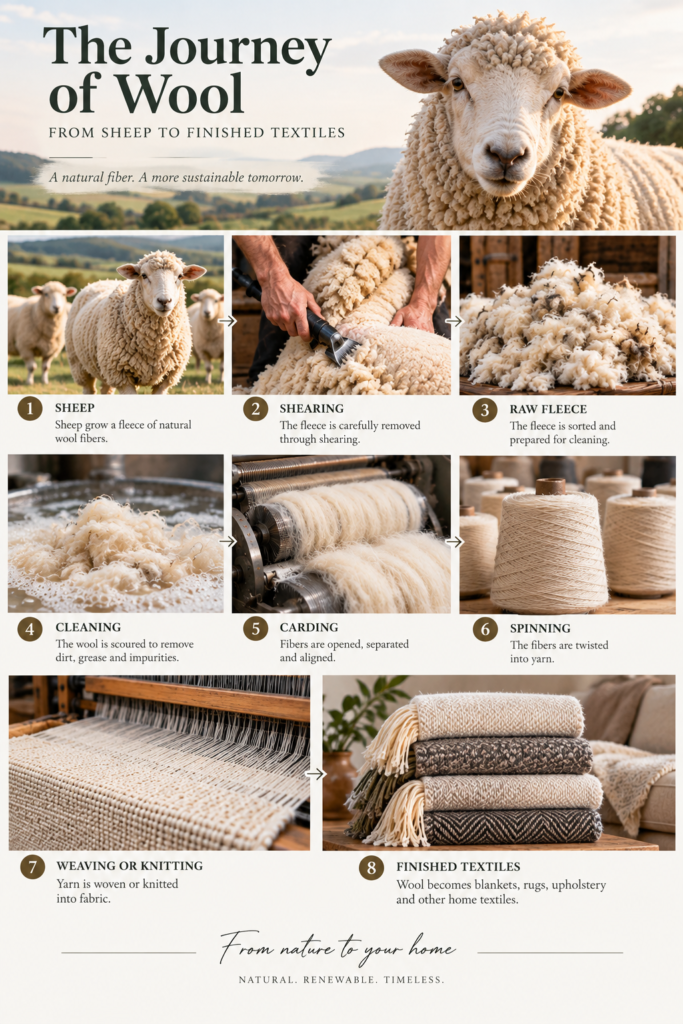
After shearing, wool typically goes through stages such as sorting, scouring, carding, and spinning. The resulting yarn can then be woven, knitted, or processed through other manufacturing methods to create textiles and finished products.
Is wool a natural fiber?
Yes. Wool is a natural animal fiber composed mainly of proteins such as keratin. It is different from synthetic fibers manufactured from materials such as polyester or nylon.
Final Thoughts
So, where does wool come from? The simple answer is sheep, but the journey from fleece to finished textile involves much more.
After sheep grow their fleece, the wool is collected through shearing and then sorted, cleaned, prepared, and spun. From there, different types of wool and manufacturing methods can produce everything from fine fabrics to blankets, rugs, carpets, upholstery, and other household textiles.
Understanding that journey also explains why not every wool product is the same. Sheep breed, fiber characteristics, processing, construction, and finishing can all influence how the finished material looks, feels, and performs.
For shoppers, that means looking beyond the word “wool” on a label. Fiber content, wool type, construction, care requirements, and the intended use of the product can provide a much clearer picture of what you are actually buying.