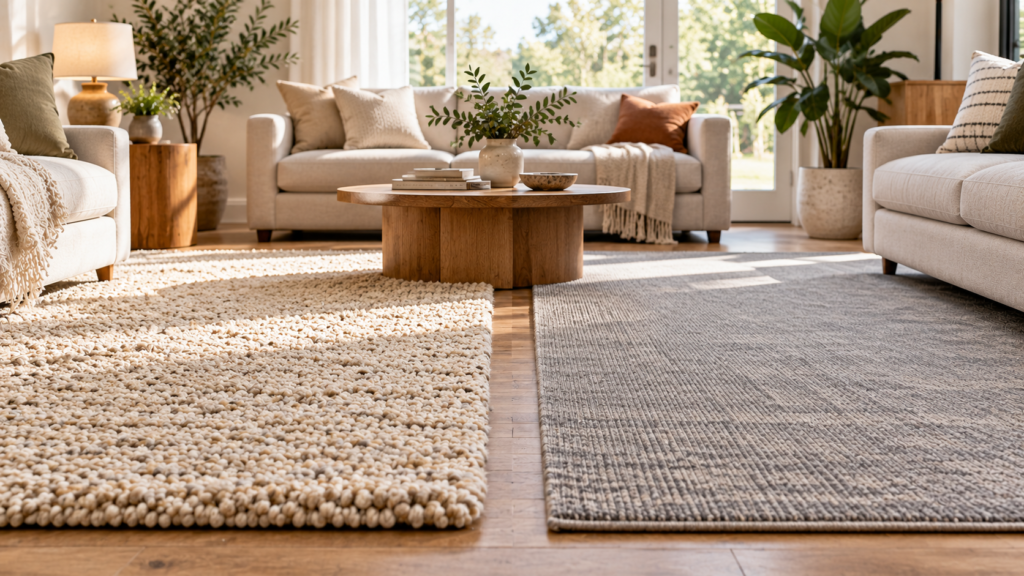
Choosing between wool and synthetic rugs can be harder than it first appears. Two rugs may look similar in a photo, yet feel very different underfoot, handle everyday wear differently, and require different levels of care.
Wool is valued for its natural fiber properties, resilience, and distinctive texture, while synthetic fibers are available across a wide range of prices and performance levels. But “synthetic” covers several materials—including nylon, polyester, and polypropylene—and they don’t all behave the same way.
So the better choice isn’t simply wool or synthetic. It depends on where the rug will be used, how much traffic it will receive, your budget, and how much maintenance you’re comfortable with.
This guide compares wool vs synthetic rugs across the factors that matter most, so you can decide which material makes more sense for your home.
Wool vs Synthetic Rugs: Quick Comparison
| Factor | Wool Rugs | Synthetic Rugs |
|---|---|---|
| Material | Natural animal fiber | Usually nylon, polyester, or polypropylene |
| Feel | Varies with fiber diameter, pile and construction | Varies considerably by fiber and construction |
| Resilience | Naturally elastic and resilient | Varies by fiber; nylon is particularly resilient |
| Stains & spills | Has natural stain-resistant properties but still requires prompt care | Performance varies by fiber, construction and treatments |
| Cleaning | Requires wool-appropriate cleaning methods | Care requirements vary by product |
| Shedding | Some new wool rugs may release loose fibers | Depends on fiber and construction |
| Price | Often higher upfront | Available across many lower price points |
| Best suited to | Buyers prioritizing natural fiber, texture and resilience | Buyers prioritizing budget or particular performance needs |
What Is a Wool Rug?
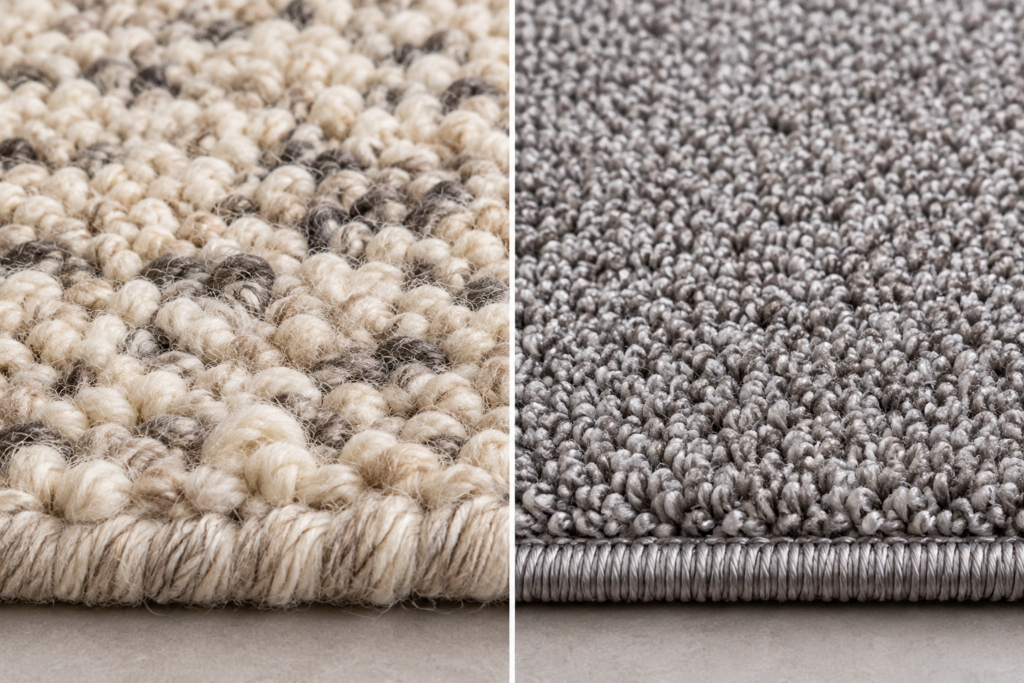
A wool rug is made entirely or partly from wool fibers, most commonly sheep’s wool. Wool has a naturally crimped structure and elasticity that allow the fiber to bend and recover.
The feel and performance of a wool rug can still vary considerably. Fiber diameter matters, but so do the way the yarn is spun, the density of the pile, and how the rug itself is constructed. Broader wool fibers are commonly used for carpets and interior textiles, while finer fibers are associated with greater softness.
Some rugs are made from 100% wool, while others combine wool with additional fibers. If natural fiber content is important to you, check the material label rather than relying only on the word “wool” in the product name.
For a broader look at construction, pile height, sizing, shedding, and choosing a rug for different rooms, see our Wool Rugs Guide.
What Is a Synthetic Rug?
Synthetic rugs are made from manufactured fibers rather than natural wool. Three common materials are nylon, polyester, and polypropylene.
It is important not to treat them as interchangeable. A synthetic rug’s durability, texture, stain performance, and price can change significantly depending on the fiber and construction.
Nylon Rugs
Nylon is known for durability, resilience, and abrasion resistance, making it a common choice where regular wear is expected.
Polyester Rugs
Polyester can be made into rugs with a wide range of textures, colors, and price points. As with other fibers, the finished rug’s performance depends on more than the fiber name alone.
Polypropylene Rugs
Polypropylene, also called olefin, is another common synthetic carpet and rug fiber. Its performance profile differs from nylon, so the intended use and construction of the individual rug should be considered before buying.
Wool vs Synthetic Rugs: The Main Differences
The biggest differences between wool and synthetic rugs tend to become more important once the rug is actually in use. Comfort matters, but so do resilience, spills, cleaning, shedding, and cost.
Comfort and Feel
Wool rugs are often associated with a warm, substantial feel underfoot, but not every wool rug feels equally soft. The feel depends on several factors, including the diameter of the wool fibers, the yarn, pile height, density, and overall construction.
Finer wool fibers generally feel softer, while broader wool fibers are commonly used in carpets and interior textiles where durability is important. This means the softness associated with fine Merino wool should not automatically be expected from every wool rug.
Synthetic rugs also vary considerably. In either category, construction can have a major effect on how the finished rug feels.
When comfort matters, especially in a bedroom or living room, evaluate the specific rug’s fiber, pile, density, and construction rather than assuming wool or synthetic will always feel softer.
Durability and Resilience
Wool is naturally elastic and resilient. Its fiber structure allows it to bend and recover, which can help a well-made wool rug maintain its shape and appearance under regular use.
Among common synthetic rug fibers, nylon stands out for durability and resilience. It is also resistant to abrasion, one reason it is widely used in demanding carpet applications.
Other synthetic fibers can also be practical, but performance depends on the fiber as well as pile density, construction, backing, and overall manufacturing quality.
This is why fiber content alone is not enough to predict how durable a rug will be.
Stains and Spills
Wool is sometimes assumed to stain more easily simply because it is a natural fiber, but the picture is more nuanced.
Wool fibers have a protective outer cuticle. Its hydrophobic characteristics help slow water-based liquids from penetrating deeper into the fiber, contributing to wool’s natural stain resistance.
That doesn’t make a wool rug stain-proof. Spills still need appropriate treatment.
Synthetic rugs can also perform well around spills, but their stain performance varies with the fiber, construction, and treatments used on the finished product.
Rather than assuming every synthetic rug is easier to manage than every wool rug, check the specifications and care instructions of the individual product.
Cleaning and Maintenance
Both wool and synthetic rugs benefit from regular vacuuming because removing soil before it becomes deeply embedded helps maintain their appearance.
Wool rugs require cleaning methods appropriate for wool. WoolSafe recommends regular vacuuming and notes that vacuuming methods should account for the construction of the rug—for example, suction-only vacuuming is generally advised for loop-pile rugs.
Synthetic rugs can sometimes allow different cleaning methods, but being synthetic does not automatically make a rug machine washable.
For either material, check the manufacturer’s care instructions before using detergents, stain removers, carpet-cleaning machines, or wet-cleaning methods.
Shedding
Some new wool rugs can release loose fibers during their early use. This type of shedding or fluffing is not necessarily evidence that a rug is defective.
How much a rug sheds can depend on its yarn, pile, density, and construction.
Gentle, regular vacuuming can help remove loose surface fibers, but the manufacturer’s care instructions should always be followed.
Synthetic rugs don’t all behave the same way either, so it is better to evaluate the individual rug rather than assume every wool rug will shed heavily or every synthetic rug will not.
Cost
Wool rugs often come with a higher upfront price than comparable synthetic rugs, while synthetic fibers are available across a wide range of price points.
That does not mean every wool rug is expensive or every synthetic rug is inexpensive. Size, construction, pile density, manufacturing method, design, brand, and craftsmanship can all affect the final price.
A lower purchase price also doesn’t automatically mean better value. Consider construction quality, intended use, maintenance requirements, and expected traffic alongside the initial cost.
Appearance and Texture
Wool rugs can have very different textures depending on the wool, yarn, pile, and construction. Some have a dense, plush surface, while others are flatter, firmer, or more visibly textured.
Synthetic rugs can also be produced in a wide range of textures, colors, and pile styles.
Construction plays a major role in the finished appearance of either material. Pile type, yarn characteristics, pile height, and density can all change how a rug looks and feels.
For that reason, photographs and fiber labels only tell part of the story.
Which Is Better for High-Traffic Areas?
For high-traffic areas, choosing between wool and synthetic fiber is only part of the decision. Construction can be just as important.
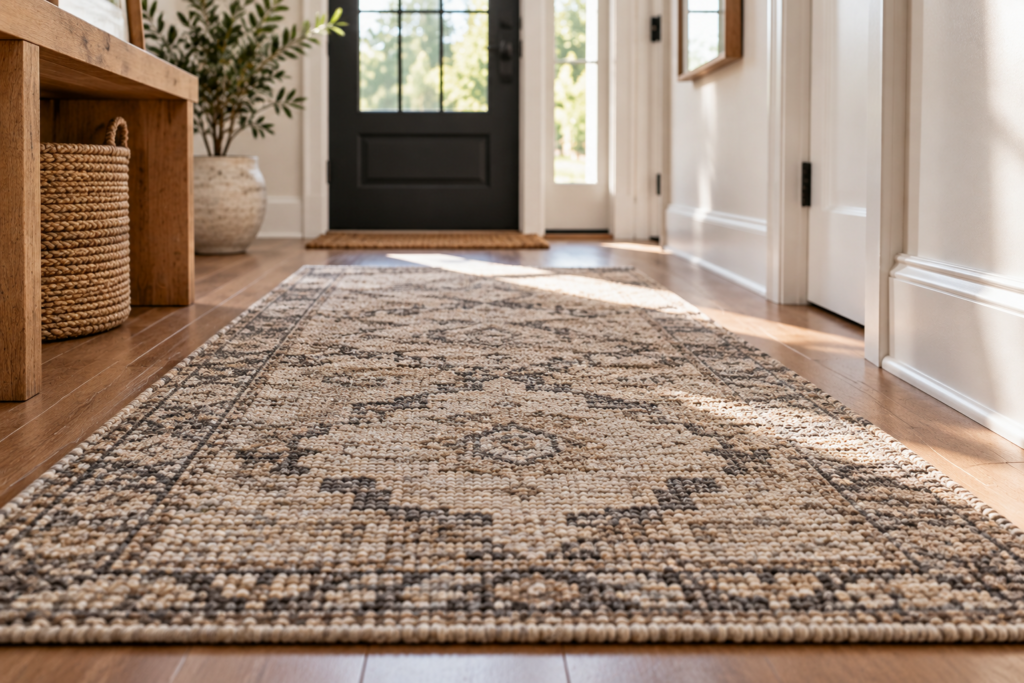
A well-constructed wool rug can be suitable for regularly used areas thanks in part to wool’s natural resilience. Among synthetic fibers, nylon is also widely valued for durability and abrasion resistance.
Whatever the fiber, pay attention to pile height and density. CRI advises that dense construction and shorter pile heights generally perform better under heavy traffic.
For hallways, entryways, and other busy areas, compare the fiber, pile, density, construction, and intended use rather than choosing on fiber content alone.
Which Is Better for Homes With Kids or Pets?
There is no single material that is automatically best for every home with children or pets.
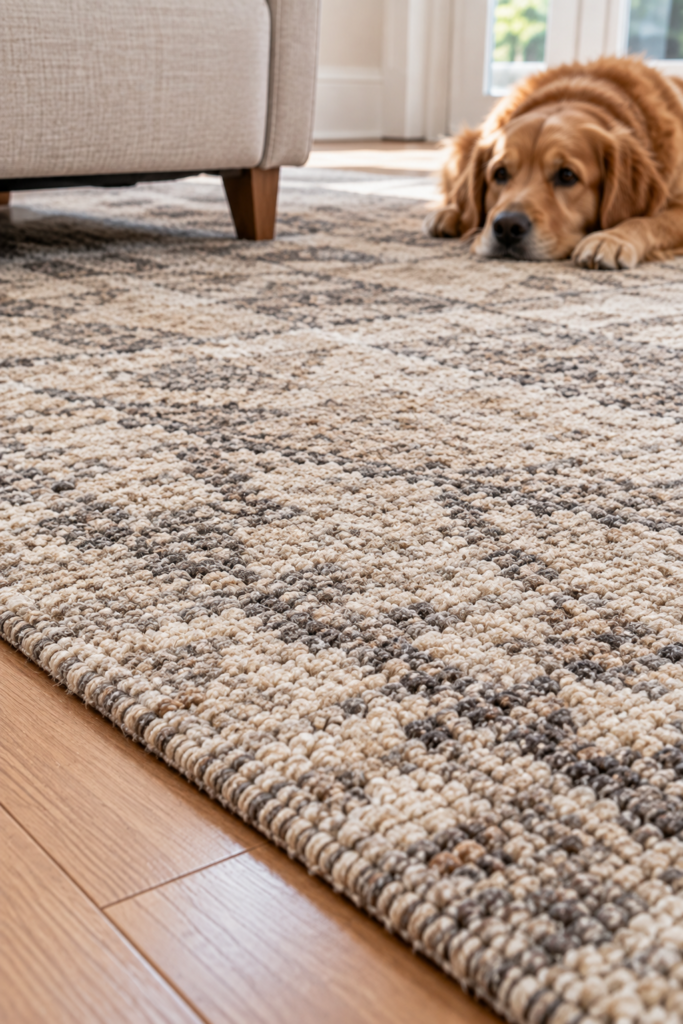
For homes where spills are frequent, consider how the individual rug should be cleaned rather than assuming that every synthetic rug will outperform wool.
With pets, construction also deserves attention. Think about pile structure, how easily soil can be removed, and the manufacturer’s care recommendations.
Durability, stain performance, construction, care requirements, and your household’s everyday routine are therefore more useful considerations than simply choosing “wool” or “synthetic.”
Wool or Synthetic Rugs for Different Rooms?
The best choice can change depending on where the rug will be used. Traffic, comfort, likelihood of spills, and maintenance should all influence the decision.
Living Room
Both materials can work well.
Wool may appeal when natural fiber, texture, and a substantial feel are priorities. A suitable synthetic rug can make sense when budget or particular performance requirements matter more.
In a busy living room, pay particular attention to density, pile height, and construction rather than fiber alone.
Bedroom
Because bedrooms generally don’t experience the same concentrated traffic as entrances or hallways, there may be more freedom to prioritize feel and appearance.
A wool rug provides a natural-fiber option, while synthetic rugs offer many textures and price points.
The better choice depends on the particular rug rather than the category alone.
Dining Room
Here, spills and chair movement become important considerations.
Either wool or synthetic can work, but check the manufacturer’s care guidance and consider how easily the rug can be maintained. A relatively low pile can also be more practical around furniture than a very deep pile.
Entryway and Hallway
These are areas where construction becomes especially important.
CRI recommends dense construction and notes that shorter pile heights perform better in heavy-traffic spaces such as entryways and halls.
Look for a construction appropriate for frequent use and consider how easily tracked-in soil can be managed.
When a Wool Rug Makes More Sense
A wool rug may make more sense when natural fiber, resilience, texture, and the character of the material are important to you.
Wool’s natural elasticity allows its fibers to bend and recover, although the performance of the finished rug still depends on construction and quality.
Wool may be a good fit if you:
- Prefer a natural animal fiber.
- Value texture and a substantial feel underfoot.
- Want natural fiber resilience.
- Are comfortable following wool-appropriate care instructions.
- Are willing to pay more upfront when the particular rug justifies it.
The important point is that “wool” on the label is not a guarantee of quality. Construction, pile, density, fiber quality, and workmanship still matter.
When a Synthetic Rug Makes More Sense
A synthetic rug may make more sense when price or particular performance requirements are higher priorities.
But the specific fiber matters. Nylon, polyester, and polypropylene should not be treated as interchangeable. Nylon, for example, is particularly recognized for wearability and abrasion resistance.
A synthetic rug may suit you if you:
- Have a more limited budget.
- Want a large selection of styles and price points.
- Need particular performance characteristics for a specific room.
- Prefer the care requirements of a particular synthetic rug.
- Don’t specifically prioritize natural fiber content.
Rather than choosing “synthetic” as a category, check which synthetic fiber is actually used and how the rug is constructed.
Wool vs Synthetic Rugs: Which Should You Choose?
When comparing wool vs synthetic rugs, there is no universal winner.
Wool offers natural elasticity and resilience, while synthetic fibers can provide different combinations of durability, price, appearance, and other performance characteristics.
The better choice depends on the individual rug and where you intend to use it.
Before buying, compare fiber content, construction, pile height, density, care instructions, expected traffic, and price.
That gives you a much more useful comparison than assuming every wool rug is superior to every synthetic rug—or the reverse.
Frequently Asked Questions
Are Wool Rugs Better Than Synthetic Rugs?
Not automatically. Wool offers natural elasticity and resilience, while synthetic rugs can offer different advantages depending on the fiber and construction. The better option depends on the individual rug and how you intend to use it.
What Are the Main Downsides of Wool Rugs?
Wool rugs can have a higher upfront cost than many synthetic alternatives and require care appropriate for wool. Some new wool rugs may also release loose fibers.
These factors vary considerably between individual rugs, so construction and care instructions should be considered before buying.
Do Wool Rugs Last Longer Than Synthetic Rugs?
Fiber alone cannot reliably tell you how long an individual rug will last.
Wool has natural resilience, while nylon is also recognized for durability and abrasion resistance. Construction, traffic, maintenance, and overall product quality all influence performance over time.
Are Synthetic Rugs Easier to Clean Than Wool Rugs?
Not necessarily in every case.
Cleaning requirements depend on the fiber, construction, type of soil or stain, and manufacturer’s instructions. Wool rugs should be cleaned using methods appropriate for wool.
Can You Vacuum a Wool Rug?
Yes. Regular vacuuming is an important part of wool rug maintenance.
However, the appropriate method depends on construction. WoolSafe, for example, generally advises suction-only vacuuming for loop-pile carpets and rugs.
Is Wool or Synthetic Better for High-Traffic Areas?
Either can work when the rug is appropriate for the application.
Wool has natural resilience, while nylon is particularly recognized for wearability and abrasion resistance. Pile height, density, and construction also have a major effect on performance.
Final Thoughts
The wool vs synthetic rugs debate doesn’t have a single winner.
Wool stands out as a natural fiber with useful elasticity and resilience. Synthetic rugs offer a broad range of materials, prices, textures, and performance characteristics.
The most useful approach is to look beyond the material name. Consider where the rug will go, how much traffic it will receive, how it is constructed, and how you expect to maintain it.
A good rug is ultimately one that fits the way the room is actually used—not simply the one made from the material that sounds best on the label.